Nuclear News Daily—5/19: NextEra-Dominion / INL's SPL / New bills
발행일
May 19, 2026
미리보기
In this issue: NextEra and Dominion move to merge, new bills introduced in Congress, INL opens its Structural Properties Laboratory, new plans in Sweden, and more. Trivia Tuesday: It’s Tuesday, which means nuclear trivia! Today’s question looks to so...
도입부: In this issue: NextEra and Dominion move to merge, new bills introduced in Congress, INL opens its Structural Properties Laboratory, new plans in Sweden, and more.
NextEra, Dominion to merge in major utilities announcement
NextEra Energy is set to acquire Dominion Energy in an approximately $67 billion merger that will alter the energy landscape—including for nuclear power—in the United States. Go deeper on Nuclear Newswire.
is upgrading its Byron and Braidwood NPPs, boosting capacity by 158 MW to meet rising power demands from data centers. Chicago Tribune (subscription required)
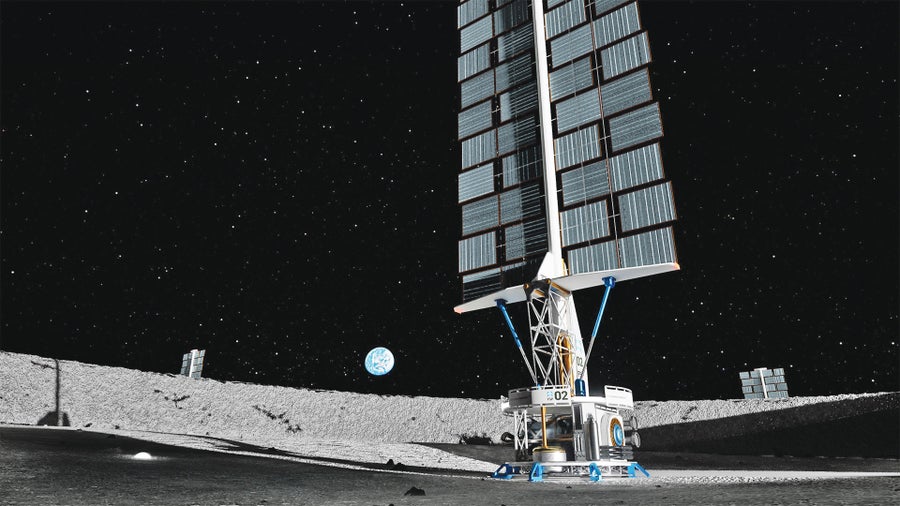
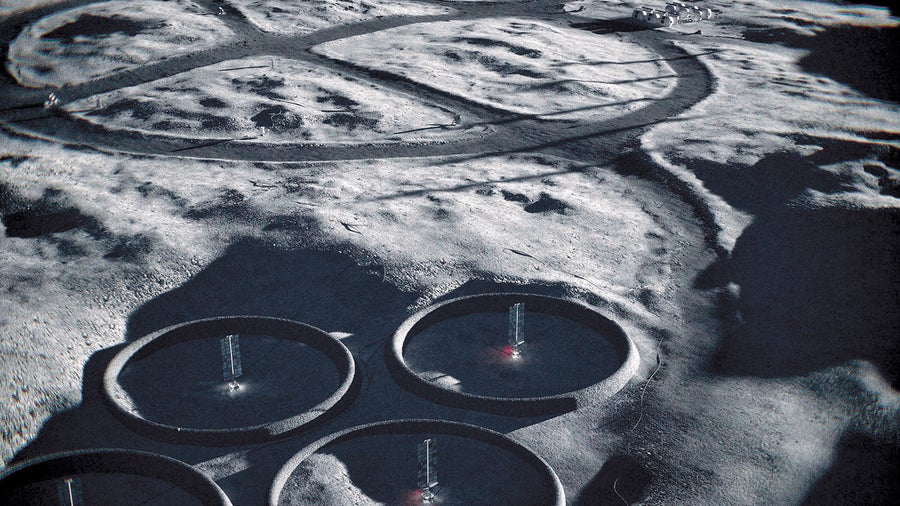
to establish a nuclear reactor on the moon by 2030 as part of the Artemis program to support its lunar base. There are safety challenges due to the moon’s harsh environment, which includes extreme temperature swings and frequent asteroid impacts. Scientific American
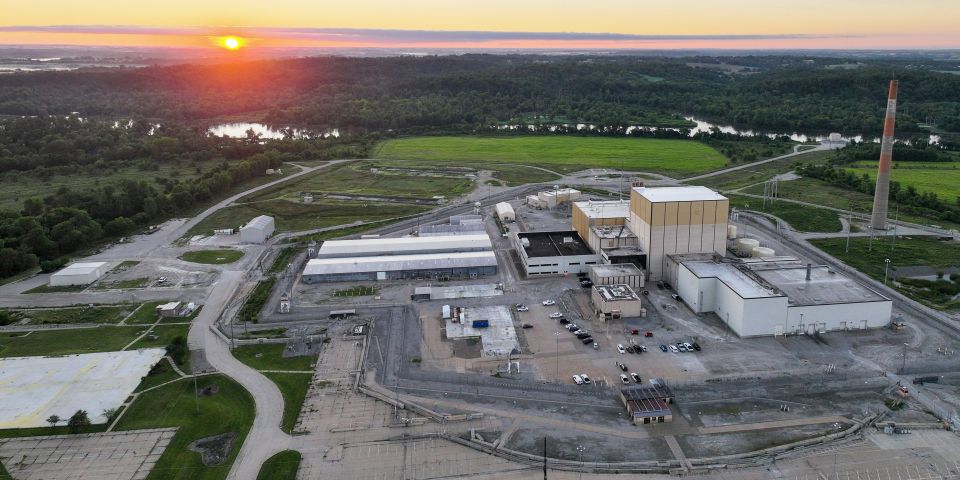
that its Structural Properties Laboratory became fully operational in January. Located at the Materials and Fuels Complex, the new facility is a “major milestone” in advancing nuclear research. INL
could enhance power grid efficiency by optimizing resource management and extending equipment lifespan. However, utility regulators’ concerns over costs hinder widespread adoption. E&E News
is aiming to deliver 50 MW of fusion electricity to Microsoft by 2029 with its Orion project. While ambitious, experts question its feasibility due to significant technical challenges. Scientific American
reactor developer Blykalla submits an application to construct a nuclear power plant in the small town of Norrsundet. The plant will include six of the company’s Sealer reactors. World Nuclear News; Reuters (subscription required)
documentary titled The Race to Fuel a Nuclear Energy Comeback charts the current landscape of the fuel industry from mining to enrichment to new technologies. Bloomberg
Legislation looks to address nuclear construction materials, tax credit rules
Lawmakers in Congress have introduced a pair of bills this month targeting different aspects of nuclear construction, with one proposal focusing on construction material and the other on tax credits. Go deeper on Nuclear Newswire.
Savannah River marks the closure of another legacy waste tank
The Department of Energy’s Office of Environmental Management has received concurrence from regulators that Tank 14 at the Savannah River Site has reached preliminary cease waste removal (PCWR) status after radioactive liquid waste was successfully removed from the tank. Go deeper on Nuclear Newswire.
NEA head gives talk about growing global interest in nuclear energy
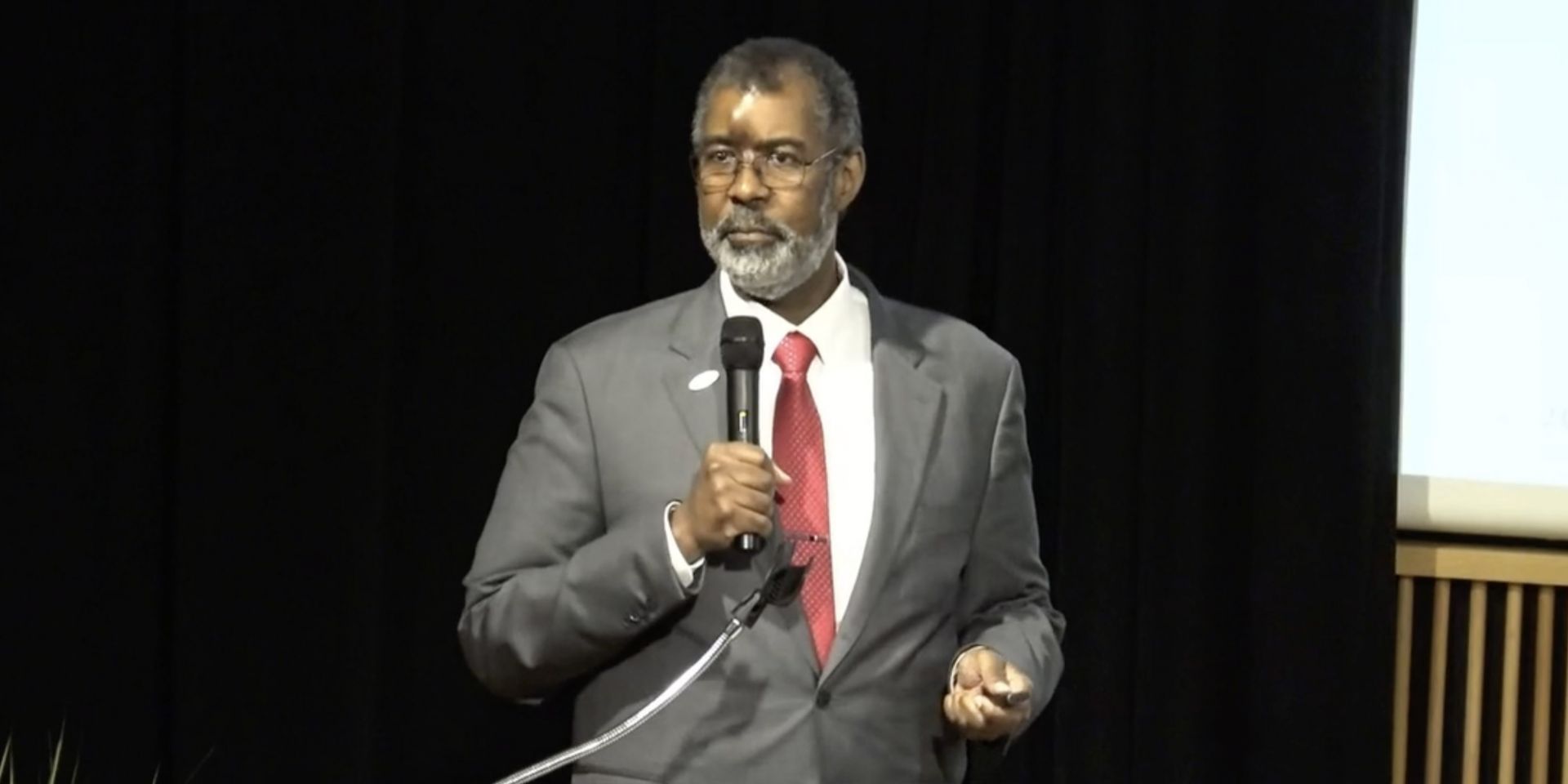
The University of Missouri’s President’s Distinguished Lecture Series featured a talk by William D. Magwood IV, director general of the OECD Nuclear Energy Agency and a former NRC commissioner, on May 13 at the Columbia campus’s Bond Life Sciences Center. Magwood speech was titled “The Next Nuclear Energy Era: Opportunities and Challenges.” Go deeper on Nuclear Newswire.
The answer: Coming in at 62.98 percent, Unit 2 at Sequoyah nuclear power plant had the lowest DER net capacity factor in the U.S. fleet from 2023 to 2025. That number stands in sharp contrast to the rest of the fleet’s capacity factors. More than half of U.S. reactors come in above 90 percent, and all but five come in above 80 percent. So, what accounts for Sequoyah-2 coming in so far below its peers? A major clue can be found in another dataset. Sequoyah-2 also comes in at the bottom of capacity factor change from 2020–2022 to 2023–2025, having decreased by 26.85 percent. Prior to a significant setback, Sequoyah-2 had a respectable 2020–2022 capacity factor of 89.82 percent, placing it closer to the middle of the pack. However, on July 30, 2024, the reactor unexpectedly shut down. According to the first letter the Tennessee Valley Authority sent to the Nuclear Regulatory Commission on the incident, this automatic reactor trip was “due to an electrical trouble turbine trip,” which was itself the “result of a generator neutral resistor overvoltage relay actuation.” At the time, TVA reported that the root cause for the event was still under investigation. That investigation evolved into an extensive main generator refurbishment that kept the reactor off line for almost a year. After getting back to 100 percent power on June 30, 2025, Sequoyah-2 performed well for the rest of the year, but the time it spent not generating pulled it to the bottom of the fleet in terms of net capacity factor. Go deeper: This story zooms into one small piece of data among dozens upon dozens of figures gathered into this year’s annual Nuclear News feature on the U.S. fleet’s capacity factors. Get the big picture on Nuclear Newswire.
태평양가스전기(PG&E) 등 전력회사들은 산불 예방, 정전 대응, 자산 관리를 위해 AI 기술 도입을 추진 중이나 규제 당국의 비용 승인 거부로 어려움을 겪고 있다.
노스캐롤라이나, 하와이, 일리노이 등 여러 주 규제 기관들이 전력회사의 혁신 기술 비용 회수 요청을 수년간 거부해 왔으며, 이로 인해 신기술 도입이 위축되고 있다.
규제 당국은 전기 요금 인상 압박 속에서 소비자 비용 부담을 우선시하고 있어, 기술 혁신과 요금 안정화 사이의 균형이 핵심 과제로 부상하고 있다.
만약 새로운 기술 도구들이 산불 예방을 위해 누군가를 위해 설계되었다면, 퍼시픽 가스 앤 일렉트릭(Pacific Gas & Electric)이 그 대표적인 사례가 될 것이다.
캘리포니아에서 발생한 2018년 캠프 파이어(Camp Fire) 참사에서의 역할로 인한 합의 이후 파산에서 벗어난 지 거의 6년이 지난 지금, 오클랜드에 본사를 둔 이 전력회사는 정전과 산불에 대한 24시간 모니터링 프로그램을 추진하고 있다. 이 프로그램은 손상된 인프라를 표시하는 550만 개의 전력 계량기 데이터, 인공지능을 활용해 화재 위험 조건을 예측하는 1,600개의 기상 관측소, 그리고 서비스 구역 전반에 걸쳐 산불을 감지하기 위해 희미한 불꽃에 초점을 맞춘 600개의 적외선 카메라로부터 수치를 수집한다.
그러나 PG&E는 주민과 기업들의 비용을 통제하는 데 주력하고 있는 주 규제 당국으로부터 이 프로그램에 필요한 지출에 대한 반대에 직면해 있다.
광고
AI 지원 소프트웨어 및 하드웨어의 등장은 전력 회사들에게 전력 자원을 보다 효율적으로 관리하고, 고가 장비의 수명을 연장하며, 비용이 많이 드는 정전에 신속하게 대응할 수 있는 강력한 신기술을 제공한다. 그러나 전기 요금 상승에 따른 부담은 전력 공급업체들이 혁신적인 모델을 도입하는 데 종종 걸림돌이 되고 있다.
이러한 신기술 옹호론자들은 규제 당국의 수년에 걸친 거부 패턴이 새로운 도구의 추구를 위축시켰다고 말한다 — 전력 회사들이 대규모 데이터 센터의 수요를 따라가기 위해 고군분투하는 상황에서도 말이다.
"시스템 편향이 존재합니다," 라고 새 기술 제공업체와 전력 회사를 긴급 프로젝트에 연결하는 정보 교환 센터를 설립한 단체 이노베이션포스(InnovationForce)의 창립자 김 겟겐(Kim Getgen)은 말했다. "항상 점진적인 변화만 다뤄온 현상 유지에 안주하는 전력 회사들이 이제 진정으로 파괴적인 새로운 아이디어를 사업에 도입해야 하는 상황이 매우 어려웠습니다."
노스캐롤라이나 규제 당국은 2018년 배전선을 통해 전기가 흐를 때 전력 손실을 줄이기 위해 전압을 조정하는 소프트웨어와 선로 센서에 대한 비용 회수 요청을 듀크 에너지(Duke Energy)에 거부했다. 같은 해 하와이 규제 당국은 하와이 일렉트릭(Hawaii Electric Co.)이 분산된 마이크로그리드를 광역 전력망에 통합하는 소프트웨어 비용을 고객에게 전가하는 것을 허용하지 않았다. 일리노이 규제 당국은 2020년 재생에너지 자원 관리에 사용되는 클라우드 기반 컴퓨팅 비용을 전력 회사들이 고객에게 전가하는 것을 거부했다.
PG&E 산불 방지 담당 부사장 앤드루 아브란체스(Andrew Abranches)는 이 기술 및 운영에 4,500만 달러를 투자했을 때의 혜택이 궁극적으로 비용을 절감할 것임을 주 규제 당국에 입증하기 위한 계산을 해왔다.
"저희는 그냥 더 느린 속도로 배포할 것입니다," 라고 아브란체스는 말했다. "저희는 더 빨리 함으로써 사회에 가치를 제공할 수 있다고 생각합니다. 그러나 이것이 판도를 바꾸는 기술임을 모든 사람들이 이해하도록 편안하게 만들어야 합니다."
#### AI 도구 상자
산불 예방은 AI 기술이 판도를 바꿀 수 있는 하나의 사례에 불과하다.
서비스 복구 팀은 극한 기상이 도래하기 전에 문제 발생 지점 근처에 더 가까이 위치하기 위해 첨단 예측 제품을 활용하고 있다. 기상 모델링 업체 클리마비전(Climavision)은 1월에 동계 폭풍 펀(Winter Storm Fern)이 서비스 구역에 큰 영향을 미치지 않을 것을 정확하게 예측함으로써 휴스턴에 본사를 둔 센터포인트 에너지(CenterPoint Energy)가 불필요한 팀 파견에 드는 비용을 피할 수 있도록 도왔다.
성능 센서들은 변전소와 변압기의 수명 주기를 연장하고 있으며, 전력 흐름에 맞춰 실시간 기상 조건 및 전기 성능에 맞게 운영을 조정하고 있다. 독립 전력 운영업체 NAES는 피츠버그에 본사를 둔 게코 로보틱스(Gecko Robotics)를 활용해 AI 기반 로봇으로 핵심 자산의 성능을 모니터링하여 계획되지 않은 가동 중단을 방지하고 자원을 보다 효율적으로 사용하고 있다.
또한 AI 소프트웨어는 더 다양한 에너지원을 조율하고 현물 시장에서 전력을 매도하고 매수하는 시기를 조정하고 있다.
이 기술의 지지자들은 규제 당국이 공급망 부족, 유지보수 비용, 기후변화로 인한 재난 등의 문제로 인해 상승하는 요금을 억제하는 데 이러한 애플리케이션이 어떻게 도움이 될 수 있는지를 충분히 평가하지 못했다고 주장한다. 그러나 전력망 현대화의 필요성을 인식하고 있는 규제 당국은 국내 여러 지역에서 인플레이션보다 빠르게 오르고 있는 전기 요금에 해당 프로그램 비용을 반영하는 데 종종 소극적인 태도를 보여왔다.
"송전이 제한되고 발전이 제한된 상황에서는 시스템에서 최대한을 얻어내고 싶습니다," 라고 워싱턴주 전력 위원이자 전국 규제 전력 위원 협회(National Association of Regulatory Utility Commissioners) 회장인 앤 렌달(Ann Rendahl)은 말했다. "그러나 문제는 그것을 위해 얼마를 지출할 것이며, 현재 고객들이 얼마나 감당할 수 있느냐는 것입니다."
대중은 전력 요금 상승의 주된 원인으로 에너지를 많이 소비하는 데이터 센터를 비난해 왔다. 그러나 로렌스 버클리 국립연구소(Lawrence Berkeley National Laboratory)와 브래틀 그룹(Brattle Group)의 자주 인용되는 연구에 따르면, 2019년부터 2024년까지 요금 인상의 주된 요인은 전기를 이동시키는 전봇대, 철탑, 전선 등 기존 송·배전 인프라를 보수하거나 교체하는 데 있었다. 캘리포니아를 포함한 지역에서 허리케인과 산불 같은 자연재해로 인한 피해 및 수리 비용 역시 주요 요인이었다.
점점 전기화되는 경제와 데이터 센터 수요를 따라가야 하는 노후 전력망의 문제는 나아지기 전에 더 악화될 것이다. 제이피모건(JPMorgan)의 애널리스트들은 블룸버그NEF(BloombergNEF) 연구를 인용하며, 미국 전력 회사들이 향후 10년간 송·배전 시스템 업그레이드에 1조 달러를 지출할 것으로 전망했다. 이 투자 비용은 요금 납부자들이 부담하게 된다.
#### 전력망 최적화
공급망 제약과 긴 허가 일정 속에서, 많은 전력 회사들은 전력망 최적화 기술을 공급 부족을 피하고 에너지 가격 부담 문제를 해결하는 신속한 방법으로 보고 있다. 이러한 아이디어는 의회, 각 주의 수도, 그리고 연방에너지규제위원회(Federal Energy Regulatory Commission)에서 주목을 받고 있다.
하원 에너지·상업위원회(House Energy and Commerce Committee)는 4월 29일 전력망에서의 AI 기술 도입을 장려하는 일련의 법안에 대한 청문회를 열었다. 또한 10월에는 초당적 주지사 그룹이 의회 위원회 지도부에 서한을 보내, 오랫동안 추진해 온 허가 법안이 광역 전력망 운영자들로 하여금 총칭 "전력망 강화 기술(grid-enhancing technologies)"로 불리는 개선책을 우선시하도록 요구해야 한다고 촉구했다.
상원 에너지·천연자원위원회(Senate Energy and Natural Resources Committee) 민주당 간사인 마틴 하인리히(Martin Heinrich, D-N.M.) 상원의원은 폴리티코(POLITICO)에 이렇게 말했다. "우리는 그러한 인센티브를 만들어야 합니다. 경제적 인센티브는 이미 존재합니다. 일부 전력 회사와 공공규제위원회에 있어 더 큰 도전은 문화적인 측면이라고 생각합니다."
도널드 트럼프(Donald Trump) 대통령은 송전 시스템에서 더 많은 용량을 확보하는 것을 목표로 하는 에너지부(Energy Department)의 19억 달러 규모 신규 보조금 공모를 통해 행정부의 역량을 이 문제에 집중시켰다. 또한 연방에너지규제위원회(FERC)는 AI 기반 솔루션과 전력망 강화 기술이 전력 공급을 최적화하고 비용을 절감하는 방법을 집중 조명하는 회의를 7월에 개최할 계획이라고 대변인 셀레스트 밀러(Celeste Miller)가 성명을 통해 밝혔다.
미네소타주 블루밍턴(Bloomington, Minnesota)에 본사를 둔 전력망 소프트웨어 기업 오에이티아이(OATI)는 해당 에너지부 자금의 일부를 신청했으며, 이 자금이 복잡하게 얽힌 전력망 인프라 소유자 및 운영자 네트워크에 연방 차원의 방향을 제시하는 데 필수적이라고 밝혔다. 최고운영책임자(COO) 케빈 사키넨(Kevin Sarkinen)은 자사의 디지털 제품이 점점 다양해지는 에너지원을 실시간으로 더 효율적으로 전력망에 연결하고, 기상 조건에 대한 대응을 극대화해 전력 용량을 높일 것이라고 말했다.
"송전 병목 현상을 제거하면 가격이 낮아집니다. 더 저렴한 자원에서 거래가 이루어질 수 있게 됩니다."라고 그는 말했다.
그러나 이노베이션포스(InnovationForce) 창립자 겟겐(Getgen)은 규제 기관들이 전력 회사들이 해당 서비스 비용을 고객에게 청구하는 것을 일상적으로 거부하고 있다고 지적하며, 이것이 혁신의 걸림돌이라고 말했다.
겟겐은 이른바 "비선로 대안(non-wires alternatives)"이 요금을 억제할 수 있지만, 초기 비용이 저렴하지 않은 경우가 많다고 말했다. 그러한 투자를 기피하면, 결국 전력 공급망 차질과 허가 병목으로 인해 비용이 더 높아진 발전 및 배전 설비 확충을 위해 고객에게 요금을 올리는 기존 방식을 고착화하게 된다.
"시스템 내에서 다르게 행동할 인센티브는 어디에 있습니까?" 겟겐은 말했다. "규제 기관이 요금 인가 방식을 통해 변화를 이끌어낼까요? 그럴 권한이 있습니다. 반대로, 전력 회사 내부에서는 어떤 레버를 다르게 당길 수 있을까요? 왜 채찍을 기다려야 합니까?"
전력 산업 기업들로 구성된 그룹이 규제 기관 및 전력 회사들을 대상으로 다양한 선택지에 주목을 촉구할 계획이라고 그리드와이즈 얼라이언스(GridWise Alliance) CEO 캐런 웨일랜드(Karen Wayland)가 밝혔다. 그녀의 조직은 지난달 정전을 유발하는 식생 관리 등 자산 관리, 강화된 극한 기상 분석을 통한 신뢰성 강화, 분산 에너지의 유연한 관리와 전력 흐름 조정을 통한 전력망 운영 개선 등 AI의 8가지 전력망 활용 분야를 명시한 보고서를 발표했다.
웨일랜드는 수많은 장애물이 존재한다고 말했다. 소비자 옹호 단체들은 전력 회사들이 비용을 요금 납부자에게 전가하려 할 때, 실질적인 혜택은 거의 없으면서 고비용 업그레이드로 "시스템을 금칠"하려 한다는 우려를 제기해 왔다.
전력 회사들은 또한 사이버 보안 취약점 도입을 우려하며, 직원들이 새로운 시스템을 사용하도록 교육하는 것도 많은 자원이 필요하다. 더불어 현재 제공되는 솔루션의 범위가 방대한 반면, 무엇이 효과적이고 무엇이 그렇지 않은지에 대한 업계의 지식이나 명확성이 부족한 실정이다.
웨이랜드(Wayland)는 전력 수요 급증에 맞춰 새로운 전력을 충분히 빠르게 추가하기 어렵기 때문에 AI 도구 활용이 필수적이라고 말했다.
"이것은 실제로 자산 관리와 현장에 보유한 자산을 더 효율적으로 관리하여 유지보수 및 교체 비용을 줄이는 방법에 초점을 맞추고 있습니다"라고 그녀는 말했다.
이러한 논의는 업라이트(Uplight)와 같은 기업에 혜택을 줄 것이다. 이 회사는 옥상 태양광 등 분산 에너지 자원을 전력망에 연결하는 AI 머신러닝을 통해 유틸리티 기업들이 더 많은 전력 용량을 활용할 수 있도록 지원해왔다. 그러나 업라이트의 산업 솔루션 부문 부사장 데이브 시핸(Dave Sheehan)에 따르면, 규제 당국이 유틸리티 기업들의 서비스 비용을 고객에게 분산하는 것을 꺼리면서 일부 거래가 제한되었다.
"그들이 진정한 동등한 존재로 대우받는다면 — 그래야 마땅하고, 산업 전반에 걸친 가치 관점에서 실제로 그러한 위치에 있습니다 — 그것이 매우 큰 영향을 미칠 것이라고 생각합니다"라고 시핸은 말했다.
일부 주(州)들이 주목하기 시작하고 있다. 메인(Maine)주와 버지니아(Virginia)주는 이제 규제 당국이 비용이 많이 드는 건설 프로젝트를 결정하기 전에 비(非)전선 대안을 고려하도록 요구하고 있다. 뉴욕(New York)주는 C3 AI와의 파트너십을 통해 변전소 유지보수 지출을 절감했는데, 이 회사는 수백만 개의 스마트 전력 계량기의 활동을 분석하여 콘에디슨(Con Edison) 시장의 변전소 전압을 조정했다.
리좀 데이터(Rhizome Data)의 최고경영자 미샬 타다니(Mishal Thadani)는 전기요금 상승과 공급망 제약이라는 두 가지 과제에 대한 관심 증가로 더 많은 유틸리티 기업들이 AI 솔루션을 고려하게 되었다고 말했다. 타다니의 회사는 AI 기후 모델링을 통해 12개 이상의 유틸리티 기업들이 인프라에 대한 심각한 위협을 식별하는 데 도움을 주었다. 이는 장기적으로 많은 비용이 드는 자본 프로젝트를 억제할 수 있다.
타다니는 자사의 신규 사업 대부분이 "훨씬 더 철저해진" 규제 당국에 대응하는 유틸리티 기업들로부터 비롯된다고 말했다. 그는 에너지 가격 적정성이 규제 당국 감시의 핵심에 있다고 밝혔다.
"유틸리티 기업들은 전통적으로 필요에 따른 기준으로 투자를 진행해왔기 때문에 투자 이면의 모든 계산을 공개할 필요가 없었습니다"라고 그는 말했다. "규제 당국들도 그런 정량적 위험 기반 비용-편익 분석을 요구하지 않았습니다. 하지만 이제는 요구하고 있습니다."
AI 분석
AI 기반 기술이 전력망 효율화에 혁신적인 가능성을 제시하고 있지만, 전기요금 인상을 우려하는 규제 당국의 저항으로 인해 그 도입이 지연되고 있다. PG&E는 산불 예방을 위해 550만 개의 스마트 미터, 1,600개의 기상 관측소, 600개의 적외선 카메라를 활용하는 첨단 모니터링 시스템을 구축하고 있으나, 4,500만 달러 규모의 투자 비용을 요금에 반영하는 것이 규제 당국으로부터 허가를 받지 못하고 있다. 이처럼 2018년 이후 미국 여러 주에서 규제 당국이 유틸리티 기업들의 AI 소프트웨어 도입 비용 회수를 반복적으로 거부해 온 패턴은, 기술 혁신을 가로막는 구조적 편향으로 작용하고 있다. AI 기술 지지자들은 첨단 예측 도구와 자산 모니터링 솔루션이 장기적으로 인프라 유지비용을 절감하고 소비자 요금 인상을 억제할 수 있다고 주장하지만, 규제 당국은 단기적인 요금 부담을 우선시하는 입장을 유지하고 있다. 전력 수요가 데이터센터 확장으로 급증하는 상황에서, AI 기반 전력망 현대화의 필요성과 요금 인상에 대한 소비자 부담 사이의 균형을 어떻게 맞출 것인지가 미국 에너지 정책의 핵심 과제로 부상하고 있다.
※ 이 글은 해외 원자력 바로알기를 위한 정보 전달을 목적으로 제공됩니다. 특정 기업이나 종목에 대한 투자 권유가 아니며, 모든 투자 판단과 그에 따른 책임은 투자자 본인에게 있습니다.
한국어
데이터 센터의 전력 수요 증가에 따라 Constellation, 수요 충족을 위한 핵발전소 업그레이드 착수
Workers monitor the control room at the Braidwood Generating Station nuclear power plant on April 21, 2026. State legislation has played a key role in preserving nuclear generation. \(Brian Cassella/Chicago Tribune\)
2026년 4월 21일, 브레이드우드 발전소 원자력 발전소 제어실에서 근무자들이 모니터링을 하고 있다. 주 정부의 입법이 원자력 발전 유지에 핵심적인 역할을 했다. (브라이언 카셀라(Brian Cassella)/시카고 트리뷴)
일리노이주 브레이스빌 — 일리노이주 최대 원자력 발전소 내부에서는 거대한 터빈이 브레이드우드 호수에서 분당 10만 갤런의 물을 끌어올리고 있다.
최근 브레이드우드 원자력 발전소 투어에서는, 두 개의 축구장 크기에 이중 원자로를 갖춘 이 광대한 시설에서 콘스텔레이션(Constellation)의 운영자들과 기술자들이 24시간 교대로 작업하고 있었다. 18개월마다 발전소는 원자로 중 하나를 가동 중단하고 1,000명 이상의 전문 계약 업체 직원들을 불러 연료를 교체하고 유지보수 작업을 수행한다.
이번 최신 연료 교체는 발전소가 역대 최대 규모의 업그레이드를 준비하는 발판이 되고 있다고 콘스텔레이션(Constellation)의 정부 업무 및 규제 지원 담당 부사장 드웨인 피켓(Dwayne Pickett)이 말했다.
"전력 수요가 있습니다," 그가 말했다. "전력을 추가하고 그 수요를 충족할 기회가 있습니다."
데이터 센터로 인한 전력 수요 증가는 일리노이주의 재생 에너지에 대한 전망을 넓혔을 뿐만 아니라 원자력에 새로운 활력을 불어넣었다.
"재생 가능 에너지와 풍력, 태양광 발전의 성장이 있었습니다," 피켓(Pickett)이 말했다. "그래서 원자력의 기회가 없었습니다. 하지만 데이터 경제의 이러한 성장으로 인해, 일리노이주가 원자력 발전소가 간신히 생존하는 이 시기에서 실제로 발전소에 투자할 수 있는 시점으로 전환할 기회가 생겼습니다."
The Braidwood Generating Station nuclear power plant operates along a lake where water is cooled, April 21, 2026. \(Brian Cassella/Chicago Tribune\)2026년 4월 21일, 브레이드우드 발전소 원자력 발전소. 이 광대한 시설은 물을 냉각하는 호수를 따라 운영된다. (브라이언 카셀라(Brian Cassella)/시카고 트리뷴)
미국 최대의 청정 에너지 생산 업체인 콘스텔레이션(Constellation)은 일리노이주의 두 최대 원자력 발전소, 즉 윌 카운티의 브레이드우드(Braidwood)와 록퍼드 남서쪽의 바이런(Byron)의 생산량을 늘리기 위해 8억 달러를 투자했다.
"업레이트(uprates)"로 알려진 이 업그레이드는 전력망에 총 158메가와트를 추가하게 되는데, 이는 매년 약 10만 가구에 전력을 공급하기에 충분한 양이다. 바이런(Byron)에서의 작업은 3월에 시작되어 2028년에 완료될 예정이다. 브레이드우드(Braidwood)는 내년 봄에 착수하여 2029년에 완료될 예정이다.
부사장 아담 슈어만(Adam Schuerman)은 원자력의 신뢰성을 강조했다.
"태양광, 풍력, 수력, 기타 모든 재생 가능 에너지원은 거의 파트타임 전력이라고 볼 수 있습니다," 그가 말했다. "(원자력) 발전소는 24시간 365일 가동됩니다. 우리는 어떤 날씨에도 의존하지 않습니다. 건물 전체가 얼어붙어도 발전소는 계속 가동됩니다."
"우리는 항상 여기에 있고, 항상 가동됩니다," 그가 덧붙였다. "이 지역의 많은 기업들이 추가 전력을 찾고 있으며, 우리가 가진 신뢰성을 원하고 있습니다."
원자력은 탄소 배출이 없고 청정 에너지 옵션으로 간주되지만, 재생 가능 에너지로 분류되지는 않는다. 원자력 발전소는 유한한 자원인 채굴 우라늄에 의존하며, 이는 수천 년에 걸쳐 붕괴되어야 하는 위험한 방사성 폐기물을 생성한다.
일리노이주 중부와 남부, 미주리주 일부를 담당하는 공공 유틸리티 기업 아메렌(Ameren)은, 일리노이주가 2050년까지 탄소 제로 배출을 포함한 야심찬 청정 에너지 목표를 향해 나아가는 가운데, 원자력 발전이 주 전력망의 필수적인 "닻" 역할을 한다고 본다.
"풍력과 태양광의 아름다운 점은 배출가스가 없다는 것이며, 햇빛이 비치고 바람이 (불 때) 많은 전력을 생산한다는 것입니다," 아메렌(Ameren)의 규제 정책 및 에너지 공급 담당 부사장 맷 톰크(Matt Tomc)가 말했다. "하지만 간헐적으로 가동되지 않거나 작동하지 않는 시기가 있어, 전력망의 다른 자원들이 안정성을 지원하고 전력 시장에 안정성을 더하는 역할을 해야 합니다."
Workers replace a transformer near a cooling tower April 21, 2026, at the Braidwood Generating Station nuclear power plant. \(Brian Cassella/Chicago Tribune\)2026년 4월 21일, 브레이드우드 발전소(Braidwood Generating Station) 원자력 발전소의 냉각탑 인근에서 작업자들이 변압기를 교체하고 있다. (브라이언 카셀라(Brian Cassella)/시카고 트리뷴(Chicago Tribune))
환경 정책 단체들은 일리노이주가 데이터 센터로 인해 높아지는 에너지 수요에 대비하면서, 원자력보다 풍력과 태양광이 더 유리하다고 주장하고 있다.
일리노이 환경위원회(Illinois Environmental Council)의 최고경영자 젠 왈링(Jen Walling)은 신규 원자력 발전소를 개발하는 데는 최대 20년이 걸릴 수 있는 반면, 재생에너지 프로젝트는 보통 18개월 이내에 건설되고 3년 미만으로 전력망에 연결된다고 밝혔다.
"이 위기는 지금 진행 중이며, 이 위기에 대응하려면 재생에너지가 가장 저렴하고 최선의 선택이 될 것입니다," 왈링이 말했다. "이것이 우리가 건설할 수 있는 가장 빠르고 저렴한 방법입니다."
피켓(Pickett)은 브레이드우드-바이런(Braidwood-Byron) 프로젝트가 기존 발전소에 발전 용량을 추가하는 데 약 3년이 걸릴 것이라고 말했다.
톰크(Tomc)는 주(州)가 전력망 신뢰성 문제에 직면한 상황에서 컨스텔레이션(Constellation)이 "공급 부족을 메우는 긍정적인 기여"를 하는 것을 보는 것이 고무적이라고 밝혔다.
그럼에도 불구하고, 톰크와 시카고 및 일리노이 북부 지역의 주요 전력 공급업체인 콤에드(ComEd) 모두, 원자력 발전량만 늘리는 것으로는 주의 당면한 에너지 과제를 해결하기에 충분하지 않다고 경고했다.
톰크는 풍력, 태양광, 수력, 원자력을 아우르는 일리노이의 에너지 용량 확대와 발전원 다양화가 계속 중요하다고 강조했다.
A sign from 1988 is displayed at the Braidwood Generating Station nuclear power plant, April 21, 2026. \(Brian Cassella/Chicago Tribune\)2026년 4월 21일, 브레이드우드 발전소(Braidwood Generating Station) 원자력 발전소에 1988년에 제작된 표지판이 전시되어 있다. (브라이언 카셀라(Brian Cassella)/시카고 트리뷴(Chicago Tribune))
#### '원자력 르네상스'
일리노이주는 1942년 시카고 대학교(University of Chicago) 풋볼 경기장 아래에 최초의 원자로가 건설된 것을 기점으로, 원자력 발전의 발상지로 여겨지고 있다.
오늘날 이 주는 미국 에너지정보청(U.S. Energy Information Administration)의 분석에 따르면, 6개 발전소에 걸쳐 11개의 원자로를 운영하며 어느 주보다 많은 전력을 원자력으로 생산하여 전국 1위를 차지하고 있다.
2024년 일리노이 청정에너지 보고서에 따르면, 주 전력의 절반 이상이 원자력에서 생산되며, 화석연료가 31%, 재생에너지가 15%를 차지하고 있다.
"원자력 발전 용량 증설이든, 신규 원자로 건설이든, (소형 원자력 발전소)이든, 원자력 투자에 있어 일리노이보다 더 좋은 조건을 갖춘 주는 없습니다," 피켓이 말했다.
이번 업그레이드는 최근까지도 불투명한 미래에 직면했던 일리노이 원자력 산업의 새로운 도약을 반영한다.
"원자력은 긴 여정을 걸어왔습니다," 피켓이 말했다. "우리 발전소들은 한때 폐쇄 직전에 놓여 있었습니다. 우리는 직원들에게 경제적으로 이대로는 안 된다고 말했습니다. 주(州)가 나서기 전까지는요."
주 입법이 원자력 발전 유지에 핵심적인 역할을 했다. 피켓에 따르면, 2016년 미래 에너지 일자리법(Future Energy Jobs Act)이 무탄소 크레딧을 도입하고 원자력 발전소에 보조금을 지원하여 컨스텔레이션(Constellation)의 클린턴 파워 스테이션(Clinton Power Station) 폐쇄를 막는 데 기여했다. 이후 2021년 기후 및 형평성 일자리법(Climate and Equitable Jobs Act)은 탄소 저감 크레딧을 도입하여 그 해 역시 폐쇄 위기에 처했던 브레이드우드(Braidwood)와 바이런(Byron) 같은 발전소들을 지원했다.
Workers monitor Unit 2 while it's temporarily shut down for refueling at the Braidwood Generating Station nuclear power plant, April 21, 2026. \(Brian Cassella/Chicago Tribune\)2026년 4월 21일, 브레이드우드 발전소(Braidwood Generating Station) 원자력 발전소에서 작업자들이 연료 재장전을 위해 일시 가동 중단된 2호기를 점검하고 있다. (브라이언 카셀라(Brian Cassella)/시카고 트리뷴(Chicago Tribune))
이러한 정책들이 산업을 안정시키고, 일자리를 유지하며, 신뢰할 수 있는 무탄소 에너지원을 보전했다고 피켓은 말했다.
최근의 주 차원의 조치들은 원자력 에너지에 대한 지지가 더 광범위하게 변화하고 있음을 시사하고 있다.
피켓(Pickett)은 "그 제한을 해제하는 것만으로도 시장 투자자들과 컨스텔레이션(Constellation)에 일리노이주가 다시 원자력 사업에 열려 있다는 신호를 보내는 것"이라고 말했다.
프리츠커 지사 사무실은 트리뷴(Tribune)에 보낸 이메일에서 더 저렴하고 청정한 에너지를 창출하는 것이 최우선 과제이며, 일리노이주의 원자력 발전소 금지를 해제함으로써 "성장하는 에너지 분야의 문을 열었다"고 밝혔다.
한 달 뒤, 프리츠커 지사는 신규 원자력 발전을 가속화하고 2033년까지 최소 2기가와트의 전력을 추가하기 위한 행정명령에 서명했다.
피켓은 "'원자력 르네상스'라는 단어를 쓰기 꺼리는 사람들이 있습니다"라고 말했다. "하지만 지금이 바로 그 순간입니다. 필요성이 있고, 대중의 지지가 있으며, 이를 지원하려는 제3자들의 관심도 있는, 시간 속의 창문 같은 시기입니다."
환경위원회는 발전소의 환경적 영향에 대한 우려에도 불구하고 주정부의 원자력 투자를 지지해 왔다고 왈링(Walling)은 말했다.
Workers are visible on the screen completing a refueling of Unit 2 in preparation for the uprate project to install higher efficiency turbines at the Braidwood Generating Station nuclear power plant, April 21, 2026. \(Brian Cassella/Chicago Tribune\)2026년 4월 21일, 브레이드우드 발전소(Braidwood Generating Station) 원자력 발전소에서 고효율 터빈 설치를 위한 출력 증강 프로젝트 준비 과정으로 2호기 재연료 주입 작업을 완료하는 작업자들이 화면에 보인다. (브라이언 카셀라(Brian Cassella)/시카고 트리뷴(Chicago Tribune))
그녀의 단체는 신뢰할 수 있는 전력망법을 지지했는데, 이 법이 2030년까지 30억 와트(3기가와트)의 배터리 저장장치 구축이라는 주 목표를 포함한 재생에너지 조치를 법제화했기 때문이며, 이를 통해 일리노이 주민들이 130억 달러를 절약할 수 있다고 그녀는 말했다.
"이것은 풍력과 태양광 에너지를 필요할 때 전력망에 공급하고 예측할 수 있게 만들어주는 것입니다"라고 그녀는 말했다. "때로는 낭비되는 막대한 양의 에너지를 단순히 생산하는 것이 아니라요."
원자력 발전소에 대한 제로 배출 크레딧 및 탄소 감축 프로그램을 통한 보조금이 2027년에 만료될 예정인 가운데, 컨스텔레이션(Constellation)은 바이런(Byron) 및 브레이드우드(Braidwood) 발전소의 현재 업그레이드 비용을 자체적으로 충당하고 있다고 밝혔다.
피켓은 "지금의 기회는 컨스텔레이션이 요금 납부자나 납세자의 돈이 아닌 우리 자신의 돈으로 투자를 해서 발전소 생산량을 늘리는 것"이라고 말했다.
#### 업그레이드의 물결
브레이드우드(Braidwood)의 정기 재연료 주입 중단 기간 동안, 수천 명의 전문 계약업체 직원들이 원자력 발전소 수리를 위해 윌 카운티(Will County)로 몰려들며, 업그레이드 프로젝트를 위해 더 많은 인력이 예상된다.
브레이스빌(Braceville)에서는 이번 달 중서부 전역에서 유지보수 기술자와 발전소 운영자들이 정전 작업을 위해 도착하면서 식당과 호텔이 가득 찼다고 컨스텔레이션(Constellation)의 발전 커뮤니케이션 선임 매니저 브렛 나우만(Brett Nauman)이 말했다.
나우만은 "이 근처 작은 지역 사회에는 매우 큰 의미가 있습니다"라고 말했다. "수천 명의 추가 인력이 호텔에 머물고 있습니다. 결국 지역에 정말 좋은 경기 부양이 됩니다."
Workers in the control room monitor Unit 2 while it's temporarily shut down for refueling on April 21, 2026, at the Braidwood Generating Station nuclear power plant. \(Brian Cassella/Chicago Tribune\)2026년 4월 21일 브레이드우드 발전소(Braidwood Generating Station) 원자력 발전소에서 재연료 주입을 위해 일시적으로 가동이 중단된 2호기를 제어실 작업자들이 모니터링하고 있다. (브라이언 카셀라(Brian Cassella)/시카고 트리뷴(Chicago Tribune))
인공지능 거대 기업들이 데이터 센터에 공급할 더 많은 전력을 추구함에 따라, 회사는 다른 지역에서도 유사한 노력을 추진하고 있다.
일리노이주에서는 메타(Meta) 창업자 마크 저커버그(Mark Zuckerberg)가 발전소에 대한 일리노이 요금 납부자 보조금을 인수하기로 합의한 후, 클린턴(Clinton) 발전소가 6월에 30메가와트 출력 증강을 발표했다. 펜실베이니아주에서는 컨스텔레이션(Constellation)이 마이크로소프트(Microsoft)와의 계약을 통해 스리마일 아일랜드(Three Mile Island) 시설을 재가동할 계획인데, 현재는 크레인 청정 에너지 센터(Crane Clean Energy Center)로 이름이 변경되었다.
브레이드우드 발전소장 도니 후닥(Donnie Hudak)에 따르면, 이 프로젝트들을 합산하면 새로운 대형 원자력 원자로 한 기에 해당하는 발전 용량이 추가된다.
그는 "우리는 본질적으로 완전히 새로운 원자력 원자로를 가동하는 것입니다"라고 말했다. "비용의 극히 일부와 훨씬 짧은 시간으로 말이죠."
부침의 반복을 겪은 끝에 피켓은 원자력 에너지가 새로운 성장 단계에 접어들고 있다며 일리노이주가 계속 선두 역할을 해주기를 바란다고 말했다.
그는 "우리는 청정 에너지 분야의 선도자였습니다"라고 말했다. "이것은 그 이점을 계속 이어나갈 기회입니다."
AI 분석
데이터 센터의 급격한 전력 수요 증가가 미국 핵에너지 산업에 새로운 전환점을 가져오고 있으며, 미국 최대 청정에너지 기업인 Constellation은 이에 대응해 일리노이주 두 개 주요 원전에 8억 달러를 투자하는 대규모 업그레이드를 추진하고 있다. 이 업그레이드를 통해 158메가와트의 추가 전력이 공급될 예정이며, 이는 약 10만 가구에 연간 전력을 공급할 수 있는 규모다. 원자력의 24시간 365일 안정적인 가동 능력은 풍력·태양광 등 간헐적 재생에너지의 한계를 보완하는 핵심 자원으로 재조명되고 있으며, 기업들이 안정적인 전력 공급을 필수 조건으로 요구하는 데이터 경제 시대에 특히 경쟁력을 갖는다. 이 사례는 과거 생존 자체가 위협받던 원전 산업이 AI·클라우드 인프라 확장이라는 시대적 수요와 맞물려 투자 유인을 회복하고 있음을 보여주는 중요한 신호로 해석된다.
※ 이 글은 해외 원자력 바로알기를 위한 정보 전달을 목적으로 제공됩니다. 특정 기업이나 종목에 대한 투자 권유가 아니며, 모든 투자 판단과 그에 따른 책임은 투자자 본인에게 있습니다.
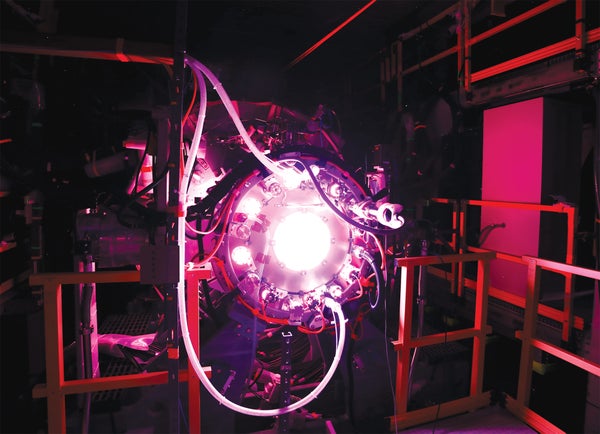
원통형 핵융합 시제품이 케이블, 호스, 금속 지지대에 둘러싸인 어두운 시험 구역 내부에서 흰색과 분홍색으로 빛나고 있다.
헬리온의 7세대 시제품 폴라리스(Polaris)가 중수소-삼중수소 연료를 이용한 최근 시험 중 분홍색으로 빛나며 열핵반응이 진행 중임을 알리고 있다.
헬리온(Helion)
워싱턴 주 말라가(Malaga, Wash.)—사과 산지의 농업 도시—동쪽에, 컬럼비아 강이 현무암 절벽 사이를 흘러 1933년부터 태평양 북서부에 전기를 공급해 온 록아일랜드 댐(Rock Island Dam)을 지나간다. 이제, 그 근처 평탄한 땅 위에서 전혀 다른 종류의 발전 프로젝트가 형태를 갖춰가고 있다.
세계에서 가장 많은 자금을 지원받은 민간 핵융합 기업 중 하나인 헬리온 에너지(Helion Energy)는 '오리온(Orion)'이라고 부르는 것을 건설 중이다. 이 회사가 말하는 이 장치는 2029년까지 마이크로소프트(Microsoft) 데이터센터에 50메가와트의 전기를 공급하는 세계 최초의 핵융합 발전소가 될 것이다. 실험실 이정표와 변동하는 일정이 지배해 온 분야에서, 오픈AI(OpenAI) CEO 샘 올트먼(Sam Altman) 등의 지원을 받는 헬리온은 새로운 산업에 대한 유용한 시각을 제공하는 상업적 약속을 한 최초의 핵융합 기업이다. 이 새로운 산업은 자금이 풍부하고 야심차며 인공지능의 막대한 전력 수요와 얽혀 있다.
"헬리온과 다른 모든 곳에 압박이 가해지고 있습니다," 헬리온의 CEO 데이비드 커틀리(David Kirtley)는 말한다. 그는 핵융합이 항상 20년 후의 일이라는 오래된 농담에 대한 즉각적인 답변을 가지고 있다. "'우리는 20년 늦었습니다. 우리는 한 발 더 나아가 이 [발전소]들을 건설하고 규모 있게 배치해야 합니다.'"
과학 저널리즘 지원에 대하여
이 기사를 즐겁게 읽고 계신다면, 구독을 통해 수상 경력에 빛나는 저널리즘을 지원하는 것을 고려해 보세요. 구독을 구매하시면 오늘날 우리 세계를 형성하는 발견과 아이디어에 관한 영향력 있는 이야기들의 미래를 보장하는 데 도움이 됩니다.
민간 자금이 이 분야로 쏟아지고 있다. 대형 기술 기업들은 상업용 기계가 전력을 공급하기 수년 전부터 핵융합 기업들과 전력 계약을 체결하고 있다. 인공지능이 이 급박함의 유일한 이유는 아니지만, 그 긴박감을 더욱 날카롭게 만들었다. 데이터 센터는 24시간 내내 어마어마한 양의 전력을 필요로 한다. 핵융합 스타트업들은 안정적이고 탄소 없는 전력으로 향하는 길을 팔고 있다. 오크리지 국립연구소(Oak Ridge National Laboratory) 핵융합 에너지 부문 책임자인 트로이 카터(Troy Carter)는 "이것은 분명 다른 어떤 에너지 기술과도 다른 상황"이라며, "아마 다른 기술들과도 다를 것"이라고 덧붙인다.
하지만 돈으로 물리 법칙을 우회할 수는 없다. 오리온(Orion) 부지의 벽이 높이 올라가는 동안에도, 헬리온(Helion)의 대담한 약속들을 둘러싼 큰 의문들이 소용돌이치고 있다—그 의문들 중에는 헬리온의 공동 창업자 중 한 명으로부터 나온 것도 있다.
핵융합은 별에서 항상 일어난다. 하지만 지구에서 이를 실현하는 것은 훨씬 어렵다. 먼저 가벼운 원자핵을 섭씨 1억 도 이상의 온도로 가열해 플라스마 상태로 만들어야 하고, 충분한 반응이 일어날 만큼 오랫동안 뜨겁고 밀집하며 안정적인 상태를 유지해야 한다. 이것이 첫 번째 과제다.
연료와 재료는 더 많은 난제를 제시한다. 가장 실용적인 핵융합 연료인 중수소와 삼중수소—모두 수소의 동위원소—는 빠른 중성자를 방출해 주변을 폭격하고, 반응을 봉쇄하기 위한 기계 자체를 손상시킨다. 또한 삼중수소는 방사성 물질로, 비교적 짧은 반감기인 12년을 가지며 자연계에서 거의 존재하지 않는다. 중수소-삼중수소 연료로 가동되는 어떤 원자로든 자체적으로 삼중수소 공급량을 생산해야 하는데, 이는 카터가 말하듯 업계가 아직 진지하게 다루지 못한 여러 부담 중 하나이며, 그 부담을 국립 연구소들이 떠안아 주길 바라는 상황이다.
워싱턴주 에버렛(Everett, Wash.)에 위치한 헬리온(Helion)은 보다 생소한 핵융합 아이디어에 베팅하고 있다. 바로 전계 역전 배위(field-reversed configuration, FRC)라 불리는 플라스마 형태를 중심으로 구축된 선형 반응로다. 토카막 내부에서 형성되는 도넛 형태의 정상 상태 플라스마나 스텔러레이터 주위를 흐르는 비대칭적인 리본 모양의 플라스마와 달리, 회전하는 연기 고리와 닮은 FRC 플라스마는 외부 자석이 거의 필요 없이 스스로 제자리를 유지한다. FRC 반응로는 "외부 자석이 매우 적다"고 카터는 말한다. "필요한 자석들은 훨씬 덜 복잡하고, 자기장도 훨씬 낮으며 비용도 적게 든다." 단점은 봉쇄 문제다. FRC 플라스마는 더 많은 에너지를 받아들일수록 안정화하기 매우 어렵기로 악명이 높다.
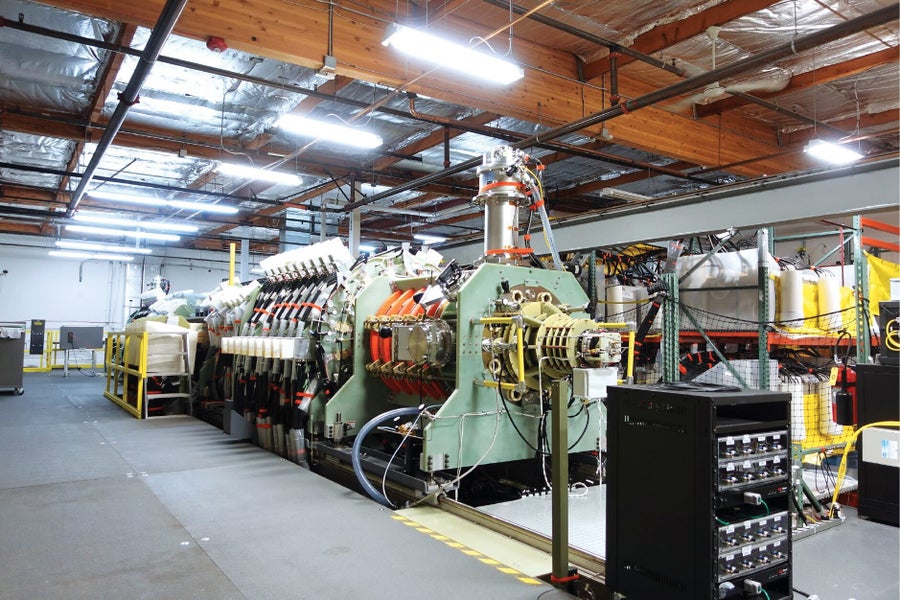
길고 연한 녹색의 핵융합 시제품이 밝은 산업 시설을 가로질러 뻗어 있으며, 금속 챔버, 케이블, 제어 장비가 그 길이를 따라 늘어서 있다.
헬리온의 6세대 시제품인 트렌타(Trenta)는 테스트 중 섭씨 1억 도의 플라스마 온도를 기록했다—민간 핵융합 기계로서의 기록이다.
헬리온(Helion)
실험 물리학자 존 슬로(John Slough)는 "FRC의 독특한 점은 우리가 '자기 조직화'라고 부른다는 것입니다. 팽이를 돌리는 것과 같습니다."라고 말한다. 하지만 "거기에 손을 대려 하면 그냥 망가질 뿐입니다."
슬로(Slough)는 수십 년간 이 아이디어를 살려두기 위해 노력했다. 2000년대 초 대안적 핵융합 개념에 대한 연방 지원이 대부분 고갈되었을 때, 당시 워싱턴 대학교에 있던 슬로(Slough)는 NASA와 미국 공군으로부터 소규모 우주 추진 계약을 받아 근근이 연구를 이어갔다. 핵심적인 통찰은, 두 개의 FRC 플라스모이드를 반응로 양쪽 끝에서 자기 펄스로 형성하고, 최대 시속 160만 킬로미터로 서로를 향해 가속시켜 충돌시키고 합쳐지게 만들 수 있다는 것이었다. 충돌 자체를 핵융합 온도에 이르는 지름길로 활용하는 것이다. 반응은 수 밀리초의 몇 분의 일 만에 일어난다. 연속적인 펄스 흐름을 통해 연료가 반복적으로 가열, 압축, 팽창되어 전기를 생성한다.
2008년경 슬로(Slough)는 당시 젊은 항공우주 엔지니어였던 커틀리(Kirtley)를 자신의 소규모 연구개발 회사인 MSNW에 채용했다. 연방 지원이 줄어들자, 커틀리(Kirtley)는 슬로(Slough)가 보지 못한 것을 발견했다. 바로 스타트업의 씨앗이었다. 그들과 크리스 피흘(Chris Pihl)이라는 엔지니어링 기술자가 함께 이 아이디어를 발전시켰다. 슬로(Slough)의 축복 아래, 커틀리(Kirtley)와 피흘(Pihl)은 그 개념을 스타트업 인큐베이터인 Y 컴비네이터(Y Combinator, 당시 알트만(Altman)이 운영)에 가져갔고, 헬리온(Helion)은 성장하기 시작했다. 이는 핵융합 분야의 한 패턴이었다. 공공 자금이 고갈되면, 일부 버려진 개념들이 스타트업으로 변신한다.
헬리온(Helion)의 접근 방식에서 또 다른 특이한 점은 반응 이후에 일어나는 것이다. 대부분의 핵융합 발전소 설계는 핵융합 열을 이용해 물을 끓이고, 터빈을 돌리고, 발전기를 구동하는 방식을 택한다. 헬리온(Helion)은 이 열 사이클을 건너뛴다. 합쳐진 플라스마가 핵융합 펄스 후 팽창하면서, 자기장에 반발하여 기계를 둘러싼 코일에 직접 전류를 유도해야 한다. 헬리온(Helion)은 플라스마가 직접 전류를 생성할 때 95% 이상의 효율로 전기를 회수할 수 있다고 주장한다. 이 수치는 대단히 중요하다.
"우리 기술의 근본은 직접 전기 회수입니다"라고 커틀리(Kirtley)는 말한다. "전기를 95퍼센트 효율로 회수할 수 있다면, 핵융합은 그 [마지막] 작은 부분만 수행하면 됩니다." 카터(Carter)도 이 측면이 헬리온(Helion)의 가장 명확한 기술적 강점이라는 데 동의한다—그것이 작동한다면 말이다. "그것은 헬리온에게 실질적인 장점입니다"라고 그는 말하며, "그들이 그것을 할 수 있다면, 그들이 필요로 하는 이득의 기준을 낮춰줍니다."
그 "만약"이 전부다. 헬리온은 각각 이전보다 더 강력한 7개의 프로토타입 기계를 제작했다. 최신 기종인 폴라리스(Polaris)는 펄스당 놀라운 5천만 줄(megajoules)의 에너지를 저장하고 전달할 수 있는 커패시터 뱅크를 갖춘 19미터짜리 장치다. 올해 초 헬리온은 에버렛(Everett)의 3만 평방피트 규모 시설에 위치한 폴라리스가 섭씨 1억 5천만 도의 기록을 달성했으며, 회사에 따르면 중수소-삼중수소 연료를 사용하는 핵융합을 "시연"하는 데 사용된 최초의 민간 개발 핵융합 장치가 되었다고 발표했다.
공학적 도전 과제들은 혹독했다. 헬리온은 수억 번의 펄스를 견딜 수 있는 고체 상태 하드웨어로 연구용 스위치를 교체해야 했다. 기계에 전력을 공급하기 위해 회사는 또한 수천 개의 특수 고압 커패시터를 제작했으며, 폴라리스는 150개의 선박 컨테이너를 채울 수 있을 만큼의 오일 충전 장치를 필요로 한다. 빠른 반복 과정에서 모든 전기 시스템은 나노초 단위의 타이밍으로 완벽하게 동기화되어 작동해야 한다. 각 펄스는 "카메라 플래시 같은 빛의 섬광"으로 나타난다고 헬리온 공동 창업자 앤서니 판코티(Anthony Pancotti)는 말한다. "눈 깜빡할 사이에 핵융합을 일으키고 그 에너지를 회수합니다."
이 접근 방식은 헬리온의 제조 야망을 형성한다. 회사는 공장에서 제작되어 에너지용 서버 랙처럼 고객에게 배송되는 많은 모듈식 발전기를 상상한다. 회사는 현재 약 600명을 고용하고 있으며, 과학자보다 기술자 비중이 높다.
2023년 헬리온은 핵융합 분야 최초의 전력 구매 계약이라고 불리는 협약을 발표하며, 2028년까지 말라가(Malaga) 발전소를 개설하고 그 이듬해까지 마이크로소프트(Microsoft)에 50메가와트의 전력을 공급하기로 약속했으며, 미이행 시 재정적 페널티가 부과된다. 몇 달 후에는 철강 제조업체 뉴코어(Nucor)와 5억 와트 규모의 개발 계약을 발표했다. 샘 알트만(Sam Altman)은 최근 오픈AI(OpenAI)와 헬리온이 잠재적 파트너십을 모색하면서 회사 이사회에서 물러났다.
물리 법칙은 돈으로 우회할 수 없습니다.
그러나 전력 거래는 작동하는 발전소와 같은 것이 아니다. 많은 핵융합 프로젝트들처럼 헬리온의 역사에는 수많은 마감 기한 미준수가 포함되어 있다. 회사는 한때 2024년까지 이전 기계에서 순 전력을 생산할 것으로 예상했다. 마이크로소프트 날짜가 다가오는 가운데, 폴라리스의 순 전력 생산을 확인하는 발표된 결과는 없다.
가장 날카로운 비판은 헬리온의 탄생에 기여한 FRC 연구를 수행한 슬로우(Slough)에게서 나온다. 그는 이후 회사와 결별했으며, 그의 반론은 설계의 핵심을 파고든다. 그가 말하는 핵심 문제는 FRC가 항상 직면해 온 것과 같은 문제, 즉 구속이다. 그의 견해에 따르면, 극도의 속도로 플라즈마를 서로 발사하고 압축하는 헬리온의 공격적인 접근 방식은, 핵융합이 헬리온이 필요로 하는 작업을 수행하기 전에 자속의 "파국적" 손실을 초래할 만큼 심각한 불안정성을 유발한다. 그 속도에서는 "FRC의 근본적인 측면에 부딪히게 된다"고 그는 말한다.
헬리온의 장기적 야망은 두 번째 비판을 불러일으킨다. 회사는 궁극적으로 오리온(Orion)이 중수소와 헬륨-3로 작동하기를 원하는데, 이는 더 높은 에너지의 중성자를 더 적게 생성하고 직접 전기 포집을 극대화할 것이다. 그러나 삼중수소의 방사성 붕괴로 생성되는 헬륨-3는 극히 희귀하며, 핵융합 반응을 달성하기가 더 어렵고 약 섭씨 2억 도의 온도를 필요로 한다. 슬로우는 그것이 요구하는 열과 구속이 헬리온의 설계로는 물리적으로 불가능하다고 말한다. 한때 가능한 경로를 보았던 곳에서, 그는 이제 그것을 가능하게 할 "물리학에서 아무것도 볼 수 없다"고 한다.
커틀리는 슬로우가 펄스 속도를 무시하는 "구식" 1차원 모델에 의존한다고 반박한다. "많은 불안정성은 성장할 충분한 시간이 없습니다"라고 그는 말하며, 헬리온의 기계가 필요한 시간 내에 형성, 합병, 압축 및 핵융합을 완료할 만큼 충분히 안정적으로 유지된다고 주장한다. 헬리온은 삼중수소에서 헬륨-3를 생성할 계획이며, 자사 모델에 따르면 플라즈마 에너지의 85퍼센트 이상을 유용한 전력으로 변환할 수 있다고 말한다.
투명성의 문제도 있다. 헬리온은 플라즈마의 핵심 성능에 관한 동료 심사 데이터를 거의 발표하지 않아, 외부 과학자들이 회사의 주장을 평가하기 어렵다. "그들은 발표하지 않으며, 그것은 그들이 취하는 입장입니다"라고 카터는 말한다. 더 많은 데이터 없이는 "그들이 어디로 향하는지 충분히 평가하기 어렵다"고 그는 덧붙인다.
독일 막스 플랑크 플라즈마 물리 연구소(Max Planck Institute for Plasma Physics)의 카를 라크너(Karl Lackner) 연구팀 또한 비판적 시각을 제기했다. 이 연구팀은 2월 _Journal of Fusion Energy_에 공식 논평을 발표했는데, 그 대상은 커틀리(Kirtley)와 헬리온(Helion) 과학자 리처드 밀로이(Richard Milroy)가 2023년 발표한 논문이다. 해당 논문은 회사의 중수소-헬륨-3 방식에 대한 물리학적 근거를 제시하고 있다. 예상 에너지 이득의 핵심은 충돌 및 압축 이후 플라즈마 내 이온이 전자보다 훨씬 높은 온도를 유지할 수 있다는 개념으로, 이 조건은 반응을 지속하는 데 필요한 에너지 투입량을 줄여준다. 라크너(Lackner) 연구팀은 일반적인 충돌 전력 전달을 고려하면 요건이 헬리온(Helion)의 분석이 시사하는 것보다 "훨씬 더 까다로워"진다고 주장한다.
이에 대해 헬리온(Helion)은 라크너(Lackner)의 분석이 자사 펄스의 주기를 고려하지 않았다고 밝혔다. 이온-전자 온도 비율이 유리하면 효율성이 향상되지만, 핵심 문제는 "이온이 영원히 전자보다 뜨겁게 유지될 수 있는지가 아니라 펄스가 충분히 빠르게 전개되는지"에 있다고 설명했다. 이 비평형 상태가 효율적인 핵융합과 에너지 회수를 뒷받침하기 위함이다.
이것이 헬리온(Helion)이 실패할 것임을 의미하지는 않는다. 핵융합에는 과도하게 약속된 기한과 지연된 돌파구의 긴 역사가 있다. 그러나 민간 핵융합은 이 분야의 속도를 바꾸어, 수십 년간 실험실 과학에 집중했던 영역에 공급망과 제조에 관한 질문들을 제기하게 만들었다.
미국 에너지부(U.S. Department of Energy) 2021년 보고서에서 민간 자본이 일정을 앞당기기 전 최초 핵융합 파일럿 플랜트의 목표 시기를 2040년으로 제시했던 카터(Carter)는 2030년대의 파일럿 플랜트가 실현 가능하다고 생각한다. 그러나 그는 어떤 단일 회사도 혼자서는 이를 달성할 수 없다고 단호하게 말한다.
공급망 측면만 해도 그 이유를 잘 보여준다. 헬리온(Helion)은 자체 커패시터와 초고압 세라믹을 직접 제조하며, 다른 핵융합 기업들도 유사한 부품을 필요로 한다. 매사추세츠(Massachusetts)에 본사를 둔 커먼웰스 퓨전 시스템즈(Commonwealth Fusion Systems)는 필요한 고온 초전도 자석을 생산하기 위한 인프라를 구축하고 있다. 그러나 어떤 스타트업도 이러한 산업 규모의 장애물을 자체적으로 완전히 내재화할 수는 없다. 지난 4월 에너지부(DOE)는 상업 규모 핵융합의 "가장 어려운 기술적 장벽"을 해결하기 위해 역대 최대 핵융합 투자액인 1억 3,500만 달러를 투자하겠다고 밝혔다. "공공 부문이 이러한 공급망 공백을 지원할 방법이 있다면," 카터(Carter)는 말한다, "그것은 우리가 검토해야 할 사안입니다."
말라가(Malaga) 인근에서는 공사가 계속되고 있다. 오리온(Orion)은 컬럼비아(Columbia) 강 위 평원에 세워지고 있다. 그리 멀지 않은 곳에서 헬리온(Helion)은 수천 개의 정교한 부품을 조립할 새 조립 시설을 준비하고 있다. 조금 더 하류에는 댐이 여전히 흘러내리는 물을 빛으로 바꾸고 있다.
헬리온(Helion)이 2028년까지 약속을 이행할지는 불확실하며, 2030년대 전력망에 핵융합이 의미 있는 기여를 할 수 있는지도 마찬가지다. 물리학이 여전히 협력해야 한다. 그러나 핵융합을 주로 과학적 도전이 아닌 제조 도전으로 접근함으로써, 헬리온(Helion)은 이미 업계가 가능하다고 믿는 것과 그 시기를 바꾸어 놓았다.
과학을 지지할 때입니다
이 기사를 즐겁게 읽으셨다면, 여러분의 지지를 부탁드리고 싶습니다. 사이언티픽 아메리칸(Scientific American)은 180년간 과학과 산업의 옹호자 역할을 해왔으며, 지금이야말로 그 200년 역사에서 가장 중요한 순간일 수 있습니다.
저는 12살 때부터 사이언티픽 아메리칸(Scientific American) 구독자였으며, 이 잡지는 제가 세상을 바라보는 방식을 형성하는 데 도움을 주었습니다. 사이언티픽 아메리칸(SciAm)은 항상 저를 교육하고 즐겁게 해주며, 우리의 광대하고 아름다운 우주에 대한 경외감을 불러일으킵니다. 여러분에게도 그러하기를 바랍니다.
사이언티픽 아메리칸(Scientific American)을 구독하시면 우리의 보도가 의미 있는 연구와 발견에 집중될 수 있도록 돕고, 미국 전역의 연구실을 위협하는 결정들을 취재할 자원을 확보하며, 과학의 가치 자체가 너무나 자주 인정받지 못하는 시대에 신진 및 현직 과학자들을 지원하는 데 기여하게 됩니다.
헬리온 에너지(Helion Energy)는 2029년까지 마이크로소프트 데이터센터에 50메가와트의 전기를 공급하겠다는 구체적인 상업적 목표를 제시한 세계 최초의 민간 핵융합 기업으로, 기존 핵융합 연구의 패러다임을 바꾸려 하고 있다. 오픈AI CEO 샘 알트먼 등의 지원을 받는 이 회사는 워싱턴주 말라가 인근에 '오리온'이라는 핵융합 발전 플랜트를 건설 중이며, 이는 인공지능 붐으로 인한 폭발적인 전력 수요에 대응하려는 빅테크 기업들의 에너지 전략과 맞닿아 있다. 핵융합 에너지는 탄소 배출 없이 막대한 에너지를 생산할 수 있는 잠재력으로 주목받아 왔으나, 일부 물리학자들은 헬리온의 기술이 약속을 따라가지 못할 수 있다고 경고하고 있어 기술적 실현 가능성에 대한 논란이 지속되고 있다. 이 기사는 민간 자본과 AI 산업의 결합이 핵융합 에너지 개발을 가속화하는 새로운 국면을 조명하며, 청정에너지 전환의 핵심 변수로 핵융합 기술이 부상하고 있음을 보여준다. 헬리온의 성패는 핵융합 산업 전반의 신뢰도와 상업화 가능성을 가늠하는 중요한 시험대가 될 것이다.
※ 이 글은 해외 원자력 바로알기를 위한 정보 전달을 목적으로 제공됩니다. 특정 기업이나 종목에 대한 투자 권유가 아니며, 모든 투자 판단과 그에 따른 책임은 투자자 본인에게 있습니다.
아이다호 국립 연구소(Idaho National Laboratory)가 2026년 1월 말 구조적 특성 실험실(Structural Properties Laboratory, SPL)을 완전 가동하며, 40년 만에 처음으로 미국 에너지부 시설에 신규 핫셀(hot cell)을 도입했다.
SPL은 총 1억 6,600만 달러의 의회 예산으로 건설된 연구 시설로, 예산 범위 내에서 일정보다 앞당겨 완공되었으며, 원자로 재료 시험 및 차세대 원자로 개발을 지원한다.
이 시설은 고방사성 물질 처리를 위한 핫셀, 첨단 로봇 시스템, 확장 가능한 공간을 갖추고 있으며, 원자력 과학 사용자 시설(Nuclear Science User Facilities) 프로그램과 재료 연구를 강화할 예정이다.
---
(아이다호 폴스, 아이다호주) – 아이다호 국립 연구소(Idaho National Laboratory, INL)는 오늘 구조적 특성 실험실(Structural Properties Laboratory, SPL)이 1월 말에 완전 가동 체제에 돌입했다고 발표했다. SPL은 연구소의 재료 및 연료 복합 단지(Materials and Fuels Complex, MFC)에 위치하며, 원자력 에너지 연구와 혁신 발전에 있어 중요한 이정표를 나타낸다.
SPL은 원자로에 사용되는 재료를 시험하고 연구함으로써, 현재 가동 중인 발전소가 더 오랜 기간 안전하게 운영될 수 있도록 하고 미래의 첨단 원자로 개발을 지원한다.
고방사성 물질 취급을 위한 핫셀(hot cell), 안전한 재료 조작을 위한 첨단 로봇 시스템, 그리고 향후 성장을 위한 확장 가능한 공간을 갖춘 SPL은 원자력 연구 인프라의 새로운 기준을 제시한다. 이는 에너지부 복합 시설 내에서 40년 만에 처음으로 신설된 핫셀이다.
1억 6,600만 달러 규모의 의회 직접 예산 자본 건설 프로젝트로, 위험 범주 3(Hazard Category 3) 연구 시설에 대한 공사는 2020년 3월에 시작되었다. 이 프로젝트는 예산 범위 내에서 일정보다 앞당겨 완공되어, 대규모의 복잡한 프로젝트를 수행하는 INL의 역량을 입증했다.
"SPL의 개소는 원자력 에너지 기술을 발전시키는 우리의 역량에서 중요한 도약을 의미합니다," 라고 INL 원자력 재료 성능 부문(Nuclear Materials Performance Division) 이사인 앤 뎀마(Anne Demma)가 말했다. "이 시설은 우리의 연구 역량을 강화할 뿐만 아니라, 세계 수준의 연구소를 완성하기 위해 전례 없는 도전을 극복한 우리 팀의 회복력과 헌신을 보여줍니다."
SPL은 현재 완전히 가동 준비가 완료되어 연구 임무를 수행할 준비가 되어 있다. 앞으로 수개월 내에 원자력 과학 사용자 시설(Nuclear Science User Facilities) 프로그램을 지원하고 재료 라이브러리를 확충하기 위해 MFC의 핫 연료 검사 시설(Hot Fuels Examination Facility), 첨단 시험 원자로(Advanced Test Reactor) 및 기타 에너지부 시설로부터 물품을 수령할 예정이다. 추가 장비가 가동되면서 SPL의 역량은 점차 확장되어 늘어나는 연구 프로젝트 포트폴리오를 지원하게 될 것이다.
건설 기간 내내 프로젝트팀은 COVID-19 팬데믹으로 인한 건설 인력 부족, 대규모 공급망 문제, 기술적 난제 등 수많은 도전 과제를 해결해야 했다.
"새로운 연구소를 가동하기까지는 비범한 노력이 필요합니다," 라고 MFC 부소장 론 크론(Ron Crone)이 말했다. "INL은 이 성과를 가능하게 한 전문 지식과 헌신으로 임한 직원들과 계약업체들에게 감사를 표합니다."
SPL에서의 연구 진행을 문의하려면 아래로 연락하세요: 브랜든 밀러(Brandon Miller) – [[email protected]](/cdn-cgi/l/email-protection#e48696858a808b8aca898d88888196a48d8a88ca838b92) 앤 뎀마(Anne Demma) – [[email protected]](/cdn-cgi/l/email-protection#d5b4bbbbb0fbb1b0b8b8b495bcbbb9fbb2baa3)
뉴스 미디어 문의: 사라 노이만(Sarah Neumann), 208-520-1651, [[email protected]](/cdn-cgi/l/email-protection#f18290839099df9f94849c909f9fb1989f9ddf969e87) 시드니 윅스(Sydney Weeks), 208-533-9496, [[email protected]](/cdn-cgi/l/email-protection#d9aaa0bdb7bca0f7aebcbcb2aa99b0b7b5f7beb6af)
inl logo
#### 아이다호 국립 연구소 소개
배텔 에너지 얼라이언스(Battelle Energy Alliance)는 미국 에너지부(U.S. Department of Energy) 원자력 에너지 사무국(Office of Nuclear Energy)을 대신하여 INL을 운영한다. INL은 미국의 원자력 에너지 연구개발 센터이며, 에너지, 국가 안보, 과학, 환경 등 에너지부의 각 전략 목표 분야에서 연구를 수행한다. 자세한 정보는 www.inl.gov를 방문하세요.
아이다호 국립 연구소의 구조적 특성 실험실(SPL) 개소는 미국 원자력 연구 인프라에 있어 40년 만에 이루어진 중요한 투자로, 노후화된 원자력 연구 시설 현대화의 필요성을 반영한다. 1억 6,600만 달러 규모의 이 시설이 예산 내에서 일정보다 빠르게 완공되었다는 점은 대형 정부 주도 과학 프로젝트의 성공적 실행 사례로 주목할 만하다. SPL은 현재 운영 중인 원자로의 수명 연장과 차세대 첨단 원자로 개발 모두를 지원함으로써, 미국의 원자력 에너지 경쟁력 강화와 탄소 중립 목표 달성에 기여할 전망이다. COVID-19 팬데믹과 공급망 위기라는 전례 없는 도전을 극복하고 완공에 성공했다는 점에서, 이 프로젝트는 과학 기술 분야의 국가 역량을 보여주는 사례로 평가될 수 있다. 향후 SPL이 원자력 과학 사용자 시설 프로그램과 연계하여 다양한 연구 프로젝트를 지원하면서, 미국 내 원자력 재료 연구의 핵심 허브로 자리매김할 것으로 기대된다.
미국 의회에서 원자력 건설 비용 절감을 위한 두 가지 법안이 발의되었으며, 하나는 건설 자재 규정 완화, 다른 하나는 세금 공제 규정 개선을 목표로 한다.
지역 자재로 원자력 건설법(Build Nuclear with Local Materials Act)은 비안전 관련 구조물에 상업용 콘크리트 및 철강 사용을 허용하여 비용 절감과 공기 단축을 추진한다.
원자력 요금 안정화법(Nuclear Rate Stabilization Act)은 현행 세금 공제 규정이 원자력 프로젝트에 실질적인 혜택을 주지 못한다는 문제를 해결하기 위해 공제 양도 허용 및 배터리 저장장치와 동등한 선택권 부여를 추진한다.
---
이번 달 의회 의원들은 원자력 건설의 서로 다른 측면을 다루는 두 가지 법안을 각각 발의했다. 하나는 건설 자재에 초점을 맞추고, 다른 하나는 세금 공제에 관한 것이다.
지역 자재로 원자력 건설법(Build Nuclear with Local Materials Act): 목요일에 의원들은 지역 자재로 원자력 건설법을 발의했다. 이 법안은 원자력규제위원회(NRC)가 원자력 발전소 내 비안전 관련 구조물 및 방사성 물질에 직접 노출되지 않는 구역에 상업용 등급의 콘크리트와 철강 사용을 허용하도록 요구한다. 또한 이 법안은 특정 안전 위험을 해소하거나 공중 보건 및 안전을 보장하기 위해 더 엄격한 기준이 필요하다고 판단될 경우, NRC가 이러한 비안전 관련 구조물에 원자력 등급 자재를 요구할 수 있도록 허용한다. 이 법안은 미국 상원과 하원 양원에 동시에 제출된 초당파적·양원적 지지를 받고 있다.
의원들은 원자로 설계의 발전으로 인해 원자력 시설 건설의 특정 부분—예를 들어 비안전 관련 구성 요소—에서는 원자력 등급의 콘크리트와 철강이 불필요해졌다고 밝혔다. 적합하고 타당한 경우 원자력 등급 건설 자재에서 상업용 등급 자재로 전환하면 비용을 줄이고 배치 속도를 높일 수 있다.
법안 발표에 따르면, 원자력 등급 콘크리트의 비용은 세제곱미터당 약 527달러로, 상업용 등급 콘크리트의 약 352달러보다 높다. 한편 원자력 등급 철강은 비원자력 등급 철강보다 약 120퍼센트 더 비싼 것으로 추정된다. 원자력 등급 시멘트를 사용한 콘크리트, 기초 및 상부 구조물 타설도 더 오랜 시간이 걸리는 경향이 있다. 또한 이러한 공사는 원자력 등급 건설 자재 작업에 특화된 인력을 필요로 한다.
법안 발의자인 신시아 루미스(Cynthia Lummis) 상원의원(공화당, 와이오밍주)은 "원자력 기술이 발전함에 따라 우리의 규정도 함께 진화해야 합니다"라고 말했다. "안전과 무관한 시설 부분에 원자력 등급 자재를 요구하는 것은 비용을 올리고, 충분히 일을 해낼 수 있는 지역 건설 인력을 배제시킵니다."
이 법안은 마크 켈리(Mark Kelly) 상원의원(민주당, 애리조나주)이 공동 발의했다. 하원의 동반 법안은 바이런 도날즈(Byron Donalds) 하원의원(공화당, 플로리다주)이 발의하고 제이크 오친클로스(Jake Auchincloss) 하원의원(민주당, 매사추세츠주)이 공동 발의했다.
도날즈 의원은 "에너지 안보는 미국의 국가 안보이자 경제 안보입니다. 에너지 수요가 계속 증가함에 따라 원자력 에너지가 기저 부하(base load) 전력의 실용적인 공급원이 되는 것이 필수적입니다"라고 말했다. "시대에 뒤떨어지고 부담스러운 규정을 면밀히 검토하고 실용적이며 상식적인 개혁을 단행해야 합니다."
이 법안은 5월 20일 상원 환경공공사업위원회(Senate Environment and Public Works Committee) 청문회에 상정될 예정이다.
원자력 요금 안정화법(Nuclear Rate Stabilization Act): 팻 해리건(Pat Harrigan) 하원의원(공화당, 노스캐롤라이나주)과 공동 발의자인 지미 파네타(Jimmy Panetta) 하원의원(민주당, 캘리포니아주)은 4월 23일 원자력 요금 안정화법을 발의했다. 이 또한 원자력 건설 비용—이 경우에는 의원들이 문제가 있다고 지적한 세금 공제 규정—을 해결하기 위한 초당파적 노력이다.
해리건 의원은 성명에서 "우리는 지구상에서 가장 강력한 에너지원, 즉 탄소 배출 제로에 수십 년간 운영 가능한 신뢰할 수 있는 기저 부하 전력을 보유하고 있지만, 시대에 뒤떨어진 회계 규정이 이것이 제대로 자리를 잡기도 전에 목을 조르도록 내버려 두고 있습니다"라고 말했다. "원자력 요금 안정화법은 의회가 이미 통과시킨 세금 공제 혜택이 실제로 도움받아야 할 사람들에게 돌아가도록 보장하고, 소비자 비용을 낮추며, 더 많은 원자로가 건설될 수 있도록 합니다. 원자력은 미국 에너지 패권의 미래이며, 우리 세법이 이를 반영할 때가 한참 지났습니다."
원자로를 건설하는 전력 회사는 건설 비용의 약 30~50퍼센트에 해당하는 청정 에너지 투자 세금 공제를 받을 수 있다. 그러나 의원들은 해당 공제 혜택이 원자로의 40년 수명에 걸쳐 분산 적용되어야 하는 규정으로 인해, 이와 관련된 잠재적 요금 인하 효과도 함께 지연된다고 주장한다. 한편 적격 프로젝트 지출 공제(qualified project expenditure credits)는 제3자에게 양도할 수 없다. 의원들은 이로 인해 신규 원자로 프로젝트의 자본 조달 접근성이 차단된다고 주장한다.
제안된 법안은 원자력 시설 프로젝트에 관련된 투자 공제 규정을 수정하여, 원자력 에너지 프로젝트가 배터리 저장 프로젝트와 동일한 규정 적용 제외(opt-out) 선택권을 갖도록 하고, 적격 프로젝트 지출 공제의 제3자 양도를 허용하는 내용을 담고 있다. 지지자들은 이 조치가 새로운 원자력 건설을 촉진할 것이라고 주장한다.
파네타 의원은 "우리의 초당파 법안은 안전하고 안정적인 원자력 프로젝트가 청정 에너지 투자 세금 공제를 제대로 활용하여 적시에 원자로를 건설할 수 있도록 세법을 개정함으로써, 우리 환경을 위한 온실가스 배출을 줄이고 전기 요금 절감을 통해 소비자들의 돈을 아낄 수 있도록 할 것입니다"라고 말했다. "에너지 비용 절감과 미국의 에너지 독립 강화를 위해 당파를 초월하여 협력할 기회가 있을 때마다 저는 언제나 기쁘게 동참합니다."
---
AI 분석
이번에 발의된 두 법안은 미국 원자력 산업의 핵심 장벽인 건설 비용과 금융 구조 문제를 정면으로 겨냥하고 있다는 점에서 주목할 만하다. 지역 자재로 원자력 건설법은 수십 년간 유지되어 온 규제 관행에 실용적인 시각으로 접근하며, 안전성과 무관한 구조물에 과도한 자재 기준을 적용하는 관행이 비용과 공기에 미치는 영향을 명확히 지적한다. 원자력 요금 안정화법은 이미 법제화된 세금 공제 혜택이 현실에서 제대로 작동하지 못하는 구조적 문제를 수정하려는 시도로, 금융 투자 유인을 강화해 민간 자본 유입을 촉진할 수 있다. 두 법안 모두 공화·민주 양당의 초당파적 지지를 받고 있다는 점은, 원자력 에너지가 당파를 초월한 정책 의제로 부상하고 있음을 보여준다. 이러한 입법 움직임은 미국의 원자력 르네상스를 가속화하고, 청정에너지 목표 달성과 에너지 안보 강화에 실질적으로 기여할 수 있는 중요한 계기가 될 것으로 평가된다.
로빈 조지 앤드루스(Robin George Andrews) 저, 클라라 모스코위츠(Clara Moskowitz) 편집
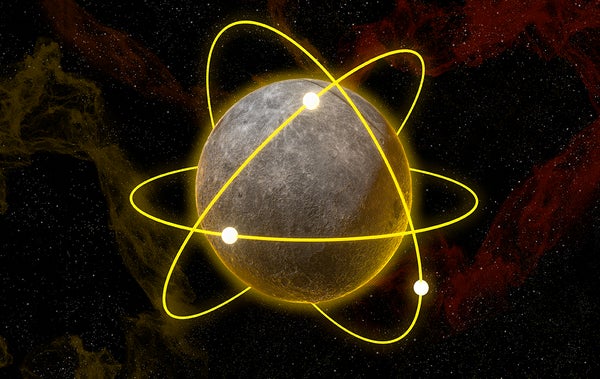
달을 원자처럼 보이도록 전자 궤도가 그려진 달의 일러스트레이션.
태비스 코번(Tavis Coburn)
NASA는 _아르테미스 II(Artemis II)_ 임무로 네 명의 우주비행사를 달 주위를 도는 선구적인 여정에 보냈습니다. 취재 내용을 여기에서 확인하세요.
지난해, NASA 임시 국장으로 임명된 지 한 달도 채 되지 않아 미국 교통부 장관 션 더피(Sean Duffy)는 세상을 향해 눈썹을 치켜올릴 만한 발표를 했다. NASA가 달에 원자로를 설치할 것이라는 내용이었다. 우주에서의 미국 국가 안보를 강화하는 일환으로, 이 원자로는 2030년까지 설계, 제작, 발사되어 달 표면에 전달될 것이라고 그는 말했다. 많은 관측자들에게 이 선언은 터무니없이 들렸다. 왜 달에 원자로를 설치하려 하는 것인가?
문제는, 만약 미국(혹은 우주 탐사 국가 중 어느 나라든)이 달에 영구적인 존재를 확립하고—혹독하고 긴 달의 밤 동안에도 운영 가능한 유인 기지를 세우고—싶다면, 태양광 발전으로는 역부족이라는 것이다. 아르테미스(Artemis) 프로그램을 통해, 최근 네 명의 우주비행사를 달 주위 비행에 보낸 미국항공우주국(NASA)은 지구의 은빛 동반자를 과학 전초기지, 채굴 현장, 그리고 화성을 향한 로켓 발사대로 탈바꿈시키고자 한다. 이를 위해서는 원자력 발전이 유일한 선택지다. "장기적으로 달 기지를 제대로 유지할 수 있는 유일한 방법입니다"라고 웨일스 뱅거 대학교(Bangor University) 원자력 미래 연구소(Nuclear Futures Institute) 공동 소장 사이먼 미들버러(Simon Middleburgh)는 말한다. 그러니 중국과 러시아가 힘을 합쳐 2035년까지 달에 자국의 원자로를 설치하려는 것도 놀랍지 않다. 이는 그들이 달 남극에 계획 중인 기지인 국제달연구기지에 전력을 공급하기 위함이다. 조만간, 어느 나라에서든 "달의 원자력 발전은 실현될 것"이라고 미들버러(Middleburgh)는 말한다. "불가피한 일입니다."
원자력 발전소는 많은 사람들이 생각하는 것보다 안전하다. 그러나 원자로를 우주에 띄우는 것은 굴곡진 역사를 가진 개념이다. 1978년에는 악명 높은 원자로 하나가 지구 대기권에서 분해되면서 국제적 사건을 일으킨 바 있다. 그리고 극심한 온도 변화, 잦은 소행성 충돌, 장기간에 걸친 지진에 노출되는 적대적인 화산 사막인 달을 위해 원자로를 설계한 사람은 아직 아무도 없다.
과학 저널리즘을 지원하며
이 기사가 도움이 되셨다면, 구독을 통해 수상 경력에 빛나는 저널리즘을 지원하는 것을 고려해 보세요. 구독을 구매하면 오늘날 세계를 형성하는 발견과 아이디어에 관한 영향력 있는 이야기들의 미래를 보장하는 데 도움이 됩니다.
전문가들은 더피(Duffy)가 제안한 원자력 발전소의 일정과 규모 모두에 의문을 제기했다. 아직 인류가 발을 디딘 적 없는 환경인 달 남극에 2030년까지 미국 가정 80가구에 전력을 공급할 수 있는 원자로를 설치한다는 것은, 불가능하지 않더라도 무리한 계획처럼 들린다. 그리고 누구도 미국이 달 원자로의 설계, 건설, 발사, 착륙을 서둘러 밀어붙이는 상황을 원하지 않는다. "최악의 시나리오는 먼저가 되려는 경쟁 속에서 중요한 설계 및 안전 단계를 건너뛰는 것일 수 있다고 생각합니다"라고 RAND 공공정책대학원(RAND School of Public Policy) 우주정책 교수이자 NASA의 전 수석 기술자 및 기술·정책·전략 담당 부국장을 역임한 바비아 랄(Bhavya Lal)은 말한다. "먼저 되는 것은 좋습니다. 경쟁도 좋습니다. 하지만 올바르게 해야 합니다."
미국이 성공한다면, 원자력으로 구동되는 달 기지는 태양계를 탐험하는 발판이자 별을 향한 거점이 될 수 있다. 하지만 실수는 일어날 수 있다. 달에 있는 고대 수빙 매장지를 실수로 방사성 폐기물로 오염시키든, 아니면 전력 없이 달의 암흑 속에 우주비행사들을 치명적으로 고립시키든, 달에서의 원자력 재앙은 미들버러(Middleburgh)의 표현을 빌리자면 "인류를 규정하는 대참사"가 될 것이다.
케이티 허프(Katy Huff)는 한 가지를 명확히 하고 싶어 한다. 우라늄—원자력 발전소의 동력원이자, 약간의 가공을 거치면 대부분의 핵무기에 파괴적인 공포를 부여하는 악명 높은 방사성 원소—은 따분하다는 것이다. 어떤 의미에서는 말이다.
일리노이 대학교 어배너-섐페인 캠퍼스(University of Illinois at Urbana-Champaign)의 원자력 공학자인 허프(Huff)는 바이든 행정부에서 원자력 에너지 담당 차관보를 역임했다. 원자력 발전은 그녀의 전문 분야다. 하지만 사용되지 않은 핵연료는 "방사선학적으로 매우 무미건조하다"는 사실을 아는 것이 중요하다고 그녀는 최근 화상 통화에서 말했다. "특별히 방사능이 강한 것도 아닙니다." 그녀는 책상 위에 있는 물건을 가리키며 말했다. "저기 저 골판지 상자에 우라늄이 들어 있어요." 손으로 우라늄을 잡아도 아무런 해가 없다는 사실은 많은 사람들에게 놀라운 일일 수 있다. "집어 들 수도 있어요. 무엇보다도 납처럼 독성이 있는 거예요"라고 미들버러(Middleburgh)는 말한다. "그러니 먹지는 마세요."
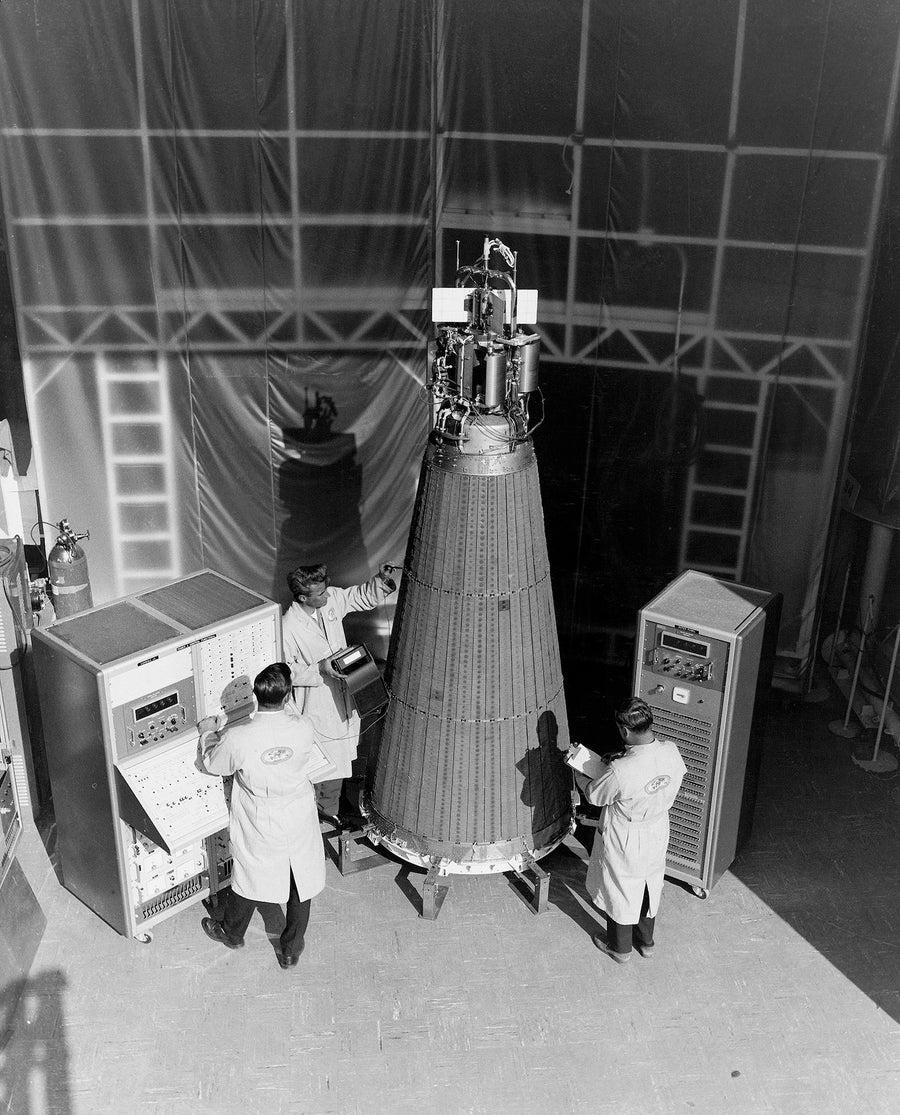
1965년 발사 준비 중인 SNAP 10A 원자력 원자로 우주선 사진.
원자력 보조 동력 시스템(System for Nuclear Auxiliary Power, SNAP) 10A는 1965년에 발사된 최초의 우주용 원자로다. 원자로(_상단_)에서 발생한 열이 원뿔 구조물을 통해 전기로 변환되었다.
George Rinhart/Corbis Historical/Getty Images
우라늄은 핵 반응로에 투입되어 중성자가 발사될 때 위험하고도 유용해진다. 그 충격으로 우라늄의 불안정한 원자핵이 분열되면서 더 많은 중성자를 방출하고, 이 중성자들이 또 다른 원자핵을 분열시키며—그 결과 열을 방출하는 핵분열 반응이 일어난다. 반응이 통제 불능 상태로 치닫지 않는 한, 이 열을 이용해 유체(대개 물)를 증기로 변환할 수 있다. 그 증기가 터빈을 회전시켜 전기를 생산한다.
중성자 충격을 받은 우라늄 연료를 직접 다루는 것은 위험하다. "그러면 연료가 분열되어 강한 방사성을 띠는 핵분열 생성물이 되는데, 이것이 바로 핵폐기물이 위험한 이유입니다"라고 허프(Huff)는 말한다. 그러나 이 원자력 연쇄반응이 매우 오랜 시간 지속될 수 있기 때문에, 특히 수년, 어쩌면 수십 년간 재연료 보급 없이도 운용 가능한 우주에서는 탁월한 에너지원이 된다.
우주에서의 원자력 개념은 새로운 것이 아니다. 1960년대부터 미국과 소련 모두 지구 궤도 위성과 아폴로 시대 달 표면 과학 실험, 화성 탐사선, 심우주 탐사선 등 다양한 장치에 전력을 공급하기 위해 방사성 동위원소 열전 발전기(RTG)를 대거 우주로 보냈다. 플루토늄, 즉 우라늄의 맹렬한 화학적 친척이 이 장치들에 자주 사용되었다. 그러나 RTG는 원자력 반응로가 아니다. 이는 원자력 배터리에 더 가깝다: 뜨겁게 달아오른 방사성 물질 저장체가 소량이지만 지속적인 열을 공급해 전기를 생산하는 방식이다.
그러나 RTG만으로는 달 기지에 충분한 전력을 공급하기 어렵다. 우주비행사들에게는 단순히 전등을 켜는 것 이상의 에너지가 필요하다. 달의 밤에는 지속적인 열원이 필요하고, 달의 낮에 기온이 치솟을 때는 그 열을 배출할 수단이 필요하다. 달 토양에서 귀중한 물을 추출할 기계—우주비행사와 작물 모두를 위한 식수이자, 결정적으로는 전기 분해를 통해 수소와 산소 가스로 분리해 로켓 연료를 만들기 위한 물—가 필요하다면, 이를 가동하기 위한 막대한 전력이 요구된다.
그러므로 지난 수년간, 트럼프 1기 행정부와 바이든 행정부를 거치며, 미 항공우주국(NASA)과 산업 파트너들이 40킬로와트급 달 원자로 설계 작업을 진행해온 것은 당연한 일이다. 전문가들에 따르면 이 규모는 사무용 건물 하나에 전력을 공급할 수 있는 수준으로, 시범적인 달 기지에 적합하다고 한다.
더피(Duffy)의 짧은 NASA 수장 재임 기간 동안, 그 수치는 100킬로와트로 상향 조정되었다. 왜일까? "저도 모릅니다"라고 허프(Huff)는 말한다. "그 수치가 단순히 더 크다는 것 이외에 별다른 근거가 있다는 증거를 찾지 못했습니다." 지구상의 표준 미국 원자력 발전소와 비교하면, 100킬로와트는 아주 작은 수준이다—약 1만 배나 출력이 낮고, 크기도 대형 자동차 정도에 불과하다. 그러나 이 용량은 "우주에서는 엄청난 수준"이라고 허프(Huff)는 말하며, 100킬로와트는 지금까지 우주로 발사된 그 어떤 원자력 반응로 출력보다 완전히 한 자릿수 이상 크다고 지적한다.
기술적으로, 불과 4년 안에 맞춤형 100킬로와트 반응로를 달에 설치하는 것은 가능하다. "도전적이지만 달성 가능한 목표입니다"라고 미국 에너지부(DOE) 우주 원자로 프로그램 국가 기술 책임자인 세바스티안 코르비시에로(Sebastian Corbisiero)는 말한다.
지난 1월, NASA의 현 국장인 재러드 아이작먼(Jared Isaacman)은 달에 원자력 핵분열 발전 시스템을 구축하겠다는 계획을 재확인했다. 그리고 3월에는 원자력 전기 추진으로 구동되는 최초의 행성 간 우주선—우주 원자로-1 프리덤(Space Reactor-1 Freedom)—을 2028년 말까지 화성으로 발사하겠다고 발표했다. 이 임무는 미국이 달 표면에 원자력 발전소를 구축하기 전에 심우주에서 핵분열 기술을 시험하는 데 도움이 될 것이다.
"미국이 발사하는 원자로에 안전 문제가 생기지 않을 것이라고 매우 확신합니다"라고 랄(Lal)은 말한다. 그러나 "분명히 무슨 일이든 잘못될 수 있고, 세상 어디에도 100퍼센트 안전한 것은 없습니다—그리고 그렇다고 말하는 사람은 거짓말을 하는 것입니다."
달에 원자력 반응로를 설치하려면, 먼저 로켓에 실어야 한다. "발사 시 안전을 확보하는 것이 가장 중요한 요소 중 하나입니다"라고 버지니아주에 본사를 둔 항공우주 기업 애널리티컬 메카닉스 어소시에이츠(Analytical Mechanics Associates)의 우주 원자력 기술 전문가이자 첨단 프로젝트 부사장인 린지 홈스(Lindsey Holmes)는 말한다.
반면 소련은 지구 대기권 밖으로 20여 기의 원자력 원자로를 쏘아 올렸다. 주로 레이더 정찰 위성의 전력 공급에 사용된 이 원자로들은 대부분 아무 사고 없이 발사됐다. 그러나 그중 하나가 "방사성 물질을 캐나다 전역에 뿌려댔다"고 홈즈(Holmes)는 말하며, 이를 하지 말아야 할 일에 대한 가혹하지만 교훈적인 사례로 꼽는다.
기술적으로, 4년 안에 맞춤 제작된 100킬로와트급 원자로를 달에 설치하는 것은 가능하다.
해당 원자로를 탑재한 우주선 코스모스 954(Kosmos 954)는 1977년 9월 발사된 지 약 3개월 후 궤도를 이탈하기 시작했다. 소련 운영자들과 미국 관계자들 모두 위성이 흔들리는 것을 감지했지만, 소련은 처음에 이를 숨겼다. 소련 엔지니어들은 우주선이 지구로 추락하기 전에 위성의 가동 중인 원자력 원자로를 우주로 방출하려 했으나 실패했다. 결국 소련은 미국 측에 사실을 시인했지만, 코스모스 954가 당시 이미 막을 수 없게 된 대기권 재진입 과정에서 아무 문제 없이 소각될 것이라고 주장했다.
미국 당국은 뜨거운 원자력 원자로가 지구로 추락하는 상황에서 어떻게 대처해야 할지 공개적으로 고심했다. 당시 국방장관 특별보좌관이었던 거스 와이스(Gus Weiss)는 "문헌을 빠르게 훑어봤지만 교과서적 답도, 심지어 교과서적 질문조차 없었다"고 말했다. 결국 1978년 1월, 코스모스 954는 인구가 비교적 희박한 캐나다 노스웨스트 준주(Northern Territories) 약 1만 5,000평방마일에 걸쳐 치명적인 잔해를 흩뿌렸다. 캐나다와 미국이 공동으로 진행한 '모닝 라이트(Morning Light)' 작전에서 방호복을 착용한 요원들이 코스모스 954의 파편을 찾아 얼어붙은 벌판을 샅샅이 뒤졌다. 위성 일부 잔해는 방사능이 높지 않았지만, 다른 파편들은 요원들의 개인 방사선 선량계가 "귀뚜라미 떼 소리"처럼 울리게 만들었다고 팀원 중 한 명이 전했다. 기적적으로 이 방사성 화재 같은 시련에서 사망자는 단 한 명도 나오지 않았으며, 소련은 캐나다에 사과의 의미로 300만 캐나다 달러를 지불했다. 코스모스 954 소동에서 얻은 명확한 교훈 하나는 달에 착륙하기 전까지는 원자력 원자로를 가동하지 말라는 것이다. 허프(Huff)는 "켜기 전까지는 내부에 핵폐기물이 없다"고 말한다.
이상적으로는 달 원자로를 바다 위에서 발사해야 하는데, 이는 파손된 원자력 원자로가 인구 밀집 지역에 흩뿌려지는 것보다 바다에 추락하는 편이 훨씬 나은 결과이기 때문이다. 이 사건은 또한 원자로 연료 선택이 중요하며, 넓은 지역에 쉽게 분산되지 않는 연료 유형을 선택해야 한다는 사실을 보여주었다. 삼중구조 등방성 입자 연료, 더 잘 알려진 이름으로 TRISO 연료가 이 문제를 해결할 수 있다. 이 연료는 "기본적으로 연료로 만든 거스토퍼(겹겹이 싸인 딱딱한 사탕) 같은 펠릿"으로 구성돼 있다고 미들버러(Middleburgh)는 말한다. 각 펠릿은 본질적으로 초고강도 탄소 및 세라믹 외피에 갇힌 우라늄, 탄소, 산소 덩어리다. 이 펠릿들은 고속 충격에도 완전히 손상되지 않을 뿐 아니라, 용암을 부어도 아무 영향이 없다. 미들버러(Middleburgh)는 "발사에 실패한다면 경제적으로 큰 손실이 되겠지만, 전부 쓸어 담을 수 있을 것"이라고 말한다.
미들버러(Middleburgh)는 많은 동료들처럼 원자력에 매료돼 있다. 그는 누가 권하지도 않았는데 원자로 수조에서 처음으로 체렌코프(Cherenkov) 복사—기묘한 파란빛—를 보았던 순간을 서정적으로 묘사한다. "TV나 인터넷 사진으로는 그 느낌을 전달할 수 없어요. 오팔처럼 반짝이고 마법 같아요. 마치 오로라 같죠." 하지만 그는 작동하는 원자력 원자로를 달에 설치하는 것이 충분히 가능하더라도 결코 간단하지 않다는 사실을 잘 알고 있다.
나쁜 소식부터 시작하자면, 지구에서 원자력 발전소를 운영하는 것이 훨씬 쉽다는 점이다. 솔직히 말해 달은 끔찍한 장소다. 달은 중력이 낮고 사실상 대기가 없는 세계로, 표면 온도가 낮에는 화씨 250도(약 121°C)에서 밤에는 영하 208도(약 -133°C)까지 극단적으로 변한다. 달에는 또한 지진과 비슷하지만 더 기묘한 달진동(moonquakes)이 발생하고, 잦은 소행성 충돌이 불규칙한 시간과 장소에 표면에 큰 크레이터를 만들어낸다.
열을 방출하는 돛이 달린 달 위의 원자력 발전소 삽화.
록히드 마틴(Lockheed Martin)의 일러스트레이션은 미래의 달 핵분열 발전소 가능성을 보여준다.
록히드 마틴(Lockheed Martin)
좋은 소식은 원자력 발전소가 생각만큼 파국적인 폭발에 취약하지 않다는 것입니다. 기계가 너무 뜨거워져 냉각할 수 없게 되면 녹아버릴 수 있습니다. 하지만 노심용융은 폭발이 아닙니다. 현대 반응로는 원자력 연료가 액화되더라도 발전소 내부에 봉쇄되도록 설계되어 있습니다.
원자력 발전소는 특별히 취약하지도 않습니다. "원자력을 생각하면 후쿠시마와 체르노빌을 떠올립니다"라고 미들버러(Middleburgh)는 말합니다. 하지만 수십 년 동안 정상적으로 운영되어 온 수많은 원자력 발전소들과 함께, "우리는 바다에 떠다니고 있는 것들을 생각하지 않습니다." 원자력 잠수함도 많이 있으며, 그것들은 상당히 극한적인 환경에서 존재하고, 항상 이리저리 흔들리며, 전투 상황을 견디도록 설계되어 있습니다. "이것들은 정말 강인할 수 있습니다"라고 그는 말합니다. 달을 견디지 못할 이유가 없습니다.
그러나 달에서 원자력 재앙이 발생할 가능성은 있습니다. 원자력 반응로가 과열되어 달에서 최초의 노심용융을 일으킨다고 가정해 보십시오. 그것은 진정으로 불명예스러운 성취가 될 것이지만, 적어도 녹아내린 연료의 대부분은 현장에 봉쇄될 것입니다. 그러나 그것은 "달 표면에 거대한 방사성 금속 덩어리가 남아있게 될 것"을 의미한다고 허프(Huff)는 말합니다. 어쩌면 수 세대 동안 아무도 그것에 접근할 수 없을 것입니다. 그리고 만약 그것이 근처의 귀중한 물 얼음 매장지로 스며든다면, 그 판도를 바꾸는 자원—우주비행사들이 그곳에 기지를 두는 바로 그 이유—은 영구적으로 오염될 것입니다. "끔찍합니다"라고 허프(Huff)는 말합니다. "정말 끔찍할 것입니다. 달에 그런 일을 기꺼이 하려는 국가를 용서하기는 매우 어려울 것입니다." 하지만 적어도 우주비행사들은 괜찮겠죠?
글쎄요, 꼭 그렇지만은 않습니다. 반응로에서 나오는 방사선—노심용융 시 방출될 수 있는 것까지—은 큰 걱정거리가 아닐 것입니다(사실 달에서의 태양 및 우주 방사선이 우주비행사 건강에 훨씬 더 큰 우려입니다). 발전소의 고장이 더 큰 문제가 될 것입니다. 달의 특정 지점이 어둠에 잠기는 2주 동안 그것에 의존하는 달 기지가 전력을 잃는다고 가정해 보십시오. 그러한 추운 조건에서 배터리 시스템은 방전되기 전에 아주 조금의 전력만 유지할 수 있을 것입니다. 그러면 우주비행사들은 큰 위기에 처하게 됩니다. "그들의 전체 생명유지 시스템이 꺼지기 때문입니다"라고 메릴랜드 대학교 칼리지 파크 캠퍼스의 행성 지진학자이자 지구물리학자인 니컬러스 슈머(Nicholas Schmerr)는 말합니다. "그들은 살아남을 수 없을 것입니다."
하지만 전문가들은 우리의 생애에 달에서 체르노빌 같은 사건을 볼 것이라고 예상하지 않습니다. 그리고 NASA의 대변인은 "핵분열 표면 전력 시스템은 안전을 고려하여 설계될 것"이라고 말합니다. 다행스러운 일입니다. 100킬로와트 원자력 반응로의 좀 더 현실적인 최악의 시나리오는 달이 단순히 그것을 망가뜨려, 우주비행사들이 가장 필요로 할 때 작동을 멈추는 것입니다. 따라서 진짜 질문은 "우리가 모든 센서, 전자 장치, 그 모든 부품들이 상당히 적대적인 환경에서 얼마나 오래 지속되도록 설계할 수 있는가?"라고 코르비시에로(Corbisiero)는 묻습니다.
달 반응로는 지구의 것과 다르게 기능해야 할 것입니다. 냉각재로도, 터빈을 돌려 전기를 만드는 증기를 생성하는 열 흡수 물질로도 물을 사용할 수 없을 것입니다. "물은 우주에서 많은 문제가 있습니다"라고 허프(Huff)는 말합니다. 물은 낮은 중력 하에서 제대로 흐르지 않으며, 달의 극심한 온도 변동은 증기가 격렬하게 팽창하거나 물이 얼어붙어 파이프를 파손시킬 수 있습니다. 대신 반응로는 지구에서 가져온 공기를 사용하여 열을 받아 터빈으로 이동시킬 것입니다. 설계하기가 더 어렵지만 가능합니다.
원자력 반응로의 냉각재로서 물을 대체하는 것은 훨씬 더 문제가 됩니다. 핵분열하는 우라늄이 생산하는 열의 대부분은 전기를 만드는 데 사용되겠지만, 일부는 초과분이 될 것입니다. 이 "폐열"은 환경으로 방출되어야 하지만, 대기가 없으면 쉽게 흡수할 수 있는 공기 같은 흡수체가 없을 것입니다. 원자력 반응로가 과열되지 않도록 막는 것은 "진공 상태에서는 어려울 것"이라고 허프(Huff)는 말합니다. 그녀와 미들버러(Middleburgh)는 같은 해결책을 제안합니다: 돛—열을 우주로 방출하기 위해 넓은 표면적을 사용하는 거대한 지느러미 모양의 장식물.
좋은 생각이다. 하지만 성가신 미소운석들을 잊어서는 안 된다—초음속 총알처럼 움직이는 자갈 크기의 암석들이다. "달은 지속적으로 외계 물질에 의해 폭격을 받고 있습니다," 슈머(Schmerr)는 말한다. 그리고 이것들을 막아줄 대기권 방패가 없다. 만약 이 운석들 중 몇 개가 방열판 날개를 뚫는다면, 발전소는 제대로 냉각이 되지 않을 것이다.
NASA의 아르테미스 프로그램을 위한 원자력 원자로로 가동되는 달 기지 제안의 일러스트레이션.
록히드 마틴(Lockheed Martin)의 일러스트레이션은 원자력으로 가동되는 미래의 아르테미스 달 기지 가능성을 보여준다.
록히드 마틴(Lockheed Martin)
또한 극도로 운이 나쁜 경우, 수십 피트 크기의 소행성이 근처 지면에 충돌할 수도 있다. "아폴로 시대에 폭 70~80미터[230~260피트]에 달하는 새 분화구가 생성되는 것을 목격했습니다," 슈머(Schmerr)는 말한다. "그런 충돌의 진앙에 있게 된다면, 그야말로 최악의 날이 될 것입니다."
우주비행사들은 이처럼 드물지만 더 큰 소행성 충돌에 대해서는 기지를 방어할 수 없다. 하지만 더 빈번하게 발생하는 작은 우주 총알들의 위협은 발전소를 지하에 매설함으로써 완화할 수 있다. 굴착할 필요조차 없다—달에 무수히 많은 비어 있는 용암 튜브 중 하나를 이용하면 된다.
달진동 역시 또 다른 도전 과제다. 지구의 지각 변동에 비하면 전혀 강력하지 않다. 아폴로 시대에 설치된 지진계로 감지된 최대 규모는 진도 3~4 사이였다. 그럼에도 불구하고, 원자력 발전소는 잠재적으로 활성화된 단층 바로 옆에 세워져서는 안 된다. 작은 진동조차도 더 높은 구조물을 넘어뜨리고 물건을 부술 수 있기 때문이다.
하지만 달의 지질학적 구성으로 인해 달진동은 지진에 비해 놀라운 지속성을 가진다. 진동이 몇 시간씩 이어질 수 있는 것이다. "시스템이 흔들릴 뿐만 아니라, 오랫동안 심하게 흔들립니다," 슈머(Schmerr)는 말한다. "이것은 지구에서의 구조물 건설에서 일반적으로 고려하는 사항이 아닙니다."
원자로가 달의 지진 위험에 대해 제대로 보강되지 않는다면, 세 가지 사태가 발생할 수 있다. 원자로가 파손되어 작동을 멈출 수 있고, 연료가 흔들려 핵분열 반응을 늦추는 이상한 배열이 될 수도 있으며, 아니면 연료가 이동하여 반응을 가속화하는 방식으로 바뀌어 발전소가 과열될 때까지 치명적인 백열 상태로 변하기 전에 가동을 중단해야 하는 상황이 올 수도 있다.
NASA의 경험 풍부한 산업 파트너들, 자체적인 깊은 전문성, 그리고 최첨단 테스트 시설들은 분명 어떠한 원자로든 재해에 강하게 만드는 데 도움이 될 것이다. 하지만 지구에서 달 환경을 완벽하게 재현하는 것은 불가능하다. 실험실에서 달의 중력을 재현하려면 마술과도 같은 일이 필요하며, 진공 챔버가 달의 극한 온도와 대기 부재를 시뮬레이션할 수 있다 해도, "미국에는 진공 챔버 내에서 원자로를 가동할 수 있는 시설이 없습니다," 코르비시에로(Corbisiero)는 말한다.
극복해야 할 장애물들이 있음에도 불구하고, 많은 전문가들은 달의 원자력 원자로 가능성에 대해 상당히 흥분해 있다. "저는 이것에 대해 열정적입니다," 미들버러(Middleburgh)는 말한다. 하지만 하나가 작동할 것인지, 그리고 안전하게 작동할 것인지를 확실히 알 수 있는 유일한 방법은 달에 가서 스위치를 켜는 것이다.
랜드(RAND) 연구소의 랄(Lal)도 미국이 달에서 첫 번째 원자력 원자로를 운영할 가능성에 대해 흥분하고 있다. 하지만 그녀는 그 과정에서 "NASA가 저지를 수 있는 모든 실수들"에 대해 많은 시간을 고민한다. 그러한 함정에는 달 남극에 원자력 기반 거점을 세우려는 또 다른 우주 강국인 중국과의 상호작용도 포함된다.
하나의 가능한 미래 시나리오에서, 중국과 미국은 달 남극의 넓은 구역을 각자 차지한다. 그들은 서로 적절한 거리를 유지하면서도 특정 작전을 조율하고 수많은 과학적 발견을 공유한다. "그것이 최선의 시나리오입니다," 랄(Lal)은 말한다. 하지만 그것이 가장 현실적인 것은 아니다. 중국과 미국은 지정학적 경쟁자이자 달을 차지하기 위한 새로운 경쟁에서 맞수다. "새로운 땅이 있고, 그것은 누구의 것도 아닙니다," 랄(Lal)은 말한다. "누가 먼저 그곳에 도착하느냐가 규칙을 만듭니다."
1967년에 서명된 유엔 우주 조약은 "우주 공간은 주권 주장, 사용이나 점령, 또는 그 밖의 어떠한 수단에 의해서도 국가적 전용의 대상이 되지 아니한다"고 명시하고 있다. 아무도 달의 영토를 법적으로 소유할 수 없다(아직까지는). 하지만 2025년 8월 선언에서, 더피(Duffy)는 원자력 발전소가 다른 당사자들에 대한 "출입 금지 구역"을 정의하는 데 사용될 수 있다고 언급했다. _이봐요, 이것은 민감하고 위험한 장비입니다—가까이 오지 마세요!_
기지를 건설한다는 것은 또한 한 국가가 달의 특정 구역에 대한 사실상의 통제권을 확보하는 것을 의미한다. 그러나 원자력 발전소는 어떤 목적으로든 우주인들과 멀리 떨어진 어느 곳에나 설치할 수 있기 때문에, 중국과 미국 모두 이를 방사성 깃발처럼 심어 놓을 수 있다. 국가들은 물이 풍부한 광활한 지역을 포함해 가치 있다고 판단되는 땅에 대해 법적으로는 완전히 인정되지 않는 영유권 주장을 신속하게 내세울 수 있다.
그런 이유로, "우리는 달에 원자로를 최초로 설치하지 _않는_ 쪽이 되고 싶지 않습니다"라고 랄(Lal)은 말한다. "미국이 먼저 착륙해 기준을 세워야 합니다." 가급적이면 이 기준에는 안전하게 설계된 원자로를 비공격적으로 배치하는 것이 포함되어야 할 것이다. 또한 각 원자로의 배치는 달 표면의 이웃 국가들에게 사전에 명확히 전달되어야 한다. "우리는 우리의 우방과 적대국 모두와 소통할 수 있어야 합니다"라고 그녀는 말한다.
그러나 현재의 정치적 환경에서는 은밀한 행동이 우세를 점할 수도 있다. 의심은 불필요한 실수의 온상이다. 그리고 상황이 대립적으로 흘러간다면, 원자력 발전소가 우주 진출 국가들이 설치하는 유일한 영토 표지가 아닐 수도 있다. "핵무기를 달에 두고 싶다면, 그냥 그렇게 할 것입니다"라고 랄(Lal)은 말한다. 우주에 핵무기를 배치하는 것은 우주 조약(Outer Space Treaty)에 따라 불법이다. 그럼에도 불구하고, 러시아는 바로 이 목적을 위해 핵무기를 개발 중인 것으로 알려져 있다. 그리고 이 조약은 법적 강제력이 없으며, 지침에 가깝다. "누군가 불순한 의도를 가지고 있다면, [강제로] 막을 방법이 없습니다"라고 그녀는 덧붙인다.
그러나 잠시, 누군가가 달 최초의 원자로로 안전하게 전력을 공급받는 달 기지를 구축하는 미래를 상상해 보자. 비좁은 신발 상자 같은 공간은 잊어도 된다. 이제 그들은 달 탐험가들을 위한 작은 마을을 만들고 유지할 수 있다. 시간이 지나면서 이 기지는 공학의 허브이자 연료 보급 기지가 되어, 더 멀리 있는 황토색 행성으로 향하는 우주인들의 발판이 될 것이다.
미국은 이 꿈을 먼저 실현하고 싶어한다. 중국도 마찬가지다. 승리를 위한 경쟁 속에서 그들이 핵 야망을 신중하게 펼치기를 바랄 뿐이다. "달의 원자력 사업 초기에는 일정 수준의 과도한 보수주의가 필요합니다"라고 미들버그(Middleburgh)는 말한다. 아무리 흥미로운 전망이고 그것이 무엇을 가능케 하더라도, 모든 과정에서 모두가 염두에 두어야 할 질문이 하나 있다: "잘못되면 어떻게 될까?"
과학을 위해 나설 때입니다
이 기사가 즐거우셨다면, 여러분의 지지를 부탁드립니다. 사이언티픽 아메리칸(Scientific American)은 180년간 과학과 산업의 옹호자로 활동해 왔으며, 지금이 그 두 세기 역사에서 가장 중요한 순간일 수 있습니다.
저는 12살 때부터 사이언티픽 아메리칸(Scientific American) 구독자였으며, 그것은 제가 세상을 바라보는 방식을 형성하는 데 도움을 주었습니다. 사이언티픽 아메리칸(SciAm)은 항상 저를 교육하고 즐겁게 해주며, 우리의 광대하고 아름다운 우주에 대한 경외감을 불러일으킵니다. 여러분에게도 그랬으면 합니다.
사이언티픽 아메리칸을 구독하시면, 우리의 보도가 의미 있는 연구와 발견에 집중될 수 있도록, 미국 전역의 연구소를 위협하는 결정들을 취재할 자원을 확보할 수 있도록, 그리고 과학의 가치가 너무나 자주 인정받지 못하는 시대에 신진 및 현직 과학자들을 지원할 수 있도록 도와주시는 것입니다.
NASA가 달에 핵반응로를 건설하려는 계획은 단순한 기술적 도전을 넘어 미국의 우주 패권 전략과 직결된 핵심 사안이다. 태양광 발전은 길고 혹독한 달의 밤 동안 전력을 공급할 수 없어, 영구적인 달 기지 운영을 위해서는 핵에너지가 유일한 현실적 대안으로 평가받고 있다. 특히 NASA는 2030년까지 달 표면에 핵반응로를 배치한다는 목표를 세웠으며, 이는 달을 화성 탐사의 전초기지로 삼으려는 아르테미스 프로그램의 핵심 인프라로 기능할 것이다. 한편 중국과 러시아도 2035년까지 자체 달 핵반응로 건설을 추진하고 있어, 달에서의 에너지 주도권을 둘러싼 우주 강국 간의 경쟁이 본격화되고 있음을 보여준다. 이 계획의 성공 여부는 인류의 달 정착과 심우주 탐사의 가능성을 가늠하는 중요한 지표가 될 것이다.
※ 이 글은 해외 원자력 바로알기를 위한 정보 전달을 목적으로 제공됩니다. 특정 기업이나 종목에 대한 투자 권유가 아니며, 모든 투자 판단과 그에 따른 책임은 투자자 본인에게 있습니다.
모멘텀과 도전 과제: 매그우드(Magwood)는 강연 전 인터뷰에서 원자력 에너지의 "다음 시대"에 초점을 맞추고 싶었다고 밝혔는데, 이는 현재 전례 없는 모멘텀이 펼쳐지고 있기 때문이라고 설명했다. "우리는 에너지 안보, 환경 목표, 경제 발전과 관련된 긴급한 필요에 의해 추진되는, 1950년대 평화를 위한 원자(Atoms for Peace) 시기 이후 가장 활발한 원자력 에너지 관심의 부활을 목격하고 있습니다. 중요한 것은, 이 부활이 더 이상 소수의 전통적인 원자력 국가들에만 국한되지 않고, 훨씬 더 광범위한 국가, 기술, 이해관계자들을 포함하고 있다는 점입니다."
그는 또한 원자력 산업이 직면한 도전 과제들, 즉 재정, 인력 개발, 공급망 준비 태세 등에 대해서도 논의했다. 그는 이러한 도전들이 "원자력 에너지의 새로운 단계가 성공적이고, 안전하며, 지속 가능하려면 반드시 극복되어야 한다"고 강조했다.
세계적 변화, 수요 증가: 매그우드(Magwood)는 강연 서두에 NEA가 협력하는 국가 수가 늘고 있음을 언급했다. "미국에서 우리가 논의하는 질문과 기술의 종류를 전 세계 사람들이 동일하게 논의하고 있음을 인식하는 것이 매우 중요해지고 있다는 것을 발견하고 있습니다"라고 그는 말했다. 그는 이와 관련하여 케냐와 필리핀에서 최근 나눈 대화 사례를 들며, 고도로 발전된 국가들을 넘어 원자력 에너지를 향한 "세계적 변화"를 나타낸다고 말했다.
그는 또한 전 세계를 폭넓게 여행하면서 "내가 이야기하는 거의 모든 정부에서 전력 공급 안보가 최우선 과제입니다"라고 덧붙이며, 이 문제가 기후 변화를 제치고 최상위 국가적 관심사로 부상했다고 지적했다—물론 기후 변화 역시 여전히 중요한 관심사로 남아 있다. 그는 이러한 발전을 러시아의 우크라이나 침공과 이로 인한 글로벌 에너지 시장에 대한 후속 영향, 그리고 전 세계적으로 증가하는 전력 수요와 결합된 결과로 설명했다.
매그우드(Magwood)는 청중에게 "실제로 우리가 다루는 많은 국가들에서 향후 20년 동안 전력 수요 성장이 기본적으로 두 배가 될 것으로 예상되며, 이는 우리가 매우 오랫동안 보지 못했던 수준입니다. 따라서 현실이 크게 달라지고 있습니다"라고 말했다.
수요 충족: 매그우드(Magwood)는 이어서 "글로벌 사우스(Global South)의 사람들은 전력에 대한 접근이 미래의 핵심 열쇠임을 인식하고 있습니다. 많은 [정부들이] 사람들을 빈곤에서 벗어나게 하려고 노력하고 있습니다. 더 나은 발전의 기회를 제공하려고 하는데, 현실은 전력이 없으면 그것을 할 수 없다는 것입니다"라고 말했다. 그는 케냐 대통령이 컴퓨터 서버 팜을 통해 미국 IT 투자를 자국으로 유치하려 했으나, 서버 팜의 높은 전력 수요로 인해 국가 전체 전력의 4분의 3을 차단해야 하는 상황이 발생하여 결국 실현하지 못했던 이야기를 소개했다.
매그우드(Magwood)는 이러한 전력 수요가 바로 많은 국가들에서 "원자력 에너지가 해결책의 일부로 다시 논의 테이블에 오른" 이유라고 말했다. 기후 변화 완화 목표를 위해 이산화탄소를 감축해야 할 필요성도 원자력 에너지에 대한 새로운 관심의 또 다른 이유라고 그는 덧붙이며, "실질적으로 원자력 없이는 이를 실현할 방법이 없으며, 이는 이미 널리 인식된 사실입니다"라고 강조했다.
2023년 COP 28에서 아직 가동 중인 원자력 발전소가 없는 국가들을 포함한 20개국 이상이 2050년까지 원자력 에너지 용량을 세 배로 늘리겠다는 의지를 표명했다. 매그우드(Magwood)는 강연에서 "글로벌 용량을 세 배로 늘리려면 기본적으로 모든 것을 해야 합니다. 장기 운영을 지속하고, 새로운 원자로를 건설하며, 전력 이외의 새로운 적용 분야로 나아가야 합니다"라고 말했다. 이는 신규 진입 국가들을 포함시키는 것을 의미한다.
SMR의 역할: 맥우드(Magwood)는 이어서 소형 모듈형 원자로(SMR)에 대해 이야기하며, "많은 사람들이 SMR이 실제로 어떻게 자리를 잡을지 오해하고 있습니다. . . . SMR이 세상을 지배하게 될 것은 아닙니다"라고 말했다.
다양한 종류의 SMR이 개발 중이며, "장기적인 미래에 매우 중요할 수 있는" 다양한 적용 분야가 예상된다. 맥우드에 따르면, SMR은 "우리가 과거에는 생각하지 못했던 방식으로 원자력을 활용하는 것을 가능하게 합니다. . . . 정말 좋은 예가 바로 상선입니다.
"SMR을 활용하고, 대규모 경수로를 함께 운영하며, 기존 발전소를 유지하고, 비전력 분야 응용을 추가한다면, 원자력 설비 용량의 세 배 달성을 향해 서서히 나아갈 수 있습니다."
하지만: 맥우드는 원자력 산업이 직면한 도전 과제를 지적하며, 보글(Vogtle), 서머(Summer), 플라망빌(Flamanville), 올킬루오토(Olkiluoto)와 같은 발전소에서 발생한 비용 초과의 "나쁜 실적"을 언급했다. 그는 새로운 원자력 발전소 건설에 필요한 기술과 경험을 재건할 필요성을 강조하면서도, "가장 큰 문제 중 하나는 아무도 첫 번째가 되려 하지 않는다는 것입니다. . . . 누군가는 어려운 결정을 내려야 합니다. 누군가는 위험을 감수해야 합니다. 그리고 업계가 진정으로 원하는 것은 [정부가] 어떤 식으로든 첫 번째 프로젝트에 안전망을 제공해 주는 것이라고 생각합니다. 하지만 지금까지 정부는 그렇게 할 의향을 보이지 않았습니다"라고 말했다.
그는 또한 기업들이 위험을 감수할 의향이 있다 하더라도 "글로벌 공급망이 준비되어 있지 않으며", "그럴 인프라가 없다"고 덧붙였다. 또한 더 많은 원자력 연료가 필요하다는 것은 "우리가 해결해야 할 중요한 문제이며, 인적 자원도 마찬가지입니다. . . . 충분한 엔지니어와 과학자가 없습니다."
교육과 소통: 이러한 문제들로 인해 맥우드는 대학과 산업계가 원자력 공학의 가치를 사회에 더 잘 설명해야 한다고 촉구했다. 그는 오늘날 많은 젊은이들이 "사회를 개선하고 세상을 더 나은 곳으로 만들 수 있는" 진로를 추구하고 싶어 한다고 말했다. "이것은 세대적인 문제입니다. 많은 젊은이들이 그런 말을 하지만, 우리가 그들과 이야기하기 전까지는 원자력이 어떻게 그런 역할을 하는지 알지 못했습니다. 그런데 이야기를 나누다 보면 눈이 빛나는 것을 볼 수 있습니다. 그러므로 이것은 소통의 과제입니다."
그는 원자력 교육, 과학, 기술 및 정책에 관한 글로벌 포럼을 포함한 교육 분야에서 원자력에너지기구(NEA)의 참여가 늘어나고 있는 것과, 고등학생을 대상으로 한 멘토링 워크숍에 대해 이야기하며 강연을 마무리했다. 그는 "세상에 변화를 만들어 나가려면, 그 시작은 학생들이어야 합니다. 그것은 그들로부터 시작됩니다"라고 말했다.
AI 분석
OECD 원자력에너지기구(NEA) 사무총장 윌리엄 매그우드 4세의 강연은 1950년대 '평화를 위한 원자력' 시대 이후 가장 강력한 핵에너지 부흥기를 맞이하고 있다는 점을 명확히 보여준다. 러시아의 우크라이나 침공으로 촉발된 글로벌 에너지 안보 위기와 전력 수요 급증이 핵에너지에 대한 관심을 전통적인 핵보유국을 넘어 아프리카·아시아 등 개발도상국까지 확산시키고 있다는 점이 특히 주목할 만하다. 2050년까지 핵 발전 용량을 3배로 늘리겠다는 COP28의 목표 달성을 위해서는 장기 운전 연장, 신규 원전 건설, 소형 모듈 원전(SMR) 도입 등 다각적인 접근이 필요하다는 점도 강조되었다. 이번 강연은 핵에너지가 기후변화 대응과 에너지 빈곤 해소라는 두 가지 글로벌 과제를 동시에 해결할 수 있는 현실적 수단으로 재평가받고 있음을 시사하며, 재원 조달·인력 양성·공급망 구축 등 해결해야 할 과제도 적지 않음을 상기시킨다.
※ 이 글은 해외 원자력 바로알기를 위한 정보 전달을 목적으로 제공됩니다. 특정 기업이나 종목에 대한 투자 권유가 아니며, 모든 투자 판단과 그에 따른 책임은 투자자 본인에게 있습니다.
넥스트에라 에너지(NextEra Energy)가 약 670억 달러 규모의 합병을 통해 도미니언 에너지(Dominion Energy)를 인수하며, 세계 최대 규제 전력회사를 탄생시킨다.
합병 완료 시 약 1,000만 고객을 보유하는 세계 최대 규제 전력회사가 되며, 미국 내 두 번째로 큰 원자력 발전 사업자로 올라서게 된다.
거래는 전량 주식 교환 방식으로 진행되며, 연방 및 주 규제 당국 승인과 주주 동의를 거쳐 12~18개월 내 완료될 예정이다.
---
넥스트에라 에너지(NextEra Energy)는 도미니언 에너지(Dominion Energy)를 인수할 예정이며, 두 회사는 오늘 이른 시각 약 670억 달러 규모의 합병을 공식 발표했다. 이번 합병은 미국의 에너지 판도를 바꿀 것으로 예상되며, 원자력 발전 분야에도 큰 영향을 미칠 전망이다.
승인될 경우 두 회사는 합산 약 1,000만 명의 고객을 보유한 세계 최대 규제 전력회사로 통합된다. 이번 합병으로 탄생하는 회사는 엑슨모빌(ExxonMobil)과 셰브론(Chevron)에 이어 세 번째로 큰 에너지 기업이 될 것이다. 양사 이사회는 이미 거래를 승인했지만, 합병은 연방 및 주 규제 당국의 승인과 주주 동의를 추가로 거쳐야 한다. 거래는 12~18개월 내 완료될 것으로 예상된다.
넥스트에라 사장 겸 최고경영자(CEO) 존 케첨(John Ketchum)은 오늘 컨퍼런스 콜에서 "합병된 회사의 타의 추종을 불허하는 규모와 운영 플랫폼을 통해 플로리다, 버지니아, 노스캐롤라이나, 사우스캐롤라이나 전역에서 합리적인 요금으로 전력 수요를 충족할 수 있을 것"이라고 말했다.
합병 주요 내용
주목할 만한 주요 사항은 다음과 같다:
케첨이 합병 법인의 이사회 의장 겸 CEO를 맡으며, 도미니언 에너지 사장 겸 CEO인 로버트 블루(Robert Blue)는 규제 유틸리티 사업 부문 사장 겸 CEO 및 이사회 이사로 참여한다.
합병 법인 사업의 80% 이상이 규제 대상 사업으로 운영된다.
두 회사는 플로리다와 버지니아에 각각 본사를 두며, 사우스캐롤라이나에 운영 본부를 유지한다.
합병 법인의 이사회는 넥스트에라 측 10명, 도미니언 측 4명으로 구성된다.
합병 회사는 넥스트에라 에너지(NextEra Energy)라는 사명을 유지하며, 뉴욕증권거래소(NYSE)에서 티커 기호 NEE로 거래된다.
이번 거래는 100% 주식 교환 방식으로 구성되며, 주주들에게 세금 면제 혜택이 기대된다.
넥스트에라와 도미니언 주주들은 합병 법인 지분을 각각 약 74.5%, 25.5% 보유하게 된다.
도미니언 에너지 산하 전력회사들은 도미니언 에너지 버지니아(Dominion Energy Virginia), 도미니언 에너지 노스캐롤라이나(Dominion Energy North Carolina), 도미니언 에너지 사우스캐롤라이나(Dominion Energy South Carolina)라는 명칭으로 계속 운영된다.
합병 완료 후 2년에 걸쳐 버지니아, 노스캐롤라이나, 사우스캐롤라이나 지역 도미니언 고객들에게 총 22억 5,000만 달러의 요금 감면 혜택이 제공된다.
원자력 발전 포트폴리오
넥스트에라와 도미니언의 주요 고객 기반은 플로리다, 버지니아, 캐롤라이나 지역에 있지만, 양사는 해당 주(州) 외부에도 원자력 자산을 보유하고 있다. 이번 합병으로 미국 내 두 번째로 큰 원자력 발전 사업자가 탄생한다.
넥스트에라가 운영하는 원자력 발전소:
포인트 비치(Point Beach): 위스콘신주 투 리버스(Two Rivers)에 위치한 2기, 1,230MWe 규모의 발전소
시브룩(Seabrook): 뉴햄프셔주 시브룩에 위치한 1기, 1,248MWe 규모의 발전소
세인트 루시(St. Lucie): 플로리다주 젠슨 비치(Jensen Beach)에 위치한 2기, 2,136MWe 규모의 발전소
터키 포인트(Turkey Point): 플로리다주 플로리다 시티(Florida City)에 위치한 2기, 1,684MWe 규모의 발전소
도미니언이 운영하는 원자력 발전소:
밀스톤(Millstone): 코네티컷주 워터퍼드(Waterford)에 위치한 2기, 2,121.5MWe 규모의 발전소
노스 애나(North Anna): 버지니아주 미네럴(Mineral)에 위치한 2기, 1,946MWe 규모의 발전소
서머(Summer): 사우스캐롤라이나주 젠킨스빌(Jenkinsville)에 위치한 1기, 966MWe 규모의 발전소
서리(Surry): 버지니아주 서리에 위치한 2기, 1,748MWe 규모의 발전소
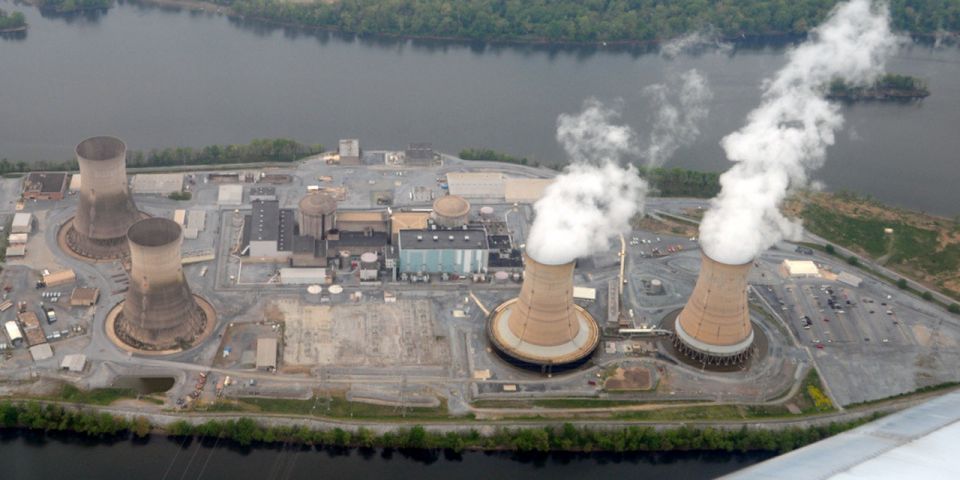
넥스트에라의 목록에 포함되지 않은 발전소로는 아이오와주 듀안 아놀드(Duane Arnold)가 있다. 615MWe 규모의 이 발전소는 넥스트에라가 2029년을 목표로 재가동을 추진 중인 곳으로, 아이오와주 유일의 원자력 발전소다. 듀안 아놀드는 비등수형 원자로(boiling water reactor)를 사용한다.
각계 반응
케첨은 이번 합병을 두 회사뿐 아니라 관련 주(州)와 고객들 모두에게 있어 "역사적인 순간"이라고 표현했다.
그는 합병 발표문에서 "전력 수요가 수십 년 만에 가장 빠른 속도로 증가하고 있습니다. 프로젝트 규모는 점점 커지고 복잡해지고 있습니다. 고객들은 수년 후가 아닌 지금 당장 저렴하고 안정적인 전력을 필요로 합니다"라고 말했다. 이어 "우리는 넥스트에라 에너지와 도미니언 에너지를 합치는 이유가 규모가 그 어느 때보다 중요하기 때문입니다. 단순히 덩치를 키우기 위한 것이 아니라, 규모가 곧 자본과 운영 효율로 이어지기 때문입니다. 규모 덕분에 더 효율적으로 구매하고, 건설하고, 자금을 조달하고, 운영할 수 있으며, 결국 이는 고객들에게 더 저렴한 전기료로 돌아올 것입니다"라고 밝혔다.
로버트 블루(Robert Blue)는 "무엇보다 이번 합병은 우리 고객들을 중심으로 구성됐습니다"라고 덧붙였다. "우리가 약속하는 요금 감면 혜택, 발전·신뢰성·폭풍 복원력에 대한 지속적인 투자, 주노 비치(Juno Beach)와 리치먼드(Richmond) 이중 본사 유지 및 인력 보전에 대한 약속, 그리고 도미니언 에너지 사우스캐롤라이나의 케이시(Cayce) 운영 본부 유지는 도미니언 에너지가 늘 추구해온 가치를 반영한 것입니다. 이 두 위대한 회사가 하나가 되어 우리가 봉사하는 모든 지역사회에 새로운 장을 써나가게 되어 기대가 큽니다."
---
AI 분석
이번 넥스트에라(NextEra Energy)와 도미니언(Dominion Energy)의 합병은 미국 전력 산업 역사상 손꼽히는 대형 거래로, 670억 달러 규모의 이번 딜은 급증하는 전력 수요에 대응하기 위해 유틸리티 기업들이 규모의 경제를 적극 추구하고 있음을 보여준다. 합병 법인은 전국에 총 8기 이상의 원자력 발전 단지를 운영하게 되어, 미국 내 원자력 발전 시장에서 두 번째로 큰 플레이어로 부상하게 된다. 이는 원자력이 탄소 중립 목표와 AI·데이터센터 수요 급증에 따른 안정적 기저 전력원으로 재평가받는 추세와 맞닿아 있다. 다만 연방 및 각 주 규제 당국의 승인 과정에서 독점 우려, 요금 인상 가능성, 지역 사업 유지 등의 문제가 주요 쟁점이 될 가능성이 높다. 듀안 아놀드(Duane Arnold) 발전소의 재가동 추진과 함께, 합병 후 원자력 포트폴리오 확대가 미국 에너지 안보와 탈탄소 정책에 어떤 영향을 미칠지 주목된다.
2026년 5월 15일, 오후 3:01 | Nuclear News | 찰리 니콜스(Charlie Nichols) 및 마이크 루칸(Mike Lukan)
듀안 아놀드 에너지 센터(Duane Arnold Energy Center)는 아이오와주 린 카운티(Linn County)에서, 팔로(Palo) 마을 인근이자 시더래피즈(Cedar Rapids) 북서쪽에 위치해 45년간 가동되었다. 넥스트에라 에너지(NextEra Energy)가 소유한 이 시설은 유일한 원자력...
코스텔레이션(Constellation)의 임원들은 월요일 1분기 실적 발표 컨퍼런스콜에서, 연방에너지규제위원회(Federal Energy Regulatory Commission, FERC)에 제출한 전력 이전 요청의 결과를 6월 또는 7월에 알 수 있을 것이라고 밝혔다...
구 스리마일 아일랜드-1(Three Mile Island-1)이 2027년 크레인 클린 에너지 센터(Crane Clean Energy Center)로 재가동될 때, 전력망에 재연결되기까지 수년간의 지연은 없을 것이라고 코스텔레이션(Constellation) CEO가 밝혔다...
마이크로 원자로 스타트업 나노 뉴클리어(Nano Nuclear)가 우주에서의 원자력 발전 관련 지원 가능 기관을 파악하기 위한 정보 요청서(RFI)를 발표하면서, 우주 원자력 발전이 이번 주 두 번째로 뉴스에 등장했다...
---
AI 분석
이 기사는 미국 원자력 발전 설비 이용률 및 신규 원자력 발전소 건설 현황을 조망하며, 야심 찬 목표와 현실 사이의 간극을 핵심 주제로 다루고 있다. AI 데이터 센터와 제조업 리쇼어링에 따른 급증하는 전력 수요를 배경으로, 원자력은 무탄소 기저 전력원으로서 그 어느 때보다 주목받고 있으나 인허가 지연과 건설 기간이라는 구조적 과제가 여전히 존재한다. 관련 기사들을 통해 NRC의 구조 개편, 구 스리마일 아일랜드의 재가동 추진, 국립연구소의 출력 증대 기술 개발 등 미국 원자력 산업 전반에서 활발한 움직임이 진행 중임을 알 수 있다. 단기적으로는 기존 원전의 수명 연장 및 재가동이 현실적인 전력 공급 대안으로 부상하고 있으며, 소형모듈원자로(SMR) 등 차세대 기술의 상용화까지는 아직 시간이 필요한 상황이다. 기사 전문이 유료 회원 전용으로 제한되어 있어 구체적인 설비 이용률 데이터와 심층 분석에 접근하는 데 한계가 있음을 밝혀 둔다.
미국 에너지부 환경관리국(DOE-EM)이 사바나 리버 부지(SRS)의 탱크 14가 방사성 액체 폐기물 제거 완료 후 예비 폐기물 제거 완료(PCWR) 상태에 도달했다고 발표했다.
탱크 14는 2년이 채 안 되는 기간 동안 PCWR을 달성한 SRS의 여덟 번째 구식 지하 레거시 폐기물 탱크가 되었으며, 연방 시설 협약 일정보다 수년 앞서 달성되었다.
향후 탱크 최종 특성화 샘플링에 드론을 독점적으로 활용할 예정으로, 탱크당 4주 및 70만 달러 절감 효과가 기대된다.
---
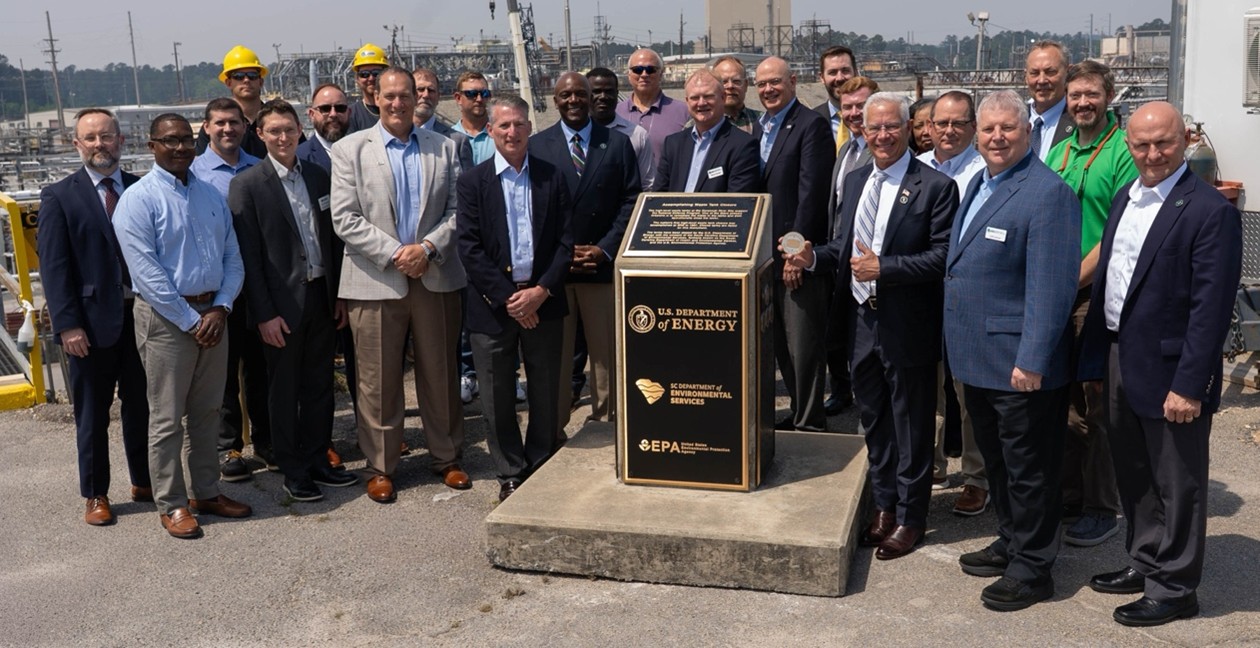
DOE 차관보 팀 월시(Tim Walsh)(오른쪽, 메달 들고 있는 사람)와 수석 부차관보 조엘 브래드번(Joel Bradburne)(오른쪽 뒷줄)이 DOE 사바나 리버 운영사무소 및 사바나 리버 미션 컴플리션(Savannah River Mission Completion)의 고위 관리자들, 그리고 이 이정표에 기여한 직원들과 함께 탱크 14의 예비 폐기물 제거 완료 달성을 기념하고 있다. (사진: DOE)
에너지부 환경관리국(DOE's Office of Environmental Management)은 사바나 리버 부지(Savannah River Site, SRS)의 탱크 14에서 방사성 액체 폐기물이 성공적으로 제거된 후 탱크 14가 예비 폐기물 제거 완료(preliminary cease waste removal, PCWR) 상태에 도달했다는 규제 당국의 동의를 받았다. PCWR은 SRS의 구식 폐기물 탱크 폐쇄 과정에서의 규제 이정표로, 해당 탱크들은 1950년대에 플루토늄 및 우라늄의 화학적 분리 과정에서 발생한 폐기물을 저장하기 위해 건설되었다.
탱크 14는 2년이 채 안 되는 기간 동안 PCWR을 달성한 SRS의 여덟 번째 구식 지하 레거시 폐기물 탱크가 되었다. 탱크 3은 2025년 9월에 PCWR 승인을 받았다.
DOE-EM 차관보 팀 월시(Tim Walsh)는 최근 SRS 방문 중 탱크 폐쇄 이정표를 기념하며, 부지의 액체 폐기물 프로그램이 부처의 정화 임무에 대한 통합적 접근 방식의 증거라고 말했다. "이것은 가능성의 예술(가능한 일의 최선)이 무엇인지, 그리고 우리의 임무를 가속화하기 위해 무엇이 달성되고 있는지를 보여주는 진정한 모델입니다"라고 그는 말했다.
역사: 정부 기록에 따르면, 탱크 14는 고열 폐기물 저장에 사용된 부지 H구역에 위치한 100만 갤런 규모의 타입 II 탱크이다. 1957년에 가동을 시작한 이 탱크는 1959년까지 이차 환형 공간(secondary annulus space)으로 폐기물이 누출되는 것이 발견되었다. 누출을 막기 위해 탱크의 폐기물 수위를 낮추었다.
정책: PCWR은 사우스캐롤라이나 환경서비스부(South Carolina Department of Environmental Services), 미국 환경보호청(U.S. Environmental Protection Agency), 그리고 DOE 간의 합의를 지정하는 것으로, 예비 정보에 기반하여 탱크 폐쇄에 대한 성능 목표가 충족될 것이라는 합리적 보증이 있다는 것을 DOE가 밝혔다.
이 탱크 폐쇄 이정표는 SRS의 연방 시설 협약(Federal Facility Agreement)에 명시되어 있으며, 이 협약은 액체 폐기물 탱크 이정표 합의(폐기물 제거 일정 및 운영 탱크 폐쇄 일정 포함)와 기타 부지 정화 우선순위를 포함한 절차적 프레임워크를 수립한다.
DOE-EM에 따르면, 모든 PCWR 이정표는 연방 시설 협약 일정보다 수년 앞서 해당 기관의 액체 폐기물 계약업체인 사바나 리버 미션 컴플리션(Savannah River Mission Completion)에 의해 달성되었다.
다음 단계: PCWR을 달성함으로써 이제 탱크 폐쇄 과정의 샘플링 및 분석 단계 작업을 시작할 수 있다. 이 단계에서는 탱크 안정화 및 최종 격리 이전에 잔류 물질의 실험실 분석과 최종 잔류 부피 결정을 바탕으로 탱크가 폐쇄 준비가 되었는지 검증하게 된다.
DOE-EM에 따르면, 탱크 14는 최종 특성화 샘플링에 드론을 독점적으로 활용하는 최초의 탱크 중 하나가 될 것이다. 탱크 14는 이미 드론을 사용하여 점검 및 매핑이 완료되었으며, DOE-EM은 탱크 점검 및 샘플링 시 유선 로봇 크롤러 대신 드론을 사용하면 탱크당 4주 및 70만 달러를 절감할 수 있다고 밝혔다.
인용: "일정보다 앞서 여덟 개의 구식 탱크에서 폐기물을 제거하면 남은 폐기물의 위험이 줄어들고 정화 가속화에 대한 부처의 약속을 이행하는 것"이라고 DOE 사바나 리버 운영사무소 관리자 에드윈 데숑(Edwin Deshong)이 말했다. 그는 또한 탱크에 대한 PCWR 달성이 주 및 연방 규제 기관에 대한 핵심 산출물이며 SRS에서의 가속화된 위험 감소 방식의 폐기물 제거 접근법을 반영한다고 덧붙였다.
---
AI 분석
사바나 리버 부지의 탱크 14 PCWR 달성은 미국 원자력 폐기물 관리 역사에서 주목할 만한 진전이다. 1950년대에 건설된 구식 탱크들의 단계적 폐쇄는 장기적인 환경 리스크 감소와 직결되며, 연방 협약 일정 대비 수년 앞선 달성은 계약업체 사바나 리버 미션 컴플리션의 높은 운영 효율성을 보여준다. 특히 드론 기술을 활용한 탱크 최종 특성화 샘플링 도입은 비용과 시간 절감뿐 아니라 작업자의 방사선 피폭 위험 감소에도 기여할 수 있는 혁신적 접근이다. 이 사례는 노후 원자력 시설의 안전한 폐쇄 과정에서 신기술 도입이 얼마나 큰 효율성을 가져올 수 있는지를 잘 보여주는 모범 사례로 평가된다. 향후 미국 내 다른 원자력 부지의 폐기물 관리 프로그램에도 이러한 방식이 확대 적용될 가능성이 높다.
스웨덴의 납 냉각 소형 모듈 원자로(SMR) 기술 개발사 블리칼라(Blykalla)가 노르순데트(Norrsundet)에 6기의 SEALER 원자로로 구성된 총 330 MWe 규모의 발전소 건설 신청서를 정부에 제출했다.
스웨덴 정부의 새로운 원자력 시설 승인 제도 하에 접수된 두 번째 신청 사례로, 50여 년 만에 스웨덴에서 신규 원자력 발전소 건설 신청이 잇따르고 있다.
블리칼라(Blykalla)는 KTH 왕립공과대학교(KTH Royal Institute of Technology)의 스핀오프 기업으로, 필요한 허가 취득 및 최종 투자 결정을 전제로 2030년대 전반기 상업 운전 개시를 목표로 하고 있다.
---
스웨덴의 납 냉각 소형 모듈 원자로 기술 개발사 블리칼라(Blykalla)가 스웨덴 중동부 예블레(Gävle) 시 노르순데트(Norrsundet)에 6기의 SEALER 원자로로 구성된 발전소 건설 신청서를 정부에 제출했다.
블리칼라(Blykalla), 스웨덴 SMR 발전소 건설 신청_64217.jpg) 신청서 제출 현장 (이미지: 블리칼라(Blykalla))
블리칼라(Blykalla)는 예블레(Gävle) 시의 노르순데트(Norrsundet)를 원자력 시설 부지로 선정한 이유로, 두 핵심 입찰 구역 사이의 전략적 위치, 기존 항만 시설, 핵심 인프라, 그리고 산업 유산을 꼽았다. 이러한 조건이 건설 복잡성을 줄이는 동시에 예측 가능한 기저부하 전력(baseload power, 전력 수요에 상관없이 안정적으로 공급되는 기본 전력)으로 지역의 전력 부족 문제를 해결할 수 있다고 설명했다. 제안된 발전소의 총 발전용량은 330 MWe이다.
블리칼라(Blykalla)의 CEO 야코브 스테드만(Jacob Stedman)은 "이번 신청은 스웨덴 역사상 최초의 사례입니다. 우리는 단순히 첨단 원자로 단지를 계획하는 것이 아니라, 스웨덴의 에너지 미래를 건설하고 국가를 전 세계 원자력 르네상스의 선두에 세우고 있습니다. 새로운 에너지 인프라 구축은 필수적이며, 미래의 에너지 시스템은 예측 가능하고 신뢰할 수 있으며 화석연료에서 자유로워야 합니다. AI와 전기화가 전 세계적으로 확산되는 지금, 예측 가능하고 청정한 기저부하 전력의 보급을 가속화해야 합니다. 그것이 바로 블리칼라(Blykalla)의 기술이 하는 일이며, 우리는 이 시대의 요구에 부응할 수 있는 독보적인 위치에 있습니다"라고 밝혔다.
기후·기업부는 정부가 신청서가 요건을 충족하는지, 제안된 사업이 정당한지, 취급되는 원자력 물질과 발생하는 원자력 폐기물에 대한 준비 및 처리 조건이 갖춰져 있는지를 심사할 예정이라고 밝혔다. 정부의 신청서 심사는 토지·환경 법원(Land and Environmental Court)과 스웨덴 방사선 안전청(Swedish Radiation Safety Authority) 등 여러 기관이 참여하는 포괄적인 승인 절차의 시작을 알린다. 이후 정부는 토지 및 수역 이용 방안에 관한 결정을 안내하는 시설 계획을 수립하게 된다.
기후·기업부는 예블레(Gävle) 시가 정부의 원자력 시설 승인 결정 전에 계획안과 신청서 모두를 승인해야 한다고 명시했다. "승인은 환경법 및 원자력활동법에 따른 허가 심사를 대체하지 않습니다. 다만, 정부 승인은 정부가 환경법 제17장에 따라 별도로 시행해야 하는 허용성 심사(permissibility review, 사업의 환경적 허용 가능성에 대한 심사)를 대체합니다"라고 밝혔다.
_c2dd3e92.jpg) 노르순데트(Norrsundet)에 들어설 SEALER 건물 조감도 (이미지: 블리칼라(Blykalla))
블리칼라(Blykalla)는 과거 리드콜드(LeadCold)라는 사명으로 불렸으며, 1996년부터 납 냉각 원자로 시스템을 연구해 온 스톡홀름(Stockholm) KTH 왕립공과대학교(KTH Royal Institute of Technology)의 스핀오프 기업이다. 2013년 주식회사로 설립된 이 회사는 SEALER(스웨덴 첨단 납 원자로, Swedish Advanced Lead Reactor)를 개발하고 있다. 실증용 SEALER(SEALER-D)는 열출력 80 MW를 목표로 계획되어 있다.
필요한 허가 취득 및 최종 투자 결정을 전제로, 상업 규모의 노르순데트(Norrsundet) 시설은 2030년대 전반기에 운영을 시작할 수 있을 것으로 기대된다.
올해 2월, 스웨덴 정부는 국내 신규 원자력 발전 설립을 용이하게 하기 위한 여러 입법안을 발표했다. 새 법률은 예측 가능성을 높이고 신규 원자력 용량의 배치를 가속화하기 위해 설계된 초기 단계 정부 승인 절차를 도입했다. 그 다음 달, 카른풀 넥스트(Kärnfull Next)가 스웨덴 남동부 외스테르예틀란드(Östergötland) 주 발데마르스비크(Valdemarsvik) 시에 소형 모듈 원자로(SMR) 기반 발전소 건설 신청서를 제출하며, 스웨덴의 새로운 원자력 시설 정부 승인법(Act on Government Approval of Nuclear Facilities) 하에 첫 번째 신청 사례가 되었다. 이는 스웨덴에서 50년 만에 처음으로 신규 원자력 발전 시설 설립 신청이 이루어진 역사적 순간이었다.
기후·환경 장관 권한대행 요한 브리츠(Johan Britz)는 "새로운 원자력 발전은 스웨덴의 에너지 독립을 위한 퍼즐의 중요한 한 조각입니다. 오늘날 세계에서 목격되는 우려는 우리가 화석연료 의존으로 얼마나 취약해지고 있는지를 분명히 보여주며, 화석연료 없는 전력 생산을 확대하는 것이 얼마나 중요한지를 일깨워줍니다. 새로운 허가 심사 제도 덕분에 더 많은 사업자들이 원자력에 투자할 용기를 얻고 있습니다"라고 말했다.
2022년 10월, 스웨덴의 새 중도 우파 연립정부는 원자력 에너지에 대한 긍정적인 입장을 채택했다. 2023년 11월에는 2035년까지 최소 대형 원자로 2기에 상당하는 신규 원자력 발전 용량을 건설하고, 2045년까지 소형 모듈 원자로를 포함해 최대 대형 원자로 10기에 상당하는 용량을 가동한다는 로드맵을 발표했다. 국가 지원에 관한 새 법률이 2025년 8월 1일 발효되었으며, 이후 관심 있는 기업들이 지원을 신청할 수 있게 되었다.
스웨덴 정부는 12월에 GE 베르노바 히타치(GE Vernova Hitachi) BWRX-300 원자로 5기 또는 롤스로이스(Rolls-Royce) SMR 3기를 도입해 베뢰(Värö) 반도의 링할스(Ringhals)에 약 1,500 MW 용량을 공급하는 두 가지 제안 중 하나를 지원하는 첫 번째 신청을 접수했다. 해당 신청은 바텐팔(Vattenfall AB)이 소유하고 인두스트리크라프트 이 스베리에(Industrikraft i Sverige AB) 컨소시엄을 통해 일련의 산업체들이 지원하는 프로젝트 회사 비데베리 크라프트(Videberg Kraft AB)가 제출했다.
---
AI 분석
블리칼라(Blykalla)의 이번 신청은 스웨덴이 수십 년간의 원자력 에너지 정책 전환을 마치고 본격적인 신규 원자력 건설 시대로 진입하고 있음을 상징적으로 보여준다. 납 냉각 방식의 SEALER 기술은 기존 경수로와 차별화된 차세대 원자로 설계로, 스웨덴이 SMR 분야에서 독자적인 기술 경쟁력을 확보하려는 전략적 의지를 반영한다. 카른풀 넥스트(Kärnfull Next)에 이어 두 번째 신청이 불과 수개월 만에 접수되면서, 스웨덴의 새 원자력 인허가 제도가 실질적인 투자 촉진 효과를 발휘하고 있음이 확인되었다. AI 데이터센터와 전기화 수요 급증에 따른 안정적 기저부하 전력 수요가 SMR 투자의 핵심 동인으로 부상하고 있으며, 스웨덴의 사례는 에너지 안보와 탈탄소화를 동시에 추구하는 유럽 국가들에게 중요한 정책적 선례가 될 것으로 보인다.
NRC, 텍사스 주 다우(Dow)와 X-에너지(X-energy)의 첨단 원자력 프로젝트에 대해 중대한 영향 없음 결론의 환경 평가서 발급
규제
_프로젝트 NRC 건설 허가 신청의 주요 이정표를 의미_ _미국 에너지부 첨단 원자로 실증 프로그램의 지원을 받는 프로젝트_
미시간 주 미들랜드 및 메릴랜드 주 록빌, 2026년 5월 18일 – 미국 원자력규제위원회 ("NRC")가 텍사스 주 시드리프트(Seadrift)에 제안된 첨단 원자력 프로젝트에 대한 다우(Dow) (NYSE: DOW)와 X-에너지, Inc.(X-energy, Inc.)(NASDAQ: XE)의 건설 허가 신청서("CPA")에 대한 환경 평가서("EA")를 완료했습니다. NRC의 검토는 NRC의 종합적인 독립 분석에 이어 일정보다 일찍 완료되었으며, 중대한 영향 없음 결론("FONSI")으로 마무리되었습니다.
롱 모트 발전소(Long Mott Generating Station)는 미국 에너지부 첨단 원자로 실증 프로그램(ARDP) 하에 다우(Dow)의 완전 자회사인 롱 모트 에너지, LLC(Long Mott Energy, LLC)를 통해 개발되고 있습니다. 제안된 프로젝트는 다우의 UCC 시드리프트 운영(Dow's UCC Seadrift Operations)에 전력과 고온 산업용 증기를 모두 제공하여 연간 40억 파운드 이상의 소재 생산을 지원할 것입니다. 완공 시 롱 모트 발전소는 북미에서 산업 시설에 서비스하기 위해 배치된 최초의 그리드 규모 첨단 원자력 원자로가 될 것으로 예상됩니다.
EA에 대한 FONSI 결론은 공기질, 수자원, 지역 종 서식지에 대한 잠재적 영향을 세계적으로 인정받은 안전 및 환경 기준에 따라 평가한 NRC 직원의 광범위한 독립 분석에 이어 내려진 것입니다. NRC는 X-에너지(X-energy)의 Xe-100 소형 모듈식 원자로 사전 인허가 작업 및 공공 보건, 안전, 환경 보호를 위한 연방 요건을 충족하는 종합적인 CPA 제출서의 혜택을 받아 1년 이내에 환경 검토를 완료했습니다.
다우(Dow)의 에너지 & 기후 사업 부문 부사장 에드워드 스톤스(Edward Stones)는 "이번 결과는 롱 모트 에너지 프로젝트의 중요한 이정표이며, NRC가 평가를 종합적이고 효율적으로 수행한 방식에 감사드린다"고 말했습니다. "미국에서 안전하고 청정하며 신뢰할 수 있고 비용 경쟁력 있는 원자력 에너지에 대한 접근을 확대하는 데 한 걸음 더 가까워졌습니다."
X-에너지(X-energy)의 최고 글로벌 운영 책임자 드라간 포포비치(Dragan Popovic)는 "이번 승인은 수년간의 준비를 통해 당사 기술의 강력한 안전성을 입증함으로써 구축된 인허가 프로세스의 효율성 향상을 위한 재현 가능한 경로를 확립합니다"라고 말했습니다. "원자력 안전에는 지름길이 없습니다. 모든 효율성은 획득해야 하며, 완전하고 고품질의 신청서와 본질적으로 안전하게 설계된 기술에서 시작됩니다."
2018년 이후 X-에너지(X-energy)와 이후 다우(Dow)는 Xe-100의 안전성을 입증하기 위해 광범위한 사전 신청 협력을 통해 NRC와 협력해 왔습니다. 이 기술적 기반은 근본적인 원자로 안전 문제보다는 부지별 요소에 초점을 맞춘 예측 가능하고 명확한 규제 프로세스를 가능하게 하여 인허가 프로세스 전반에 걸쳐 효율성 향상의 기회를 창출하는 데 도움이 됩니다.
X-에너지(X-energy)의 Xe-100은 최소한의 환경 발자국을 실현하도록 설계된 80MW급 고온 가스 냉각 원자로입니다. 이 원자로의 헬륨 냉각재는 운전 중 방사성을 띠지 않아 방사선 관련 고려 사항 및 부정적 환경 영향의 범주 전체를 제거합니다. 최소한의 용수 요건은 주요 수생 생태계 영향을 없애고, 냉각탑이나 취수 구조물이 없어 시각적, 환경적 혼란 및 건설 중 부지 영향을 모두 줄입니다. 이러한 설계 특성은 산업 응용 분야에 신뢰할 수 있는 청정 에너지를 제공하면서도 탁월한 환경 보호를 가능하게 합니다.
*
다우(Dow)에 대하여
다우(Dow) (NYSE: DOW)는 포장, 인프라, 모빌리티 및 소비자 응용 분야 등 고성장 시장의 고객에게 서비스를 제공하는 세계 최고의 소재 과학 기업 중 하나입니다. 당사의 글로벌 범위, 자산 통합 및 규모, 고객 중심 혁신 및 선도적인 사업 포지션을 통해 수익성 있는 성장을 달성하고 지속 가능한 미래를 실현하는 데 기여합니다. 당사는 29개국에서 제조 시설을 운영하며 약 34,600명을 고용하고 있습니다. 다우(Dow)는 2025년 약 400억 달러의 매출을 달성했습니다. 다우(Dow) 또는 회사에 대한 언급은 다우 Inc.(Dow Inc.)와 그 자회사를 의미합니다. 자세한 내용은 www.dow.com을 방문하세요.
X-에너지(X-energy)에 대하여
X-에너지, Inc.(X-Energy, Inc.) (NASDAQ: XE)는 더 안전하고 효율적인 첨단 소형 모듈식 원자력 원자로와 독점 연료 개발을 통해 원자력 에너지 산업을 재정의하고 있는 청정 에너지 발전을 위한 첨단 소형 모듈식 원자력 원자로 및 연료 기술의 선도적 개발업체로서, 현대 경제의 요구를 충족하는 청정하고 안전하며 신뢰할 수 있는 에너지를 제공합니다. X-에너지(X-energy)의 단순화되고 모듈식이며 본질적으로 안전한 SMR 설계는 원자력 기술 배치를 위한 응용 분야와 시장을 확대하고 다른 SMR 및 기존 원자력과 비교하여 향상된 안전성, 낮은 비용 및 빠른 건설 일정을 구현합니다.
로버트 맥엔타이어(Robert McEntyre), 기업 커뮤니케이션 [[email protected]]()
+1 240.673.6565
패트리샤 길(Patricia Gil), 투자자 관계 [[email protected]]()
+1 301.558.3040
AI 분석
미국 원자력규제위원회(NRC)가 다우(Dow)와 X-에너지의 텍사스 시드리프트 소재 선진 원자력 프로젝트인 '롱 못 발전소'에 대해 환경 평가를 완료하고 '중대한 영향 없음(FONSI)' 판정을 내린 것은 소형모듈원자로(SMR) 상용화 과정에서 중요한 이정표다. NRC가 일정보다 앞당겨 심사를 완료했다는 점은 사전 허가 작업과 고품질 신청서 제출이 규제 효율성을 높일 수 있음을 입증하며, 향후 유사 프로젝트의 참고 모델이 될 수 있다. 이 프로젝트는 북미 최초로 산업 시설에 공급되는 상업 규모 선진 원자로를 목표로 하며, 연간 40억 파운드 이상의 소재 생산에 필요한 전력과 고온 산업용 증기를 동시에 공급한다는 점에서 산업 탈탄소화의 실질적 모델로 주목된다. X-에너지의 Xe-100은 헬륨 냉각재를 사용해 방사성 오염 위험을 원천적으로 차단하고 냉각탑이 불필요할 만큼 물 사용량이 적어 환경 영향을 최소화한다는 기술적 강점을 가지고 있다. 이번 환경 평가 통과는 건설 허가 취득을 향한 핵심 단계로, 미국 에너지부(DOE)의 선진 원자로 실증 프로그램(ARDP) 지원 아래 첨단 원자력 기술이 실질적 상용화에 한 발 더 다가섰음을 의미한다.
※ 이 글은 해외 원자력 바로알기를 위한 정보 전달을 목적으로 제공됩니다. 특정 기업이나 종목에 대한 투자 권유가 아니며, 모든 투자 판단과 그에 따른 책임은 투자자 본인에게 있습니다.
버지니아주 와이즈 카운티가 마이크로원자로 도입 가능성을 검토하는 타당성 조사를 진행 중이며, 이번 주 두 차례의 주민 설명회를 개최한다.
GO 버지니아 경제개발 프로그램이 승인한 10만 달러 보조금으로 연구비가 지원되며, 연말까지 완료될 예정이다.
마이크로원자로는 트럭으로 운반 가능한 소형 원자력 반응로로, 농촌 지역의 안정적인 전력 공급과 데이터 센터 등 에너지 집약 산업 유치에 활용될 가능성이 주목된다.
---
와이즈 카운티의 소형 원자력 발전 프로젝트 개발 전망이 이번 주 열리는 두 차례의 주민 설명회 주제로 다뤄질 예정이다.
화요일 설명회는 오후 6시에 빅 스톤 갭(Big Stone Gap)에 위치한 마운틴 엠파이어 커뮤니티 칼리지(Mountain Empire Community College)의 굿로 센터(Goodloe Center)에서 열리며, 수요일 설명회는 오전 10시에 버지니아대학교 와이즈 캠퍼스(University of Virginia's College at Wise)의 캔트렐 홀(Cantrell Hall)에서 진행된다.
두 행사는 카운티 주민 및 관심 있는 일반인 누구나 참가할 수 있으며, 마이크로원자로의 카운티 도입 타당성을 검토하는 연구의 일환으로 개최된다.
이번 행사는 버지니아주 에너지부(Virginia Department of Energy)와 GO 버지니아(GO Virginia) 경제개발 프로그램의 지원을 받아 조직되었다.
카운티가 설명회 공지에서 밝힌 바에 따르면, 이번 타당성 조사는 "버지니아 남서부 지역의 첨단 원자력 에너지 개발과 관련한 잠재적 미래 결정의 틀을 마련하는 데 지침이 될 것"이라고 한다. "이 계획은 특정 프로젝트, 부지 또는 원자로 설계에 대한 승인을 의미하지 않습니다. 대신, 잠재적인 미래 프로젝트 검토에 활용될 기준을 파악하고 우선순위를 정하는 데 초점을 맞추고 있습니다."
설명회 공지에 따르면, 이번 행사는 "프로젝트 및 프로젝트 결과물에 관한 추가 정보를 제공하고 참석자들의 의견을 수렴하기 위한" 목적으로 열린다.
카렌 멀린스(Karen Mullins) 카운티 검사 겸 임시 카운티 행정관에 따르면, 발표자는 프로젝트 매니저 밥 베일리(Bob Bailey), 버지니아 이노베이티브 뉴클리어(Virginia Innovative Nuclear, VIN) 허브 사무총장 제프 위트(Jeff Whitt), 그리고 와이즈 카운티 경제개발국장 브라이언 팰린(Brian Falin)이다.
2025년 1월, GO 버지니아 지역 1 위원회(GO Virginia Region 1 Council)는 이 타당성 조사 재원으로 10만 달러의 보조금을 승인했다.
와이즈, 리, 스콧 카운티 및 노턴 시(city of Norton)에 계획 지원과 서비스를 제공하는 LENOWISCO 계획지구위원회(LENOWISCO Planning District Commission)가 와이즈 카운티의 조사를 지원하고 있다.
LENOWISCO 소속 지역 계획가 토머스 로슨(Thomas Lawson)은 금요일에 이 연구가 연말까지 완료될 것으로 예상된다고 밝혔다.
마이크로원자로는 트럭으로 운반할 수 있을 만큼 소형인 원자력 반응로다. 미국 에너지부 원자력에너지국(U.S. Department of Energy's Office of Nuclear Energy)에 따르면, 대부분의 마이크로원자로는 최대 20메가와트의 열에너지를 생산하며, 이는 직접 열원으로 사용하거나 전력으로 변환할 수 있다. 한편, 탄광 지역에서 잠재적 프로젝트로 논의되어 온 소형 모듈식 원자로(SMR, Small Modular Reactor)는 50~300메가와트 규모다.
LENOWISCO 사무총장 듀에인 밀러(Duane Miller)는 마이크로원자로가 농촌 지역에 안정적이고 일관된 전력을 공급할 수 있다고 말했다. 이는 태양광이나 풍력과 같은 "간헐적(intermittent, 날씨 등 외부 환경에 따라 발전량이 변동되는)" 에너지원에 대한 의존도를 낮추는 동시에, 에너지 소비가 많은 경제 부문을 유치하는 수단으로 활용될 수 있다고 덧붙였다.
보조금 신청서에 따르면, 이번 조사는 마이크로원자로를 위한 후보 부지와 필요 인프라를 파악·분석하는 것을 목표로 한다. 또한 기저부하(baseload, 항상 일정하게 유지되어야 하는 최소 전력 수요) 전력 공급 역량을 파악하고, 데이터 센터 등 잠재 고객을 발굴하는 데 도움을 줄 것이라고 한다.
2025년 12월, 당시 글렌 영킨(Glenn Youngkin) 주지사 사무실은 버지니아대학교 와이즈 캠퍼스(UVa-Wise)가 인력 개발 및 전문 교육 지원을 위한 원자력 제어실 시뮬레이터를 구입할 것이라고 발표했다. 해당 대학은 이 프로젝트를 위해 버지니아 청정에너지혁신은행(Virginia Clean Energy Innovation Bank)으로부터 27만 5,000달러의 보조금을 받았다.
와이즈 카운티는 영킨 전 주지사가 2022년 10월 에너지 계획의 일환으로 발표한 소형 모듈식 원자력 반응로 유치 후보 지역 중 하나였다. 전 주지사는 석탄 산업 침체로 타격을 받은 탄광 지역에 미국 최초의 SMR을 배치하고자 했다.
SMR은 기존 원자력 반응로보다 더 작고 단순한 버전으로, 발전량은 약 3분의 1 수준이며 공장에서 제작한 후 현장으로 운반하여 설치할 수 있다.
2023년, LENOWISCO는 SMR을 수용할 수 있는 7곳의 잠재 후보지를 선정한 연구를 발표했다. 후보지로는 애팔래치아 타운(town of Appalachia)의 옛 불릿 광산 단지(Bullitt mine complex), 스콧 카운티 더필드(Duffield) 인근의 라임스톤 광산 지역(Limestone mine area), 리 카운티와 와이즈 카운티 경계에 위치한 폐광 토지, 와이즈 인근의 로운섬 파인 지역 비즈니스·기술 파크(Lonesome Pine Regional Business and Technology Park), 노턴의 프로젝트 인터섹션 부지(Project Intersection property), 세인트 폴(St. Paul) 인근의 버지니아 시티 하이브리드 에너지 센터 구역(Virginia City Hybrid Energy Center area), 그리고 디켄슨 카운티(Dickenson County)의 레드 어니언 산업 부지(Red Onion industrial property)가 포함된다.
클린치 연합(The Clinch Coalition)과 남부 애팔래치아 마운틴 스튜어즈(Southern Appalachian Mountain Stewards)를 포함한 지역 사회 옹호 단체들은 LENOWISCO 연구에서 선정된 부지에 대해 주민 의견 수렴 기회가 없었다며 지역의 SMR 프로젝트 추진 움직임에 우려를 표명했다.
이러한 노력은 버지니아 남서부 원자력 감시단(Southwest Virginia Nuclear Watch) 창설로 이어졌으며, 이 단체는 현재도 해당 지역의 원자력 에너지 프로젝트 논의를 지속적으로 모니터링하고 있다.
---
AI 분석
버지니아주 와이즈 카운티의 마이크로원자로 타당성 조사는 석탄 산업 쇠퇴로 경제적 어려움을 겪고 있는 애팔래치아 지역에서 원자력 에너지를 새로운 경제 동력으로 활용하려는 구체적인 시도를 보여준다. 마이크로원자로 및 SMR에 대한 관심은 단순한 전력 공급을 넘어 데이터 센터 등 에너지 집약 산업 유치와 지역 일자리 창출이라는 경제적 목표와 긴밀히 연결되어 있다. 그러나 클린치 연합 등 지역 환경 단체의 반발은 원자력 시설 입지 선정 과정에서 주민 참여와 투명한 소통이 얼마나 중요한지를 보여주는 사례다. 이번 설명회는 지역 사회와의 소통을 강화하려는 노력의 일환으로 볼 수 있으며, 타당성 조사 결과가 향후 버지니아 남서부 지역의 원자력 에너지 정책 방향에 중요한 참고자료가 될 것으로 보인다. 미국 내 소형 원자력 기술 확산 추세와 맞물려, 이 지역의 사례는 경제적 필요와 환경적 우려 사이에서 균형을 찾으려는 지역 사회의 복잡한 고민을 잘 드러내고 있다.
AI Could Make Power Grid More Efficient if Utilities Can Persuade Regulators
TL;DR
AI-powered monitoring and forecasting systems can help utilities manage infrastructure more efficiently, reduce power outages, and mitigate wildfire risks, but regulatory resistance to recovery costs is slowing adoption.
Regulators have repeatedly rejected utility requests to pass AI technology costs to customers, citing affordability concerns even as electricity rates climb due to grid maintenance and infrastructure replacement needs.
Federal policy and some state regulators are beginning to recognize grid optimization technologies as essential for meeting growing energy demand without massive infrastructure buildouts, creating momentum for change.
---
Main Article
If the burgeoning crop of new technology tools for wildfire prevention were designed for anyone, Pacific Gas & Electric would be the poster child.
Nearly six years removed from bankruptcy after a settlement for its role in the catastrophic 2018 Camp Fire in California, the Oakland-based utility is pursuing a round-the-clock monitoring program for power outages and wildfires. It pulls readings from 5.5 million meters that flag compromised infrastructure, 1,600 weather monitoring stations that use artificial intelligence to forecast fire-risk conditions and 600 infrared cameras trained on faint flickers to detect wildfires across its service territory.
But PG&E is facing resistance to the needed spending on the program from state regulators who are focused on keeping costs under control for residents and businesses.
The advent of AI-supported software and hardware offers electric utilities powerful new technology to more efficiently manage power resources, extend the lifelines of expensive equipment and quickly respond to costly power outages. But the strain of rising power prices has created hurdles that are often keeping those innovative models out of the hands of electricity providers.
Advocates of those new technologies said a years-long pattern of rejection from regulators has chilled the pursuit of those new tools — even as power companies are struggling to keep up with the demand from their massive data centers.
"The system bias exists," said Kim Getgen, founder of InnovationForce, an organization that has set up a clearinghouse to connect new tech providers with utilities for pressing projects. "It's been very hard for status quo-thinking utilities that have always dealt with incremental change to now have to bring in really, truly disruptive new ideas into their business."
North Carolina regulators in 2018 denied Duke Energy's request to recover costs for software and line sensors to adjust voltage to reduce power loss as electricity flows through distribution wires. Hawaii regulators that year did not allow Hawaii Electric Co. to pass on costs for software to integrate disparate microgrids onto the broader grid. Illinois regulators in 2020 declined to let utilities pass along costs to customers for cloud-based computing used to manage renewable resources.
PG&E Vice President for Wildfire Mitigation Andrew Abranches has been doing the math to show the state regulator that benefits from pouring $45 million into the technology and operations will ultimately reduce costs.
"We'll just deploy it at a slower pace," Abranches said. "We think we can get value to society by doing it faster. But we need to get everyone comfortable that they understand this is a game-changing technology."
The AI Toolbox
Wildfire prevention is just one example where AI tech could be a game changer.
Service restoration crews are using advanced forecasting products to position closer to trouble spots before extreme weather arrives. Modeler Climavision helped Houston-based CenterPoint Energy avoid costly, unnecessary crew dispatch when it accurately predicted Winter Storm Fern would not significantly affect its service territory in January.
Performance sensors are prolonging substation and transformer life cycles, and they're aligning their operations with real-time weather conditions and electric performance to match the flow of power. Independent power operator NAES has tapped Pittsburgh-based Gecko Robotics to use its AI-driven robots to monitor performance of critical assets to avoid unplanned shutdowns and use resources more efficiently.
And AI software is juggling a broader array of energy sources and scheduling when to sell and buy power on spot markets.
Proponents of the technology argue their regulators have not fully appreciated how those applications can hold down rates that are climbing because of pressure from issues like supply chain shortages, maintenance and climate change-fueled disasters. But regulators, who are aware of the need to modernize the power networks, have often been reluctant to fold the costs for those programs into the electricity prices that have been rising faster than inflation in many parts of the country.
"When you have constricted, constrained transmission, constrained generation, you want to get the most out of the system," said Ann Rendahl, a Washington utility commissioner and president of the National Association of Regulatory Utility Commissioners. "But I think the question is: How much are you going to spend to do that, and how much can customers bear at the moment?"
The public has largely blamed energy-hungry data centers for rising power bills. But from 2019 through 2024 the main culprit behind the price hikes was refurbishing or replacing existing transmission and distribution infrastructure — the poles, towers and wires that move electricity — according to an oft-cited Lawrence Berkeley National Laboratory and Brattle Group study. Damage and repairs from natural disasters like hurricanes and wildfires, particularly in California, were also a major factor.
The problem for the aging grid to keep up with the increasingly electrified economy and data center demand will get worse before it gets better. Analysts at JPMorgan project that U.S. utilities will spend $1 trillion upgrading transmission and distribution systems over the next decade, citing BloombergNEF research. Ratepayers will fund those investments.
Optimizing the Power Network
Amid supply chain constraints and long permitting timelines, many utilities see grid optimization technologies as a speedy way to avoid supply crunches and to address energy affordability challenges. Those ideas have attracted attention in Congress, state capitals and at the Federal Energy Regulatory Commission.
The House Energy and Commerce Committee held an April 29 hearing on a series of bills that would encourage adoption of AI technology on the grid. And a bipartisan group of governors in October urged congressional committee leaders to ensure that long-sought permitting legislation requires regional grid operators to prioritize fixes known collectively as "grid-enhancing technologies."
"We need to create those incentives," Sen. Martin Heinrich (D-N.M.), the top Democrat on the Senate Energy and Natural Resources Committee, told POLITICO. "The economic incentives are there. I think part of the challenge for some utilities and public regulatory commissions has been more cultural."
President Donald Trump has thrown his administration's weight behind the issue, with the Energy Department's new $1.9 billion grant opportunity that aims to leverage more capacity out of transmission systems. And FERC is planning to hold a conference in July to spotlight how AI-driven solutions and grid-enhancing technologies can optimize power delivery and reduce costs, spokesperson Celeste Miller said in a statement.
Bloomington, Minnesota, based utility software company OATI applied for a slice of that DOE funding, which the firm said is crucial for providing federal direction to the web of grid infrastructure owners and operators. Chief Operations Officer Kevin Sarkinen said his firm's digital products would more efficiently bring the increasingly diverse array of energy sources onto the grid in real-time and maximize their response to weather conditions to increase electricity capacity.
"It lowers the prices as you eliminate transmission bottlenecks. It enables transactions to flow from cheaper resources," he said.
But regulators routinely reject letting utilities charge customers for those services, said Getgen, the InnovationForce founder. She said that is a roadblock to innovation.
So-called "non-wires alternatives" can tame rates, Getgen said, but the up-front costs are often not cheap. Shunning those investments instead bakes in the traditional model of raising rates on customers to build more power generation and distribution — an option that has gotten more expensive amid tight energy supply chains and permitting bottlenecks.
"Where are the incentives in the system to do things differently?" Getgen said. "Will it come from regulators in the way they approve rate cases? They have the power to do that. On the other side, within the utility, what's the lever that you can pull differently? Why wait for the stick?"
A group of electricity industry companies are planning to call attention to the range of options with regulators and utilities, said Karen Wayland, CEO of the GridWise Alliance. Her organization last month published a report that named eight different grid uses for AI, including asset management like controlling outage-causing vegetation, bolstering reliability through enhanced extreme weather analysis and improving grid operations by flexibly managing distributed energy and adjusting power flow.
Many roadblocks exist, Wayland said. Consumer advocates have raised worries utilities are trying to "goldplate the system" with expensive upgrades that offer little in tangible benefits when they ask to pass costs onto ratepayers.
Utilities also fear introducing cybersecurity vulnerabilities, and training workers to use new systems is resource-intensive. On top of that, the range of solutions on offer now is overwhelming — but there is little industry knowledge or clarity about what works and what doesn't.
But Wayland said leveraging AI tools is essential since utilities are not likely to add new power quickly enough to match surging demand.
"It's really putting a focus on asset management and how you can better manage the assets that you have out in the field to reduce the cost of maintaining and replacing them," she said.
Those conversations would benefit companies like Uplight. The firm has helped utilities harness more electric capacity through AI machine learning that pulls distributed energy resources, such as rooftop solar onto the grid. But regulators' reticence to let utilities spread the cost of services to customers has constrained some deals, said Dave Sheehan, vice president of industry solutions at Uplight.
"For them to be truly treated as an equal — as they should be and as they are from their value perspective across the entire industry — I would say that that would make a really big impact," Sheehan said.
Some states are beginning to take notice. Maine and Virginia now require regulators to consider non-wires alternatives before committing to pricey construction projects. New York mitigated substation maintenance spending through a partnership with C3 AI, which analyzed activity from millions of smart electricity meters to adjust substation voltage in the Con Edison market.
The enhanced attention to the twin challenges of rising electricity rates and supply chain limitations have also driven more utilities to consider AI solutions, said Mishal Thadani, CEO of Rhizome Data. Thadani's firm has helped more than a dozen utilities identify critical threats to infrastructure through AI climate modeling. That can contain costly capital projects over the long term.
Thadani said a majority of his firm's new business stems from utilities responding to "much more diligent" regulators. He said energy affordability is at the heart of regulators' scrutiny.
"Utilities really haven't had to show all of the math behind their investments as traditionally they've been on an as-needed basis," he said. "Regulators really have not been asking for that quantitative type of risk-based cost-benefit analysis. Now, they have."
---
AI Analysis
This article reveals a critical tension in energy policy: the gap between technological capability and regulatory willingness to fund it. AI-powered grid optimization could meaningfully reduce electricity costs and improve reliability, yet regulators consistently block utilities from recovering investment costs, citing consumer affordability concerns while electricity rates climb anyway. The emerging federal support under the Trump administration and increasing state-level recognition of "non-wires alternatives" suggest this regulatory calculus may be shifting, but the pattern suggests change will be incremental—driven more by crisis (supply chain bottlenecks, climate disasters) than proactive policy. The core challenge is that regulators must balance competing goods: adopting expensive new technologies now to avoid even costlier infrastructure later, while protecting consumers from rising bills in the present.
As Data Centers Seek More Power, Constellation Launches Nuclear Plant Upgrades to Meet Rising Demand
May 18, 2026
TL;DR
Constellation is investing $800 million in nuclear plant upgrades at Braidwood and Byron in Illinois to increase power output and meet surging electricity demand from data centers.
The upgrades will add 158 megawatts combined to the grid—enough to power roughly 100,000 homes—with completion expected in 2028-2029.
While nuclear provides reliable 24/7 baseload power, environmental groups argue renewables can be deployed faster and more cheaply to address the state's energy crisis.
Workers monitor the control room at the Braidwood Generating Station nuclear power plant on April 21, 2026. State legislation has played a key role in preserving nuclear generation. (Brian Cassella/Chicago Tribune)
Workers monitor the control room at the Braidwood Generating Station nuclear power plant on April 21, 2026. State legislation has played a key role in preserving nuclear generation. (Brian Cassella/Chicago Tribune)
BRACEVILLE, Ill. — Inside Illinois' largest nuclear power plant, massive turbines pull 100,000 gallons of water a minute from Braidwood Lake.
On a recent tour of the Braidwood Nuclear Generating Station, a sprawling facility the size of two football fields and anchored by dual reactors, Constellation operators and technicians worked around the clock. Every 18 months, the plant shuts down one of its nuclear reactors and brings in over a thousand specialized contractors to replace fuel and perform maintenance.
This latest refueling sets the stage as the plant prepares for its biggest upgrade yet, said Dwayne Pickett, Constellation vice president of government affairs and regulatory advocacy.
"There's a need for power," he said. "There's an opportunity to add power and to meet that need."
Rising electricity demand from data centers has broadened the state's outlook on renewables as well as given new life to nuclear.
"We've had the growth of renewable power and wind and solar power," Pickett said. "So the opportunity for nuclear just hasn't been there. But with this growth in the data economy, there's an opportunity for Illinois to transition from this period where nuclear plants are barely surviving to a point where we can actually invest in the plants."
The Braidwood Generating Station nuclear power plant operates along a lake where water is cooled, April 21, 2026. (Brian Cassella/Chicago Tribune)
The Braidwood Generating Station nuclear power plant on April 21, 2026. The sprawling facility operates along a lake where water is cooled. (Brian Cassella/Chicago Tribune)
Constellation, the largest clean energy producer in the U.S., has spent $800 million to increase output at its two largest nuclear plants in Illinois: Braidwood in Will County and Byron, southwest of Rockford.
These upgrades, known as "uprates," will add a combined 158 megawatts to the grid — enough to power roughly 100,000 homes every year. Work at Byron began in March and is expected to be completed in 2028. Braidwood will get underway next spring and be completed in 2029.
Vice President Adam Schuerman emphasized nuclear power's reliability.
"Solar, wind, hydro, all the other renewable sources, you can almost consider them part-time power," he said. "(Nuclear) plants are on 24/7. We don't rely on any weather, like the whole building could freeze, and the plant would keep going."
"We're always here, we're always on," he added. "A lot of companies in the area where they're looking for the extra power, they're looking for the reliability that we have."
Although nuclear power is carbon-free and considered a clean energy option, it's not classified as renewable. Nuclear plants rely on a finite material, mined uranium, which creates hazardous, radioactive waste requiring safe storage for thousands of years to decay.
Ameren, a utility company that covers central and southern Illinois and parts of Missouri, considers nuclear generation a necessary "anchor" for the state's grid as Illinois works toward ambitious clean energy goals, including zero carbon emissions by 2050.
"The beautiful thing about wind and solar is they don't produce emissions, they also produce a lot of electricity when the sun is shining and the wind is (blowing)," said Matt Tomc, Ameren vice president of regulatory policy and energy supply. "But you do have those periods of time, where they are intermittent or they are not running and you're relying on additional resources out on the grid to help support reliability as well as just add stability to the marketplace for power."
Workers replace a transformer near a cooling tower April 21, 2026, at the Braidwood Generating Station nuclear power plant. (Brian Cassella/Chicago Tribune)
Workers replace a transformer near a cooling tower April 21, 2026, at the Braidwood Generating Station nuclear power plant. (Brian Cassella/Chicago Tribune)
Environmental policy groups argue wind and solar offer advantages over nuclear power as Illinois prepares for rising energy demands driven by data centers.
Jen Walling, the chief executive officer of the Illinois Environmental Council, said new nuclear plants can take up to 20 years to develop, while renewable energy projects are typically built within 18 months and connected to the grid in less than three years.
"This crisis is happening now, and if we're going to meet it, renewables are going to be the cheapest, best option to meet the crisis that's happening," Walling said. "It's the fastest and cheapest way that we can build."
The Braidwood-Byron project will take about three years to add generation capacity to existing plants, Pickett said.
As the state faces grid reliability concerns, Tomc said it's encouraging to see Constellation make "a positive contribution of filling the gap in supply."
Still, both Tomc and ComEd, the primary electricity provider for Chicago and northern Illinois, cautioned that increasing nuclear power alone won't be enough to solve the state's looming energy challenges.
Growing energy capacity and diversifying Illinois' generation — across wind, solar, hydro and nuclear — remains important, Tomc said.
A sign from 1988 is displayed at the Braidwood Generating Station nuclear power plant, April 21, 2026. (Brian Cassella/Chicago Tribune)
A sign from 1988 is displayed at the Braidwood Generating Station nuclear power plant on April 21, 2026. (Brian Cassella/Chicago Tribune)
#### A 'nuclear renaissance'
Illinois is considered the birthplace of nuclear power, dating back to 1942 when the first reactor was built beneath the University of Chicago's football stadium.
Today, the state leads the nation in nuclear energy, generating more electricity from its 11 reactors across six plants than any other state, according to an analysis from the U.S. Energy Information Administration.
A 2024 Illinois clean energy report found just over half of the state's electricity comes from nuclear power, followed by fossil fuels at 31% and renewables at 15%.
"There is no state that's better poised for investment in nuclear, be it uprates or be it new reactors or (small nuclear reactors)," Pickett said.
The upgrades reflect renewed momentum for nuclear energy in Illinois — an industry that, until recently, faced an uncertain future.
"Nuclear is going on a long journey," Pickett said. "Our plants at some point were on the verge of shutting down. We told our employees, this isn't going to work out for us economically. Until the state came in."
State legislation has played a key role in preserving nuclear generation. The Future Energy Jobs Act of 2016 established zero-emission credits and provided subsidies to nuclear plants that helped keep Constellation's Clinton Power Station from closing, said Pickett. Later, the Climate and Equitable Jobs Act of 2021 introduced carbon mitigation credits that supported plants like Braidwood and Byron, also on the verge of shutting down that year.
Workers monitor Unit 2 while it's temporarily shut down for refueling at the Braidwood Generating Station nuclear power plant, April 21, 2026. \(Brian Cassella/Chicago Tribune\)Workers monitor Unit 2 while it's temporarily shut down for refueling on April 21, 2026, at the Braidwood Generating Station nuclear power plant. (Brian Cassella/Chicago Tribune)
Those policies stabilized the industry, Pickett said, preserving jobs and maintaining a reliable source of carbon-free energy.
Recent state actions indicate a broader shift in support of nuclear energy.
In January, Gov. J.B. Pritzker signed the Clean and Reliable Grid Act, ending a decades-old moratorium on building new large-scale nuclear plants in the state.
"Just lifting that cap sends the signal to the market investors, to Constellation, that Illinois is open for business for nuclear again," Pickett said.
In an email to the Tribune, Pritzker's office said creating more affordable, clean energy is a top priority and by ending the ban on nuclear plants in Illinois, he's "opened the door to the growing energy sector."
A month later, Pritzker signed an executive order to accelerate new nuclear generation and add at least 2 gigawatts of power by 2033.
"People don't like using the word nuclear renaissance," Pickett said. "But it's what this moment is. It's a window in time where the need is there, the public support is there, the interest from third parties to help support it is there."
The environmental council has supported state nuclear investments despite concerns about the environmental impacts of the plants, said Walling.
Workers are visible on the screen completing a refueling of Unit 2 in preparation for the uprate project to install higher efficiency turbines at the Braidwood Generating Station nuclear power plant, April 21, 2026. \(Brian Cassella/Chicago Tribune\)Workers are visible on the screen completing a refueling of Unit 2 in preparation for the uprate project to install higher efficiency turbines at the Braidwood Generating Station nuclear power plant on April 21, 2026. (Brian Cassella/Chicago Tribune)s
Her organization backed the reliable grid act because it codified renewable energy measures, including a state goal of building 3 gigawatts of battery storage by 2030, which she said could save Illinois residents $13 billion.
"It's making it so that you can release wind and solar onto the grid when it's needed and predict it," she said, "rather than just making a huge amount of energy that sometimes is wasted."
While subsidies for nuclear plants through the zero emissions credit and carbon mitigation programs are set to expire in 2027, Constellation said it is funding the current upgrades at Byron and Braidwood plants.
"The opportunity now is for Constellation to make investments, using our own money, non-ratepayer money or taxpayer money, to increase the output of the plants," said Pickett.
#### A wave of upgrades
During scheduled refueling outages at Braidwood, thousands of specialized contractors flock to Will County to repair the nuclear plant — and even more workers are expected for the upgrade project.
In Braceville, restaurants and hotels have filled up this month as maintenance technicians and plant operators from across the Midwest arrive for the outage work, said Brett Nauman, Constellation's senior manager of generation communications.
"For the little community near here, it's very profound," Nauman said. "We've got all these additional thousand workers staying in hotels. It ends up being a really nice boost for the area."
Workers in the control room monitor Unit 2 while it's temporarily shut down for refueling on April 21, 2026, at the Braidwood Generating Station nuclear power plant. \(Brian Cassella/Chicago Tribune\)Workers in the control room monitor Unit 2 while it's temporarily shut down for refueling on April 21, 2026, at the Braidwood Generating Station nuclear power plant. (Brian Cassella/Chicago Tribune)
As artificial intelligence giants seek more power to supply data centers, the company is pursuing similar efforts elsewhere.
In Illinois, the Clinton plant announced a 30-megawatt uprate in June after Meta founder Mark Zuckerberg agreed to take over Illinois ratepayer subsidies for the plant. In Pennsylvania, Constellation plans to restart the Three Mile Island facility — now renamed the Crane Clean Energy Center — through a deal with Microsoft.
Combined, these projects will add as much generating capacity as a new large nuclear reactor, according to Braidwood Plant Manager Donnie Hudak.
"We're essentially bringing on a whole new nuclear reactor," he said. "At a fraction of the cost and a fraction of the time to do it."
After cycles of ups and downs, Pickett said nuclear energy is entering a new phase of growth and hopes Illinois will continue to take the lead.
"We've been a leader in clean energy," he said. "This is an opportunity to continue that advantage."
AI Analysis
The surge in data center power demand is fundamentally reshaping nuclear energy's economic viability, transforming plants from "barely surviving" to investment-worthy infrastructure. Constellation's $800 million uprate investment in Illinois plants demonstrates how AI and cloud computing growth is reviving nuclear as a critical component of clean energy strategy, providing the reliable 24/7 baseload power that intermittent renewables cannot supply. This shift reveals a pragmatic evolution in decarbonization approaches—moving beyond renewables-only strategies to hybrid models that leverage nuclear's stability and zero-carbon output to support grid reliability. The implications extend beyond Illinois, suggesting that data center expansion could catalyze nuclear renaissance nationally, accelerating the path toward 2050 carbon neutrality goals. However, this revival must address persistent challenges around radioactive waste management and long-term storage to remain sustainable.
Helion Energy wants to build fusion power on a start-up timeline
May 19, 2026
TL;DR
Helion Energy claims its Orion fusion reactor will deliver 50 megawatts of electricity to Microsoft data centers by 2029, making it the first commercial fusion power plant
The company uses a field-reversed configuration (FRC) design that requires fewer external magnets than traditional tokamak or stellarator designs
Some physicists warn that Helion's ambitious timeline and promises may be outrunning what the technology has actually proven to deliver
Helion Energy wants to build fusion power on a start-up timeline
This company says its pulsed plasma machine will deliver electricity to the grid by 2029. Some physicists warn that its promises are outrunning what the technology has proved
A cylindrical fusion prototype glows white and pink inside a dark test bay, surrounded by cables, hoses and metal supports.
Polaris, Helion's seventh-generation prototype, glows pink during recent testing with deuterium-tritium fuel, signaling that a thermonuclear reaction is underway.
Helion
Just east of Malaga, Wash.—a farm town in apple country—the Columbia River runs between basalt bluffs past the Rock Island Dam, which has turned water into electricity for the Pacific Northwest since 1933. Now, on a flat stretch of land nearby, a very different kind of power project is taking shape.
Helion Energy, one of the world's best-funded private fusion companies, is building what it calls Orion: a machine it says will become the world's first fusion power plant, delivering 50 megawatts of electricity to Microsoft data centers by 2029. In a field long dominated by laboratory milestones and moving timelines, Helion, backed by the likes of OpenAI CEO Sam Altman, is the first fusion company to make a commercial promise, one that provides a useful lens on the new industry: well-funded, ambitious and entangled with artificial intelligence's huge appetite for power.
"The pressure's on for Helion and everyone else," says David Kirtley, Helion's CEO. He has a ready reply to the old joke about fusion always being 20 years away. "I say, 'We're 20 years late. We need to step up and build these [plants] and deploy them at scale.'"
On supporting science journalism
If you're enjoying this article, consider supporting our award-winning journalism by subscribing. By purchasing a subscription you are helping to ensure the future of impactful stories about the discoveries and ideas shaping our world today.
Private money has flooded the field. Big tech companies are signing power deals with fusion firms years before any commercial machine has delivered electricity. AI is not the only reason for this rush, but it has sharpened the urgency. Data centers require staggering amounts of around-the-clock electricity; fusion start-ups are selling a path to firm, carbon-free power. "It's a situation that's certainly unlike any other energy technology," says Troy Carter, director of the Fusion Energy Division at Oak Ridge National Laboratory—and, he adds, "maybe unlike other technologies."
But you can't buy your way around the laws of physics. Even as the walls at the Orion site rise, big questions swirl over the company's bold promises—including from one of Helion's co-founders.
Fusion happens in stars all the time. But doing it on Earth is harder: first, you must heat light nuclei into plasma at temperatures above 100 million degrees Celsius, then keep them hot, dense and stable long enough for sufficient reactions to occur. That's the first challenge.
Fuel and materials pose more hard problems. The most practical fusion fuel—deuterium and tritium, both hydrogen isotopes—throws off fast neutrons that bombard their surroundings, degrading the very machine meant to contain the reaction. And tritium is radioactive, with a relatively quick half-life of 12 years, and barely exists in nature. Any reactor running on deuterium-tritium fuel will need to breed its own tritium supply—one of a number of burdens that, as Carter says, the industry has yet to seriously address, leaving them to hope the national labs will carry that load.
Helion, based in Everett, Wash., is betting on one of the more obscure fusion ideas: a linear reactor built around a plasma shape called a field-reversed configuration, or FRC. Unlike the doughnut-shaped steady-state plasma that forms inside a tokamak or the asymmetrical ribbon of plasma coursing around a stellarator, an FRC plasma, resembling a spinning smoke ring, holds itself in place, requiring fewer external magnets. An FRC reactor "has very few external magnets," Carter says. "The magnets you need are much less complex, much lower field and less costly." The catch is confinement: FRC plasmas are notoriously hard to stabilize as they take in more energy.
A long, pale green fusion prototype stretches across a bright industrial facility, with metal chambers, cables and control equipment along its length.
Trenta, Helion's sixth-generation prototype, produced plasma temperatures of 100 million degrees Celsius during testing—a record for a private fusion machine.
Helion
"The unique thing about FRCs: We call them 'self-organized,'" says experimental physicist John Slough. "It's like spinning a top." But "if you try to screw around with it, you're just going to mess it up."
Slough spent decades working to keep the idea alive. By the early 2000s federal support for alternative fusion concepts had largely dried up; Slough, then at the University of Washington, continued on a shoestring, with small space-propulsion contracts from NASA and the U.S. Air Force. A key insight was that two FRC plasmoids could be formed with magnetic pulses at either end of the reactor, accelerated toward each other at up to 1.6 million kilometers per hour, and made to collide and merge—using the collision itself as a shortcut to fusion temperatures. The reaction takes place in fractions of a millisecond: through a rapid stream of pulses, the fuel is heated, compressed and expanded repeatedly to generate electricity.
Around 2008 Slough hired Kirtley, then a young aerospace engineer, at MSNW, his small R&D company. As federal support ebbed, Kirtley saw something Slough did not: the seed of a start-up. They and an engineering technician named Chris Pihl worked on the idea. With Slough's blessing, Kirtley and Pihl took the concept to start-up incubator Y Combinator (then run by Altman), and Helion took off. It was part of a pattern in fusion: when public money dried up, some abandoned concepts turned into start-ups.
Another unusual feature of Helion's approach is what comes after the reaction. Most fusion power plant designs call for using fusion heat to boil water, spin a turbine and drive a generator. Helion is skipping that thermal cycle. As the merged plasma expands after the fusion pulse, it should push back against the magnetic field and induce electric current directly in coils surrounding the machine. Helion claims that when the plasma generates current directly, it can recover electricity at efficiencies over 95 percent. That number matters enormously.
"Fundamental to our technology is direct electricity recovery," Kirtley says. "If you can recover the electricity at 95 percent efficiency, fusion has to do only that [last] little bit." Carter agrees that this aspect is Helion's clearest technical edge—if it works. "That's a real advantage for Helion," he says, which "does lower the bar, if they can do that, on how much gain they need."
That "if" is the whole story. Helion has built seven prototype machines, each more powerful than the last. The latest, Polaris, is a 19-meter device with capacitor banks capable of storing and delivering a staggering 50 megajoules of energy per pulse. Earlier this year Helion announced that Polaris, housed in a 30,000-square-foot facility in Everett, had reached a record 150 million degrees C and, according to the company, had become the first privately developed fusion machine used to "demonstrate" fusion using deuterium-tritium fuel.
The engineering challenges have been brutal. Helion has had to replace research-grade switches with solid-state hardware that can survive hundreds of millions of pulses. To power the machine, the company also has constructed thousands of specialized high-voltage capacitors; Polaris requires enough of the oil-filled devices to fill 150 shipping containers. Through each rapid repetition, all the electrical systems must work in perfect synchrony, with nanosecond timings. Each pulse appears as "this flash of light, like a camera flash," says Anthony Pancotti, a Helion co-founder. "It produces fusion, recovers that energy, before you can blink your eye."
This approach shapes Helion's manufacturing ambitions. It imagines many modular generators, built in factories and shipped to customers like server racks for energy. The company now employs around 600 people, with a heavy emphasis on technicians rather than scientists.
In 2023 Helion announced what it called the first power purchase agreement in fusion, committing to open its Malaga plant by 2028 and supply Microsoft with 50 megawatts of electricity by the following year, with financial penalties for nondelivery. A few months later it announced a 500-megawatt development deal with steelmaker Nucor. Altman recently stepped off the company's board as OpenAI and Helion explored a possible partnership.
You can't buy your way around the laws of physics.
But a power deal is not the same thing as a working power plant. Helion's history, like that of many fusion projects, includes a string of missed deadlines. The company once projected net electricity from an earlier machine by 2024. As the Microsoft date looms, no published results have confirmed net power generation from Polaris.
The sharpest criticism comes from Slough, whose FRC research helped to give rise to Helion. He has since split with the company, and his objection goes to the heart of the design. The core problem, he says, is the same one FRCs have always faced: confinement. In his view, Helion's aggressive approach of firing plasmas together at extreme speed and compressing them drives instabilities severe enough to produce a "catastrophic" loss of flux before fusion can do the work Helion needs it to do. At those speeds, he says, "you've run up against a fundamental aspect of the FRC."
Helion's longer-term ambition draws a second line of criticism. The company ultimately wants Orion to run on deuterium and helium-3, which would produce fewer higher-energy neutrons and maximize its direct capture of electricity. But helium-3, produced by the radioactive decay of tritium, is exceedingly scarce, and fusion reactions are harder to achieve, requiring temperatures of about 200 million degrees C. Slough says that the heat and confinement it would require are physically implausible with Helion's design. Where he once saw possible pathways, he now "can't see anything in the physics" that would allow it.
Kirtley counters that Slough relies on "dated" one-dimensional models that ignore the speed of its pulses. "Many instabilities do not have enough time to grow," he says, arguing that Helion's machines remain stable enough to complete formation, merging, compression and fusion on the required timescale. Helion plans to breed helium-3 from tritium and says that its models suggest it can convert more than 85 percent of the plasma's energy into useful electricity.
There is also the question of transparency. Helion publishes very little peer-reviewed data about the core performance of its plasma, making it difficult for outside scientists to evaluate its claims. "They don't publish, and that's a stance they take," Carter says. Without more data, he adds, "it is hard to fully assess where they're headed."
Another line of scrutiny comes from Karl Lackner of the Max Planck Institute for Plasma Physics in Germany, whose group published formal comments in the _Journal of Fusion Energy_ in February. Their target is a 2023 paper by Kirtley and Helion scientist Richard Milroy, laying out the physics case for the company's deuterium–helium-3 approach. Central to its projected energy gains is the idea that ions in the plasma can remain far hotter than electrons after the collision and compression—a condition that would reduce the energy input required to sustain the reaction. Lackner's group argues that once you account for ordinary collisional power transfer, the requirements become "much more demanding" than Helion's analysis suggests.
For its part, Helion says Lackner's analysis does not account for the cadence of its pulses. A favorable ion-electron temperature ratio improves efficiency, but the question "is not whether ions can remain hotter than electrons forever but whether the pulse evolves quickly enough" for that nonequilibrium to support efficient fusion and energy recovery.
None of this means Helion will fail. Fusion has a long history of overpromised deadlines and delayed breakthroughs. But private fusion has changed the field's pace, forcing questions about supply chains and manufacturing into a domain that for decades focused on lab science.
Carter, whose 2021 U.S. Department of Energy report set a 2040 target for the first fusion pilot plant before private capital accelerated the timeline, thinks a pilot plant in the 2030s is feasible. But he is emphatic that no one company can get there by itself.
The supply-chain dimension alone illustrates why. Helion makes its own capacitors and ultrahigh-pressure ceramics; other fusion companies need similar components. Massachusetts-based Commonwealth Fusion Systems is building infrastructure to produce the high-temperature superconducting magnets it needs. But no start-up can fully internalize these industrial-scale obstacles on its own. In April the DOE said it will invest $135 million—its largest fusion investment to date—to address the "toughest technical barriers" to commercial-scale fusion. "If there's a way for the public sector to support these supply-chain gaps," Carter says, "that's something we should be looking at."
Back near Malaga, the construction continues. Orion is rising on the plain above the Columbia. Not far away, Helion is preparing a new assembly facility to piece together thousands of intricate components. A short distance downstream, the dam still turns the falling water into light.
Whether Helion will deliver by 2028 is uncertain, as is fusion's ability to make a meaningful contribution to the grid in the 2030s. The physics still have to cooperate. But by treating fusion as a manufacturing challenge rather than a mainly scientific one, Helion has already changed what the industry believes is possible—and how soon.
It's Time to Stand Up for Science
If you enjoyed this article, I'd like to ask for your support. Scientific American has served as an advocate for science and industry for 180 years, and right now may be the most critical moment in that two-century history.
I've been a Scientific American subscriber since I was 12 years old, and it helped shape the way I look at the world. SciAm always educates and delights me, and inspires a sense of awe for our vast, beautiful universe. I hope it does that for you, too.
If you subscribe to Scientific American, you help ensure that our coverage is centered on meaningful research and discovery; that we have the resources to report on the decisions that threaten labs across the U.S.; and that we support both budding and working scientists at a time when the value of science itself too often goes unrecognized.
Helion Energy represents a significant shift in fusion development by being the first private company to make concrete commercial commitments rather than indefinite research timelines, with CEO David Kirtley acknowledging the urgency of accelerating deployment. The company's 2029 deadline for delivering 50 megawatts to Microsoft data centers reflects the growing power demands of AI infrastructure, which is driving unprecedented private investment in fusion technology and creating real accountability for progress. However, the article raises important concerns that Helion's promises may be outrunning proven technological capabilities, suggesting skepticism exists even among physicists about whether the timeline is realistic. This situation illustrates both the potential of private sector fusion development to break through decades of stalled progress and the risks of overpromising when deploying unproven technology at commercial scale.
Idaho National Laboratory opens Structural Properties Laboratory for advanced nuclear research
May 18, 2026
TL;DR
Idaho National Laboratory's Structural Properties Laboratory became fully operational in January 2026, representing the first new hot cell in the Department of Energy complex in over four decades
The $166 million facility tests nuclear reactor materials to help current plants operate safely longer and supports development of next-generation advanced reactors
The project was completed on budget and ahead of schedule despite significant challenges including COVID-19 workforce constraints and supply chain disruptions
---
Main Article
(IDAHO FALLS, Idaho) – The Idaho National Laboratory announced today that its Structural Properties Laboratory became fully operational in late January. SPL is located at the lab's Materials and Fuels Complex and represents a major milestone in advancing nuclear energy research and innovation.
SPL tests and studies the materials used in nuclear reactors, helping today's plants operate safely for longer and supporting development of the advanced reactors of tomorrow.
Equipped with a hot cell for handling highly radioactive materials, advanced robotics for safe material manipulation and scalable space for future growth, SPL sets a new standard for nuclear research infrastructure. This is the first new hot cell in the Department of Energy complex in over four decades.
A $166 million congressional line-item capital construction project, work began on this Hazard Category 3 research facility in March 2020. The project was completed on budget and ahead of schedule, demonstrating INL's ability to execute large, complex projects.
"The opening of SPL marks a significant step forward in our ability to advance nuclear energy technologies," said Anne Demma, director of INL's Nuclear Materials Performance Division. "This facility not only strengthens our research capabilities but also demonstrates the resilience and dedication of our team in overcoming unprecedented challenges to deliver a world-class laboratory."
SPL is now fully commissioned and ready to fulfill its research mission. In the coming months, it will receive shipments from the Hot Fuels Examination Facility at MFC, the Advanced Test Reactor and other DOE facilities to support the Nuclear Science User Facilities program and enhance its materials library. As additional instruments come online, SPL's capabilities will expand to support a growing portfolio of research projects.
Throughout the course of construction, the project team addressed numerous challenges including a construction workforce constrained by the COVID-19 pandemic, large-scale supply chain challenges and technical challenges.
"Bringing a new laboratory online requires extraordinary effort," said Ron Crone, associate laboratory director for MFC. "INL recognizes the dedicated staff and contractors whose expertise and commitment made this achievement possible."
For more information about SPL and its capabilities, visit inl.gov/mfc/.
Contacts
To inquire about conducting research in SPL, contact:
Brandon Miller – [email protected]
Anne Demma – [email protected]
News Media Contacts:
Sarah Neumann, 208-520-1651, [email protected]
Sydney Weeks, 208-533-9496, [email protected]
---
AI Analysis
The opening of Idaho National Laboratory's Structural Properties Laboratory represents a significant advancement in U.S. nuclear energy infrastructure, marking the first new hot cell facility in the DOE complex in over 40 years. The successful completion of this $166 million project on budget and ahead of schedule despite unprecedented pandemic and supply chain challenges demonstrates strong project management and institutional commitment to nuclear research. SPL's capabilities in materials testing and radioactive material handling position it as a critical facility for both maintaining safety in current reactor operations and accelerating development of next-generation advanced reactor technologies that will be essential for meeting future energy demands.
English
Legislation looks to address nuclear construction materials, tax credit rules-Nuclear Newswire
Legislation looks to address nuclear construction materials, tax credit rules
Published: May 18, 2026
TL;DR
Congress introduced two bipartisan bills targeting nuclear construction costs: the Build Nuclear with Local Materials Act would allow commercial-grade concrete and steel in non-safety-related structures, potentially reducing costs by up to 60-70% on materials.
The Nuclear Rate Stabilization Act aims to fix tax credit distribution rules, allowing nuclear projects the same opt-out options as battery storage and enabling transfer of qualified project expenditure credits to third parties to unlock capital.
Both bills address regulatory and financial barriers slowing nuclear deployment, with the Materials Act hearing scheduled for May 20 before the Senate Environment and Public Works Committee.
Full Article
Lawmakers in Congress have introduced a pair of bills this month targeting different aspects of nuclear construction, with one proposal focusing on construction material and the other on tax credits.
Build Nuclear with Local Materials Act
On Thursday, lawmakers introduced the Build Nuclear with Local Materials Act, which would require the Nuclear Regulatory Commission to allow the use of commercial-grade concrete and steel in non-safety-related structures at nuclear power plants and areas not directly exposed to radioactive material. The bill also would allow the NRC to require nuclear-grade materials on these non-safety-related structures if it is determined that stricter standards are necessary to address a specific safety risk or ensure public health and safety. The bill has bipartisan and bicameral support, as the legislation was filed at both the U.S. House and Senate.
Lawmakers said advancements in reactor designs have made nuclear-grade concrete and steel unnecessary for certain aspects of nuclear facilities construction, such as in non-safety-related components. Shifting away from nuclear-grade construction materials to commercial-grade materials where feasible and appropriate would reduce costs and speed up deployment.
Nuclear-grade concrete costs an estimated $527 per cubic meter, higher than the estimated $352 per cubic meter for commercial-grade concrete, according to the announcement of the bill. Nuclear-grade steel, meanwhile, costs an estimated 120 percent more than non-nuclear-grade steel. Concrete, foundation, and superstructure pours using nuclear-grade cement tend to take longer as well. This construction also requires crews that are specialized in working with nuclear-grade construction materials.
As nuclear technology evolves, our regulations should evolve with it. Requiring nuclear-grade materials in parts of a plant that have nothing to do with safety drives up costs and locks out local construction crews who are more than capable of doing the job.
— Sen. Cynthia Lummis (R., Wyo.)
The bill is cosponsored by Sen. Mark Kelly (D., Ariz.). Its companion legislation in the House is sponsored by Rep. Byron Donalds (R., Fla.) and cosponsored by Rep. Jake Auchincloss (D., Mass.).
Energy security is national and economic security for the United States. As our energy demands continue to grow, it is essential that nuclear energy is a viable source of base load power. We must take a hard look at outdated and burdensome regulations and make practical, commonsense reforms.
— Rep. Byron Donalds (R., Fla.)
The bill is scheduled for a hearing before the Senate Environment and Public Works Committee on May 20.
Nuclear Rate Stabilization Act
Rep. Pat Harrigan (R., N.C.) and cosponsor Rep. Jimmy Panetta (D., Calif.) introduced the Nuclear Rate Stabilization Act on April 23, another bipartisan effort to address nuclear construction costs—in this case, tax credit rules the lawmakers said are broken.
We have the most powerful energy source on earth, zero emissions, reliable baseload power that can run for decades, and we are letting outdated accounting rules strangle it before it gets off the ground. The Nuclear Rate Stabilization Act makes sure the tax credits Congress already passed actually reach the people they were meant to help, lowers costs for consumers, and gets more reactors built. Nuclear is the future of American energy dominance and it is past time our tax code reflected that.
— Rep. Pat Harrigan (R., N.C.)
Utilities constructing nuclear reactors can receive clean energy investment tax credits of roughly 30–50 percent of construction costs. However, lawmakers argue that rules require those credits be stretched out over the 40-year lifespan of a reactor, also stretching out the potential rate relief associated with these credits. Qualified project expenditure credits, meanwhile, cannot be transferred to third parties. Lawmakers argue this cuts off access to capital for new reactor projects.
The proposed legislation would modify investment credit rules associated with nuclear facilities projects, giving nuclear energy projects the same opt-out option from these rules that battery storage projects have and allowing the transfer of qualified project expenditure credits to third parties—a move supporters argue would spur new nuclear construction.
Our bipartisan bill would update the tax code to ensure that safe and secure nuclear projects can properly utilize clean energy investment tax credits to build reactors in a timely manner, cutting greenhouse gas emissions for our environment and saving consumers money on their electricity bills. I'm always glad to work across the aisle when it comes to reducing energy costs and strengthening America's energy independence.
— Rep. Jimmy Panetta (D., Calif.)
AI Analysis
These two complementary legislative efforts address critical bottlenecks in nuclear expansion from different angles: one targeting construction cost reduction through material standards reform, the other optimizing financial incentives through tax code modernization. The bipartisan support across both bills indicates growing consensus that outdated regulations are impeding nuclear energy deployment at a time when carbon-free baseload power is increasingly vital for energy security. If enacted, these measures could significantly lower project costs and accelerate reactor construction timelines, making nuclear energy more competitive in the decarbonization race while supporting domestic manufacturing and construction employment.
Why NASA wants to build a nuclear reactor on the moon
May 19, 2026
TL;DR
NASA plans to place a nuclear reactor on the lunar south pole by 2030 to power a permanent moon base, as solar power cannot sustain operations during the lengthy lunar night.
China and Russia are also developing nuclear power for the moon, planning their own reactor by 2035 for the International Lunar Research Station.
Experts question whether the 2030 timeline is feasible and caution against prioritizing speed over critical design and safety steps for the unprecedented lunar nuclear project.
An illustration of the moon with electron orbitals drawn around it to look like an atom.
Tavis Coburn
NASA launched four astronauts on a pioneering journey around the moon—the _Artemis II_ mission. Follow our coverage here.
Last year, less than a month after being named acting administrator of NASA, U.S. Secretary of Transportation Sean Duffy made an eyebrow-raising announcement to the world: NASA was going to put a nuclear reactor on the moon. As part of strengthening U.S. national security in space, he said, this reactor would be designed, built, flown and delivered to the lunar surface by 2030. To many observers, this declaration sounded wild. Why would you want to put a nuclear reactor on the moon?
The thing is, if America (or any spacefaring nation) wants to establish a permanent presence on the moon—an inhabited station that can operate during the frigid and lengthy lunar night—solar power won't cut it. Through its Artemis program, which just sent four astronauts on a trip around the moon, NASA wants to transform our planet's argent companion into a scientific outpost, a mining site and a rocket launchpad pointed at Mars. To do that, nuclear power is the sole option. "It's the only way we can sustain a lunar base properly long-term," says Simon Middleburgh, co-director of the Nuclear Futures Institute at Bangor University in Wales. It's no wonder, then, that China and Russia are teaming up to put their own nuclear reactor on the moon by 2035 to electrify what they call the International Lunar Research Station—their planned base on the lunar south pole. Sooner or later, from one nation or another, "nuclear power on the moon will happen," Middleburgh says. "It's inevitable."
Nuclear power plants are safer than many suspect. But putting reactors in space is a concept with a checkered history. One notorious reactor caused an international incident in 1978 after it came apart in Earth's atmosphere. And nobody has ever designed a reactor for the moon, a hostile volcanic desert subject to extreme temperature swings, frequent asteroid strikes and protracted quakes.
On supporting science journalism
If you're enjoying this article, consider supporting our award-winning journalism by subscribing. By purchasing a subscription you are helping to ensure the future of impactful stories about the discoveries and ideas shaping our world today.
Experts questioned both the timing and the scale of the nuclear power plant Duffy is proposing. Placing a reactor capable of powering 80 American households on the lunar south pole—an environment no human has yet set foot in—by 2030 sounds rushed, if not impossible. And the last thing anyone wants is for the U.S. to barrel through the conception, construction, launch and landing of a lunar nuclear reactor. "I think the worst-case scenario might be [that] in the quest to be first we skip important design and safety steps," says Bhavya Lal, a professor of space policy at the RAND School of Public Policy and former acting chief technologist and associate administrator for technology, policy and strategy at NASA. "It's good to be first—competition is good—but we need to do it right."
If the U.S. does succeed, its nuclear-powered moon base could become a solar system–exploring foothold among the stars. But mistakes can happen. And whether you've accidentally spray-painted an ancient reserve of water ice with radioactive waste or fatally stranded your astronauts in the lunar darkness without any power, a nuclear disaster on the moon would be, in Middleburgh's words, "a humanity-defining shit show."
Katy Huff wants to clear something up: uranium, the infamous radioactive element used to power nuclear plants and, with some tweaking, give most nukes their annihilative terror, is dull—at least in a manner of speaking.
Huff, a nuclear engineer at the University of Illinois at Urbana-Champaign, was the assistant secretary for nuclear energy in the Biden administration. Nuclear power is her jam. But it's important to know that unused nuclear fuel is "radiologically very boring," she said during a recent video call. "It's not particularly radioactive." She gestured to an object on her desk. "I have some uranium in that cardboard box right there." The fact that you can hold uranium in your hand without consequence may come as a surprise to many. "You can pick it up. It's toxic more than anything else; it's like lead," Middleburgh says. "So don't eat it."
A photo of the SNAP 10A nuclear reactor spacecraft being prepared for launch in 1965.
The System for Nuclear Auxiliary Power (SNAP) 10A, which launched in 1965, was the first nuclear reactor sent to space. Heat from the reactor (_top_) was converted to electricity by the cone structure.
George Rinhart/Corbis Historical/Getty Images
Uranium becomes dangerous—and helpful—when you chuck it into a nuclear reactor and fire neutrons at it. The impact causes the uranium's unstable atomic nuclei to snap apart and emit more neutrons, which cause more nuclei to rupture—and voilà, you have a heat-emitting nuclear fission reaction. As long as the reaction doesn't spiral out of control, you can use the heat to turn a fluid (often water) into steam. That steam rotates a turbine, which makes electricity.
You don't want to hold the uranium fuel after it's been blasted with neutrons. "Then it breaks apart and becomes fission products that are highly radioactive, which is why nuclear waste is dangerous," Huff says. But because that nuclear cascade can continue for a very long time, it's a fabulous power source—particularly in space, where it won't need refueling for years, maybe decades.
The concept of nuclear power in space isn't new. Starting in the 1960s, both the U.S. and the Soviet Union sent plenty of radioisotope thermoelectric generators, or RTGs, into space to power all kinds of things, from Earth-orbiting satellites and the Apollo-era scientific experiments on the moon to Mars rovers and deep-space probes. Plutonium, uranium's ferocious chemical cousin, was often used in these devices. RTGs, though, are not nuclear reactors. They are more like nuclear batteries: screaming-hot radioactive caches providing a small but lasting source of heat that can produce electricity.
But an RTG would be insufficient to power a moon base. Astronauts need more than just energy to keep the lights on. They need a constant source of heat in the night and a way to vent that heat when the mercury soars during lunar daytime. If they want machines that can extract precious water from the lunar soil—water for hydrating both astronauts and crops and, crucially, to be electrically split into hydrogen and oxygen gas to make rocket fuel—then they'll need oodles of electricity to power them.
It makes sense, then, that for the past several years, across both the first Trump administration and the Biden administration, NASA and its industry partners had been working on designs for a 40-kilowatt lunar reactor. This size would be enough to power an office building, which is about right for a prototypical moon base, experts say.
Under Duffy's brief tenure as NASA's leader, that number jumped to 100 kilowatts. Why? "I have no idea," Huff says. "I found no evidence that they thought about that number beyond it being bigger." Compared with a standard U.S. nuclear reactor on terra firma, 100 kilowatts is tiny—it's about 10,000 times less powerful, and it would be only the size of a large car. But this capacity is "huge for space," Huff says, noting that 100 kilowatts is a full order of magnitude greater than the output of any other nuclear reactor launched off-world.
Technically, putting a bespoke 100-kilowatt reactor on the moon in just four years is possible. "It is an aggressive but achievable goal," says Sebastian Corbisiero, national technical director for the U.S. Department of Energy's space reactor program.
In January, NASA's current administrator, Jared Isaacman, reaffirmed the plan to put nuclear fission power on the moon. And in March he announced that NASA would launch the first interplanetary spacecraft powered by nuclear electric propulsion—the Space Reactor-1 Freedom—to Mars by the end of 2028. This mission will help test out nuclear fission technology in deep space before the U.S. establishes a nuclear power plant on the lunar surface.
"I am quite confident that no reactor the U.S. launches will have safety concerns," Lal says. Yet "obviously things can always go wrong, and there's no such thing as 100 percent safe anywhere in the world—and anybody who says [they've achieved] that is lying."
*
To put a nuclear reactor on the moon, you must first put it on a rocket. "Keeping it safe for launch is one of the biggest factors," says Lindsey Holmes, an expert in space nuclear technology and vice president of advanced projects at Analytical Mechanics Associates, an aerospace company based in Virginia.
The U.S. launched the first nuclear reactor to space, the experimental Systems for Nuclear Auxiliary Power 10A reactor, back in 1965. This wastebasket-size 600-watt box generated power for just 43 days before a voltage regulator broke. It's still orbiting the planet today and remains America's sole attempt at operating a nuclear reactor off-planet.
The Soviet Union, in contrast, propelled more than two dozen nuclear reactors beyond Earth's atmosphere. Most of these reactors, which were often used to power radar spy satellites, went up without incident. One, however, "spewed radioactive stuff all over Canada," Holmes says, providing a brutally instructive master class in what not to do.
Technically, putting a bespoke 100-kilowatt reactor on the moon in four years is possible.
The spacecraft carrying that reactor, the Kosmos 954, started moving off target about three months after its September 1977 launch. Both the Soviet Union's operators and the U.S. officials noticed it wobbling around, but the Soviets initially kept quiet. Their engineers tried to eject the satellite's active nuclear reactor into space before the vehicle crashed back to Earth, but to no avail. Eventually the Soviets fessed up to their American counterparts—but they claimed Kosmos 954 would incinerate without consequence during its by then unstoppable atmospheric reentry.
U.S. authorities openly wondered what to do about a hot nuclear reactor plunging back to Earth. Gus Weiss, then a special assistant to the secretary of defense, said at the time that "a quick scan of literature showed no textbook answer, nor even a textbook question." Ultimately, in January 1978, Kosmos 954 showered its deadly detritus over a 15,000-square-mile patch of Canada's relatively sparsely inhabited Northern Territories. During a joint Canadian-American operation called Morning Light, hazmat-suited agents scoured the frozen realm for the shattered corpse of Kosmos 954. Some parts of the satellite weren't highly radioactive, but other fragments made the agents' personal radiation dosimeters sound off like "a field of crickets," according to a member of the team. Miraculously this trial by radioactive fire didn't kill a single soul—and the Soviet Union paid Canada $3 million CAD in apology. One clear lesson emerged from the Kosmos 954 kerfuffle: don't start a lunar nuclear reactor until it lands on the moon. "Until you turn it on, there's no nuclear waste inside," Huff says.
Ideally a lunar reactor should launch over the ocean because a splashdown would be a far better outcome than splattering a populous area with a smashed-apart nuclear reactor. The episode also revealed that the choice of reactor fuel is important, and you would want a fuel type that isn't prone to dispersing over a wide area. Tristructural isotropic particle fuel, better known as TRISO fuel, could work wonders here. It consists of pellets that are "basically gobstoppers of fuel," Middleburgh says. Each pellet is essentially a uranium, carbon and oxygen blob imprisoned within an ultraresilient carbon and ceramic shell. Not only can they survive high-velocity impacts fully intact, but you could pour lava over them to no effect. "If your launch were to fail, it'd be a big economic mess," Middleburgh says, but "you'd be able to sweep it all up."
---
Middleburgh, like many of his colleagues, is enchanted by nuclear power. Unprompted, he waxes lyrical about the first time he saw Cherenkov radiation—an eerie blue glow—in a reactor pool: "TVs and pictures on the Internet don't do it justice. It's opalescent, magical; it's like the northern lights." But he's under no illusion that trying to put a working nuclear reactor on the moon, though entirely plausible, will be simple.
Let's start with the bad news: it's a lot easier to operate a nuclear power plant on Earth. The moon, quite frankly, is an awful place. It's a low-gravity world with essentially no atmosphere, which means its surface temperatures regularly swing from 250 degrees Fahrenheit during the day to –208 degrees F at night. It also has moonquakes, which resemble Earth's tectonic tremors but are weirder, and frequent small asteroid impacts create hefty craters on the surface at random times and locations.
An illustration of a nuclear power plant on the moon with sails to dissipate heat.
Lockheed Martin illustration shows a potential future lunar fission power plant.
The good news is that nuclear reactors aren't as prone to cataclysmic explosions as you might think. If the machine gets too hot and can't cool down, it will melt. But meltdowns are not explosions. Modern reactors are designed so that if nuclear fuel liquefies, they contain it within the plant.
Nuclear power plants are not particularly fragile, either. "When we think of nuclear, we think of Fukushima, we think of Chernobyl," Middleburgh says. But along with the virtually countless nuclear power plants around the world that have been operating normally for decades, "we don't think of the ones that have been floating in our oceans." Nuclear submarines are also plentiful; they exist in a fairly extreme environment, get knocked around all the time and are designed to withstand combat scenarios. "These things can be seriously robust," he says. There's no reason they can't withstand the moon, too.
A nuclear disaster on the moon is possible, though. Let's say a nuclear reactor does overheat and creates the first-ever nuclear meltdown on the moon. That would be a truly ignoble achievement, but at least most of the melted fuel would be contained at the site. It would, however, mean that "there would be a large, radioactive hunk of metal sitting there on the lunar surface," Huff says. Nobody could approach it, perhaps for generations. And if it oozed into a precious reserve of water ice nearby, that game-changing resource—the entire reason astronauts would be based there—would be permanently contaminated. "Yikes," Huff says. "It would be terrible. It would be very hard to forgive a nation willing to do that to the moon." But at least the astronauts would be fine, right?
Well, not really. Radiation from the reactor—even what might be unleashed during a meltdown—wouldn't be a huge worry (in fact, the solar and cosmic radiation on the moon is much more of a concern for astronaut health). The failure of the plant would be the bigger problem. Say the lunar base relying on it loses electricity during the two weeks when any given spot on the moon is cloaked in darkness. In such cold conditions, battery systems may hold only a modicum of juice before they run dry. Then the astronauts are in deep trouble "because their entire life-support system goes down," says Nicholas Schmerr, a planetary seismologist and geophysicist at the University of Maryland, College Park. "They're not going to be able to survive."
But experts don't anticipate that we'll see a lunar Chernobyl in our lifetime. And a spokesperson at NASA says "the fission surface power system will be designed with safety in mind." That's a relief. A more realistic worst-case scenario for a 100-kilowatt nuclear reactor is that the moon simply breaks it, and it stops working when the astronauts need it most. So the real question is, "How long can we design all the sensors and electronics and all those components to last in a fairly hostile environment?" Corbisiero asks.
A lunar reactor will have to function differently than those on Earth. It probably won't be able to use water either as a coolant or as the heat-absorbing, steam-making substance that turns a turbine to make electricity. "Water has a lot of problems in space," Huff says. It doesn't flow properly under low gravity, and the maddening temperature swings on the moon could cause the steam to violently expand or the water to freeze, breaking pipes in the process. Instead the reactor would probably use air brought from Earth to take on the heat and move it to the turbine. That's more difficult to design for, but it's possible.
Replacing water as the nuclear reactor's coolant is much more problematic. Most of the heat produced by the fissioning uranium would be used to make electricity, but some of it would be excess. This "waste heat" will need to escape into the environment, but without any atmosphere there won't be any airlike sink to easily soak it up. Stopping the nuclear reactor from overheating is "going to be hard in a vacuum," Huff says. She and Middleburgh suggest the same solution: sails—giant finlike adornments that can use their large surface area to eject heat into space.
Sounds good. But don't forget about those pesky micrometeorites—pebble-size rocks that move like hypersonic bullets. "The moon is constantly being bombarded by extraterrestrial material," Schmerr says, and there's no atmospheric shield to stop them. If several of these meteorites puncture the radiator fins, the plant will be unable to cool down properly.
An illustration of a proposed moon base powered by a nuclear reactor for NASA's Artemis program.
Lockheed Martin illustration shows a potential future nuclear-powered Artemis moon base.
Lockheed Martin
You also could get supremely unlucky, and an asteroid a dozen or so feet across could smash into the ground nearby. "We saw new craters that formed during Apollo that were 70, 80 meters [230 to 260 feet] wide," Schmerr says. "If you happen to be at ground zero for one of those impacts, you're having a really bad day."
Astronauts cannot defend their base against any of these rarer, larger asteroid strikes. But they can mitigate the threat of the more frequent but diminutive space bullets by burying their power plant underground. They wouldn't even need to dig—they could simply use one of the moon's multitude of hollowed-out lava tubes.
Moonquakes are another challenge. They are nowhere near as powerful as Earth's tectonic convulsions: the largest spotted by seismometers placed during the Apollo era were between magnitudes 3 and 4. Still, a nuclear power plant shouldn't go right next to a potentially active fault, because even a modest tremor could knock over taller structures and break things.
But the moon's geological makeup gives moonquakes a surprising persistence compared with earthquakes; the tremors can last for several hours. "Not only is your system shaking, it's shaking a lot for a long time," Schmerr says. "This is not something we normally think about with structural construction here on Earth."
If the reactor isn't properly fortified against the moon's seismic dangers, three things could happen: the reactor could break and stop working; the fuel might be jiggled around and put into a weird arrangement that slows down the fission reaction; or the fuel could shift in a way that speeds up the reaction—and makes the power plant overheat until it requires a shutdown before it turns into a lethal, incandescent soup.
NASA's experienced industry partners, its own deep expertise and its cutting-edge testing facilities will certainly help to make any reactor disaster-resistant. But it's impossible to perfectly re-create the lunar environment on Earth. Reproducing lunar gravity in a laboratory would require an act of witchcraft, and although vacuum chambers can simulate the moon's extreme temperatures and lack of atmosphere, "the U.S. does not have a facility where you can operate a reactor inside a vacuum chamber," Corbisiero says.
Despite the hurdles that must be overcome, many experts are pretty jazzed about the possibility of a lunar nuclear reactor. "I'm enthusiastic about it," Middleburgh says. But the only way to know for sure that one will work, and work safely, is to go to the moon and switch it on.
Lal at RAND is also excited about the prospect of the U.S. operating the first nuclear reactor on the moon. But she spends a lot of time thinking about "all the things NASA could do wrong" in the process. Those pitfalls include its interactions with China, a spacefaring nation also keen to establish a nuclear-powered foothold on the lunar south pole.
In one possible future scenario, China and the U.S. have their own spacious patches of the lunar south pole. They coordinate certain operations and share a bevy of scientific discoveries, all while keeping a respectful distance from each other. "That's the best-case scenario," Lal says. But it's not the most realistic. China and the U.S. are geopolitical rivals and competitors in the new race to claim the moon. "There's new land, and it belongs to no one," Lal says. "Whoever gets there first makes the rules."
The United Nations Outer Space Treaty, which was signed in 1967, states that "outer space is not subject to national appropriation by claim of sovereignty, by means of use or occupation, or by any other means." Nobody can legally own territory on the moon (yet). But in his August 2025 declaration, Duffy noted that nuclear power plants could be used to define a "keep-out zone" to other parties: _Hey, this is sensitive, dangerous equipment—stay away!_
Establishing a base would also grant a nation de facto control over a given patch of the moon. But nuclear power plants can be put anywhere for any purpose, far from any astronauts, so both China and the U.S. could place them like radioactive flags. Nations could quickly stake not quite legal claims on any land they deemed valuable—including any swaths rich in water.
For that reason, "we don't want to _not_ be the first to have a nuclear reactor on the moon," Lal says. "The U.S. should be the first to land, to set the norms." Preferably, these norms would include the nonaggressive placement of safely designed nuclear reactors. The deployment of each reactor should also be clearly communicated ahead of time to our neighbors on the lunar surface. "We need to be able to talk to our friends and adversaries," she says.
But in the current political climate, clandestine behaviors could win out. Suspicion is a breeding ground for unforced errors. And if things get confrontational, nuclear power plants may not be the only territorial markers spacefaring nations put down. "If they want to put a nuclear weapon on the moon, they will just do it," Lal says. Putting nukes in space is illegal under the Outer Space Treaty. Nevertheless, Russia is thought to be developing one for this very purpose. And the treaty isn't legally enforceable; it's more like a guideline. "If somebody wants to be nefarious, there is no way [to force] them not to be," she adds.
For a moment, though, let's envision a future in which someone sets up a lunar base that's safely powered by the first-ever nuclear reactor on the moon. Forget a cramped shoebox; they can now create and sustain a small village for their moonwalkers. In time, this base becomes an engineering hub and a fuel depot—a springboard for astronauts to reach the ocher-hued planet farther afield.
America wants to realize this dream first. So does China. Let's hope that in their scramble to win, they unfurl their nuclear ambitions carefully. "Some overconservatism at the very beginning of the lunar nuclear endeavor is required," Middleburgh says. No matter how exciting the prospect is and what it may enable, one question should be on everyone's mind throughout: "What happens if it goes wrong?"
If you enjoyed this article, I'd like to ask for your support. Scientific American has served as an advocate for science and industry for 180 years, and right now may be the most critical moment in that two-century history.
I've been a Scientific American subscriber since I was 12 years old, and it helped shape the way I look at the world. SciAm always educates and delights me, and inspires a sense of awe for our vast, beautiful universe. I hope it does that for you, too.
If you subscribe to Scientific American, you help ensure that our coverage is centered on meaningful research and discovery; that we have the resources to report on the decisions that threaten labs across the U.S.; and that we support both budding and working scientists at a time when the value of science itself too often goes unrecognized.
NASA's plan to deploy a nuclear reactor on the moon by 2030 represents a critical shift in lunar exploration strategy, as solar power alone cannot sustain continuous operations during the lunar night. The initiative addresses a fundamental challenge for establishing a permanent lunar base—ensuring reliable, continuous power generation for scientific research, mining operations, and potential Mars launch facilities. By adopting nuclear power, NASA aims to maintain long-term habitability and operational capability on the moon, positioning the U.S. competitively against international efforts like the China-Russia joint lunar reactor project planned for 2035. This technological advancement signals a broader strategic commitment to transforming the moon from a short-term exploration destination into a sustained human presence and industrial hub. The success of this endeavor could fundamentally reshape space exploration and establish essential infrastructure for deeper human expansion into the solar system.
English
NEA head gives talk about growing global interest in nuclear energy-Nuclear Newswire
NEA head gives talk about growing global interest in nuclear energy
May 18, 2026
TL;DR
OECD NEA Director General William D. Magwood IV discussed unprecedented momentum in nuclear energy interest, driven by energy security concerns and climate goals, expanding beyond traditional nuclear countries.
Global electricity demand is expected to double over the next 20 years, particularly in developing nations seeking to lift populations out of poverty and attract investment.
The nuclear industry faces significant challenges including cost overruns, supply chain readiness, workforce development, and the need for better communication about nuclear's societal benefits.
Full Article
OECD NEA Director General Magwood gave a talk as part of the President's Distinguished Lecture series at University of Missouri on May 13.
The University of Missouri's President's Distinguished Lecture Series featured a talk by William D. Magwood IV, director general of the OECD Nuclear Energy Agency and a former NRC commissioner, on May 13 at the Columbia campus's Bond Life Sciences Center. Magwood's speech was titled "The Next Nuclear Energy Era: Opportunities and Challenges."
Momentum and Challenges
Magwood explained prior to his lecture that he wanted to focus on "the next era" of nuclear energy because of the unprecedented momentum with which it is currently unfolding:
We are seeing the most active resurgence of nuclear energy interest since the Atoms for Peace period in the 1950s, driven by urgent needs related to energy security, environmental targets, and economic development. Importantly, this resurgence is no longer limited to a small group of traditional nuclear countries but involves a much broader range of nations, technologies, and stakeholders.
He also discussed the challenges that the nuclear industry faces, including in terms of financing, workforce development, and supply chain readiness. He stressed that these challenges "must be overcome if this new phase of nuclear energy is to be successful, safe, and sustainable."
Global Shift, Demand Growth
Magwood began his talk by noting that the number of countries with which the NEA is working is growing.
We're finding that it's becoming very important to recognize that the kinds of questions and technologies that we're talking about in the U.S., people around the world are having the same conversation.
He related examples of recent discussions he's had in Kenya and the Philippines in this regard, indicating "a global shift" toward nuclear energy beyond highly developed nations.
He added that in his widespread travels around the world, "The security of supply of electricity is the highest priority in virtually every government that I talk to," pointing out that this issue has supplanted climate change in top national concerns—though climate change does remain a concern. He attributed this development to Russia's invasion of Ukraine and subsequent effects on global energy markets, combined with the growing demand around the world for more electricity.
Magwood told the audience:
In fact, in a lot of the countries we deal with, growth [in electricity demand] is expected to basically double over the next 20 years, and that's just something we haven't seen in a very long time. So it's a very big change in realities.
Meeting Needs
Magwood continued:
People in the Global South have recognized that access to electricity is a key to the future. Many [governments] are trying to pull people out of poverty. They're trying to get people a better chance for more development, and the reality is, if they don't have electricity, they can't do it.
He related a story of Kenya's president wanting to bring American IT investment into his country with a computer server farm, but the president was unable to do so because the server farm's high electricity demands would have required shutting off electricity for three-fourths of the country.
Magwood said that this need for electricity is why "nuclear energy's back on the table as a part of the solution" for many countries. The need to meet climate change–mitigation goals with carbon dioxide reductions continues to be another reason for the renewed interest in nuclear power, he added, and "There really is no practical way to do it without nuclear, and that's something that's been well recognized."
At COP 28 in 2023, more than 20 countries, including several that do not yet have operable power reactors, expressed a desire to triple nuclear energy capacity by 2050.
Well, if you want to triple global capacity, you basically have to do everything. You have to continue long-term operation, build new reactors, go into new areas of application outside of electricity.
That includes bringing newcomer countries into the fold.
SMRs in the Mix
Magwood next talked about small modular reactors, observing that "a lot of people misunderstand how SMRs will actually fit. . . . SMRs are not going to take over the world."
Many different types of SMRs are under development, with many different kinds of projected applications that "could be very important in the long-term future." According to Magwood, SMRs "enable us to think about using nuclear in ways that we have not in the past. . . . A really good example is merchant shipping.
So you put the SMRs, you put together the large-scale light water, you put together keeping the existing plants, throw in these non-electric applications, and you can sort of creep your way up towards that tripling of nuclear capacity.
Yes, But
Magwood pointed out the challenge in front of the nuclear industry, noting the "bad track record" of cost overruns with plants like Vogtle, Summer, Flamanville, and Olkiluoto. He stressed the need to rebuild the skills and experience necessary for constructing new nuclear power plants, but also that:
One of the big problems is nobody wants to be first. . . . Somebody has to bite the bullet. Somebody has to take the risk. And what I think the industry would really like would be if [governments] somehow put a safety net under the first projects. But right now, to date, the government hasn't shown an interest in doing that.
He added that even if companies were willing to accept the risk, "the global supply chain is not really ready" and "we don't have the infrastructure to do that." As well, the need for more nuclear fuel is "a big issue that we have to deal with. And human resources. . . . We don't have enough engineers and scientists."
Education and Communication
These issues led Magwood to call on universities and industry to do a better job of explaining the value of nuclear engineering to society. He observed that many young people today want to pursue careers that "could improve society, make the world a better place. . . . It's a generational thing. A lot of young people say that, and they just didn't see how nuclear does that until we talked to them. And then when you talk to them, you see the lights going on. So, it is a communication challenge."
He finished his lecture by talking about the NEA's increasing involvement in education, including through the Global Forum on Nuclear Education, Science, Technology, and Policy and through mentoring workshops aimed at high school students. He said:
If we're going to make a difference in the world, it is going to start with the students. It begins with them.
AI Analysis
Magwood's presentation articulates a compelling narrative about nuclear energy's potential to address interconnected global challenges: energy security, economic development, and climate change. His emphasis on the shift from energy as a purely developed-world concern to a critical development priority in the Global South reflects a fundamental reinterpretation of nuclear's role in the 21st century. However, the tension between optimism about demand and pessimism about nuclear's capacity to meet it underscores the industry's structural challenges—supply chains, workforce development, and financing mechanisms must mature rapidly for the tripling goal to be achievable. Magwood's focus on education and communication as foundational solutions recognizes that technological capability alone is insufficient; cultural and institutional support are equally critical.
English
NextEra, Dominion to merge in major utilities announcement-Nuclear Newswire
NextEra, Dominion to merge in major utilities announcement
Published: May 18, 2026, 3:27 PM
TL;DR
NextEra Energy is acquiring Dominion Energy in a $67 billion all-stock merger that will create the world's largest regulated electric utility company serving approximately 10 million customers.
The combined company will operate as NextEra Energy, maintaining dual headquarters in Florida and Virginia, and become the country's second-largest nuclear power generator with 9 operating nuclear facilities.
The merger requires federal and state regulatory approval plus shareholder approval, with expected close within 12-18 months; Dominion customers will receive $2.25 billion in bill credits over two years post-close.
Overview
NextEra Energy is set to acquire Dominion Energy, the two utilities announced earlier today in an approximately $67 billion merger that will alter the energy landscape—including for nuclear power—in the United States.
If approved, the two utilities would combine to create the world's largest regulated electric utility company with a customer base of approximately 10 million. The merger would also create the third-largest energy company, behind ExxonMobil and Chevron. The companies' boards of directors have approved the transaction, but the merger still requires federal and state regulatory approval as well as shareholder approval. The transaction is expected to close within 12–18 months.
"The combined company's unmatched scale and operating platform would enable us to meet electricity demand while maintaining affordability across Florida, Virginia, North Carolina, and South Carolina," NextEra president and CEO John Ketchum said in a conference call earlier today.
About the Merger
Notable highlights include the following:
Ketchum will serve as chair and CEO of the combined company, while Dominion Energy president and CEO Robert Blue will serve as president and CEO of regulated utilities and as a member of the board of directors.
Combined company operations will be more than 80 percent regulated.
The two companies will maintain dual headquarters in Florida and Virginia and operational headquarters in South Carolina.
The combined company will include 10 NextEra board members and four from Dominion.
The company will operate under the NextEra Energy name and trade on the New York Stock Exchange under the ticker symbol NEE.
The transaction is structured as 100 percent all-stock and is expected to be tax-free to shareholders.
NextEra and Dominion shareholders will own approximately 74.5 percent and 25.5 percent of the combined company, respectively.
Dominion Energy's utility companies will continue to operate as Dominion Energy Virginia, Dominion Energy North Carolina, and Dominion Energy South Carolina.
The company will offer $2.25 billion in bill credits to Dominion customers in Virginia, North Carolina, and South Carolina, spread out over two years post close.
Nuclear Power Portfolio
While their customers are primarily in Florida, Virginia, and the Carolinas, NextEra and Dominion have nuclear assets outside those states. The merger would create the country's second-largest generator of nuclear power.
NextEra operates the following nuclear plants:
Point Beach, a two-unit, 1,230-MWe facility in Two Rivers, Wis.
Seabrook, a one-unit, 1,248-MWe facility in Seabrook, N.H.
St. Lucie, a two-unit, 2,136-MWe facility in Jensen Beach, Fla.
Turkey Point, a two-unit, 1,684-MWe facility in Florida City, Fla.
Dominion operates the following:
Millstone, a two-unit, 2,121.5-MWe facility in Waterford, Conn.
North Anna, a two-unit, 1,946-MWe facility in Mineral, Va.
Summer, a one-unit, 966-MWe facility in Jenkinsville, S.C.
Surry, a two-unit, 1,748-MWe facility in Surry, Va.
Not included in NextEra's list is Duane Arnold, the 615-MWe plant in Iowa that the utility is attempting to restart as soon as 2029. Duane Arnold's boiling water reactor is Iowa's only nuclear power plant.
What They're Saying
Ketchum called it a "historic moment" not just for the two companies but for the states and customers it serves.
"Electricity demand is rising faster than it has in decades. Projects are getting larger and more complex. Customers need affordable and reliable power now, not years from now," he said in an announcement of the merger. "We are bringing NextEra Energy and Dominion Energy together because scale matters more than ever—not for the sake of size but because scale translates into capital and operating efficiencies. It enables us to buy, build, finance, and operate more efficiently, which translates into more affordable electricity for our customers in the long run."
"Most importantly, this combination is built around our customers," added Blue. "The bill credits we are committing to, the continued investments in generation, reliability and storm resiliency and our commitments to retain our team and dual headquarters in Juno Beach and Richmond, as well as Dominion Energy South Carolina's existing operational headquarters in Cayce, reflect the values that have always defined Dominion Energy. We are excited to bring these great companies together and to write the next chapter in every community we serve."
AI Analysis
This merger represents a significant consolidation in the U.S. utility sector, combining two major players to create unparalleled scale in regulated utilities. The merger's emphasis on nuclear power—creating the second-largest nuclear generator in the country—underscores the strategic importance of carbon-free baseload generation in meeting rising electricity demand. The structured approach with $2.25 billion in bill credits and maintained operational headquarters demonstrates careful attention to regulatory and customer concerns that will likely be critical during the approval process.
U.S. nuclear capacity factors: More power on order
Published: May 8, 2026
TL;DR
U.S. nuclear capacity additions are falling short of ambitious expectations set in recent years
New commercial, utility-scale nuclear generation remains several years away from operation despite submitted or approved construction permits
The nuclear industry faces delays in bringing new capacity online despite regulatory efforts to accelerate the process
---
Main Content
U.S. nuclear capacity additions are falling short of ambitious expectations set (and then reset) in recent years. Despite construction permits submitted or approved at this writing, new commercial, utility-scale nuclear generation is still a few years away from operation.
---
AI Analysis
This article highlights a critical gap between the nuclear industry's stated ambitions and near-term delivery timelines. While regulatory processes continue to advance, the reality of nuclear development demonstrates that even optimistic projections require significant revision. The persistence of delays in new capacity additions underscores both the technical complexity of nuclear projects and the multi-year lead times inherent in large infrastructure development, even as the U.S. faces growing electricity demand from emerging technologies.
English
Savannah River marks the closure of another legacy waste tank-Nuclear Newswire
Savannah River marks the closure of another legacy waste tank
Published: May 18, 2026, 11:53 AM
TL;DR
Tank 14 at Savannah River Site has reached preliminary cease waste removal (PCWR) status, becoming the eighth old-style legacy waste tank to do so in under two years
Use of drones for characterization sampling saves $700,000 and four weeks per tank compared to traditional methods
The tank closure milestone demonstrates accelerated risk-reduction approach and positions the site ahead of Federal Facility Agreement schedule
---
DOE Assistant Secretary Tim Walsh (right, holding medallion) and Principal Deputy Assistant Secretary Joel Bradburne (right, back row) joined senior managers from the DOE's Savannah River Operations Office and Savannah River Mission Completion and other personnel who contributed to the milestone to commemorate Tank 14 reaching preliminary cease waste removal. (Photo: DOE)
Overview
The Department of Energy's Office of Environmental Management has received concurrence from regulators that Tank 14 at the Savannah River Site has reached preliminary cease waste removal (PCWR) status after radioactive liquid waste was successfully removed from the tank. PCWR is a regulatory milestone in the closure of SRS's old-style waste tanks, which were built in the 1950s to store waste generated by the chemical separations of plutonium and uranium.
Tank 14 has become the eighth old-style underground legacy waste tank at SRS to reach PCWR in under two years. Tank 3 received PCWR approval in September 2025.
DOE-EM Assistant Secretary Tim Walsh, who marked the tank closure milestone during his recent visit to SRS, said the site's liquid waste program is a testament to the integrated approach to the department's cleanup mission.
"It's really a model for what is the art of the possible and what is being accomplished to speed up our mission here," he said.
History
According to government records, Tank 14 is a 1-million-gallon, Type II tank located in the site's H Area that was used for the storage of high-heat waste. Placed into service in 1957, the tank was found to be leaking waste into the secondary annulus space by 1959. Waste levels in the tank were reduced to stop the leaking.
Policy
PCWR designates an agreement among the South Carolina Department of Environmental Services, the U.S. Environmental Protection Agency, and the DOE that, based on preliminary information, there is reasonable assurance that performance objectives for tank closure will be met, the DOE noted.
This tank closure milestone is outlined in SRS's Federal Facility Agreement, which establishes a procedural framework, including liquid waste tank milestone agreements (such as the schedule for waste removal and operational tank closures), and other site cleanup priorities.
According to DOE-EM, all PCWR milestones have been met by the office's liquid waste contractor, Savannah River Mission Completion, years ahead of the Federal Facility Agreement schedule.
Next Steps
Having reached PCWR, work can now begin on the sampling and analysis phase in the tank closure process. This phase will verify that the tanks are ready to be closed on the basis of laboratory analysis of any remaining material and final residual volume determination prior to stabilization and final isolation of the tanks.
According to DOE-EM, Tank 14 will be one of the first tanks to use drones exclusively for final characterization sampling. Tank 14 was previously inspected and mapped using drones, and DOE-EM said that the use of drones instead of tethered robotic crawlers for tank inspections and sampling saves DOE-EM four weeks and $700,000 per tank.
Quote
"Removing the waste from eight old-style tanks ahead of schedule reduces the risk of the remaining waste and delivers on the department's commitment to accelerate cleanup," said the DOE's Savannah River Operations Office manager Edwin Deshong, adding that achieving PCWR for the tanks are key deliverables to state and federal regulators and reflect the accelerated risk-reduction approach to waste removal at SRS.
AI Analysis
This milestone represents significant progress in the Department of Energy's decades-long effort to remediate Cold War-era nuclear waste at the Savannah River Site. The achievement of eight PCWR statuses in under two years demonstrates the effectiveness of the integrated cleanup approach and suggests that accelerated timelines are achievable through coordinated federal, state, and contractor efforts. The adoption of drone technology for tank characterization is particularly noteworthy, as it not only reduces costs and time but also minimizes human exposure to hazardous environments—a critical consideration in nuclear waste management. Tank 14's journey from a leaking 1957-era tank to PCWR status exemplifies how modern technology and sustained commitment can address long-standing environmental and safety challenges in the nuclear industry.
Swedish lead-cooled SMR developer Blykalla has submitted an application to build a 330 MWe nuclear facility in Norrsundet, Gävle, comprising six SEALER reactors
The facility could become operational in the first half of the 2030s, pending necessary permits and investment decisions
This application demonstrates momentum under Sweden's new nuclear approval framework, following Kärnfull Next's application in March 2026
---
Full Article
Share on socials
Swedish lead-cooled small modular reactor technology developer Blykalla has submitted an application to the government to construct a power plant in Norrsundet, Gävle, in east central Sweden, comprising six SEALER reactors.
Blykalla applies to build Swedish SMR plant_64217.jpg)
Submission of the application (Image: Blykalla)
Location and Facility Details
Blykalla said it chose Norrsundet in the municipality of Gävle as the location for its nuclear facility due to its strategic location between two key bidding zones, an existing port, key infrastructure, and industrial heritage – reducing construction complexity while addressing regional power shortages with predictable baseload power. The proposed plant will have a total generating capacity of 330 MWe.
CEO Statement
"This application is a historic first for Sweden," said Blykalla CEO Jacob Stedman. "We're not just planning an advanced reactor park - we're building Sweden's energy future and putting the country at the forefront of the global nuclear power renaissance. Building new energy infrastructure is critical, and the energy systems of the future need to be predictable, reliable and fossil-free. As AI and electrification grow worldwide, we need to accelerate the deployment of predictable, clean baseload power. That's exactly what Blykalla's technology does, and we are uniquely positioned to meet this moment."
Government Review Process
The Ministry of Climate and Enterprise said the government will now assess whether the application meets the requirements, whether the proposed activity is justified and whether there are conditions for preparedness and for handling the nuclear material being handled and the nuclear waste that is generated. The government review of the application launches a comprehensive approval process involving multiple agencies, including the Land and Environmental Court and Swedish Radiation Safety Authority. The government will then produce a facility plan to guide decisions on how land and water areas will be used.
The ministry noted the municipality of Gävle needs to approve both the plan and the application before the government can make a decision to approve a nuclear facility.
"The approval does not replace the permit review according to the Environmental Code and the Nuclear Activities Act," it said. "However, the government's approval replaces the permissibility review that the government must otherwise carry out according to Chapter 17 of the Environmental Code."
_c2dd3e92.jpg)
Rendering of the SEALER building in Norrsundet (Image: Blykalla)
Company Background
Blykalla - formerly called LeadCold - is a spin-off from the KTH Royal Institute of Technology in Stockholm, where lead-cooled reactor systems have been under development since 1996. The company - founded in 2013 as a joint stock company - is developing the SEALER (Swedish Advanced Lead Reactor). A demonstration SEALER (SEALER-D) is planned to have a thermal output of 80 MW.
Subject to the necessary permits and final investment decisions, the commercial-scale Norrsundet facility could become operational in the first half of the 2030s.
Sweden's Nuclear Expansion Framework
In February, the Swedish government announced several proposed measures to make it easier to establish new nuclear power in the country. The new legislation introduces an early-stage government approval process designed to improve predictability and accelerate the deployment of new nuclear capacity. The following month, Kärnfull Next submitted an application to build a power plant based on small modular reactors (SMRs) in the municipality of Valdemarsvik in Östergötland county in southeastern Sweden, becoming the first application under the country's new Act on Government Approval of Nuclear Facilities. It marked the first application for the establishment of new nuclear power in Sweden 50 years.
"New nuclear power is an important piece of the puzzle for Sweden's energy independence," said Acting Minister of Climate and Environment Johan Britz. "The concern we are now seeing in the world clearly shows how vulnerable we are becoming from our dependence on fossil fuels – and how crucial it is to expand fossil-free electricity production. Thanks to our new permit review, more actors now dare to invest in nuclear power."
In October 2022, Sweden's incoming centre-right coalition government adopted a positive stance towards nuclear energy. In November 2023, it unveiled a roadmap which envisages the construction of new nuclear generating capacity equivalent to at least two large-scale reactors by 2035, with the equivalent capacity of up to 10 new large-scale reactors (which may include small modular reactors) coming online by 2045. A new act on state aid entered into force on 1 August 2025, since when interested companies have been able to apply for the aid.
The Swedish government received the first such application in December to support proposals for either five GE Vernova Hitachi BWRX-300 reactors or three Rolls-Royce SMRs to provide about 1500 MW capacity at Ringhals on the Värö Peninsula. The application came from Videberg Kraft AB, a project company owned by Vattenfall AB and backed by a series of industrial firms via the Industrikraft i Sverige AB consortium.
---
AI Analysis
Blykalla's application represents a significant milestone in Sweden's nuclear energy renaissance, demonstrating how streamlined government approval processes are enabling new reactor technologies to advance toward deployment. The 330 MWe facility with six SEALER reactors signals confidence in lead-cooled SMR technology at commercial scale, following decades of research at KTH. With a potential operational timeline in the early 2030s and multiple applications now in the pipeline under Sweden's new framework, the country is positioning itself as a leader in next-generation nuclear energy while addressing both energy security concerns highlighted by European geopolitical tensions and the growing power demands from AI and electrification initiatives. The involvement of industrial consortiums and established energy companies like Vattenfall suggests that SMRs are moving from academic promise to practical commercial implementation.
NRC Issues Environmental Assessment with Finding of No Significant Impact for Dow and X-energy's Proposed Advanced Nuclear Project in Texas
Published: May 18, 2026
TL;DR
The U.S. Nuclear Regulatory Commission completed an Environmental Assessment for Dow and X-energy's Construction Permit Application for a proposed advanced nuclear project in Seadrift, Texas, concluding with a Finding of No Significant Impact (FONSI)
The Long Mott Generating Station will be the first grid-scale advanced nuclear reactor deployed to serve an industrial site in North America, providing electricity and high-temperature industrial steam to Dow's Seadrift Operations
The NRC completed its environmental review in under one year, demonstrating an efficient and comprehensive regulatory process built on years of pre-application engagement and strong technological preparation
Overview
MIDLAND, Mich. and ROCKVILLE, Md., May 18, 2026 – The U.S. Nuclear Regulatory Commission ("NRC") has completed its Environmental Assessment ("EA") for Dow (NYSE: DOW) and X-energy, Inc. (NASDAQ: XE)'s Construction Permit Application ("CPA") for a proposed advanced nuclear project in Seadrift, Texas. The NRC's review was completed ahead of schedule following a comprehensive independent analysis by the NRC, concluding with a Finding of No Significant Impact ("FONSI").
Project Details
Long Mott Generating Station is being developed through Dow's wholly-owned subsidiary, Long Mott Energy, LLC under the U.S. Department of Energy's Advanced Reactor Demonstration Program (ARDP). The proposed project would provide both electricity and high-temperature industrial steam to Dow's UCC Seadrift Operations, powering the production of more than 4 billion pounds of materials per year. Once complete, Long Mott Generating Station is expected to be the first grid-scale advanced nuclear reactor deployed to serve an industrial site in North America.
Environmental Assessment
The FONSI conclusion on the EA follows an extensive independent analysis by NRC staff, evaluating potential impacts to air quality, water resources, and local species habitats under globally recognized safety and environmental standards. The NRC completed its environmental review in under one year, benefiting from X-energy's pre-licensing work on its XE-100 small modular reactor, and a comprehensive CPA submittal that meets the federal requirements for the protection of public health, safety, and the environment.
Dow and X-energy's CPA included a 1,000+ page Environmental Report supported by year-long field surveys, groundwater monitoring wells with 12 months of water quality measurements, and engagement with multiple state agencies including the Texas Historical Commission, Texas Parks and Wildlife Department, and Texas General Land Office. Throughout the project, Dow and X-energy have taken a proactive approach to environmental mitigation by identifying sensitive habitats before finalizing the site layout, proposing facility siting to avoid impacts to protected resources, and designing around environmental constraints rather than mitigating for them after the fact.
Statements
"This is a significant milestone for the Long Mott Energy project and we appreciate the comprehensive and efficient manner in which the NRC conducted its assessment," said Edward Stones, business vice president, Energy & Climate, Dow. "We are another step closer to expanding access to safe, clean, reliable, cost-competitive nuclear energy in the U.S."
"This approval establishes a replicable pathway for increased efficiency in the licensing process, built through years of preparation to demonstrate the strong safety profile of our technology," said Dragan Popovic, Chief Global Operating Officer at X-energy. "There are no shortcuts in nuclear safety. Every efficiency has to be earned, and it begins with a complete, high-quality application and technology designed to be intrinsically safe."
Pre-Application Engagement
Since 2018, X-energy, and subsequently Dow, have worked with the NRC through extensive pre-application engagement to demonstrate the Xe-100's safety profile. This technical foundation helps enable a predictable, well-defined regulatory process focused on site-specific factors rather than fundamental reactor safety questions, creating opportunities for enhanced efficiency throughout the licensing process.
Technology Overview
X-energy's Xe-100 is an 80 MW high-temperature gas-cooled reactor designed to enable a minimal environmental footprint. The reactor's helium coolant does not become radioactive during operation, eliminating entire categories of radiological considerations and adverse environmental impacts. Minimal water requirements eliminate major aquatic ecosystem impacts, and the absence of cooling towers or water intake structures reduces both visual and environmental disruption, as well as site impact during construction. These design characteristics enable exceptional environmental protection while delivering reliable, clean energy for industrial applications.
About Dow
Dow (NYSE: DOW) is one of the world's leading materials science companies, serving customers in high-growth markets such as packaging, infrastructure, mobility and consumer applications. Our global breadth, asset integration and scale, customer-focused innovation and leading business positions enable us to achieve profitable growth and help deliver a sustainable future. We operate manufacturing sites in 29 countries and employ approximately 34,600 people. Dow delivered sales of approximately $40 billion in 2025. References to Dow or the Company mean Dow Inc. and its subsidiaries. Learn more about us at www.dow.com.
About X-energy
X-Energy, Inc. (NASDAQ: XE) is a leading developer of advanced small modular nuclear reactors and fuel technology for clean energy generation that is redefining the nuclear energy industry through its development of safer and more efficient advanced small modular nuclear reactors and proprietary fuel to deliver clean, safe, reliable energy that meet the demands of the modern economy. X-energy's simplified, modular, and intrinsically safe SMR design expands applications and markets for deployment of nuclear technology and drives enhanced safety, lower cost and faster construction timelines when compared with other SMRs and conventional nuclear.
Contacts
Dow:
Rachelle Schikorra: 989.513.8598
X-energy:
Robert McEntyre, Corporate Communications: +1 240.673.6565
Patricia Gil, Investor Relations: +1 301.558.3040
AI Analysis
This FONSI represents a significant regulatory milestone that validates the pre-licensing work X-energy and Dow invested over several years, establishing a more efficient pathway for advanced reactor deployment. The completion of the environmental assessment in under one year demonstrates how comprehensive pre-application engagement and high-quality initial filings can streamline NRC processes, potentially setting a precedent for future advanced reactor projects. The Long Mott project's focus on industrial heat applications represents an important diversification of nuclear energy use cases beyond traditional electricity generation, which could expand the addressable market for small modular reactors across industrial sectors seeking decarbonization solutions.
Wise County's Prospects for Small Nuclear Power Projects Will Be Discussed During Information Meeting Tuesday and Wednesday
Published: May 18, 2026
TL;DR
Wise County is holding two information meetings this week to discuss the feasibility of developing small nuclear power projects (microreactors) in the region
A $100,000 grant from GO Virginia Region 1 Council is funding a feasibility study expected to be completed by year-end, with support from the Virginia Department of Energy
The study builds on prior work including a 2023 LENOWISCO report identifying seven potential sites, though community groups raised concerns about the lack of public feedback on site selection
Information Meetings
Wise County's prospects for developing small nuclear power projects will be the subject of two information meetings being held this week.
A Tuesday meeting will be held at 6 p.m. in Mountain Empire Community College's Goodloe Center, in Big Stone Gap, while a Wednesday session will be at 10 a.m. in Cantrell Hall at the University of Virginia's College at Wise.
The sessions are open to county residents and others who are interested. They are part of a study of whether a microreactor would be feasible for the county.
Study Overview
The events are being organized with support from the Virginia Department of Energy and the GO Virginia economic development program.
The feasibility study will "guide the development of a framework for potential future decisions related to advanced nuclear energy development in Southwest Virginia," the county said in its announcement of the meetings. "This initiative does not represent approval of a specific project, site, or reactor design. Instead, it is focused on identifying and prioritizing the criteria that would be used to evaluate potential future projects for consideration."
The information sessions will "provide additional information related to the project, project deliverables, and to garner input from attendees," the announcement states.
The presenters will be Bob Bailey, project manager, Jeff Whitt, executive director of the Virginia Innovative Nuclear (VIN) Hub, and Wise County Director of Economic Development Brian Falin, according to Karen Mullins, county attorney and interim county administrator.
Funding and Timeline
In January 2025, the GO Virginia Region 1 Council approved a $100,000 grant to fund the feasibility study.
The LENOWISCO Planning District Commission, which provides planning support and services to Wise, Lee and Scott counties and the city of Norton, is assisting Wise County with the study.
Thomas Lawson, a regional planner with LENOWISCO, said Friday that the study is expected to be completed by the end of the year.
Understanding Microreactors
Microreactors are compact nuclear reactors small enough to be transported by truck. Most would produce up to 20 megawatts of thermal energy that could be used directly as heat or converted to electric power, according to the U.S. Department of Energy's Office of Nuclear Energy. A small modular nuclear reactor, or SMR, which has also been discussed as a potential project in the coalfields area, ranges from 50 to 300 megawatts.
LENOWISCO Executive Director Duane Miller has said that microreactors could provide a stable and consistent power supply to rural areas, which would reduce dependence on "intermittent" sources like solar or wind while acting as a recruitment tool for economic sectors that use a lot of energy.
Study Goals
The study aims to identify and analyze a prospective site for a microreactor and the infrastructure that would be required, according to the grant application. It would also determine the baseload power capabilities and help identify customers such as data centers.
Recent Developments
In December 2025, then-Gov. Glenn Youngkin's office announced that UVa-Wise would purchase a nuclear control room simulator to support workforce development and professional training. The college received a $275,000 grant from the Virginia Clean Energy Innovation Bank for the project.
Wise County was one of the localities in the running for a small modular nuclear reactor announced by Youngkin in October 2022 as part of his energy plan. The former governor wanted to deploy the nation's first SMR in the coalfields region, which has been affected by the downturn of the coal industry.
SMRs are smaller, simpler versions of traditional nuclear reactors that produce about a third of the power and can be built in a factory and shipped to a site.
Previous Site Analysis
In 2023, LENOWISCO released a study naming seven potential sites that could accommodate SMRs, including the former Bullitt mine complex in the town of Appalachia; the Limestone mine area near Duffield in Scott County; an abandoned mine land site at the border of Lee and Wise counties; the Lonesome Pine Regional Business and Technology Park near Wise; the Project Intersection property in Norton; the Virginia City Hybrid Energy Center area near St. Paul; and the Red Onion industrial property in Dickenson County.
Community Concerns
Community advocacy groups, including The Clinch Coalition and Southern Appalachian Mountain Stewards, raised concerns about local efforts to explore SMR projects, saying there was no opportunity for public feedback on the sites named in the LENOWISCO study.
Those efforts led to the creation of Southwest Virginia Nuclear Watch, which continues to monitor discussion of nuclear energy projects in the region.
AI Analysis
This article highlights an important juncture for Wise County as it evaluates small modular nuclear reactor and microreactor technology as potential economic development solutions. The feasibility study represents a measured approach that emphasizes community input and clear criteria development before any specific projects are approved, addressing earlier concerns raised by advocacy groups about lack of public engagement. The region's history with coal industry decline and recent workforce development investments (such as the UVa-Wise control room simulator) suggest genuine institutional commitment to exploring nuclear energy as a viable economic driver for Appalachia's energy transition.