International access: Over the past week, ANS’s website has been experiencing ongoing issues with international traffic, limiting access to our website for users in most countries. We apologize for any inconvenience you may have experienced; the issu...
도입부: International access: Over the past week, ANS’s website has been experiencing ongoing issues with international traffic, limiting access to our website for users in most countries. We apologize for any inconvenience you may have experienced; the issue has been resolved.
U.S. nuclear capacity factors: More power on order
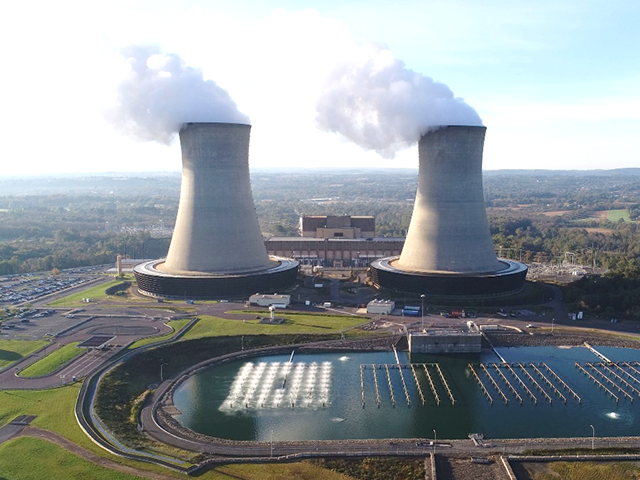
U.S. nuclear capacity additions are falling short of ambitious expectations set (and then reset) in recent years. Despite construction permits submitted or approved at this writing, new commercial, utility-scale nuclear generation is still a few years away from operation. Still, as has been cataloged year over year in this annual Nuclear News capacity factors survey, the fleet’s capacity factors have held steady since making significant gains during the 1990s. This year, the U.S. fleet’s median design electrical rating (DER) net capacity factor, calculated over three years of generation, is 91.29, up slightly from the 91.13 median recorded in 2020–2022. While the fleet continues to perform well, U.S. utility-scale electricity generation is increasing and outpacing any nuclear gains. With total generation up 2.8 percent from 2024 to 2025, the share of electricity generated by nuclear energy shrank. The nuclear generation share was 19.8 percent in 2000 and just 17.7 percent in 2025, according to U.S. Energy Information Administration data. That 17.7 percent of generation came from about 785 terawatt-hours of nuclear generation, up from about 782 TWh in 2024, when nuclear energy’s contribution accounted for 18.1 percent of generation. Go deeper: To see this newest data examined at length, read the full feature on Nuclear Newswire.
AP1000 reactor equipment for a group of utilities, advancing nuclear projects. The DOE aims to secure long-lead components to support future reactors with Westinghouse’s involvement. S&P Global
updates to rules for medical and industrial radioactive materials that aim to streamline licensing, enhancing efficiency without compromising safety. NRC
wins $1.4B in contracts for the U.S. Naval Nuclear Propulsion Program, involving nuclear reactor components and manufacturing for Navy submarines and aircraft carriers. Virginia Business
’s Department of Nuclear Engineering and Radiological Sciences talks about its role in the new Great Lakes Partnership to Enhance the Nuclear Workforce, a group that also includes ANS. MLive
plans a $500 million project to enhance its role in nuclear research and workforce training, focusing on next-generation reactors. Triangle Business Journal (subscription required)
its Independent Electricity System Operator to enter a cost-sharing and recovery agreement with Bruce Power, unlocking about $300M in support of the proposed Bruce C project. Power Magazine
respective authorities responsible for decommissioning nuclear power plants sign an MOU to launch a joint effort to partner on decommissioning techniques for graphite-moderated reactors. World Nuclear News
use small reactors due to military needs, but civilian adoption lags due to cost, security, and scale. Mass production might make small reactors viable. Wall Street Journal (subscription required)
A recent Government Accountability Office report found that the Department of Energy's Office of Environmental Management faces significant aging infrastructure, data accuracy issues, and funding challenges in managing nuclear waste cleanup facilities. Go deeper on Nuclear Newswire.
NASA takes step toward ion engines powered by fission reactors
A new prototype ion engine known as a lithium-fed magnetoplasmadynamic (MPD) thruster has passed a crucial test at NASA. The space agency is hoping to eventually combine this technology with nuclear fission to produce power and thrust for lengthy space flights, such as a crewed mission to Mars. Go deeper on Nuclear Newswire.
Fusion consortium established to advance private-sector fusion
Three companies have come together to form the U.K. Infinity Fusion Consortium with the objective of developing the first private sector–led fusion power plant in the United Kingdom using existing “commercially credible” technologies. Go deeper on Nuclear Newswire.
New AI tool to identify materials for plasma-facing components
Ames National Laboratory has announced a new tool that combines artificial intelligence and physics-based modeling to identify materials that can be used in fusion systems, where materials must withstand intense heat, radiation, and mechanical stress. Go deeper on Nuclear Newswire.
V.C. Summer failed to maintain safety equipment, says NRC—The State Joint venture formed with a focus on finishing Summer-2 and -3— Nuclear Newswire Brookfield and the Nuclear Company team up—PR Newswire Chernobyl at 40 years: Looking back at Nuclear News— Nuclear Newswire What goes around comes around: The revival of Toshiba’s 4S?— Nuclear Newswire
BWX Technologies가 미국 해군 핵추진 프로그램(Naval Nuclear Propulsion Program) 관련 계약 14억 달러를 수주했다.
계약 내용은 장기 선행 자재 구매 및 제조 부문을 포함한다.
BWXT는 최근 6개월간 포드급 항공모함 USS 도리스 밀러(CVN 81)용 대형 증기 발생기 4기를 인디애나주 마운트 버넌 시설에서 햄프턴 로즈 조선소로 납품했다.
카테고리: [](<>) \- 날짜:
카테고리: [](<>) \- 날짜:
카테고리: [](<>) \- 날짜:
카테고리: [](<>) \- 날짜:
카테고리: [](<>) \- 날짜:
카테고리: [](<>) \- 날짜:
카테고리: [](<>) \- 날짜:
카테고리: [](<>) \- 날짜:
카테고리: [](<>) \- 날짜:
카테고리: [](<>) \- 날짜:
카테고리: [](<>) \- 날짜:
카테고리: [](<>) \- 날짜:
카테고리: [](<>) \- 날짜:
카테고리: [](<>) \- 날짜:
카테고리: [](<>) \- 날짜:
카테고리: [](<>) \- 날짜:
카테고리: [](<>) \- 날짜:
BWXT, 미국 해군 원자력 추진 프로그램 계약 14억 달러 수주
장기 자재 구매 및 제조 계약 포함
조시 재니(Josh Janney) //2026년 5월 7일//지난 6개월간 BWX 테크놀로지스(BWX Technologies)는 인디애나주 마운트버논(Mount Vernon) 시설에서 최신 포드급 항공모함인 USS 도리스 밀러(Doris Miller, CVN 81)를 위한 대형 포드급 증기 발생기 4기를 햄프턴 로즈(Hampton Roads) 조선소로 선적했다. 사진 제공: BWXT
지난 6개월간 BWX 테크놀로지스(BWX Technologies)는 인디애나주 마운트버논(Mount Vernon) 시설에서 최신 포드급 항공모함인 USS 도리스 밀러(Doris Miller, CVN 81)를 위한 대형 포드급 증기 발생기 4기를 햄프턴 로즈(Hampton Roads) 조선소로 선적했다. 사진 제공: BWXT
지난 6개월간 BWX 테크놀로지스(BWX Technologies)는 인디애나주 마운트버논(Mount Vernon) 시설에서 최신 포드급 항공모함인 USS 도리스 밀러(Doris Miller, CVN 81)를 위한 대형 포드급 증기 발생기 4기를 햄프턴 로즈(Hampton Roads) 조선소로 선적했다. 사진 제공: BWXT
지난 6개월간 BWX 테크놀로지스(BWX Technologies)는 인디애나주 마운트버논(Mount Vernon) 시설에서 최신 포드급 항공모함인 USS 도리스 밀러(Doris Miller, CVN 81)를 위한 대형 포드급 증기 발생기 4기를 햄프턴 로즈(Hampton Roads) 조선소로 선적했다. 사진 제공: BWXT
린치버그(Lynchburg)에 본사를 둔 원자력 부품 및 연료 제조업체 BWX 테크놀로지스(BWX Technologies)는 목요일 미국 해군 원자력 추진 프로그램(U.S. Naval Nuclear Propulsion Program) 계약 두 건을 수주했다고 발표했으며, 계약 총액은 14억 달러를 초과한다.
이 프로그램은 미 해군(U.S. Navy)과 에너지부가 공동으로 운영하는 조직으로, 해군의 잠수함과 항공모함에 동력을 공급하는 원자로를 감독한다. 첫 번째 계약은 12억 8,500만 달러 규모로, 2026 회계연도의 프로그램 장기 자재 구매를 포함한다. 이는 2030년까지 연간 5회 제공되는 태스크 오더 계약 중 첫 번째이다.
회사는 두 번째 계약이 1억 6,500만 달러 규모로, 포드급(Ford-class) 항공모함을 위한 장기 원자로 시스템 부품 조달 및 제조 작업을 포함한다고 밝혔다. 해당 작업은 오하이오주 바버턴(Barberton)과 인디애나주 마운트버넌(Mount Vernon)에 위치한 BWXT 시설에서 수행될 예정이다.
"BWXT에서 미 해군의 장병들을 위해 원자력 원자로 시스템을 납품하는 것보다 더 숭고한 사명은 없습니다." BWXT 원자력 운영 그룹 사장 게리 캠퍼(Gary Camper)는 성명에서 이같이 밝혔다. "우리가 납품하는 모든 부품은 안전, 성실, 정밀에 대한 철저한 헌신을 반영하며, 이를 통해 해군의 잠수함과 항공모함이 전 세계를 자신 있게 항행하며 비할 데 없는 신뢰성으로 국가를 수호할 수 있습니다."
현재까지 BWXT는 해군 원자력 추진 프로그램에 420개 이상의 원자로 노심을 납품했으며, 지난 2년간 해당 프로그램으로부터 여러 건의 대형 계약을 수주했다. 2025년 10월, 회사는 해군 원자력 원자로 연료 제조를 위한 1억 7,400만 달러 규모의 계약을 수주했다고 발표했다. 같은 해 7월에는 약 26억 달러 규모의 계약을, 그해 2월에는 21억 달러 규모의 계약을 각각 수주했으며, 이는 컬럼비아급(Columbia-class) 및 버지니아급(Virginia-class) 잠수함과 포드급 항공모함에 관련된 원자로 부품 제조 및 자재 조달을 위한 것이었다.
지난 6개월간 BWXT는 또한 인디애나주 마운트버넌 시설에서 미 해군의 최신 포드급 항공모함인 USS 도리스 밀러(CVN-81)를 위한 포드급 증기 발생기 4기를 햄프턴 로즈(Hampton Roads) 조선소로 출하했다.
포춘 1000대 기업인 BWXT는 약 1만 명의 직원을 보유하고 있으며, 전 세계 17개 제조 시설을 소유 및 운영하고 있다. 또한 24개 이상의 추가 시설에서 미국 및 캐나다 정부를 지원하고 있다. 2025년 매출은 31억 9,000만 달러 이상으로 2024년 대비 18% 증가했다.
[브리짓 쿨롱(Bridget Coulon). 사진 제공: 페라톤(Peraton)페라톤(Peraton), 최고인사책임자 영입페라톤(Peraton)이 브리짓 쿨롱(Bridget Coulon)을 최고인사책임자(CHO)로 임명했다. 그녀는 25년 이상의 경력을 쌓은 후 레스턴(Reston) 소재 동사에 합류했다[...]2026년 5월 7일]()
[M1A2 에이브럼스(Abrams) SEPv3. 사진 제공: 제너럴 다이내믹스(General Dynamics)제너럴 다이내믹스(General Dynamics) 자회사, 7억 1,600만 달러 규모 육군 계약 수주미 육군이 전투용 차량 함대 지원을 위해 제너럴 다이내믹스 랜드 시스템스(General Dynamics Land Systems)에 7억 1,600만 달러 규모의 계약을 체결했다[...]2026년 5월 5일]()
[제퍼슨 랩(Jefferson Lab)은 뉴포트 뉴스(Newport News)에 위치해 있다. 사진: 조시 재니(Josh Janney)6월 제퍼슨 랩(Jefferson Lab) 전환에 관한 새로운 세부사항 공개지난달 새로운 운영 체계 발표에 이어 제퍼슨 랩(Jefferson Lab)의 미래에 대한 새로운 세부사항이 밝혀졌다[...]2026년 4월 28일]()
[IFPC Inc 2는 방공 능력을 제공하도록 설계되었다. 사진 제공: 레이도스(Leidos)레이도스(Leidos) 자회사, 방공 발사대용 6억 1,700만 달러 육군 계약 수주레스턴(Reston) 소재 레이도스(Leidos)의 자회사가 추가 IFPC Inc. 2 발사대 제작 및 납품을 위해 미 육군으로부터 6억 1,700만 달러 규모의 계약을 수주했다[...]2026년 4월 23일]()
[USS 줌왈트(USS Zumwalt, DDG 1000) 미 해군 사진. 사진 제공: RTX(RTX)RTX(RTX) 자회사, 2억 1,339만 달러 해군 계약 수정안 수주미 해군이 레이시온(Raytheon)에 해군 줌왈트(Zumwalt) 관련 작업 지속을 위한 2억 1,339만 달러 규모의 계약 수정안을 체결했다[...]2026년 4월 21일]()
[정부 계약업체 | 기술 2025: 게베든(GEVEDEN), 렉스 D.(REX D.)BWXT(BWXT), 원자력 생산을 위한 중공업 제조업체 인수BWXT(BWXT)가 상업용 원자력 제조 역량 강화를 위해 프리시전 컴포넌츠 그룹(Precision Components Group)을 인수하며 직원 50[...]2026년 4월 20일]()
[ 버지니아 민주당의 주 선거구 재획정 헌법 개정안에 반대하는 캠페인 집회 지지자들이 2026년 4월 11일 버지니아주 브리지워터에서 4월 21일 주민투표 특별선거를 앞두고 집회를 마치고 떠나고 있다. REUTERS/Ken Cedeno/파일 사진 버지니아 대법원, 찬반 4대 3 판결로 선거구 재획정 주민투표 결과 뒤집어 유권자들이 최근 승인한 버지니아 헌법 개정안은 민주당에게 유리한 위치를[...] ]()
[ 버지니아주 컴벌랜드 카운티에 계획된 도미니언 에너지(Dominion Energy)의 3,000메가와트 복합 사이클 천연가스 발전소 조감도. 이미지 제공: 도미니언 에너지 도미니언 에너지(Dominion Energy), 컴벌랜드에 수십억 달러 규모 발전소 건설 계획 도미니언 에너지 버지니아(Dominion Energy Virginia)는 3,000메가와트 복합 사이클 천연[...] ]()
[ 정부 | 정치 | 로비 2025: 루카스(LUCAS), 상원의원 L. 루이즈(L. LOUISE) FBI, 포츠머스 소재 루이즈 루카스(Louise Lucas) 상원의원 사무실 및 사업체 압수수색 FBI 요원들이 버지니아주 민주당 루이즈 루카스(Louise Lucas) 상원의원의 포츠머스 지역구 사무실과 인근 대마[...] ]()
[ 비공개: 2026 버지니아 40세 미만 40인 시상식 2026 40세 미만 40인 시상식 버지니아 전역에서 차세대 전문가들이 리더십 역할을 맡으며 각 산업을 형성해[...] ]()
[ 부동산 2023: 벤자민 샬(BENJAMIN SCHALL) 아발론베이(AvalonBay), 에쿼티 레지덴셜(Equity Residential)과 합병 논의 중 — 블룸버그 보도 아링턴 소재 아발론베이 커뮤니티(AvalonBay Communities)가 시카고 소재[...] ]()
[ VCU 헬스(VCU Health) 폴리 심장 센터 파빌리온(Pauley Heart Center Pavilion) 조감도. 이미지 제공: VCU 헬스 VCU 헬스(VCU Health), 리치먼드에 9,000만 달러 규모 시설 착공 VCU 헬스는 수요일 리치먼드 다이아몬드 디[...] ]()
[ 밸리 헬스 윈체스터 메디컬 센터(Valley Health Winchester Medical Center) 메리 프리 베드 재활 타워(Mary Free Bed Rehabilitation Tower) 조감도. 이미지 제공: 밸리 헬스 밸리 헬스(Valley Health), 두 개의 신규 건물로 확장 밸리 헬스는 2,090만 달러 규모의 행동 건강 파빌리온과[...] ]()
[ A hydrogen power plant could be located at the Lonesome Pine Regional Business & Technology Park in Wise County. Photo courtesy Wise County Industrial Development Authority 와이즈 카운티 데이터 센터 개발자들, 현장 에너지 모색 와이즈 카운티 데이터 센터 개발자들은 수소 또는 천연가스를 동력원으로 하는 10억 달러 규모의 캠퍼스를 계획하고 있으며, 목표[...] ]()
[ Gov. Abigial Spanberger vetoed a bill that would have allowed a casino in the Tysons area. Photo by Adobe Stock 스팬버거 주지사, 페어팩스 카지노 법안에 거부권 행사 에이비게일 스팬버거(Abigail Spanberger) 주지사는 페어팩스 카운티 카지노 주민투표를 허용하는 법안에 거부권을 행사했으며, 이유[...] ]()
[ A rendering prepared by Cox, Kliewer & Co. of the data center rejected by Chesapeake City Council last year Rendering courtesy City of Chesapeake 체서피크, 데이터 센터 규제 강화 검토 체서피크 시 공무원들은 주거 지역 인근 데이터 센터 개발을 규제하는 새로운 용도지역 규정 도입을 검토하고 있으며[...] ]()
동의 관리
본 웹사이트는 개인정보 처리방침과 쿠키 정책에 명시된 바와 같이, 웹사이트 운영, 분석, 사이트 이용 현황 분석, 사이트 탐색 개선, 사용자 경험 최적화 및 제3자 광고 또는 마케팅 목적을 위해 쿠키, 웹 비콘, 픽셀, 태그, 소프트웨어 개발 키트 및 관련 추적 기술을 사용합니다. 이러한 기술을 통해 당사 및 특정 제3자는 귀하의 탐색 행동 및 페이지 조회 등 웹사이트와의 상호작용에 관한 정보를 자동으로 수집할 수 있습니다. 또한 당사는 개인정보 처리방침과 쿠키 정책에 따라 귀하의 웹사이트 활동 정보를 소셜 미디어, 광고, 분석 및 기타 비즈니스 파트너와 공유할 수 있습니다. "전체 동의"를 클릭하시면 이러한 기술의 사용 및 귀하의 웹사이트 활동 정보를 제3자와 공유하는 것에 동의하시는 것입니다. 비필수 추적 기술의 사용에 동의하지 않으시면 "전체 거부"를 클릭하십시오. "쿠키 설정"을 클릭하여 특정 비필수 기술을 거부할 수 있습니다.
기능 기능 항상 활성화
기술적 저장 또는 접근은 가입자 또는 사용자가 명시적으로 요청한 특정 서비스의 사용을 가능하게 하거나, 전자통신 네트워크를 통한 통신 전송을 수행하는 정당한 목적을 위해 엄격히 필요합니다.
환경설정 환경설정
기술적 저장 또는 접근은 가입자 또는 사용자가 요청하지 않은 환경설정을 저장하는 정당한 목적을 위해 필요합니다.
통계 통계
기술적 저장 또는 접근은 통계 목적으로만 사용됩니다. 기술적 저장 또는 접근은 익명의 통계 목적으로만 사용됩니다. 소환장, 인터넷 서비스 제공업체의 자발적 협조 또는 제3자의 추가 기록 없이는, 이 목적으로만 저장되거나 검색된 정보는 일반적으로 귀하를 식별하는 데 사용될 수 없습니다.
광고 광고
기술적 저장 또는 접근은 광고를 전송하기 위한 사용자 프로필을 생성하거나, 유사한 마케팅 목적으로 웹사이트 또는 여러 웹사이트에서 사용자를 추적하는 데 필요합니다.
BWX Technologies(BWXT)가 미국 해군 핵 추진 프로그램(Naval Nuclear Propulsion Program)에서 총 14억 달러 규모의 계약을 수주했으며, 이는 장납기 자재 구매 및 제조 부문을 포함한다. 이번 계약은 미국이 핵 추진 항공모함 및 잠수함 전력을 지속적으로 강화하고 있음을 보여주며, BWXT가 해당 분야에서 핵심 공급업체로서의 입지를 더욱 공고히 하고 있음을 시사한다. 특히 BWXT는 최근 6개월 내에 최신 포드급 항공모함인 USS 도리스 밀러(CVN 81)용 대형 증기 발생기 4기를 인디애나주 마운트 버넌 시설에서 햄프턴 로즈 조선소로 납품한 바 있어, 이번 수주는 실질적인 생산 역량 위에 이루어진 성과다. 이 같은 대규모 계약은 미국의 해군력 현대화 전략과 핵 추진 기술 유지에 대한 정부의 강력한 의지를 반영하며, 방위산업 내 핵 관련 분야의 중요성이 높아지고 있음을 보여준다. 장기적으로 BWXT는 핵 추진 함정 분야에서 안정적인 수익원을 확보함으로써 사업 기반을 더욱 탄탄히 다질 것으로 예상된다.
※ 이 글은 해외 원자력 바로알기를 위한 정보 전달을 목적으로 제공됩니다. 특정 기업이나 종목에 대한 투자 권유가 아니며, 모든 투자 판단과 그에 따른 책임은 투자자 본인에게 있습니다.
온타리오 주정부가 IESO와 브루스 파워 간 비용 분담 및 회수 협약을 지시하며 브루스 C 원전 사전건설 작업에 약 3억 달러를 투입한다.
브루스 C 프로젝트가 승인될 경우 허론 호수 인근 기존 브루스 부지에 최대 4,800MW의 신규 원자력 발전 용량이 추가되며, 캐나다 GDP에 2,380억 달러 기여 및 건설 중 1만 8,900개 일자리 창출이 예상된다.
에너지·광산부 장관 스티븐 레체는 이 프로젝트가 브루스 파워를 세계 최대 원자력 발전 시설로 탈바꿈시키고 최종적으로 캐나다인 15만 명을 고용할 것이라고 밝혔다.
Ontario Advances Bruce C Nuclear Project with $300M Pre-Development Agreement
온타리오(Ontario)는 캐나다에서 30년 만에 처음으로 대규모 원자력 발전소를 건설하기 위한 가장 결정적인 조치를 취했다. 독립전력시스템운영자(Independent Electricity System Operator, IESO)에게 브루스 파워(Bruce Power)와 비용 분담 및 회수 계약을 체결하도록 지시하여, 제안된 브루스 C(Bruce C) 프로젝트의 착공 전 작업을 추진하도록 했다.
에너지·광업부 장관 스티븐 레체(Stephen Lecce)가 5월 7일 발표한 이 협약은 퍼스트 네이션(First Nations) 및 지역사회 참여, 인력 계획, 부지 준비, 그리고 2030년까지 완료될 예정인 착공 전 활동에 약 3억 달러를 투입한다. 연방 규제 승인을 거쳐 전체 프로젝트가 진행될 경우, 브루스 C는 휴런 호(Lake Huron) 연안의 기존 브루스 부지에 최대 4,800MW의 새로운 원자력 발전 용량을 추가하게 된다.
발표에서 인용된 주(州) 정부 자료에 따르면, 이 프로젝트는 캐나다 국내총생산(GDP)에 2,380억 달러 기여, 건설 기간 중 18,900개의 일자리 창출, 그리고 발전소 가동 후 6,700개의 상시 일자리 창출이 예상된다. 온타리오 상공회의소(Ontario Chamber of Commerce)는 최근 보고서에서, 이 프로젝트가 인근 브루스(Bruce), 그레이(Grey), 휴런(Huron) 카운티 지역사회에 연평균 20억 달러의 지역 GDP, 4억 2,700만 달러의 노동 소득, 3,400개의 상근직 일자리를 가져다줄 것으로 추산했다.
레체 장관은 성명을 통해 "우리 경제가 해외의 위협에 직면한 시기에, 온타리오 정부는 캐나다산 원자력에 두 배로 투자하고 있다"고 말하며, 브루스 C를 궁극적으로 15만 명의 캐나다인을 고용할 수 있는 대륙을 선도하는 원자력 확장의 핵심으로 규정했다. 그는 또한 이 프로젝트가 "브루스 파워를 세계 최대의 원자력 발전 시설로 변모시키는" 것을 목표로 한다고 덧붙였다.
2023년 발표에서 오늘의 약속까지: 긴 여정
5월 7일 발표는 2023년 7월에 시작된 프로세스의 가장 중요한 후속 조치로, 당시 온타리오 주는 브루스 파워(Bruce Power)에게 기존 브루스 부지에 최대 4,800 MW의 신규 원자력 발전 설비 입지 타당성을 평가하기 위한 지역사회 협의 및 연방 환경 영향 평가를 시작하도록 지시했습니다. 전 에너지부 장관 토드 스미스(Todd Smith) 재임 시 이루어진 이 초기 발표는, 2005년 이후 처음으로 전력 수요가 증가하기 시작하는 상황에 대한 예방적 조치로서 사전 개발 작업을 규정했습니다.
2024년, 브루스 파워(Bruce Power)는 캐나다 영향 평가청에 초기 프로젝트 기술서를 제출하여 연방 영향 평가 절차를 공식적으로 개시했습니다. 대규모 신규 원자력 프로젝트에 대한 다년간 승인 과정의 첫 단계인 이 평가는 2028년에 완료될 것으로 예상됩니다. 이후 캐나다 원자력 안전위원회(CNSC)로부터 부지 준비 허가를 받게 됩니다.
5월 7일의 비용 분담 지시는 연방 영향 평가 작업을 위한 IESO-브루스 파워(Bruce Power) 최초 자금 지원 방식을 수립한 2024년 장관 지시와 함께 이루어졌습니다. 두 협약을 통해 브루스 파워(Bruce Power)는 최종 투자 결정 이전에 엔지니어링 연구, 공급업체 자격 심사, 공급망 준비 및 인력 계획을 추진할 수 있는 보다 명확한 재정적 기반을 확보하게 되었습니다.
온타리오 전력망 전반의 급증하는 수요
브루스 C(Bruce C) 결정은 온타리오 전력 수요에 대한 변화된 전망에 의해 추진되고 있다. 주 정부의 발표는 "2050년까지 최대 90%"의 성장을 가리키고 있으며, 이는 독립 전력 시스템 운영자(IESO)의 2025년 연간 계획 전망(APO) 기준 시나리오보다 더 적극적인 전력화 시나리오를 반영하는 수치다. IESO의 기준 시나리오는 같은 기간 동안 전력 수요 75% 증가를 모델링하고 있다.
시스템이 궁극적으로 어떤 경로를 따르든, 계획 담당자들은 상당한 규모의 신규 발전 용량이 필요할 것이라는 데 동의하고 있다. 2034년까지 IESO의 APO는 에너지 및 용량 부족이 약 2,100 MW의 용량과 7 TWh의 에너지 규모로 확대될 것으로 예측한다. IESO와 온타리오 원자력 운영사들은 2050년까지 최대 17,800 MW의 신규 원자력 용량을 공급하는 것—달링턴(Darlington) 규모의 발전소 약 5개에 해당—이 기술적으로 실현 가능하다는 결론을 내렸으며, 이를 위해서는 브루스 C에서 이미 계획된 것 외에 대형 원자로 최소 8기를 추가로 건설하고, 잠재적으로는 브루스 1호기 및 2호기의 수명을 두 번째 개보수를 통해 연장해야 한다고 밝혔다.
수요 성장 동인이 다양화되고 있다. 교통 전력화가 단일 항목으로는 가장 큰 기여 요인이 될 것으로 예측되며, 전기차(EV) 관련 전력 수요는 2035년까지 20 TWh에 달할 것으로 전망된다. 산업 수요는 자동차, 전기차 배터리, 첨단 제조업, 핵심 광물 채굴 분야의 투자가 주(州)로 유입됨에 따라 2035년까지 58% 증가할 것으로 예상된다. 인공지능(AI) 및 클라우드 워크로드를 처리하는 데이터 센터는 2035년까지 신규 전력 수요의 약 13%를 차지할 것으로 전망된다.
Bruce C의 _세대를 위한 에너지_ 계획에서의 위치
이 프로젝트는 포드(Ford) 정부의 첫 번째 통합 장기 에너지 계획인 _세대를 위한 에너지(Energy for Generations)_ 의 중심에 자리하고 있다. 이 계획은 작년에 발표되고 2025년 10월에 업데이트되었다. 이 계획은 2050년까지의 계획 기간을 설정하며, 온타리오주 역사상 처음으로 전력, 천연가스, 수소, 바이오연료, 저장 및 기타 에너지원을 단일 통합 프레임워크 안에 포함시켰다.
저렴성, 안보, 신뢰성, 청정 에너지라는 네 가지 원칙을 기반으로 한 이 계획은 현재 약 37,200MW인 설치 전력 용량을 2050년까지 65,000MW 이상으로 확장할 것을 요구한다. 원자력은 미래 시스템의 근간으로 자리매김하고 있다. 온타리오 독립 전력 시스템 운영자(IESO)의 전망에 따르면 원자력 발전량은 2026년 약 65TWh에서 2050년까지 200TWh 이상으로 증가하여 궁극적으로 온타리오주 전력의 대부분을 공급하게 된다.
브루스 C(Bruce C)는 동시에 추진되는 여러 주요 원자력 사업 중 하나다:
달링턴(Darlington) 개보수. 온타리오 파워 제너레이션(Ontario Power Generation, OPG)의 4기 발전소에 대한 128억 달러 규모의 전면 개보수는 예정대로 예산 내에서 진행 중이며, 1호기는 2024년 11월에 예정보다 약 5개월 앞당겨 가동을 재개했다. 마지막 호기는 2026년 완공될 예정으로, 2055년경까지 3,500MW의 용량을 확보한다. 브루스 파워(Bruce Power) 수명 연장 프로그램. 3호기부터 8호기까지의 개보수가 진행 중이며 2033년까지 완료될 예정으로, 브루스 A와 B의 합산 6,550MW 용량을 2060년대까지 연장한다. 브루스 파워는 별도로 자산 최적화를 통해 2030년대까지 기존 호기에서 추가로 450MW의 최대 출력을 확보한다는 목표를 세웠다. 피커링 B(Pickering B) 개보수. OPG는 총 프로젝트 자금을 62억 달러로 늘리는 41억 달러 규모의 주 예산 지원을 받아 프로젝트 정의 단계를 진행 중이다. 최종 승인을 조건으로, 5~8호기의 개보수는 2030년대 중반까지 완료를 목표로 하고 있다. 달링턴 소형 모듈 원자로(SMR). 온타리오주는 2025년 5월 OPG의 달링턴 부지에 BWRX-300 SMR 4기를 건설하는 209억 달러 규모의 계획을 승인했다. G7 최초의 계통 규모 SMR인 1호기는 2030년 말 이전에 상업 운전을 목표로 하며, 후속 호기들은 2033년에서 2035년 사이에 순차적으로 완공될 예정이다. 웨슬리빌(Wesleyville, 포트 호프(Port Hope)). OPG는 포트 호프의 1,300에이커 규모 웨슬리빌 부지에 대규모 원자력 신규 건설을 위한 초기 계획도 추진 중이며, 초기 평가에 따르면 궁극적으로 최대 10,000MW의 신규 발전 용량이 들어설 수 있는 것으로 나타났다.
이러한 사업들은 현재 온타리오주 원자력 산업 전반에 걸쳐 약 80,000개의 일자리를 지원하는 것으로 추산되며, 브루스 파워의 기존 부지만 해도 수명 연장 프로그램을 통해 연간 약 22,000개의 직·간접 일자리를 지원하고 있다.
선도적인 국내 공급망
온타리오 주는 원자력 지출을 캐나다 내에 유지하기 위한 경제적 논거에 크게 의존하고 있다. 브루스 파워(Bruce Power)는 현재 지출의 약 95%가 캐나다 내에서 이루어지고 있다고 밝혔으며, 온타리오 주는 브루스 C(Bruce C) 프로젝트의 규모와 온타리오 원자력 공급망의 성숙도를 감안할 때 이 수치가 더욱 확대될 것이라고 말했다.
이 공급망은 서스캐처원(Saskatchewan)에서 채굴된 우라늄이 블라인드 리버(Blind River)에 있는 세계 최대 우라늄 정제소에서 정제되고 포트 호프(Port Hope)에서 변환되는 것부터, 포트 호프, 토론토(Toronto), 피터버러(Peterborough)의 시설에서 연료봉 다발이 제조되는 것까지 이어진다. 온타리오 주는 이미 루마니아에 대한 개·보수 서비스, 폴란드·에스토니아·미국에서의 소형모듈원자로(SMR) 관련 협약, 그리고 폴란드 BWRX-300 호기용 원자로 압력 용기를 제조하기 위해 온타리오 주 캠브리지(Cambridge)의 BWXT에 부여된 10억 달러 이상의 계약 기회 등 원자력 기술을 국제적으로 수출하고 있다.
업계 관계자들은 5월 7일 발표에 즉각 찬사를 보냈다. 앳킨스레얄리스(AtkinsRéalis) CEO 이언 L. 에드워즈(Ian L. Edwards)는 이번 결정을 "온타리오 에너지 미래를 규정하는 순간"이라고 평했다. 웨스팅하우스 캐나다(Westinghouse Canada)의 존 고먼(John Gorman)은 자사가 건설을 지원할 "준비가 되어 있다"고 밝혔으며, 카메코(Cameco)의 팀 깃젤(Tim Gitzel)은 이 프로젝트를 주의 장기적 에너지 안보를 위한 "중추적 발걸음"이라고 표현했다. 에이콘(Aecon), 프라마톰(Framatome), BWXT, 키넥트릭스(Kinectrics), NPX, E.S. 폭스 리미티드(E.S. Fox Limited) 각사는 건설 지원을 약속하는 성명을 발표했다.
노동계도 이에 동참하며 환영의 뜻을 밝혔다. 리우나(LiUNA) 국제 부회장 겸 캐나다 디렉터 조 만시넬리(Joe Mancinelli)는 이번 협약을 "이 시대가 요구하는 국가 건설 정책"이라고 규정했다. 전력 노동자 연합(Power Workers' Union), 전문직 종사자 협회(Society of United Professionals, IFPTE 160), 온타리오 주 건설 및 건축 노동조합 협의회(Provincial Building and Construction Trades Council of Ontario)도 모두 건설 단계 전반에 걸쳐 수천 개의 노조 일자리가 생겨날 것이라는 전망을 근거로 지지 의사를 표명했다.
원주민 부족 및 지역 사회와의 협력
브루스(Bruce) 부지는 소긴 퍼스트 네이션(Saugeen First Nation)과 나와시 언세디드 퍼스트 네이션의 치페와족(Chippewas of Nawash Unceded First Nation)으로 구성된 소긴 오지브웨이 네이션(Saugeen Ojibway Nation, SON)의 전통 영토 내에 위치해 있습니다. 온타리오(Ontario) 주와 브루스 파워(Bruce Power) 모두 SON과의 지속적인 협력에 대한 의지를 재확인했으며, 새로운 사전 개발 협약이 SON과의 협력 지원은 물론, 브루스(Bruce), 그레이(Grey), 휴런(Huron) 카운티 지역 사회와의 협력을 지원하기 위한 역량 자금을 제공한다는 점을 확인했습니다.
브루스 카운티 워든 겸 소긴 쇼어스(Saugeen Shores) 시장 루크 샤르보노(Luke Charbonneau)는 이번 자금 지원이 지자체들이 "자신 있게 계획을 수립"할 수 있는 여건을 마련해 준다고 말하며, 자신의 지역이 더 넓은 시스템에 전력을 공급하는 데 기여하게 됐다고 밝혔습니다. 킨카딘(Kincardine) 시장 케네스 크레이그(Kenneth Craig)는 이번 조치를 지역 경제에 대한 신뢰의 표시로 환영했습니다.
원주민 리더십과 지분 참여는 온타리오 주의 광범위한 에너지 계획 전반에 걸쳐 점점 더 두드러진 주제로 부각되고 있습니다. 온타리오 주는 원주민 에너지 지원 프로그램(Indigenous Energy Support Program)을 연간 2,500만 달러로 확대하고, 원주민 기회 금융 프로그램(Indigenous Opportunities Financing Program)의 대출 보증 한도를 10억 달러에서 30억 달러로 높였으며, 최근 배터리 저장 및 송전 조달 사업에서 원주민 지분 참여를 우선시했습니다. 하이드로 원(Hydro One)의 50대 50 퍼스트 네이션 지분 파트너십 모델(First Nation Equity Partnership Model)은 현재 여러 주요 송전 프로젝트에 적용되고 있으며, 테이크와 타가무 네이션(Taykwa Tagamou Nation)과 무스 크리 퍼스트 네이션(Moose Cree First Nation)은 무스 리버 분지(Moose River Basin)의 잠재적인 두 수력 발전소에 대한 초기 단계 계획을 공동으로 주도하고 있습니다.
송전 및 계통 준비
4,800MW 규모의 브루스(Bruce) 발전소 증설에는 이에 상응하는 송전망 투자가 필요합니다. _에너지 포 제너레이션스(Energy for Generations)_ 는 2032년 서비스 개시를 목표로 하는 새로운 500kV 배리-서드베리(Barrie-to-Sudbury) 송전선을 남북 회랑 강화의 핵심축으로 제시하고 있습니다. 이 업그레이드는 브루스 C에만 국한된 것은 아니지만, 광역 토론토 지역과 온타리오 남서부의 수요 거점으로 신규 발전량을 공급하기 위해 설계된 30,000킬로미터 이상의 대규모 송전망 확충 사업의 일환입니다. 이미 남서부 지역의 5개 우선 사업이 시행 중이며, 여기에는 2025년 1월 예정보다 1년 앞서 완공된 채텀-레이크쇼어(Chatham-to-Lakeshore) 송전선도 포함됩니다.
우선 에너지 프로젝트의 허가 절차를 간소화하기 위해 출범한 온타리오 주의 "원 팀(One Team)" 조정 이니셔티브는, 브루스 C가 사전 개발 단계에서 인허가 단계로, 그리고 궁극적으로 건설 단계로 진행됨에 따라 필요한 인허가 묶음에도 적용될 것으로 기대됩니다.
다음 단계
가까운 미래에는 3억 달러 규모의 사전 개발 예산이 지역사회 참여, 공급망 자격 심사, 기술 엔지니어링 작업, 그리고 세부적인 부지 준비 계획 수립을 위한 4년간의 지속적인 활동에 투입될 예정이다. 현재 진행 중인 연방 환경 영향 평가 작업은 2028년 완료를 목표로 순조롭게 진행되고 있으며, 이후 CNSC의 부지 준비 허가가 발급될 예정이다.
주요 공사는 해당 연방 승인이 완료된 후에야 시작될 수 있으며, 프로젝트에 적용될 정확한 원자로 기술은 아직 선정 단계에 있다. 온타리오 주는 OPG(Ontario Power Generation), 브루스 파워(Bruce Power), IESO(Independent Electricity System Operator), 그리고 정부의 고위 지도층으로 구성된 신규 원자력 기술 패널을 활용하여 브루스 C와 웨슬리빌(Wesleyville) 양쪽에 걸친 기술 결정을 조율하고, 안전성, 비용 효율성, 에너지 안보, 경제적 이익 간의 균형을 맞출 계획임을 밝혔다.
IESO 사장 겸 CEO인 레슬리 갤링거(Lesley Gallinger)는 이번 협약이 장기 인프라 계획의 현실을 반영한다고 말했다. "이처럼 긴 준비 기간이 필요한 프로젝트의 첫 단계를 지원함으로써, 우리는 온타리오 주가 미래를 대비하고 전력 수요가 발생하는 시점에 이를 충족할 수 있도록 준비하고 있습니다."
온타리오 주정부가 브루스 C 원자력 프로젝트에 3억 달러 규모의 사전 개발 협약을 체결함으로써 캐나다에서 30년 만에 처음으로 대규모 원자력 발전소 건설을 향한 결정적인 발걸음을 내딛었다. 이 프로젝트는 최대 4,800MW의 신규 발전 용량을 추가할 계획으로, 2050년까지 온타리오 전력 수요가 최대 90% 증가할 것으로 예상되는 상황에서 전력 공급 부족 문제를 해결하기 위한 핵심 대책으로 자리매김하고 있다. 경제적 파급 효과도 상당하여 캐나다 GDP에 2,380억 달러 기여, 건설 기간 18,900개 일자리 창출, 완공 후 6,700개의 영구적 일자리가 예상되며, 주변 지역사회에도 연간 평균 20억 달러의 GDP 효과가 전망된다. 전기차 보급 확대, 산업 전력 수요 증가, AI 데이터센터 확산 등 복합적인 수요 증가 요인을 고려할 때, 이 프로젝트는 단순한 에너지 인프라를 넘어 캐나다의 탈탄소 경제 전환과 산업 경쟁력 강화에도 중요한 역할을 할 것으로 보인다. 다만 연방 환경 영향 평가가 2028년까지 예정되어 있고 최종 투자 결정까지 여러 규제 절차가 남아 있어, 실제 건설 착수까지는 상당한 시간이 소요될 전망이다.
※ 이 글은 해외 원자력 바로알기를 위한 정보 전달을 목적으로 제공됩니다. 특정 기업이나 종목에 대한 투자 권유가 아니며, 모든 투자 판단과 그에 따른 책임은 투자자 본인에게 있습니다.
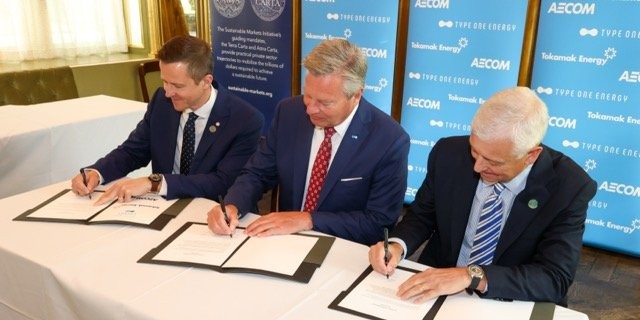
토카막 에너지(Tokamak Energy), 타입 원 에너지(Type One Energy), AECOM의 대표들이 영국 인피니티 핵융합 컨소시엄(U.K. Infinity Fusion Consortium) 설립 협약에 서명하고 있다. (사진: Type One Energy)
요약
카테고리: 현황
영국에서 민간 부문 주도의 첫 번째 핵융합 발전소 개발을 목표로, 타입 원 에너지(Type One Energy), 토카막 에너지(Tokamak Energy), AECOM 세 기업이 연합하여 영국 인피니티 핵융합 컨소시엄을 설립했다.
컨소시엄은 타입 원 에너지의 400MWe급 인피니티 투(Infinity Two) 스텔라레이터 설계, 토카막 에너지의 고온 초전도(HTS) 자석 기술, AECOM의 국제 엔지니어링 역량을 결합하여 시너지를 창출한다.
이 컨소시엄은 영국 정부의 STEP(구형 토카막 에너지 생산, Spherical Tokamak for Energy Production) 핵융합 프로그램과 상호 보완적으로 작동하며, 영국 및 미국의 상업적 핵융합 선도 목표에 부합한다.
---
세 기업이 연합하여 영국 인피니티 핵융합 컨소시엄(U.K. Infinity Fusion Consortium)을 결성했다. 이 컨소시엄의 목표는 기존의 "상업적으로 신뢰할 수 있는" 기술을 활용해 영국 최초의 민간 부문 주도 핵융합 발전소를 개발하는 것이다.
컨소시엄은 세 파트너사의 전문성이 결합되어 시너지를 발휘할 것으로 기대된다. 테네시 주(Tennessee) 기반의 핵융합 스타트업 타입 원 에너지(Type One Energy)는 400MWe급 인피니티 투(Infinity Two) 스텔라레이터(stellarator) 핵융합 발전소 설계안을 제공한다. 영국의 핵융합 기술 기업 토카막 에너지(Tokamak Energy)는 고온 초전도(HTS) 자석 기술과 제조 역량을 보유하고 있다. 텍사스 주(Texas) 기반의 컨설팅 기업 AECOM은 국제적인 엔지니어링 및 인프라 역량을 갖추고 있다.
SMI 의무 실행 중: 컨소시엄에 참여한 세 파트너사는 모두 지속 가능한 시장 이니셔티브(Sustainable Markets Initiative, SMI)의 회원사다. SMI는 찰스 3세(King Charles III)가 민간 부문의 지속 가능한 경제 전환 가속화를 지원하기 위해 창설한 글로벌 네트워크다. 이 목표는 지난 3월 발표된 영국 정부의 공식 핵융합 전략의 일환이기도 하다.
컨소시엄의 활동은 찰스 국왕이 최근 미국 의회 연설에서 밝힌, 영국과 미국이 "내일의 기술—핵융합과 양자 컴퓨팅, AI와 신약 개발 분야에서 새로운 파트너십을 맺어 재능과 자원을 결합함으로써 수많은 생명을 구할 가능성을 열어가고 있다"는 발언과도 맥을 같이한다.
영국 인피니티 핵융합 컨소시엄 설립과 관련해 SMI CEO 제니퍼 조던-세이피(Jennifer Jordan-Saifi)는 다음과 같이 말했다. "타입 원 에너지, 토카막 에너지, AECOM이 SMI 회원사로서 한데 모였습니다. 이는 SMI의 테라 카르타(Terra Carta)와 아스트라 카르타(Astra Carta) 의무가 실제로 작동하고 있음을 보여줍니다—기업과 금융이 협력하여 혁신적인 돌파구를 보다 지속 가능한 미래 구축을 위한 측정 가능한 성과로 전환하는 것입니다."
STEP 핵융합 프로그램: 컨소시엄은 또한 영국의 구형 토카막 에너지 생산(Spherical Tokamak for Energy Production, STEP) 핵융합 프로그램을 위한 자기 밀폐 핵융합 기술, 원자력 공급망, 규제 사안, 발전소 부지 선정 분야에 대한 영국 정부의 투자를 활용할 수 있을 것으로 기대된다. STEP 프로그램은 핵융합 연구에서 상업적 실용화로의 전환을 촉진하고 있다. 컨소시엄은 STEP을 보완하는 민간 주도의 핵융합 상업화 경로를 만들 계획이며, 토카막 에너지는 최근 자석 시스템 파트너로 선정되어 8개 자석 작업 패키지를 담당하게 됐다.
실증 경험: 컨소시엄은 타입 원 에너지가 테네시 밸리 오쏘리티(Tennessee Valley Authority, TVA)의 불 런(Bull Run) 부지에서 추진 중인 인피니티 투 핵융합 발전소 프로젝트를 통해 축적한 경험으로부터도 혜택을 받을 수 있다. 이 미국 프로젝트는 컨소시엄이 영국에서 진행할 인피니티 투 배치의 기술적 모델로 활용될 수 있다.
타입 원 에너지 CEO 크리스 모리(Chris Mowry)는 새 컨소시엄이 "상업적으로 실현 가능한 실제 핵융합 발전소 프로젝트를 구현하는 데 필요한 영국과 미국의 핵심 산업 역량을 한데 모았다"고 말했다. 그는 이어 "핵융합 기술, 첨단 제조, 발전소 엔지니어링을 결합함으로써 오늘의 에너지 혁신과 내일의 에너지 인프라 사이의 격차를 좁히고 있다"며 "우리의 이니셔티브는 상업적 핵융합 배치의 선두주자가 되고자 하는 영국과 미국의 목표와 완전히 부합한다"고 덧붙였다.
토카막 에너지 CEO 워릭 매튜스(Warrick Matthews)는 컨소시엄이 "토카막 에너지의 혁신적인 자석 기술과 제조 전문성을 또 하나의 세계 정상급 핵융합 프로그램의 중심에 올려놓는다"고 말했다. 그는 "함께라면 무한하고 청정한 새로운 에너지 형태의 상업화를 향해 더 빠르게 나아갈 수 있으며, STEP 자석 시스템 파트너로서의 역할과 결합해 글로벌 핵융합 분야에서 영국 공급망의 선도적 위치를 강화할 수 있다"고 강조했다.
---
AI 분석
이번 영국 인피니티 핵융합 컨소시엄의 출범은 핵융합 에너지 상업화가 정부 연구 기관 주도에서 민간 기업 주도로 무게 중심이 이동하고 있다는 신호탄으로 해석된다. 타입 원 에너지의 스텔라레이터 설계, 토카막 에너지의 자석 기술, AECOM의 엔지니어링 역량이라는 세 가지 보완적 강점의 결합은 단순한 기업 간 협력을 넘어 핵융합 공급망 생태계를 구축하려는 전략적 시도로 볼 수 있다. 특히 영국 정부의 STEP 프로그램과 병행하여 민간 상업화 경로를 개척한다는 점은, 공공과 민간이 경쟁이 아닌 협력 구조로 핵융합 에너지 보급을 추진하는 새로운 모델을 제시한다. 미국 TVA 불 런 부지의 실증 경험을 영국 배치에 활용하는 방식은 기술 이전과 리스크 저감 측면에서 주목할 만하며, 향후 양국 간 핵융합 에너지 협력의 기준점이 될 가능성이 높다. SMI를 매개로 한 민간 투자 유치 전략 역시 핵융합 상업화의 자금 조달 방식에 새로운 방향을 제시하는 사례로 평가된다.
미국 정부책임청(GAO)은 DOE 환경관리국(DOE-EM)이 노후 인프라, 데이터 정확성 문제, 자금 조달 어려움에 직면해 있다고 보고했으며, 이는 원자력 폐기물 정화 시설 관리에 심각한 영향을 미치고 있다.
2025년 6월 기준, DOE-EM이 관리하는 15개 정화 부지의 약 4,300개 시설에서 15억 달러 이상의 수리 수요가 보고되었으며, 유지보수 예산은 2020 회계연도 대비 80% 증가했다.
GAO는 데이터 검증 절차 강화, 유지보수 데이터 정확성 향상, 의회에 대한 체계적인 소통 개선 등 4가지 권고사항을 제시했으며, DOE는 이 중 2개에 동의하고 나머지 2개에는 부분 동의했다.
---
미국 정부책임청(Government Accountability Office, GAO)의 최근 보고서에 따르면, 에너지부(Department of Energy, DOE)의 환경관리국(Office of Environmental Management, DOE-EM)은 원자력 폐기물 정화 시설 관리에 있어 심각한 노후 인프라 문제, 데이터 정확성 문제, 자금 조달 문제에 직면해 있는 것으로 나타났다.
보고서에 따르면, 2025년 6월 기준으로 DOE-EM이 감독하는 15개 정화 부지의 약 4,300개 운영 시설에서 15억 달러 이상의 수리 수요가 보고된 상태이다. 또한, DOE-EM의 예산 요청에는 2026 회계연도(FY 2026) 유지보수 지출로 9억 5,000만 달러 이상이 포함되어 있으며, 이는 2020 회계연도(FY 2020) 대비 80% 증가한 수치이다.
GAO는 DOE-EM 본부와 각 정화 부지 간의 더 나은 계획 수립, 그리고 미지원 유지보수 프로젝트에 관한 의회와의 더 나은 소통이 이루어진다면, 장기적으로 수백만 달러를 절감하면서 유지보수 수요를 관리하는 데 도움이 될 것이라고 밝혔다.
보고서 주요 내용: GAO는 DOE-EM이 각 부지에 걸쳐 약 2,200개의 건물, 2,500개의 기타 구조물 및 시설, 1,200개의 트레일러, 도로 및 유틸리티와 같은 지원 요소를 유지하는 데 연간 약 7억 8,100만 달러를 지출하고 있음을 확인했다. 보고서는 "일부 경우에는 인프라 유지보수에 대한 임시방편적 접근(piecemeal approach, 단편적·부분적 처리 방식)으로 인해 유지보수 비용이 교체 비용을 초과하는 결과를 초래했다"고 기술하고 있다.
DOE-EM 데이터에 대한 GAO의 분석 결과, 2025년 6월 기준으로 DOE-EM 시설의 약 80%가 "양호(good)" 또는 "매우 양호(very good)"한 상태 지수를 보유하고 있으며, 약 1.5%가 "임무 핵심(mission critical)"으로 분류되면서 "불량(poor)" 또는 "매우 불량(very poor)"한 상태 지수를 나타내고 있는 것으로 확인되었다. 보고서는 "임무 핵심적이면서 불량 또는 매우 불량한 상태에 있는 시설의 비율은 상대적으로 낮지만, 그 중 하나라도 고장이 발생할 경우 정화 임무, 부지 안전, 또는 두 가지 모두에 높은 위험을 초래할 수 있다"고 밝히고 있다.
DOE-EM 정화 부지들은 데이터 검증, 정확성 및 비교 가능성에 관한 DOE 명령 430.1C(DOE Order 430.1C)의 요구사항을 일관되게 준수하지 않는 것으로 나타났다. 명령 430.1C는 DOE-EM이 모든 부지에 대해 연간 데이터 검증을 실시하도록 요구하고 있다.
각 부지에서는 현재, 계획된, 그리고 미래의 임무 요건을 충족하기 위한 인프라를 포괄하는 DOE-EM의 기업 전체 전략 계획인 마스터 자산 계획(Master Asset Plan)이 부지 수준의 모든 필요 사항을 반영하지 못한다고 보고했다. 이는 부분적으로 해당 계획이 권장 프로젝트를 개발하기 위해 전년도 기록 데이터의 "스냅샷(snapshot, 특정 시점의 단순 기록)"을 사용하기 때문이다.
권고사항: GAO 보고서는 해당 문제들을 해결하기 위해 다음과 같은 권고사항을 제시하고 있다:
DOE-EM이 정화 부지들로 하여금 데이터 검증 문제를 수정하기 위한 시정 조치 계획을 수립하고 완료하도록 보장할 것.
DOE-EM이 각 부지가 이연된 유지보수 및 연간 실제 유지보수 데이터를 정확하고 비교 가능하게 수집하는 절차를 갖추도록 보장할 것.
기관 본부가 부지 유지보수 필요 사항을 더 잘 반영하기 위해 정화 부지에서 더 신뢰할 수 있는 정보를 마스터 자산 계획에 보다 잘 통합할 것.
기관이 우선순위 지정 모델에 의해 식별된 특정 프로젝트를 통해 달성할 수 있는 비용 절감 및 임무 위험 감소에 대해 의회에 소통할 것.
이에 대해 DOE는 첫 번째 두 가지 권고사항에는 동의하고, 나머지 두 가지 권고사항에는 부분적으로 동의한다는 입장을 표명했다.
---
AI 분석
이번 GAO 보고서는 DOE-EM의 원자력 폐기물 정화 임무가 노후화된 인프라와 데이터 관리의 취약성이라는 이중 과제에 직면해 있음을 명확히 드러낸다. 특히 유지보수 예산이 2020 회계연도 대비 80% 증가했음에도 불구하고 15억 달러 이상의 수리 수요가 적체되어 있다는 사실은, 단순한 예산 증액만으로는 구조적 문제를 해결하기 어렵다는 점을 시사한다. 데이터 검증 미이행과 마스터 자산 계획의 한계는 자원 배분의 비효율성을 초래할 수 있으며, 임무 핵심 시설의 부실 관리는 정화 임무와 부지 안전 전반에 연쇄적 위험을 야기할 수 있다. DOE가 GAO의 권고사항 일부에만 동의한 점은 향후 이행 과정에서 마찰이 예상됨을 보여주며, 의회와의 소통 강화와 데이터 기반 우선순위 수립이 장기적 비용 절감의 핵심이 될 것이다.
_새로 설립된 회사는 V.C. Summer 원자력 프로젝트의 프로젝트 관리자로 선정되었습니다_
사우스캐롤라이나주 컬럼비아 및 뉴욕, 2026년 5월 4일 /PRNewswire/ -- 세계적인 선도 투자 회사 브룩필드(Brookfield)와 원자력 프로젝트 개발 및 실행 회사인 더 뉴클리어 컴퍼니(The Nuclear Company, "TNC")는 오늘 웨스팅하우스(Westinghouse) 원자력 원자로 기술 개발을 전문으로 하는 신규 합작 회사 설립을 위한 파트너십을 체결했다고 발표했습니다. 이 파트너십은 세계 최고 수준의 원자력 프로젝트 실행 회사를 구축하는 것을 목표로 합니다.
브룩필드(Brookfield)의 글로벌 자산 운용 및 에너지 인프라 개발 역량과 TNC의 원자력 프로젝트 실행 전문성이 결합되어 이 전문 프로젝트 개발 회사의 토대를 형성하게 됩니다. 해당 회사는 AP1000 및 AP300을 포함한 웨스팅하우스(Westinghouse) 원자로 기술만을 기반으로 한 원자력 프로젝트 배치 실행 역량과 함께 엔지니어링, 조달, 건설 및 시운전 활동에 대한 종합적인 프로젝트 관리, 인허가 지원, 감독 서비스를 제공할 예정입니다. 양측은 통상적인 승인 절차 및 조건에 따라 향후 수개월 내에 최종 계약 체결을 향해 나아갈 것으로 기대하고 있습니다.
사우스캐롤라이나주 젠킨스빌(Jenkinsville) 인근의 부분 건설된 AP1000 두 기를 잠재적으로 개발하려는 노력의 일환으로, 브룩필드(Brookfield)는 공식 명칭 V.C. Summer 원자력 2호기 및 3호기("본 프로젝트")로 알려진 사우스캐롤라이나주 페어필드 카운티(Fairfield County) 원자력 프로젝트의 프로젝트 관리자로 신규 회사를 선정했습니다. 이 프로젝트는 미국에서 실행 준비가 가장 잘 갖춰진 원자력 개발 기회 중 하나입니다. 사우스캐롤라이나주 주립 전력회사인 산티쿠퍼(Santee Cooper)는 해당 프로젝트에서 이 회사의 역할을 지지합니다.
신규 회사는 본 프로젝트에 대한 실사 활동을 지원하고, 최종 투자 결정(Final Investment Decision)으로 진행될 경우 프로젝트 실행을 감독할 예정입니다. 프로젝트 개발은 추가 평가, 규제 승인, 최종 계약 체결을 조건으로 합니다.
브룩필드(Brookfield)의 매니징 파트너 와이어트 하틀리(Wyatt Hartley)는 "이번 합작투자는 대규모 인프라 투자에 대한 브룩필드(Brookfield)의 원칙 있는 접근 방식과 숙련된 운영사와의 파트너십에 대한 집중을 반영합니다"라고 말했습니다. "글로벌 인프라 개발 역량과 원자력 프로젝트 실행 전문성을 결합함으로써, 이 플랫폼이 미국 정부와의 웨스팅하우스(Westinghouse) 파트너십의 모멘텀을 기반으로 미국의 원자력 부흥을 가속화할 잠재력을 가지고 있다고 믿습니다"라고 덧붙였습니다.
더 뉴클리어 컴퍼니(The Nuclear Company)의 최고원자력책임자(Chief Nuclear Officer) 조 클레차(Joe Klecha)는 "우리 팀은 보글(Vogtle) 현장과 세계에서 가장 복잡한 에너지 프로젝트들을 통해 구축되었습니다"라고 말했습니다. "우리는 원자력을 실현하는 데 무엇이 필요한지 알고 있습니다. 지금까지 부족했던 것은 속도와 규모에 맞게 사람, 역량, 자본을 한데 모으는 모델이었습니다. 그것이 바로 이 파트너십이 만들어내는 것입니다."
브룩필드(Brookfield)에 대하여
브룩필드(Brookfield)는 전 세계 경제의 근간을 이루는 실물 자산과 필수 서비스 기업을 소유·운영하는, 운용 자산 규모 1조 달러 이상의 세계적인 선도 투자 회사입니다. 당사는 경제 성장과 생산성 지원에 핵심적인 인프라, 재생에너지 및 에너지 전환, 사모펀드, 부동산, 크레딧 등의 분야에서 전 세계 기관 및 개인 투자자를 대신하여 투자합니다.
100년이 넘는 역사와 30개국 이상에서의 운영 경험을 바탕으로, 당사는 보다 연결되고 회복력 있으며 지속 가능한 미래를 가능하게 하는 기반 자산과 기업을 구축하기 위해 장기적이고 인내심 있는 자본을 투입하며, 고객을 위한 장기적인 부의 창출과 주주를 위한 강력한 위험 조정 수익 실현을 추구합니다. 뉴욕에 본사를 둔 브룩필드 코퍼레이션(Brookfield Corporation, 티커: BN)과 세계적인 선도 대안 자산 운용사인 브룩필드 자산운용(Brookfield Asset Management, 티커: BAM)은 모두 뉴욕증권거래소(NYSE)와 토론토증권거래소(TSX)에 상장되어 있습니다.
더 뉴클리어 컴퍼니(The Nuclear Company)는 자체 개발한 원자력 운영 시스템(Nuclear Operating System, NOS)—모든 기술의 원자로 건설을 데이터 기반의 예측 가능한 프로세스로 전환하는 AI 기반 플랫폼—을 통한 '한 번 설계, 다수 건설(design-once, build-many)' 접근 방식으로 원자력 건설의 현대화를 선도합니다. 보글(Vogtle) 3호기 및 4호기를 가동에 성공한 팀을 포함한 원자력 발전 및 에너지 인프라 베테랑들이 설립한 TNC는 원자력을 보급하고 기존 시설을 운영하여 미국의 장기적인 에너지 안보를 보장합니다.
브룩필드(Brookfield)와 더 뉴클리어 컴퍼니(TNC)의 파트너십은 미국 핵에너지 르네상스를 가속화하려는 민간 자본의 강력한 의지를 보여주는 사례로, 웨스팅하우스 원자로 기술(AP1000, AP300) 전문 기업을 설립해 핵발전 프로젝트의 실행 역량을 통합한다는 점에서 주목할 만하다. 특히 사우스캐롤라이나주 젠킨스빌 인근의 V.C. Summer 원전 2·3호기 부지처럼 이미 일부 건설이 진행된 '실행 준비 완료' 프로젝트에 집중한다는 전략은 새로운 부지 개발에 따른 리스크를 줄이는 실용적 접근이다. 1조 달러 이상의 자산을 운용하는 브룩필드의 금융·인프라 역량과, 조지아주 보글 원전 건설 경험을 보유한 TNC의 핵발전 전문성이 결합됨으로써 자본·기술·인력의 삼각 구조가 완성된다는 점이 이 합작의 핵심 강점이다. 이 파트너십은 미국 정부의 원전 부흥 기조와도 맞물려 있으며, 향후 최종 투자 결정(FID) 및 규제 승인 과정이 미국 신규 원전 개발의 실현 가능성을 가늠하는 중요한 시금석이 될 것이다. 장기적으로는 '설계 1회, 반복 건설' 모델을 통해 원전 건설 비용과 일정을 예측 가능하게 만들려는 TNC의 접근 방식이 글로벌 원전 산업의 표준으로 자리 잡을 가능성도 있다.
※ 이 글은 해외 원자력 바로알기를 위한 정보 전달을 목적으로 제공됩니다. 특정 기업이나 종목에 대한 투자 권유가 아니며, 모든 투자 판단과 그에 따른 책임은 투자자 본인에게 있습니다.
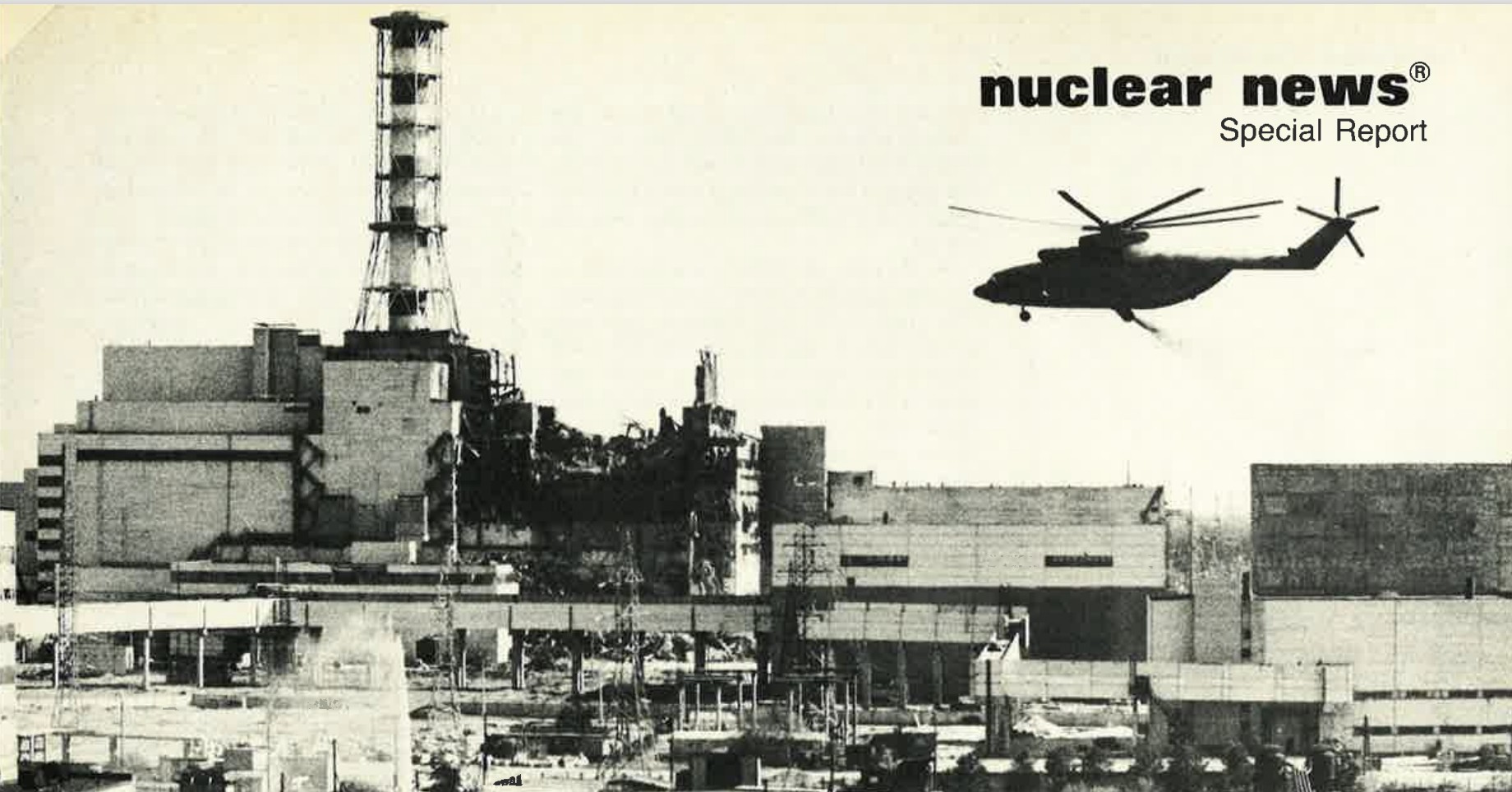
손상된 체르노빌 원자력 발전소를 점검하는 헬리콥터. (사진: _Nuclear News_, 1986년 10월, p. 59; 원출처: _Soviet Life_)
현지 시각 4월 26일 일요일 오전 1시 23분은 역사상 가장 심각한 원자력 사고, 즉 당시 소련의 일부였던 우크라이나 체르노빌 원자력 발전소 4호기 노심 용융 사고로부터 40주년이 되는 시각이다.
명확한 설명: 체르노빌 사고를 노심 용융이라고 부르는 것은 정확하지만, 후쿠시마 다이이치 및 스리마일 아일랜드 사고와의 근본적인 차이를 이해하는 것이 중요하다. 아래에서 읽게 되겠지만, 체르노빌 사고는 수초에서 수분 만에 전개된 반응도 유발 노심 용융으로 인한 대참사였다. 반면, 후쿠시마와 TMI에서의 점진적인 냉각재 상실로 인한 노심 용융은 수 시간에 걸쳐 진행되었으며, 모든 측면에서 그 파괴 규모는 몇 자릿수나 적었다.
그 후 40년 동안, 수많은 책, 다큐멘터리, 기사, 학술 발표들이 다양한 각도에서 체르노빌의 역사와 영향을 조명해 왔다. _Nuclear News_ 의 아카이브에도 이와 유사하게 풍부한 관점들이 존재하며, 수백 명의 과학자, 옹호자, 비평가, 정치인들이 수년에 걸쳐 체르노빌에 관한 자신의 생각을 공유해 왔다. 오늘은 _NN_ 의 지면에서 몇 가지 주요 내용을 살펴보며 체르노빌의 이야기가 수십 년에 걸쳐 어떻게 전개되어 왔는지 살펴보고자 한다.
_Nuclear News_ 아카이브에 수록된 체르노빌 사진들
Slider Photo
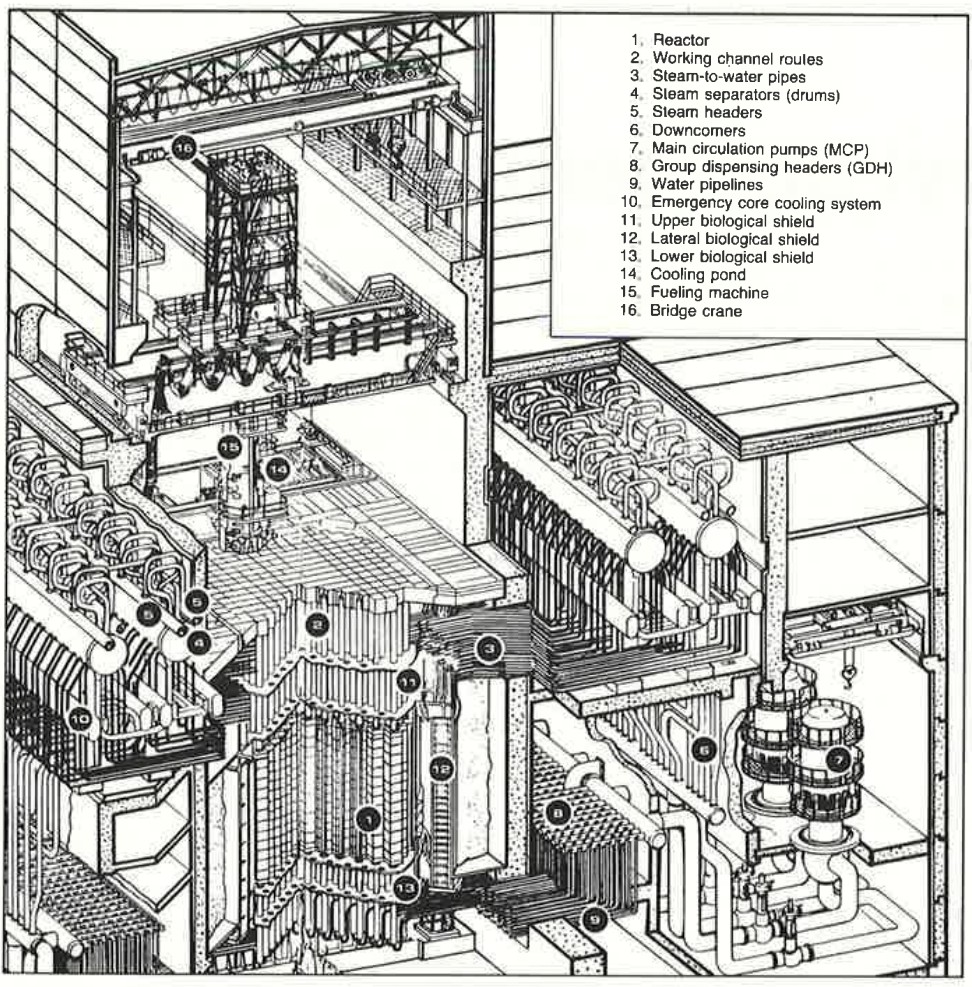
RBMK-1000 원자로의 단면도. (출처: _NN_, 1986년 6월, p. 87; 원출처: _IAEA Bulletin_)
_Nuclear News_ 아카이브에 수록된 체르노빌 사진들
Slider Photo
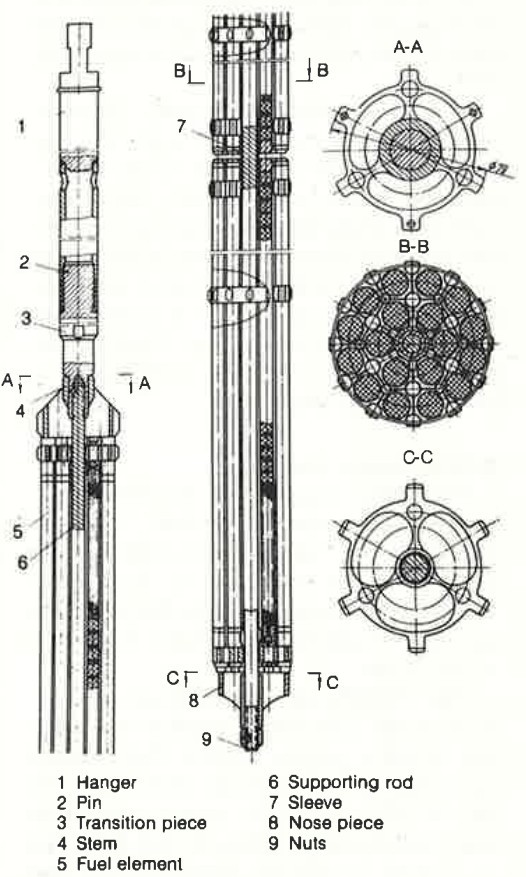
RBMK 핵연료 집합체 설계. (출처: _NN_, 1986년 6월, p. 89; 원출처: _Nuclear Energy_)
_Nuclear News_ 아카이브에 수록된 체르노빌 사진들
Slider Photo
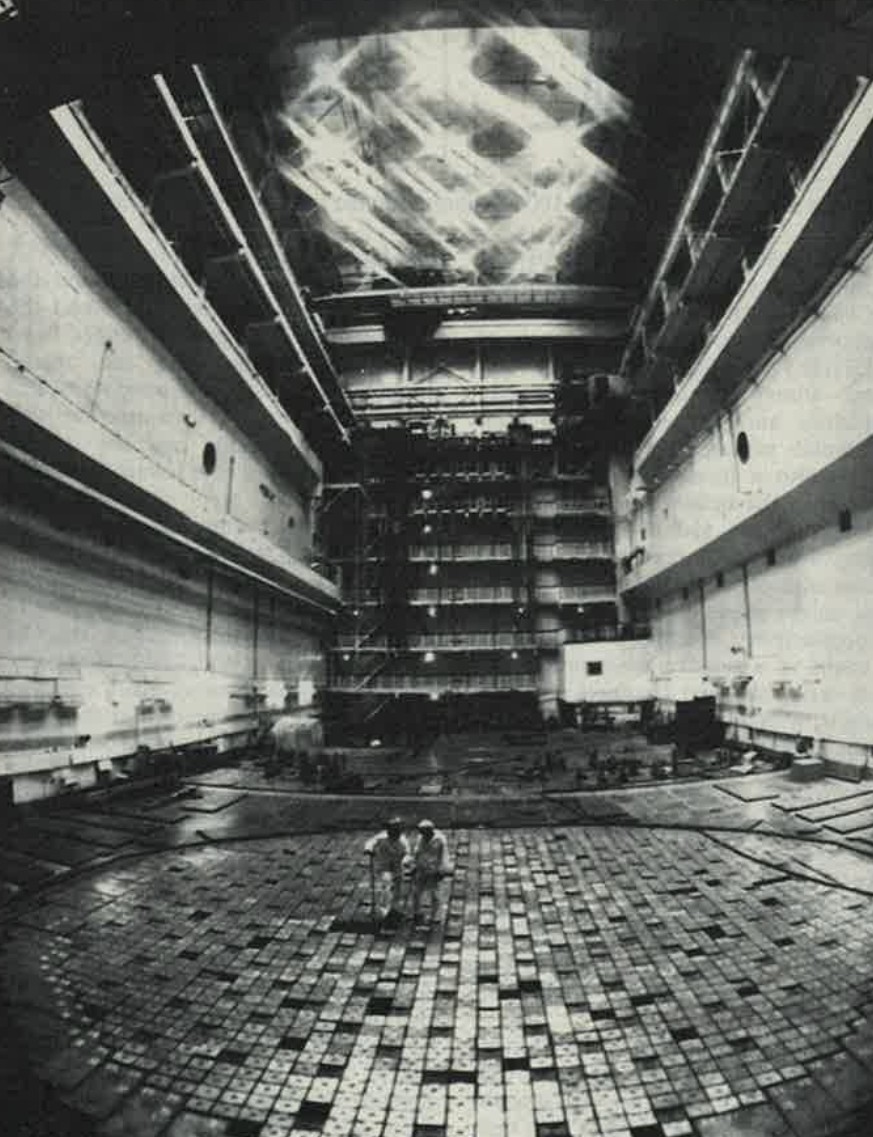
1982년 체르노빌의 원자로 홀. (출처: _NN_, 1986년 6월, p. 90; 원출처: AP/Wide World Photos)
_Nuclear News_ 아카이브에 수록된 체르노빌 사진들
Slider Photo
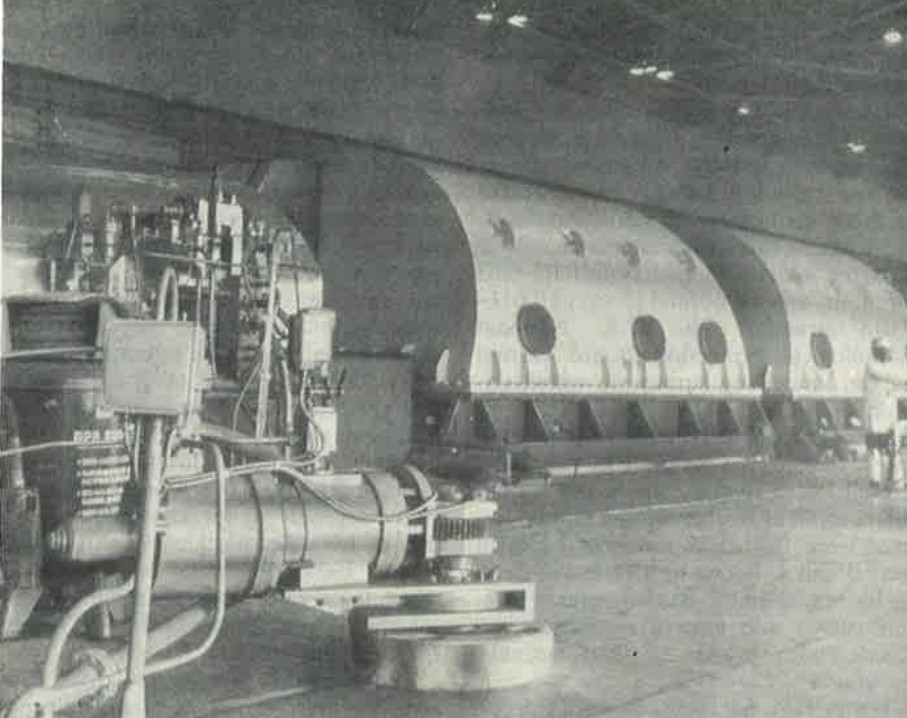
사고 이전, 아마도 1·2호기 터빈 홀로 추정되는 체르노빌의 터빈들. (사진: _NN_, 1986년 6월, p. 94)
_Nuclear News_ 아카이브에 수록된 체르노빌 사진들
Slider Photo
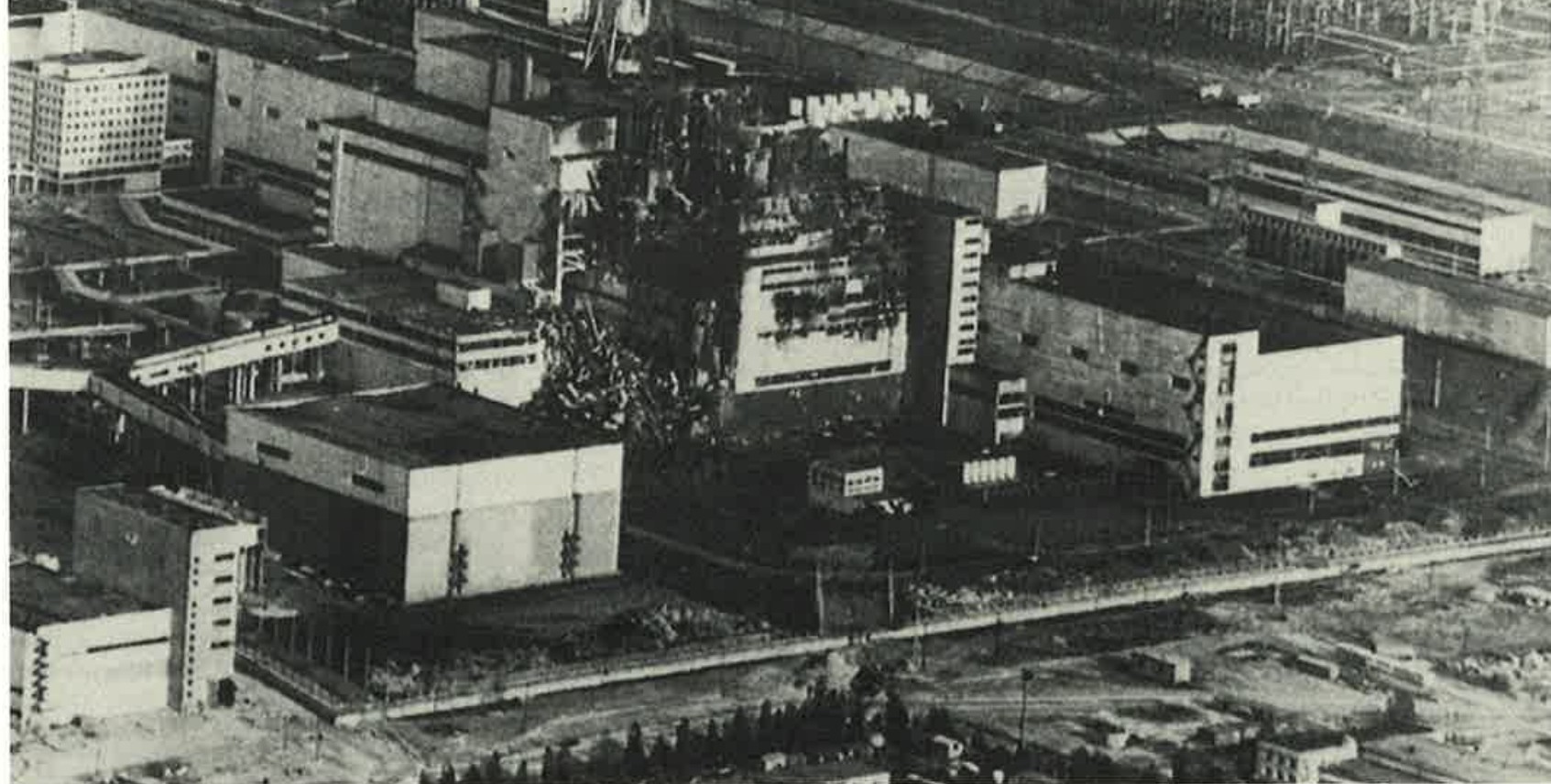
1986년 5월 9일, 손상된 체르노빌 부지. (사진: _NN_, 1986년 6월, p. 87; 원출처: AP/Wide World Photos)
_Nuclear News_ 아카이브에 수록된 체르노빌 사진들
Slider Photo
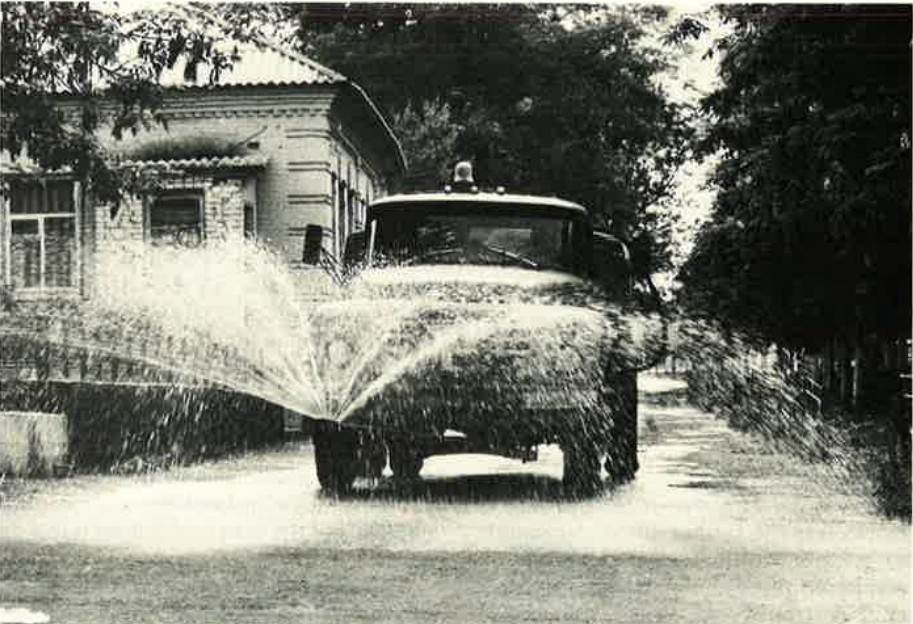
사고 이후 발전소 인근 마을 도로에 물을 살포하는 모습. (사진: _NN_, 1986년 10월, p. 64; 원출처: _Soviet Life_)
_Nuclear News_ 아카이브에 수록된 체르노빌 사진들
Slider Photo
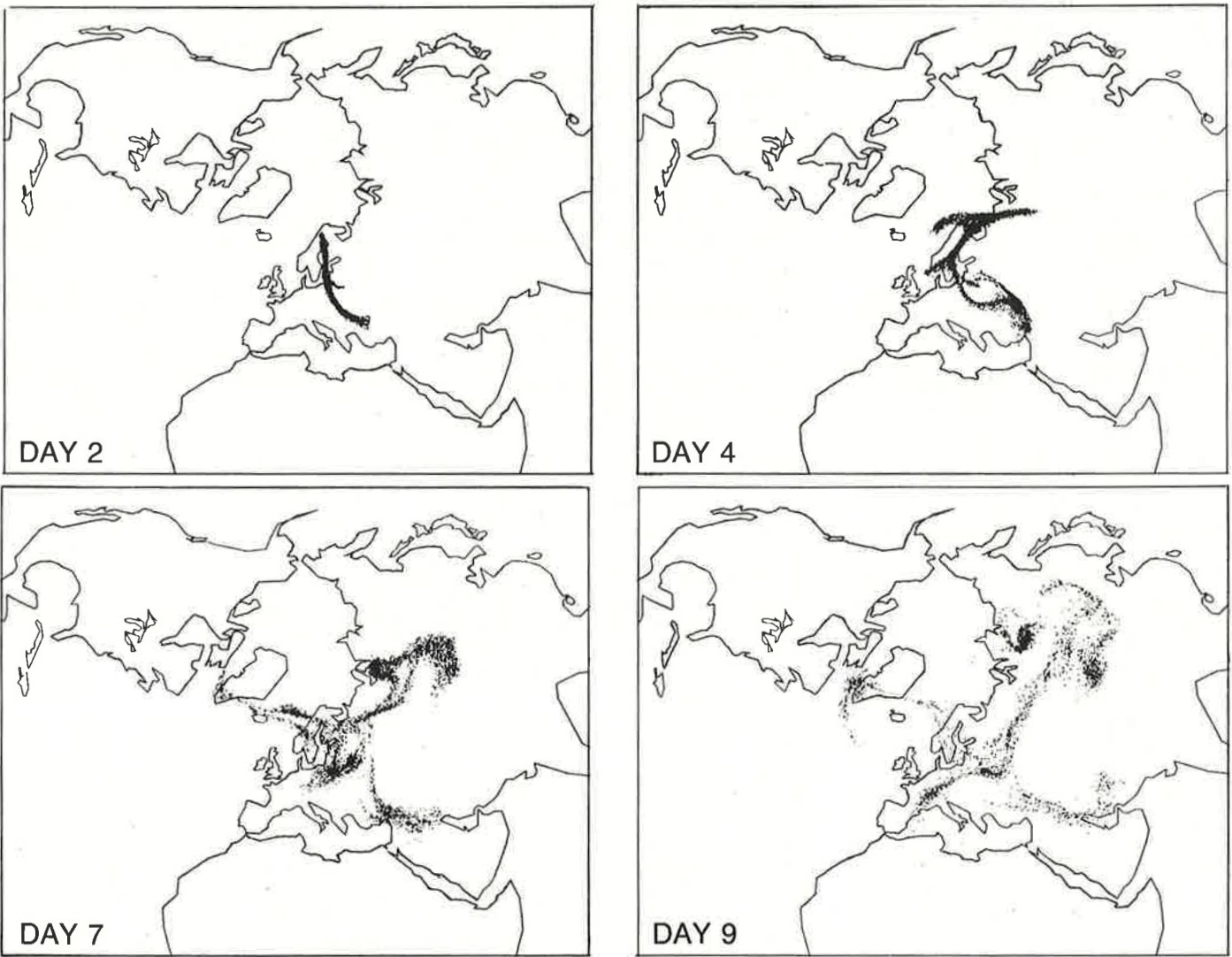
사고 이후 수일간 북반구 하부 대류권에서의 방사선 분산 플룸에 대한 예비 추정치를 나타낸 로렌스 리버모어 국립연구소(Lawrence Livermore National Laboratory) 작성 지도. (출처: _NN_, 1986년 6월, p. 92)
_Nuclear News_ 아카이브에 수록된 체르노빌 사진들
Slider Photo
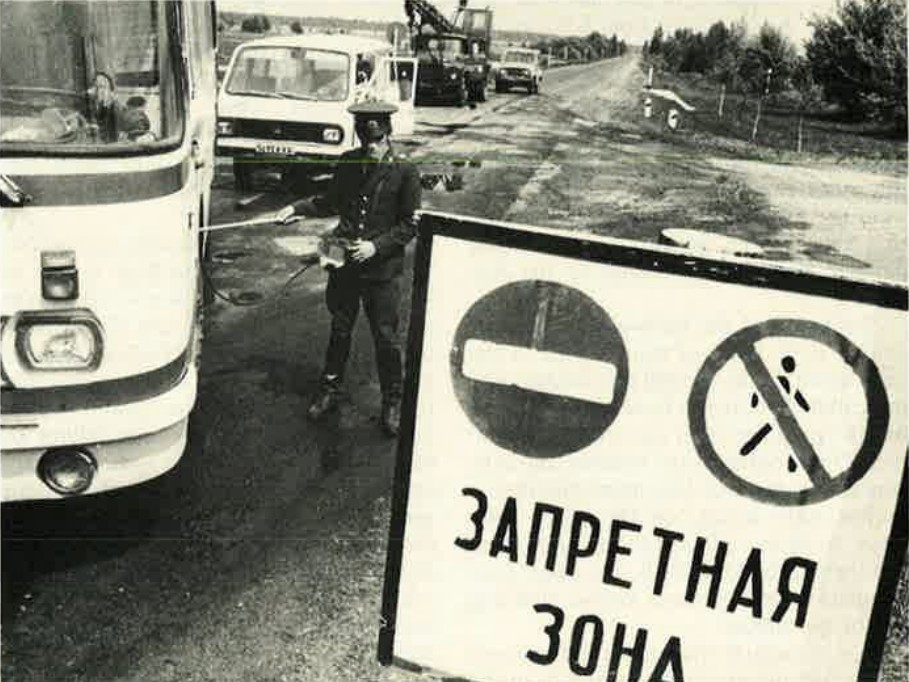
30킬로미터 대피 구역 경계의 방사선 검문소. (사진: _NN_, 1986년 10월, p. 66; 원출처: Sovfoto)
_Nuclear News_ 아카이브에 수록된 체르노빌 사진들
Slider Photo
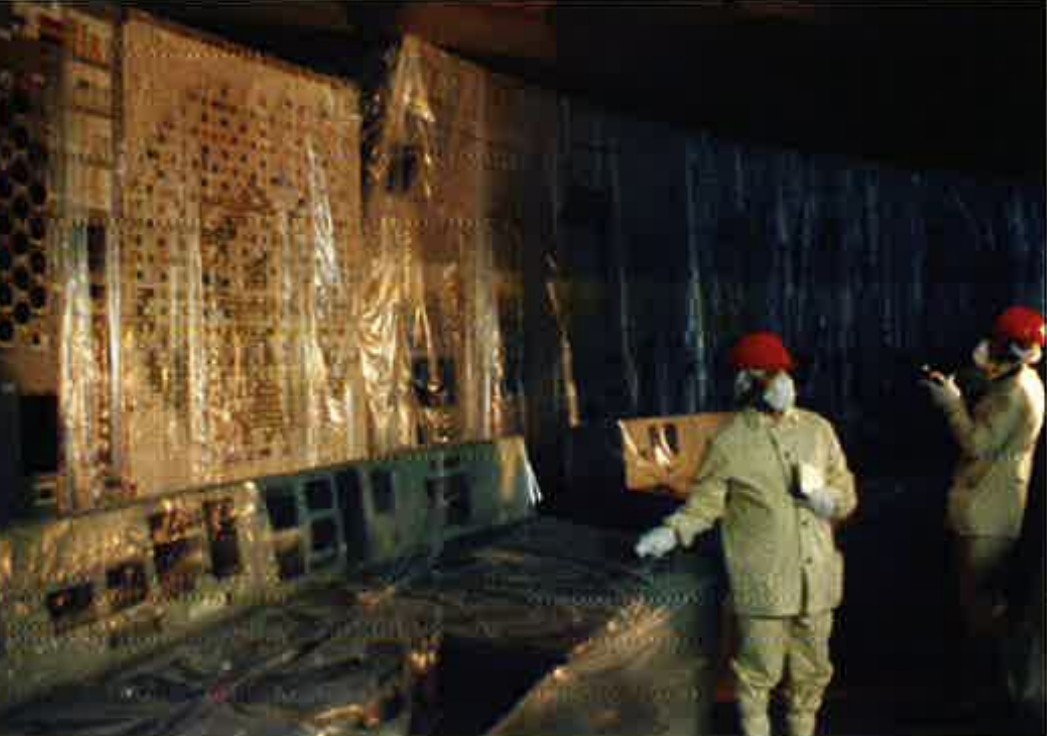
1995년 말 체르노빌 현장 견학 중, 방문객이 체르노빌 4호기 제어실에서 악명 높은 긴급 정지 버튼의 위치를 가리키고 있다. (사진: 사이먼 리폰(Simon Rippon)/_NN_, 1996년 4월, p. 32)
_Nuclear News_ 아카이브에 수록된 체르노빌 사진들
Slider Photo
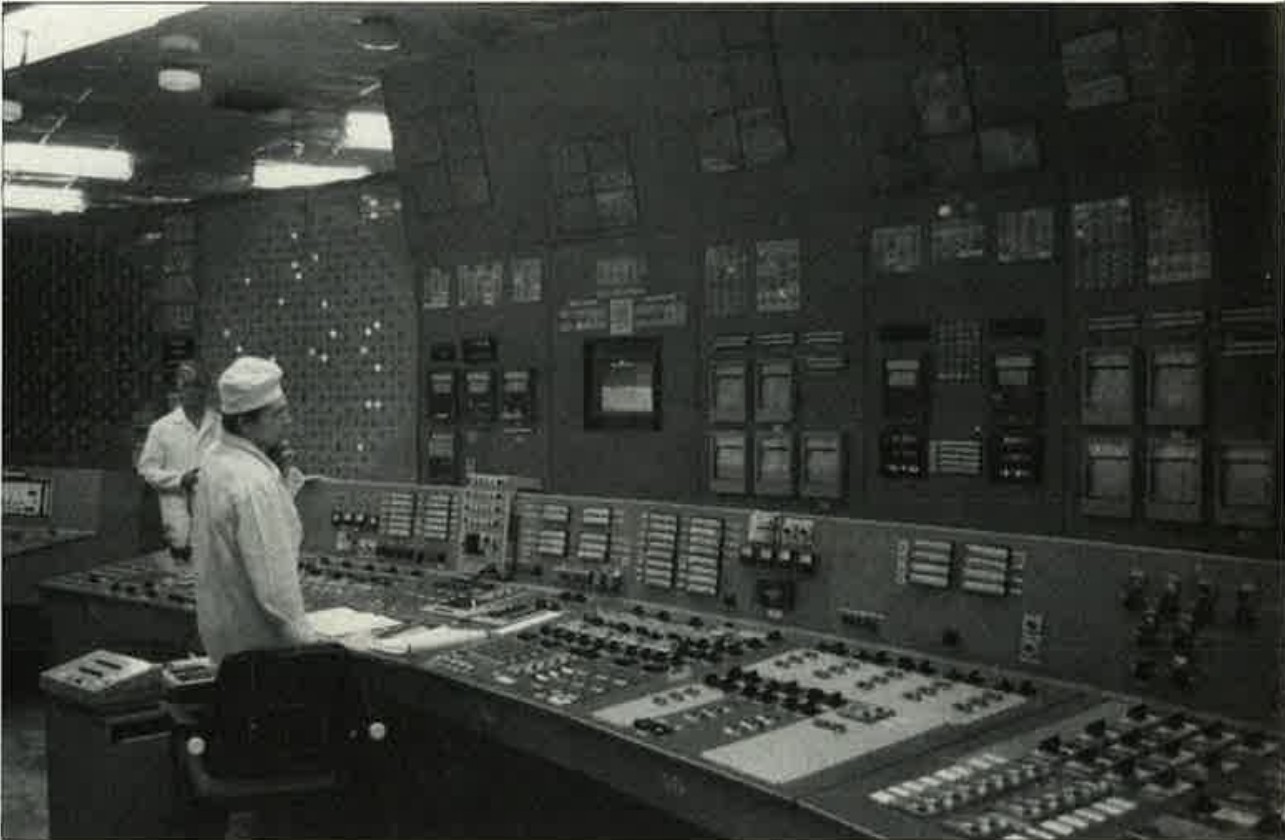
1995년 정상 가동 중인 체르노빌 3호기 제어실. (사진: 사이먼 리폰(Simon Rippon)/_NN_, 1996년 4월, p. 34)
_Nuclear News_ 아카이브에 수록된 체르노빌 사진들
Slider Photo
체르노빌의 "자진 귀환자" 중 한 명이 반려견과 함께 출입 제한 구역에서의 삶으로 돌아가고 있다. (사진: _NN_, 2006년 4월, p. 43; 원출처: _Insight_)
Prev __
Next __
사고 이전: 체르노빌 4호기는 1984년 4월에 운전을 시작하였다. 이에 앞서 1982년, 1979년, 1978년에 운전을 시작한 세 기의 다른 호기가 있었다. 1986년 사고 이전 《원자력 뉴스(Nuclear News)》 아카이브에서 체르노빌에 관한 주목할 만한 언급은 단 하나뿐이다. 1982년 11월호 《NN》에서 체르노빌의 원자로들은 1000MWe급 경수냉각·흑연감속 원자로로 구성된 신규 원자로 군의 일부로 소개되었다. 이 LGR들은 설계의 "모듈식 특성" 덕분에 소련에서 이전 원자로 유형들보다 "다소 원활한 도입"이 이루어진 것으로 묘사되었다.
《NN》의 사고 보도: 1986년 4월 29일, 키이우(Kyiv)의 주요 신문 뒷면에는 "소련 각료회의의 정보"라는 제목의 짧은 기사가 실렸다. 그 내용은 다음과 같았다. "체르노빌 원자력 발전소에서 사고가 발생하였습니다. 원자로 한 기가 손상되었습니다. 피해를 수습하기 위한 조치가 진행 중입니다. 부상자들이 치료를 받고 있습니다. 정부 조사위원회가 구성되었습니다."
이처럼 밋밋한 첫 언론 보도는, 이후 뒤따르게 될 광범위하고 상세한 보도와는 극명한 대조를 이룬다. 《NN》이 이 주제를 처음 다룬 기사는 "체르노빌 사고"라는 단순한 제목으로 1986년 6월호에 실렸다.
해당 기사에서 체르노빌은 인명 피해 규모, 방출된 방사선량, 발전소의 물리적 손상, 그리고 "이미 긴장된 국가 간 관계를 더욱 악화시킨 결과"의 측면에서 역대 "가장 심각한" 원자력 사고로 기술되었다.
이어서 《NN》은 사고의 전개 과정을 설명하였으나, 당시 기자들에게는 그 경위의 상당 부분이 알려지지 않은 상태였다. 원자력 발전소에는 외부 전원 상실 시를 대비한 계획이 마련되어 있다. RBMK의 경우, 이 계획에는 원자로 냉각과 같은 핵심 기능을 유지하기 위해 현장 디젤 발전기가 가동되는 것이 포함되어 있었다. 그러나 이 발전기들은 기동하는 데 약 3분이 소요되었다. 이 잠재적인 전력 공백을 메우기 위해, 체르노빌의 엔지니어들은 디젤 발전기가 기동하는 동안 발전소 터빈의 관성을 이용하여 원자로 냉각재 펌프에 전력을 공급할 수 있다는 가설을 세웠다. 그들은 이 아이디어가 실현 가능한지 확인하기 위해 1986년 4월 25일 금요일에 안전 시험을 계획하였다.
지연, 교대 근무 교체, 그리고 시험이 소련의 노동절에 해당하는 국제 노동자의 날 직전에 실시된 점 등이 겹치면서, 결국 시험을 수행해야 했던 현장 원자로 운전원들은 경험이 상대적으로 부족한 인원들이었다. 이 운전원들은 시험 전에 일련의 실수를 저질렀다. 원자로 출력을 너무 빠르게 낮추어 제논(xenon)-135가 축적되도록 하였고, 허용 최솟값을 초과하여 제어봉을 인출하였으며, 허용 최댓값을 초과하여 냉각재 펌프 유량을 증가시켰고, 원자로를 급정지하도록 경고하던 터빈 자동 트립 신호와 제어실 컴퓨터를 모두 꺼버렸다.
그런 다음 운전원들은 원자로의 냉각재 펌프를 차단하여 시험을 시작하였다. 약 30초 후, 원자로 내의 냉각재가 증기로 급격히 기화하면서 반응도가 크게 증가하였다. 출력이 계속 상승하면서, 높아진 중성자속이 과잉 Xe-135를 소멸시켜 반응도를 더욱 증가시켰다. 운전원들이 이후 원자로 급정지를 시도하였으나, 이는 오히려 반응도를 더욱 증가시키는 결과를 낳았다. 운전원들이 시험을 시작한 지 불과 54초 만에 대규모 증기 폭발이 발생하였다.
수 초 후, 원인에 대한 논란이 있는 두 번째 폭발이 원자로를 뒤흔들었다. 두 폭발 모두 원자로에 즉각적이고 광범위한 피해를 입혔으며, 주변 건물에 화재를 일으켰다. 곧이어 냉각재 누출이 발생하였고, 그 뒤를 이어 가장 심각한 상황이 전개되었다. 바로 고온의 흑연 감속재에서 발생한 화재였다. 이 화재의 열기(최고 5,000°C에 달한 것으로 추정)는 방사성 물질의 기둥을 대기 중 높이 밀어 올려 북유럽 전역에 광범위하게 확산시킨 주요 요인 중 하나였을 것으로 보인다.
첫 폭발로부터 약 36시간 후, 체르노빌 반경 10킬로미터 이내 주민들의 대피가 시작되었다. 반경 30킬로미터를 포괄하는 광역 대피는 닷새 후에 시작되었다. 측정 결과, 확장된 구역 내 최대 방사선 수치는 시간당 10~15밀리렘에 달하는 것으로 나타났다. 지역 당국은 이 대피에 총 9만 명 이상의 주민이 포함되었다고 보고하였다.
6월, 《NN》의 최초 보도 시점에 이미 유고슬라비아(Yugoslavia), 네덜란드(the Netherlands), 오스트리아(Austria), 스웨덴(Sweden), 덴마크(Denmark) 등지에서 원자력 사업들이 재검토되거나, 취소되거나, 중단되고 있었다.
10년 후: 1995년 말, 당시 《NN》의 국제 편집장이었던 사이먼 리폰(Simon Rippon)은 4호기 파괴로부터 10년이 지난 시점에서 발전소의 상황을 직접 확인하기 위해 체르노빌을 방문하였다. 그 무렵, 소련은 해체되었고, 광역 대피 구역은 대체로 영구적인 출입금지 구역의 형태를 갖추어가고 있었으며, 체르노빌의 지속적인 유산은 유럽 상당 지역에서 원자력 반대 여론을 크게 높여놓은 상태였다.
리폰(Rippon)은 체르노빌이 이미 역사상 가장 많이 기록된 자연재해 또는 인재로 자리 잡았다는 점과, 방사선에 대한 공포가 이제 일상화되었다는 점을 되돌아보았다. 전 세계 정부들은 "이러한 심리적 공포의 영향에서 자유롭지 못했으며," 원자력 규정에 다양한 개혁을 단행했는데, 이는 "방사선학적 요인보다는 사회경제적, 정치적, 심리적 요인에 의해 크게 좌우된" 것이었다.
체르노빌 현장에는 여전히 "산더미 같은 고철과 장비"가 남아 있었으며, 두 기의 원자로가 계속 가동 중이었고 4호기 주변에는 보호용 석관이 설치되어 있었다. (2호기는 무관한 터빈 화재 이후 1991년에 가동이 중단된 바 있다.)
체르노빌의 암울한 유산에도 불구하고, 현장의 분위기는 전반적으로 긍정적이었다. 리폰(Rippon)은 현장 부소장인 아르투르 코르네예프(Artur Korneyev)와 대화를 나눴는데, 그는 4호기 터빈 홀 지붕에서 정신없이 진행된 수습 작업을 3주간 감독하는 동안 120렘의 피폭량을 받았음에도 불구하고 자신의 자리로 "기꺼이 복귀"했다.
코르네예프(Korneyev)는 폭발 직후의 첫 며칠—파괴된 원자로의 아직 타오르는 잔해 위로 뜨거운 연료와 흑연 조각들을 삽으로 퍼 올리던 시절—을 오늘날의 모습과 비교했다. 새로 페인트칠한 석관, 광범위한 지붕 보수 작업, 심지어 새 잔디를 심기 위한 부지 정비 작업까지, 이 모든 것이 코르네예프(Korneyev)에게는 발전소가 올바른 방향으로 나아가고 있다는 신호였다. 그를 비롯해 리폰(Rippon)이 대화를 나눈 대부분의 사람들은 대규모 해체 및 정화 작업에 필요한 자금 마련을 위해(연간 2억 달러에 달하는 전력 판매 수익을 통해) 2010~2015년까지 발전소를 계속 운영하고 (2호기도 재가동해야 한다는) 데 찬성하는 입장이었다.
20년 후: 체르노빌 직원들의 바람에도 불구하고, 2호기는 결코 재가동되지 않았으며 1호기와 3호기 모두 2000년 말까지 가동이 중단되었다. _NN_이 체르노빌에 대한 다음번 심층 분석을 수행한 2006년 무렵에는 관심이 해체, 오염 제거, 그리고 출입제한구역의 미래 모습으로 옮겨가 있었다. 낡고 노후화된 석관을 보호하고 그 아래 잔해물의 완전한 해체를 가능하게 하기 위해 설계된 구조물인 신안전격납구조물(NSC)의 건설이 한창이었다.
우크라이나가 체르노빌의 나머지 가동 원자로들을 폐쇄하기를 거부하면서 우크라이나와 국제 사회 사이에 갈등이 생겨났다. 우크라이나가 마침내 입장을 바꾸어 정화 작업의 어려운 과제에 전념하기로 합의하자, 이 과업을 수행하는 데 도움을 주기 위해 전 세계로부터 지원이 쏟아졌다.
이 복잡한 작업이 여러 방면에서 진행되는 가운데, 시선은 출입제한구역으로 향했다. 그곳에서는 놀랍고도 이제는 널리 알려진 이야기가 펼쳐지기 시작했다. 발전소 반경 30킬로미터 안에서 "무성한 초목"과 동물들로 가득 찬, "새롭게 되살아난 야생의 풍경"이 번성하고 있었다. 게다가 일부 사람들은 "자진 귀환자"라 불리며 출입제한구역 내 옛 집으로 돌아와 일상생활을 이어가기 시작했다.
오늘날 돌아보며: 재난 30주년이 된 2016년, 마침내 NSC가 제자리에 들어섰다. 체르노빌에게 있어 지난 20년은 고된 정화 작업이 더디게 이어지는 이야기였으며, 이 작업은 최근 몇 년간 진행 중인 러시아-우크라이나 전쟁으로 인해 상당한 어려움을 겪었다. 특히 2025년 NSC에 구멍을 낸 드론 공격이 두드러진 사례였다.
우크라이나를 넘어서, 체르노빌이 원자력의 평화적 개발에 궁극적으로 미친 전반적인 영향에 대한 추측이 많다. 재난으로부터 직접 비롯된 구체적인 조치들은 긍정적인 것과 부정적인 것 모두 찾아볼 수 있다. 세계원자력발전사업자협회(WANO)는 체르노빌에 직접적인 반응으로 설립되었으며, 국제적 원자력 안전성 향상을 위해 막대한 양의 작업을 수행해 왔다. 반면 독일이 한때 국가 전력의 절반 이상을 공급하던 원자력 분야를 포기한 것은 이루 헤아릴 수 없는 경제적, 환경적 비용을 초래했다.
체르노빌의 유산은 원자력에 대한 대중의 핵심적인 기준점 중 하나로 공고히 자리매김했다. 이는 원자력 반대론자들이 자주 언급하는 논거로 남아 있으며, 오늘날 전문가들은 그 사고로 이어진 결함들이 이제 21세기 원자력 세계와는 거의 닮지 않은 산업의 유물이 되었다는 점을 계속해서 설명하고 있다.
그럼에도 불구하고, 40년이 지난 지금 체르노빌의 영향이 희미해지고 있다는 몇 가지 징후가 나타나고 있다—전 세계적으로 원자력의 모멘텀이 높아지고 있으며, 특히 젊은 세대들 사이에서 대중의 지지가 상승 추세를 보이고 있다. 차세대 원자로에 대한 새로운 계획들이 발전함에 따라, 체르노빌은 원자력 산업이 왜 그토록 엄격한 안전 문화를 유지하기 위해 노력하는지를 상기시켜 주는 교훈으로 반드시 남아 있을 것이다.
_편집자 주: 이 기사는 체르노빌 사고로 이어진 일련의 사건을 명확히 하고 다른 원자력 사고와의 차이점을 강조하기 위해 수정되었습니다._ NN _은 이 주제에 대한 전문 지식을 제공해 준 ANS 회원 크리스 퍼페티(Chris Perfetti)에게 감사를 전합니다._
AI 분석
체르노빌 사고 40주년을 맞아 미국 원자력학회(ANS)의 공식 간행물인 Nuclear News의 수십 년치 아카이브를 돌아보는 이 기사는, 단순한 역사적 회고를 넘어 원자력 산업이 사고로부터 어떻게 배우고 진화해 왔는지를 보여주는 중요한 기록이다. 특히 체르노빌 사고를 후쿠시마, 스리마일 섬 사고와 명확히 구분하며 반응도 급상승에 의한 순식간의 재앙적 붕괴와 냉각재 상실에 의한 점진적 사고의 차이를 강조한 점은, 대중의 잘못된 인식을 바로잡는 데 중요한 의미를 지닌다. 이 기사는 수십 년에 걸쳐 과학자, 옹호론자, 비평가, 정치인들이 체르노빌에 대해 남긴 다양한 시각을 집대성함으로써, 원자력 기술의 안전성 논의가 얼마나 다층적으로 발전해 왔는지를 증언한다. 체르노빌 40주기는 원자력 르네상스를 논하는 현재의 에너지 전환 맥락에서, 과거의 교훈을 바탕으로 안전 문화와 투명성을 더욱 강화해야 한다는 시대적 요구를 상기시킨다.
※ 이 글은 해외 원자력 바로알기를 위한 정보 전달을 목적으로 제공됩니다. 특정 기업이나 종목에 대한 투자 권유가 아니며, 모든 투자 판단과 그에 따른 책임은 투자자 본인에게 있습니다.
더 뉴클리어 컴퍼니(The Nuclear Company)와 브룩필드(Brookfield)가 합작 투자 회사를 설립하여 웨스팅하우스(Westinghouse) 원자로 기반 원자력 프로젝트 실행에 특화한다.
브룩필드는 이 합작법인을 통해 사우스캐롤라이나 V.C. 썸머(V.C. Summer) 원자력 발전소의 2·3호기 완공 프로젝트 관리자로 활용할 계획이다.
2017년 중단된 AP1000 기반 썸머-2·3 건설 프로젝트를 "미국에서 가장 실행 준비가 잘 된 원자력 개발 기회 중 하나"로 평가하며 재추진 가능성을 타진 중이다.
---
원자력 발전 프로젝트 개발 회사인 더 뉴클리어 컴퍼니(The Nuclear Company, 이하 TNC)는 글로벌 투자 회사 브룩필드(Brookfield)와 파트너십을 맺어 웨스팅하우스(Westinghouse) 원자로 관련 프로젝트 실행을 전문으로 하는 신규 회사를 설립한다.
TNC에 따르면, 새로운 프로젝트 개발 회사는 "AP1000 및 AP300을 포함한 웨스팅하우스 원자로 기술에만 기반한 원자력 프로젝트 배치에 대한 실행 역량을 제공할 것이며, 여기에는 엔드투엔드 프로젝트 관리, 허가 지원, 그리고 엔지니어링·조달·건설·시운전 활동에 대한 감독이 포함된다"고 밝혔다.
V.C. 썸머(V.C. Summer): 브룩필드는 이 합작 투자 회사를 사우스캐롤라이나 V.C. 썸머 원자력 발전소의 2·3호기 완공을 위한 잠재적 프로젝트 관리자로 활용할 계획이다. 이곳에는 두 기의 AP1000 호기가 부분 건설된 채 멈춰 있다. 지난해 말, 사우스캐롤라이나의 주 소유 전기·수도 사업자인 샌티 쿠퍼(Santee Cooper)는 해당 호기의 브룩필드 매각과 관련하여 브룩필드와 양해각서(MOU)를 체결한 바 있다.
원자력규제위원회(Nuclear Regulatory Commission, NRC)는 2012년 썸머-2 및 -3에 대한 건설·운영 통합 허가를 발급했다. 그러나 5년간의 지연과 비용 초과 끝에—이 기간 동안 엔지니어링·조달·건설 작업의 약 64%가 완료된 것으로 알려져 있다—프로젝트는 2017년 중단되었다.
TNC는 썸머-2 및 -3의 완공을 "미국에서 가장 실행 준비가 잘 된 원자력 개발 기회 중 하나"로 묘사하며, 새로운 회사가 해당 프로젝트의 "실사 활동을 지원"하고 "최종 투자 결정으로 나아갈 경우 납품을 감독"할 것이라고 밝혔다. 다만, 프로젝트의 최종 개발은 "추가 평가, 규제 승인 및 확정 계약의 체결에 달려 있다"고 전했다.
보글 현장에서 쌓은 경험(Built on the field of Vogtle, 보글 원자력 발전소 건설 현장에서 얻은 실전 경험): TNC는 2023년 AI 기반 "원자력 운영 시스템(Nuclear Operating System)" 개념을 가지고 설립되었으며, 이는 원자로 건설을 보다 예측 가능하고 데이터 중심적인 프로세스로 만들기 위해 설계되었다. 벤처 캐피털 지원을 받는 이 회사는 2024년에 발표한 바와 같이 2030년대 중반까지 "한 번 설계하고 많이 짓는(design-once, build-many) 방식"을 활용하여 일련의 원자로를 배치할 계획이다.
TNC의 최고원자력책임자(Chief Nuclear Officer) 조 클레차(Joe Klecha)는 브룩필드와의 파트너십에 대해 이렇게 말했다. "우리 팀은 보글 현장과 세계에서 가장 복잡한 에너지 프로젝트들 속에서 만들어졌습니다. 우리는 원자력을 실현하기 위해 무엇이 필요한지 알고 있습니다. 그간 부족했던 것은 속도와 규모에 맞게 인력, 역량, 자본을 한데 모을 수 있는 모델이었습니다. 이번 파트너십이 바로 그것을 만들어냅니다."
웨스팅하우스 인수 및 파트너십: 브룩필드는 2018년 웨스팅하우스를 인수했다. 2023년에는 카메코(Cameco)가 브룩필드에 합류하여 웨스팅하우스의 공동 소유주가 되었다. 2025년에는 웨스팅하우스, 브룩필드, 카메코가 AP1000 및 AP300 기술의 보급 가속화를 위해 미국 정부와 전략적 파트너십을 체결했다.
브룩필드의 매니징 파트너 와이어트 하틀리(Wyatt Hartley)는 TNC와의 합작 투자가 "대규모 인프라 투자에 대한 브룩필드의 원칙 중심 접근 방식과 경험 있는 운영자와의 파트너십 집중을 반영한다"고 말했다. 그는 이어 "우리의 글로벌 인프라 개발 역량과 원자력 프로젝트 납품 전문성을 결합함으로써, 이 플랫폼이 미국 원자력 부흥을 가속화하고 웨스팅하우스와 미국 정부 간 파트너십의 모멘텀을 이어나갈 잠재력이 있다고 믿는다"고 밝혔다.
---
AI 분석
더 뉴클리어 컴퍼니(TNC)와 브룩필드(Brookfield)의 합작 투자 설립은 2017년 이후 방치되어 온 V.C. 썸머-2·3 건설 재개에 대한 가장 구체적인 움직임으로, 미국 원자력 산업 내 민간 자본의 대규모 재진입을 알리는 신호탄으로 볼 수 있다. 이미 64%가량 공정이 진행된 AP1000 두 기를 완공하는 것은 신규 건설 대비 비용·기간 측면에서 상당한 이점을 지닌다는 점에서 투자자들의 관심을 끌 만하다. 다만 이 프로젝트는 2017년 약 90억 달러 규모의 손실로 중단된 전례가 있으며, 최종 투자 결정(FID)까지는 여전히 규제 승인과 정밀 실사라는 관문이 남아 있다. 웨스팅하우스, 브룩필드, 카메코(Cameco)로 이어지는 기존 전략적 파트너십 구조가 TNC와의 합작으로 더욱 견고해지면서, AP1000·AP300 기술을 중심으로 한 미국 내 원자력 공급망 재건에 탄력이 붙을 것으로 예상된다. 이 같은 합종연횡은 AI 데이터센터 전력 수요 급증이라는 시장 환경과 맞물려 원자력 르네상스의 현실화 가능성을 높이고 있다.
손상된 체르노빌 원자력 발전소를 점검하는 헬리콥터. (사진: _Nuclear News_, 1986년 10월, p. 59; 원출처: _Soviet Life_)
현지 시각 4월 26일 일요일 오전 1시 23분은 역사상 가장 심각한 원자력 사고, 즉 당시 소련의 일부였던 우크라이나 체르노빌 원자력 발전소 4호기 노심 용융 사고로부터 40주년이 되는 시각이다.
명확한 설명: 체르노빌 사고를 노심 용융이라고 부르는 것은 정확하지만, 후쿠시마 다이이치 및 스리마일 아일랜드 사고와의 근본적인 차이를 이해하는 것이 중요하다. 아래에서 읽게 되겠지만, 체르노빌 사고는 수초에서 수분 만에 전개된 반응도 유발 노심 용융으로 인한 대참사였다. 반면, 후쿠시마와 TMI에서의 점진적인 냉각재 상실로 인한 노심 용융은 수 시간에 걸쳐 진행되었으며, 모든 측면에서 그 파괴 규모는 몇 자릿수나 적었다.
그 후 40년 동안, 수많은 책, 다큐멘터리, 기사, 학술 발표들이 다양한 각도에서 체르노빌의 역사와 영향을 조명해 왔다. _Nuclear News_ 의 아카이브에도 이와 유사하게 풍부한 관점들이 존재하며, 수백 명의 과학자, 옹호자, 비평가, 정치인들이 수년에 걸쳐 체르노빌에 관한 자신의 생각을 공유해 왔다. 오늘은 _NN_ 의 지면에서 몇 가지 주요 내용을 살펴보며 체르노빌의 이야기가 수십 년에 걸쳐 어떻게 전개되어 왔는지 살펴보고자 한다.
_Nuclear News_ 아카이브에 수록된 체르노빌 사진들
Slider Photo
RBMK-1000 원자로의 단면도. (출처: _NN_, 1986년 6월, p. 87; 원출처: _IAEA Bulletin_)
_Nuclear News_ 아카이브에 수록된 체르노빌 사진들
Slider Photo
RBMK 핵연료 집합체 설계. (출처: _NN_, 1986년 6월, p. 89; 원출처: _Nuclear Energy_)
_Nuclear News_ 아카이브에 수록된 체르노빌 사진들
Slider Photo
1982년 체르노빌의 원자로 홀. (출처: _NN_, 1986년 6월, p. 90; 원출처: AP/Wide World Photos)
_Nuclear News_ 아카이브에 수록된 체르노빌 사진들
Slider Photo
사고 이전, 아마도 1·2호기 터빈 홀로 추정되는 체르노빌의 터빈들. (사진: _NN_, 1986년 6월, p. 94)
_Nuclear News_ 아카이브에 수록된 체르노빌 사진들
Slider Photo
1986년 5월 9일, 손상된 체르노빌 부지. (사진: _NN_, 1986년 6월, p. 87; 원출처: AP/Wide World Photos)
_Nuclear News_ 아카이브에 수록된 체르노빌 사진들
Slider Photo
사고 이후 발전소 인근 마을 도로에 물을 살포하는 모습. (사진: _NN_, 1986년 10월, p. 64; 원출처: _Soviet Life_)
_Nuclear News_ 아카이브에 수록된 체르노빌 사진들
Slider Photo
사고 이후 수일간 북반구 하부 대류권에서의 방사선 분산 플룸에 대한 예비 추정치를 나타낸 로렌스 리버모어 국립연구소(Lawrence Livermore National Laboratory) 작성 지도. (출처: _NN_, 1986년 6월, p. 92)
_Nuclear News_ 아카이브에 수록된 체르노빌 사진들
Slider Photo
30킬로미터 대피 구역 경계의 방사선 검문소. (사진: _NN_, 1986년 10월, p. 66; 원출처: Sovfoto)
_Nuclear News_ 아카이브에 수록된 체르노빌 사진들
Slider Photo
1995년 말 체르노빌 현장 견학 중, 방문객이 체르노빌 4호기 제어실에서 악명 높은 긴급 정지 버튼의 위치를 가리키고 있다. (사진: 사이먼 리폰(Simon Rippon)/_NN_, 1996년 4월, p. 32)
_Nuclear News_ 아카이브에 수록된 체르노빌 사진들
Slider Photo
1995년 정상 가동 중인 체르노빌 3호기 제어실. (사진: 사이먼 리폰(Simon Rippon)/_NN_, 1996년 4월, p. 34)
_Nuclear News_ 아카이브에 수록된 체르노빌 사진들
Slider Photo
체르노빌의 "자진 귀환자" 중 한 명이 반려견과 함께 출입 제한 구역에서의 삶으로 돌아가고 있다. (사진: _NN_, 2006년 4월, p. 43; 원출처: _Insight_)
Prev __
Next __
사고 이전: 체르노빌 4호기는 1984년 4월에 운전을 시작하였다. 이에 앞서 1982년, 1979년, 1978년에 운전을 시작한 세 기의 다른 호기가 있었다. 1986년 사고 이전 《원자력 뉴스(Nuclear News)》 아카이브에서 체르노빌에 관한 주목할 만한 언급은 단 하나뿐이다. 1982년 11월호 《NN》에서 체르노빌의 원자로들은 1000MWe급 경수냉각·흑연감속 원자로로 구성된 신규 원자로 군의 일부로 소개되었다. 이 LGR들은 설계의 "모듈식 특성" 덕분에 소련에서 이전 원자로 유형들보다 "다소 원활한 도입"이 이루어진 것으로 묘사되었다.
《NN》의 사고 보도: 1986년 4월 29일, 키이우(Kyiv)의 주요 신문 뒷면에는 "소련 각료회의의 정보"라는 제목의 짧은 기사가 실렸다. 그 내용은 다음과 같았다. "체르노빌 원자력 발전소에서 사고가 발생하였습니다. 원자로 한 기가 손상되었습니다. 피해를 수습하기 위한 조치가 진행 중입니다. 부상자들이 치료를 받고 있습니다. 정부 조사위원회가 구성되었습니다."
이처럼 밋밋한 첫 언론 보도는, 이후 뒤따르게 될 광범위하고 상세한 보도와는 극명한 대조를 이룬다. 《NN》이 이 주제를 처음 다룬 기사는 "체르노빌 사고"라는 단순한 제목으로 1986년 6월호에 실렸다.
해당 기사에서 체르노빌은 인명 피해 규모, 방출된 방사선량, 발전소의 물리적 손상, 그리고 "이미 긴장된 국가 간 관계를 더욱 악화시킨 결과"의 측면에서 역대 "가장 심각한" 원자력 사고로 기술되었다.
이어서 《NN》은 사고의 전개 과정을 설명하였으나, 당시 기자들에게는 그 경위의 상당 부분이 알려지지 않은 상태였다. 원자력 발전소에는 외부 전원 상실 시를 대비한 계획이 마련되어 있다. RBMK의 경우, 이 계획에는 원자로 냉각과 같은 핵심 기능을 유지하기 위해 현장 디젤 발전기가 가동되는 것이 포함되어 있었다. 그러나 이 발전기들은 기동하는 데 약 3분이 소요되었다. 이 잠재적인 전력 공백을 메우기 위해, 체르노빌의 엔지니어들은 디젤 발전기가 기동하는 동안 발전소 터빈의 관성을 이용하여 원자로 냉각재 펌프에 전력을 공급할 수 있다는 가설을 세웠다. 그들은 이 아이디어가 실현 가능한지 확인하기 위해 1986년 4월 25일 금요일에 안전 시험을 계획하였다.
지연, 교대 근무 교체, 그리고 시험이 소련의 노동절에 해당하는 국제 노동자의 날 직전에 실시된 점 등이 겹치면서, 결국 시험을 수행해야 했던 현장 원자로 운전원들은 경험이 상대적으로 부족한 인원들이었다. 이 운전원들은 시험 전에 일련의 실수를 저질렀다. 원자로 출력을 너무 빠르게 낮추어 제논(xenon)-135가 축적되도록 하였고, 허용 최솟값을 초과하여 제어봉을 인출하였으며, 허용 최댓값을 초과하여 냉각재 펌프 유량을 증가시켰고, 원자로를 급정지하도록 경고하던 터빈 자동 트립 신호와 제어실 컴퓨터를 모두 꺼버렸다.
그런 다음 운전원들은 원자로의 냉각재 펌프를 차단하여 시험을 시작하였다. 약 30초 후, 원자로 내의 냉각재가 증기로 급격히 기화하면서 반응도가 크게 증가하였다. 출력이 계속 상승하면서, 높아진 중성자속이 과잉 Xe-135를 소멸시켜 반응도를 더욱 증가시켰다. 운전원들이 이후 원자로 급정지를 시도하였으나, 이는 오히려 반응도를 더욱 증가시키는 결과를 낳았다. 운전원들이 시험을 시작한 지 불과 54초 만에 대규모 증기 폭발이 발생하였다.
수 초 후, 원인에 대한 논란이 있는 두 번째 폭발이 원자로를 뒤흔들었다. 두 폭발 모두 원자로에 즉각적이고 광범위한 피해를 입혔으며, 주변 건물에 화재를 일으켰다. 곧이어 냉각재 누출이 발생하였고, 그 뒤를 이어 가장 심각한 상황이 전개되었다. 바로 고온의 흑연 감속재에서 발생한 화재였다. 이 화재의 열기(최고 5,000°C에 달한 것으로 추정)는 방사성 물질의 기둥을 대기 중 높이 밀어 올려 북유럽 전역에 광범위하게 확산시킨 주요 요인 중 하나였을 것으로 보인다.
첫 폭발로부터 약 36시간 후, 체르노빌 반경 10킬로미터 이내 주민들의 대피가 시작되었다. 반경 30킬로미터를 포괄하는 광역 대피는 닷새 후에 시작되었다. 측정 결과, 확장된 구역 내 최대 방사선 수치는 시간당 10~15밀리렘에 달하는 것으로 나타났다. 지역 당국은 이 대피에 총 9만 명 이상의 주민이 포함되었다고 보고하였다.
6월, 《NN》의 최초 보도 시점에 이미 유고슬라비아(Yugoslavia), 네덜란드(the Netherlands), 오스트리아(Austria), 스웨덴(Sweden), 덴마크(Denmark) 등지에서 원자력 사업들이 재검토되거나, 취소되거나, 중단되고 있었다.
10년 후: 1995년 말, 당시 《NN》의 국제 편집장이었던 사이먼 리폰(Simon Rippon)은 4호기 파괴로부터 10년이 지난 시점에서 발전소의 상황을 직접 확인하기 위해 체르노빌을 방문하였다. 그 무렵, 소련은 해체되었고, 광역 대피 구역은 대체로 영구적인 출입금지 구역의 형태를 갖추어가고 있었으며, 체르노빌의 지속적인 유산은 유럽 상당 지역에서 원자력 반대 여론을 크게 높여놓은 상태였다.
리폰(Rippon)은 체르노빌이 이미 역사상 가장 많이 기록된 자연재해 또는 인재로 자리 잡았다는 점과, 방사선에 대한 공포가 이제 일상화되었다는 점을 되돌아보았다. 전 세계 정부들은 "이러한 심리적 공포의 영향에서 자유롭지 못했으며," 원자력 규정에 다양한 개혁을 단행했는데, 이는 "방사선학적 요인보다는 사회경제적, 정치적, 심리적 요인에 의해 크게 좌우된" 것이었다.
체르노빌 현장에는 여전히 "산더미 같은 고철과 장비"가 남아 있었으며, 두 기의 원자로가 계속 가동 중이었고 4호기 주변에는 보호용 석관이 설치되어 있었다. (2호기는 무관한 터빈 화재 이후 1991년에 가동이 중단된 바 있다.)
체르노빌의 암울한 유산에도 불구하고, 현장의 분위기는 전반적으로 긍정적이었다. 리폰(Rippon)은 현장 부소장인 아르투르 코르네예프(Artur Korneyev)와 대화를 나눴는데, 그는 4호기 터빈 홀 지붕에서 정신없이 진행된 수습 작업을 3주간 감독하는 동안 120렘의 피폭량을 받았음에도 불구하고 자신의 자리로 "기꺼이 복귀"했다.
코르네예프(Korneyev)는 폭발 직후의 첫 며칠—파괴된 원자로의 아직 타오르는 잔해 위로 뜨거운 연료와 흑연 조각들을 삽으로 퍼 올리던 시절—을 오늘날의 모습과 비교했다. 새로 페인트칠한 석관, 광범위한 지붕 보수 작업, 심지어 새 잔디를 심기 위한 부지 정비 작업까지, 이 모든 것이 코르네예프(Korneyev)에게는 발전소가 올바른 방향으로 나아가고 있다는 신호였다. 그를 비롯해 리폰(Rippon)이 대화를 나눈 대부분의 사람들은 대규모 해체 및 정화 작업에 필요한 자금 마련을 위해(연간 2억 달러에 달하는 전력 판매 수익을 통해) 2010~2015년까지 발전소를 계속 운영하고 (2호기도 재가동해야 한다는) 데 찬성하는 입장이었다.
20년 후: 체르노빌 직원들의 바람에도 불구하고, 2호기는 결코 재가동되지 않았으며 1호기와 3호기 모두 2000년 말까지 가동이 중단되었다. _NN_이 체르노빌에 대한 다음번 심층 분석을 수행한 2006년 무렵에는 관심이 해체, 오염 제거, 그리고 출입제한구역의 미래 모습으로 옮겨가 있었다. 낡고 노후화된 석관을 보호하고 그 아래 잔해물의 완전한 해체를 가능하게 하기 위해 설계된 구조물인 신안전격납구조물(NSC)의 건설이 한창이었다.
우크라이나가 체르노빌의 나머지 가동 원자로들을 폐쇄하기를 거부하면서 우크라이나와 국제 사회 사이에 갈등이 생겨났다. 우크라이나가 마침내 입장을 바꾸어 정화 작업의 어려운 과제에 전념하기로 합의하자, 이 과업을 수행하는 데 도움을 주기 위해 전 세계로부터 지원이 쏟아졌다.
이 복잡한 작업이 여러 방면에서 진행되는 가운데, 시선은 출입제한구역으로 향했다. 그곳에서는 놀랍고도 이제는 널리 알려진 이야기가 펼쳐지기 시작했다. 발전소 반경 30킬로미터 안에서 "무성한 초목"과 동물들로 가득 찬, "새롭게 되살아난 야생의 풍경"이 번성하고 있었다. 게다가 일부 사람들은 "자진 귀환자"라 불리며 출입제한구역 내 옛 집으로 돌아와 일상생활을 이어가기 시작했다.
오늘날 돌아보며: 재난 30주년이 된 2016년, 마침내 NSC가 제자리에 들어섰다. 체르노빌에게 있어 지난 20년은 고된 정화 작업이 더디게 이어지는 이야기였으며, 이 작업은 최근 몇 년간 진행 중인 러시아-우크라이나 전쟁으로 인해 상당한 어려움을 겪었다. 특히 2025년 NSC에 구멍을 낸 드론 공격이 두드러진 사례였다.
우크라이나를 넘어서, 체르노빌이 원자력의 평화적 개발에 궁극적으로 미친 전반적인 영향에 대한 추측이 많다. 재난으로부터 직접 비롯된 구체적인 조치들은 긍정적인 것과 부정적인 것 모두 찾아볼 수 있다. 세계원자력발전사업자협회(WANO)는 체르노빌에 직접적인 반응으로 설립되었으며, 국제적 원자력 안전성 향상을 위해 막대한 양의 작업을 수행해 왔다. 반면 독일이 한때 국가 전력의 절반 이상을 공급하던 원자력 분야를 포기한 것은 이루 헤아릴 수 없는 경제적, 환경적 비용을 초래했다.
체르노빌의 유산은 원자력에 대한 대중의 핵심적인 기준점 중 하나로 공고히 자리매김했다. 이는 원자력 반대론자들이 자주 언급하는 논거로 남아 있으며, 오늘날 전문가들은 그 사고로 이어진 결함들이 이제 21세기 원자력 세계와는 거의 닮지 않은 산업의 유물이 되었다는 점을 계속해서 설명하고 있다.
그럼에도 불구하고, 40년이 지난 지금 체르노빌의 영향이 희미해지고 있다는 몇 가지 징후가 나타나고 있다—전 세계적으로 원자력의 모멘텀이 높아지고 있으며, 특히 젊은 세대들 사이에서 대중의 지지가 상승 추세를 보이고 있다. 차세대 원자로에 대한 새로운 계획들이 발전함에 따라, 체르노빌은 원자력 산업이 왜 그토록 엄격한 안전 문화를 유지하기 위해 노력하는지를 상기시켜 주는 교훈으로 반드시 남아 있을 것이다.
_편집자 주: 이 기사는 체르노빌 사고로 이어진 일련의 사건을 명확히 하고 다른 원자력 사고와의 차이점을 강조하기 위해 수정되었습니다._ NN _은 이 주제에 대한 전문 지식을 제공해 준 ANS 회원 크리스 퍼페티(Chris Perfetti)에게 감사를 전합니다._
AI 분석
체르노빌 사고 40주년을 맞아 미국 원자력학회(ANS)의 공식 간행물인 Nuclear News의 수십 년치 아카이브를 돌아보는 이 기사는, 단순한 역사적 회고를 넘어 원자력 산업이 사고로부터 어떻게 배우고 진화해 왔는지를 보여주는 중요한 기록이다. 특히 체르노빌 사고를 후쿠시마, 스리마일 섬 사고와 명확히 구분하며 반응도 급상승에 의한 순식간의 재앙적 붕괴와 냉각재 상실에 의한 점진적 사고의 차이를 강조한 점은, 대중의 잘못된 인식을 바로잡는 데 중요한 의미를 지닌다. 이 기사는 수십 년에 걸쳐 과학자, 옹호론자, 비평가, 정치인들이 체르노빌에 대해 남긴 다양한 시각을 집대성함으로써, 원자력 기술의 안전성 논의가 얼마나 다층적으로 발전해 왔는지를 증언한다. 체르노빌 40주기는 원자력 르네상스를 논하는 현재의 에너지 전환 맥락에서, 과거의 교훈을 바탕으로 안전 문화와 투명성을 더욱 강화해야 한다는 시대적 요구를 상기시킨다.
※ 이 글은 해외 원자력 바로알기를 위한 정보 전달을 목적으로 제공됩니다. 특정 기업이나 종목에 대한 투자 권유가 아니며, 모든 투자 판단과 그에 따른 책임은 투자자 본인에게 있습니다.
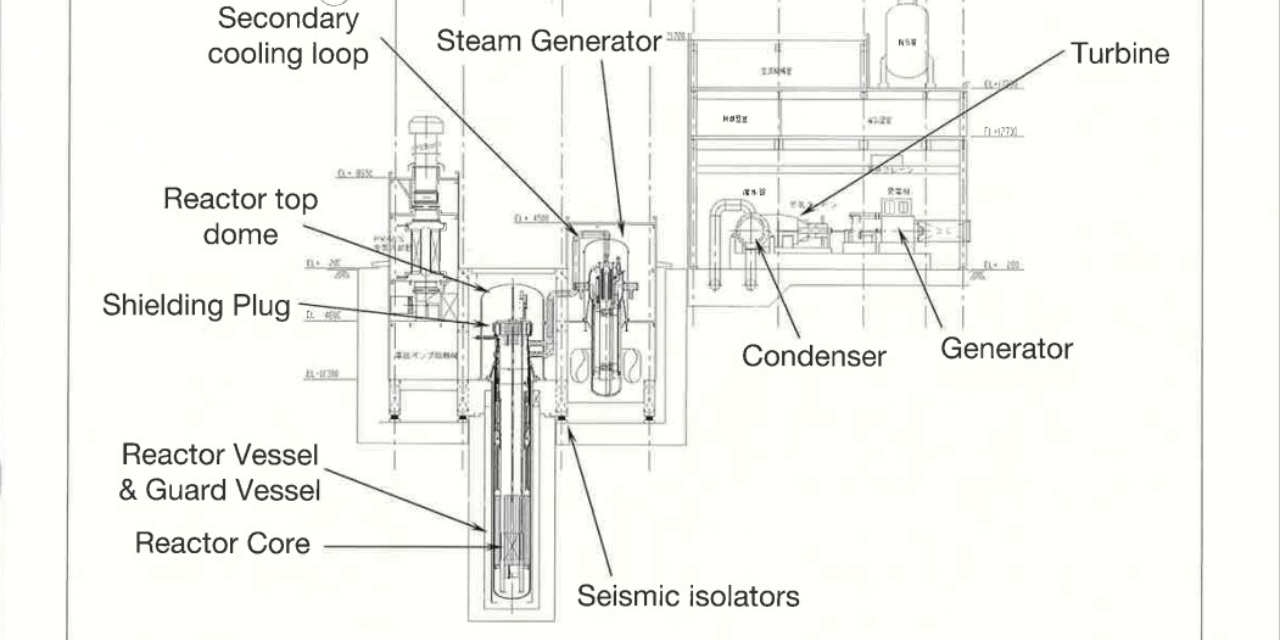
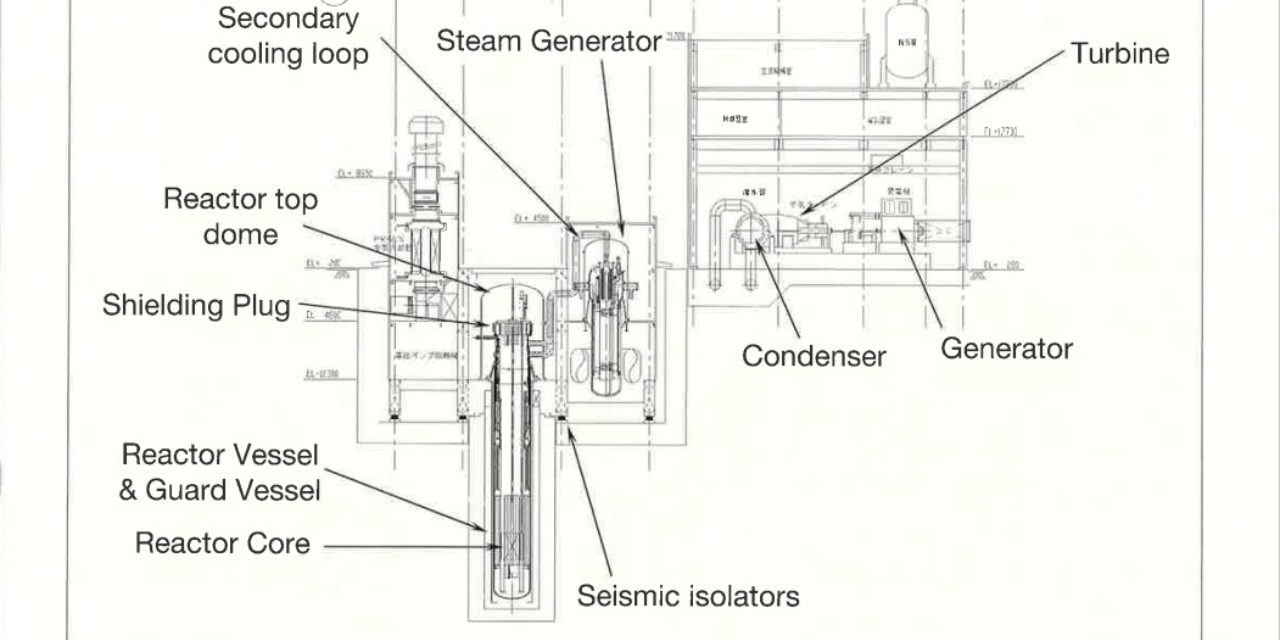
2005년 _원자력 뉴스(Nuclear News)_ 에 게재된 도시바(Toshiba) 4S 나트륨 냉각 원자로 다이어그램. (출처: _NN_, 2005년 8월호, 51쪽)
오늘날 상업용 소형 원자로는 원자력 아이디어 시장에서 흔히 볼 수 있다. 수십 개의 기업이 급증하는 에너지 수요를 충족하기 위해 자사 설계의 대규모 상용화를 위해 경쟁하고 있다.
그러나 "소형 원자로(microreactor)"라는 용어가 _원자력 뉴스_ 에 처음 등장한 것은 2019년이었다. 당시 국방부(Department of Defense)가 훗날 펠레 프로젝트(Project Pele)로 발전할 사업 초기에 원자력 맥락에서 이 용어를 대중화했다. 그보다 훨씬 이전인 2005년으로 거슬러 올라가면, 도시바는 소규모 전력망을 갖춘 오지에 적합한 30메가와트 열출력(MWt) 풀(pool)형 원자로인 4S(초안전·소형·단순, Super-Safe, Small, and Simple)를 개발하고 있었다. 한 번 밀봉·설치되면 무교체 상태로 30년간 운전이 가능한 설계였다. 만약 그 당시 "소형 원자로"라는 용어가 통용되었더라면, 4S는 분명 그 범주로 분류되었을 것이다.
4S가 50메가와트 전기출력(MWe) 이하로 설계된 최초의 원자로는 결코 아니었지만, 오늘날 우리가 소형 원자로라고 부르는 새로운 물결과 본질적으로 동일한 판매 논리를 갖춘 초기 사례 중 하나였다.
그렇다면 한 스타트업이 4S 설계를 부활시키려 한다는 것이 그다지 놀라운 일은 아닐지도 모른다. 그 기업은 잽 에너지(Zap Energy)로, 지난 주 "4S 개념을 출발점으로 삼아 현대적 설계 도구를 통해 이를 재생하여 당사 첫 번째 핵분열 제품 설계의 기반으로 삼겠다"고 발표했다.
이미 이례적인 이 이야기에는 한 가지 이례적인 반전이 더 있다. 잽 에너지는 지금까지 오로지 핵융합 발전 개발에만 집중해온 기업이다.
4S의 간략한 역사: 도시바의 4S 계획 초기 단계는 미국원자력학회(American Nuclear Society)의 2004년 동계 학술대회에서 논의되었다. 도시바는 알래스카의 오지 마을 갈레나(Galena)에 원자로를 배치하는 것을 목표로 했다. 이 원자로는 마을의 모든 전력 수요와 상당 부분의 난방 수요를 충당할 예정이었다. _원자력 뉴스_ 의 설명에 따르면, 갈레나는 전력망이나 도로 연결이 없어 여름철에만 접근 가능한 강을 통해 수입되는 디젤에 의존하고 있었기에, 4S는 해당 지역사회에 막대한 혜택을 가져다줄 수 있었다.
이 비전을 실현하기 위해 갈레나 지방 정부는 에너지부(Department of Energy)와 협력하여 사전 부지 선정 연구를 진행했다. 에너지부는 다시 알래스카 대학교와 아이다호 국립 연구소(Idaho National Laboratory)와 협력했다. 알래스카 주 의회도 해당 프로젝트에 관한 여러 백서 작성을 위해 50만 달러를 지원하기로 했으며, 주 내 다른 소규모 지역사회들도 갈레나의 첫 프로젝트를 복제하는 데 관심을 보였다.
2007년부터 도시바는 원자력규제위원회(Nuclear Regulatory Commission)에 일련의 기술 보고서를 제출하고 갈레나와의 사전 작업을 계속했다. 설계 인증을 받기 위한 계획도 마련되었지만, 기한이 지연되고 목표가 달성되지 못하면서 프로젝트의 추진력이 약해졌다. 2011년 갈레나는 결국 새로운 화석 연료 발전소 건설을 추진하기로 결정했다. 2년 후 원자력규제위원회의 검토가 어떠한 검토 문서도 없이 중단되면서, 4S는 역사의 뒤안길로 사라진 종이 원자로로 남게 되었다.
잽 에너지로 돌아와서: 지난 주까지만 해도 대중은 잽 에너지를 오로지 Z-핀치 핵융합 플라즈마 기술을 개발하는 핵융합 개발사로만 알고 있었다. 2023년 이 회사는 모듈형 핵융합 발전소 개발 비전을 향해 나아가면서 에너지부 산하 첨단연구프로젝트청(Advanced Research Projects Agency–Energy, ARPA-E)으로부터 500만 달러의 자금 지원을 받았다. 당시 회사는 자사 기술이 "값비싸고 복잡한 자기 코일 없이 플라즈마를 가두고 압축"하기 때문에 "대단히 저렴한" 전력원을 제공할 수 있다고 주장했다.
그러나 이러한 단일 집중 전략은 4월 29일 잽이 자브리나 조할(Zabrina Johal)을 새 최고경영자(CEO)로 맞이하고, "단기적 핵분열 배치와 장기적 핵융합 돌파구의 잠재력을 결합"하는 새로운 전략으로 전환을 발표하면서 바뀌었다.
잽에게 있어 이 전략은 "단순한 관찰에 근거한다. 핵분열과 핵융합은 별개의 산업이 아니라, 재료·공학적 과제·공급망·시스템 아키텍처를 공유하는 깊이 연결된 분야"라는 것이다. 핵분열을 먼저 추구하고 핵융합을 그 다음으로 함으로써, 회사는 "특히 액체 금속, 중성자 환경, 고출력 밀도 설계 분야에서 깊은 기술적 중복을 활용하여 두 분야의 발전을 가속화"하기를 바란다.
회사는 핵심 사명이 "핵융합의 상업화로 남아 있다"고 주장하면서도, 긴박한 에너지 수요가 핵분열을 통한 보다 신속한 상업화를 요구한다고 밝혔다.
업계 일부에서는 이번 발전에 대해 다양한 수준의 회의적 시각과 열의를 표명했다. 커먼웰스 퓨전 시스템즈(Commonwealth Fusion Systems) CEO 밥 멈가드(Bob Mumgaard)는 이 움직임을 "극적인 방향 전환"이라고 부르며 "핵분열과 핵융합을 혼합하는 것은 좋지 않은 생각"이라고 덧붙였다. 그는 "핵분열과 핵융합이 모두 중성자를 포함한다고 말하는 것은 물리학과 공학의 심층적인 차이를 얼버무리는 것"이라고 말하며, 핵분열은 이미 "수년 앞선 기존 업체들이 있는 포화된 공간"이라고 지적했다.
그럼에도 불구하고, 잡(Zap)은 핵분열과 핵융합 간의 상당한 시너지가 전반적인 개발을 가속화할 것이라고 주장한다. 또한 회사는 새로운 백서에서 4S 원자로 개념을 부활시키기로 한 결정이 "해결해야 할 엔지니어링 세부 사항의 수를 줄인다"고 주장한다. 개발 또는 배치에 대한 구체적인 일정은 제시되지 않았지만, 백서는 핵분열 분야의 다음 단계가 "새로운 제조 기술, AI 강화 방법론, 그리고 최근 몇 년간 축적된 지식이 [4S] 설계를 개선하고 비용을 절감하는 데 어떻게 기여할 수 있는지 평가하는 것"이 될 것이라고 명시했다.
백서는 이 모든 것을 종합하면 잡(Zap)의 핵분열-핵융합 이중 트랙 계획이 회사를 "원자력 에너지 배치를 위한 플랫폼 기업, 즉 지금 당장 필요로 하는 전력망에 청정하고 안정적인 전력을 공급하는 동시에 앞으로 수십 년간 핵융합 배치의 상업적 기반을 구축하고 핵분열 핵연료 주기를 완결하는 기업"으로 자리매김시킨다고 결론짓는다.
AI 분석
도시바의 4S(초안전·소형·단순) 원자로는 2005년 처음 개발되어 알래스카 오지 마을에 30년간 무교체 운전을 목표로 했으나, 규제 지연과 사업 추진력 약화로 2013년 사실상 폐기된 역사적 설계였다. 최근 핵융합 스타트업인 Zap Energy가 이 4S 설계를 부활시키겠다고 선언하면서, 핵분열 조기 상용화와 핵융합 장기 돌파의 병행 전략을 채택한 점이 주목된다. 이는 핵분열과 핵융합이 액체금속, 중성자 환경 등 공통 기술 기반을 공유한다는 인식에서 비롯된 것으로, 단순한 사업 다각화가 아닌 시너지 전략으로 평가할 수 있다. 이 사례는 과거 '페이퍼 리액터'로 사라진 설계가 현대의 설계 도구와 새로운 에너지 수요 환경 속에서 재조명될 수 있음을 보여주며, 마이크로원자로 시장의 경쟁 심화와 함께 기존 설계 자산의 재활용 가능성을 시사한다.
※ 이 글은 해외 원자력 바로알기를 위한 정보 전달을 목적으로 제공됩니다. 특정 기업이나 종목에 대한 투자 권유가 아니며, 모든 투자 판단과 그에 따른 책임은 투자자 본인에게 있습니다.
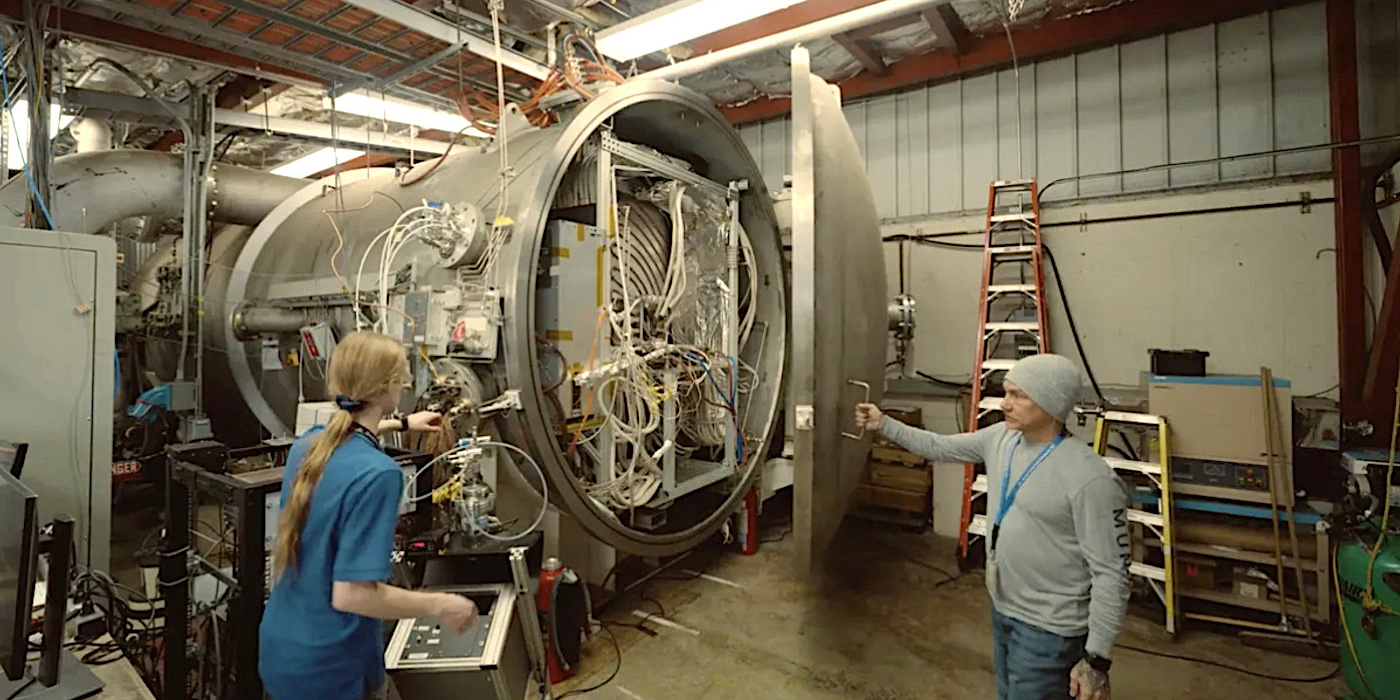
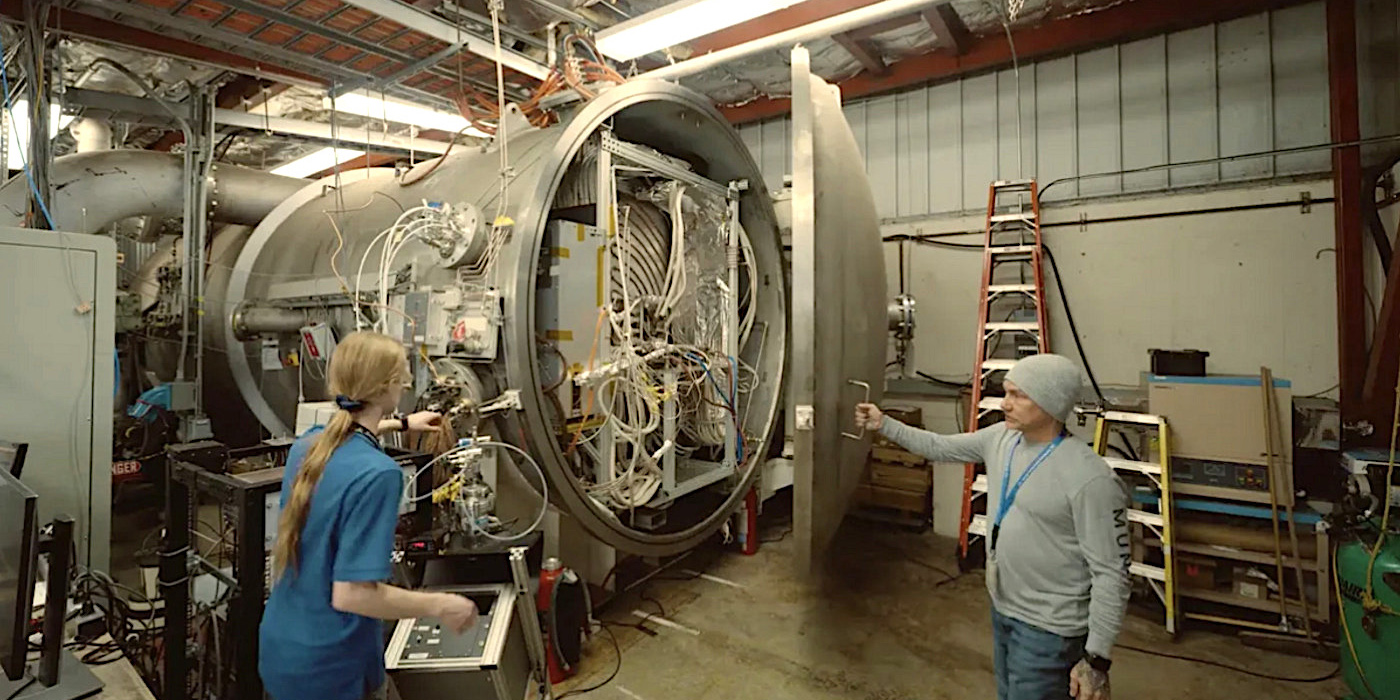
NASA의 제트추진연구소(Jet Propulsion Laboratory)에 위치한 응축성 금속 추진제(Comet) 진공 시설. 이곳에서 새로운 리튬 공급 이온 엔진이 시험되었다. (사진: NASA/JPL-Caltech)
요약
카테고리: 기술
NASA가 리튬 공급 자기유체역학(MPD) 추력기 시제품을 최초로 성공적으로 시험 가동하여 120킬로와트의 출력을 달성했다.
이 추력기는 현재 NASA에서 운용 중인 가장 강력한 이온 엔진보다 25배 더 강력하며, 향후 유인 화성 탐사 임무에 활용될 가능성이 있다.
NASA는 궁극적으로 이 이온 추진 기술을 소형 핵분열 원자로와 결합하여, 태양광 패널보다 더 많은 전력을 생산할 수 있는 우주선을 개발하는 것을 목표로 하고 있다.
---
리튬 공급 자기유체역학(MPD) 추력기로 알려진 새로운 이온 엔진 시제품이 NASA에서 중요한 시험을 통과했다. 이 우주 기관은 궁극적으로 이 기술을 원자력 핵분열과 결합하여 화성 유인 탐사와 같은 장기 우주 비행을 위한 동력과 추력을 생산하기를 희망하고 있다.
이온 추진: 이온 엔진은 전자기장을 이용해 이온(전기적으로 하전된 원자)을 노즐을 통해 가속시켜 추력을 생성한다. 이 과정을 전기 추진 또는 이온 추진이라고 한다. 이러한 엔진은 화학 연소 엔진보다 추진제를 90% 적게 사용하면서도 고속을 달성할 수 있으며, 우주선의 질량도 줄일 수 있다.
NASA는 1960년대에 일부 우주 임무에 이온 엔진을 사용하기 시작했다. 1998년, 소행성 9660 브레일(Braille)을 통과 비행한 딥 스페이스 1(Deep Space 1) 임무의 발사는 이러한 기술이 지구 궤도 너머의 임무에 처음으로 사용된 사례였다. 이온 엔진은 이후 NASA, 유럽우주국(European Space Agency), 그리고 다른 여러 나라들의 무인 우주 탐사 임무에 사용되었다. 현재 NASA가 운용 중인 가장 강력한 이온 엔진은 2029년 소행성 16 프시케(Psyche)에 도착하기 위해 2023년에 발사된 프시케(Psyche) 임무에 탑재된 것이다. 그 엔진은 시속 최대 124,000마일(200,000킬로미터)의 속도를 낼 수 있다.
25배 더 강력한 성능: 새로 시험된 MPD 추력기는 프시케 우주선에 탑재된 엔진보다 25배 더 강력한 것으로 알려져 있다. NASA 국장 자레드 아이작맨(Jared Isaacman)은 최근 성명에서 다음과 같이 밝혔다. "이번은 미국에서 전기 추진 시스템이 이 정도로 높은 출력 수준, 즉 최대 120킬로와트에서 작동한 최초의 사례입니다. 우리는 그 다음 거대한 도약(인류 우주 탐사의 다음 단계를 의미하는 관용구)을 이끌 전략적 투자를 계속해 나갈 것입니다."
일반적인 이온 엔진이 이온 공급원으로 제논 가스를 사용하는 것과 달리, MPD 추력기 시제품은 강력한 전류를 생성하여 자기장과 상호 작용함으로써 리튬 이온을 가속시킨다. 지난 2월 NASA 제트추진연구소의 응축성 금속 추진제(Comet) 진공 시설 내에서 실시된 다섯 차례의 시험 발사에서, 이 추력기는 120kW 출력 수준에 도달했다. 이 시제품 엔진의 첫 시험 발사는 성공으로 평가받았다.
JPL(제트추진연구소) 선임 연구 과학자 제임스 폴크(James Polk)는 다음과 같이 말했다. "지난 몇 년간 이 추력기를 설계하고 제작해 온 과정은 이번 첫 시험을 위한 오랜 준비 기간이었습니다. 우리가 추력기가 작동한다는 것을 보여주었을 뿐만 아니라, 목표로 했던 출력 수준에도 도달했기 때문에 이것은 우리에게 매우 중요한 순간입니다. 그리고 우리에게는 규모 확대(스케일업)에 따른 과제들을 해결하기 시작할 좋은 시험대가 있다는 것도 알게 되었습니다."
폴크(Polk)와 그의 JPL 팀의 다음 목표는 이온 엔진으로 500kW에서 1MW 사이의 출력 수준을 달성하는 것이다. 그 목표가 달성되면, 빠르면 몇 년 내에, 연구진은 4MW의 출력 수준을 목표로 삼을 계획이다.
이온 추력과 핵분열 동력의 결합: 이 NASA/JPL 연구의 궁극적인 목표는 여러 대의 이러한 엔진을 사용하여 우주인들을 화성으로 실어 나르는 우주선을 개발하는 것이다. 과거에 이온 엔진에 전력을 공급하기 위해 태양 전지판을 사용했던 것과 달리, NASA가 이상적으로 구상하는 이온 엔진은 소형 원자력 핵분열 원자로로 구동될 것이다. 이 원자로는 이론적으로 태양 전지판보다 더 많은 전력을 생산할 수 있다.
핵분열 원자로를 이용하여 이온 엔진에 동력을 공급한다는 개념은 NASA의 스페이스 리액터-1 프리덤(Space Reactor-1 Freedom) 프로젝트를 통해 곧 시험될 예정이다. 2028년 말까지 발사될 예정인 이 프로젝트에서는, 핵분열 원자로로 구동되는 제논 연료 이온 엔진을 탑재한 우주선이 소형 회전익 항공기(로터크래프트) 그룹을 화성으로 운반하게 된다.
우주 임무에서의 원자력 활용에 관한 추가적인 아이디어와 계획들은 4월에 발표된 백악관 과학기술정책실(Office of Science and Technology Policy) 메모에서 설명된 바 있다.
AI 분석
NASA의 리튬 공급 MPD 추력기 시험 성공은 우주 추진 기술의 중요한 이정표로, 기존 이온 엔진 대비 25배에 달하는 출력 향상을 실증했다는 점에서 주목할 만하다. 특히 이 기술을 소형 원자력 핵분열 원자로와 결합하려는 전략은, 태양광 의존도를 줄이고 심우주(deep space) 탐사에서의 에너지 공급 문제를 근본적으로 해결할 수 있는 잠재력을 가진다. 2028년 말 발사를 목표로 하는 스페이스 리액터-1 프리덤 프로젝트는 원자력 추진 우주선의 실제 운용 가능성을 검증하는 첫 번째 중요 시험대가 될 것이다. 500kW~1MW, 나아가 4MW 수준의 출력 목표는 유인 화성 탐사라는 장기 목표를 현실화하는 데 필수적인 단계이며, 이는 미국의 우주 탐사 전략에서 원자력 기술의 역할이 점점 더 중요해지고 있음을 보여준다. 이 기술의 성공적인 개발은 향후 심우주 탐사 임무의 패러다임을 바꿀 수 있는 게임 체인저(game changer, 판도를 바꾸는 요소)가 될 것으로 전망된다.
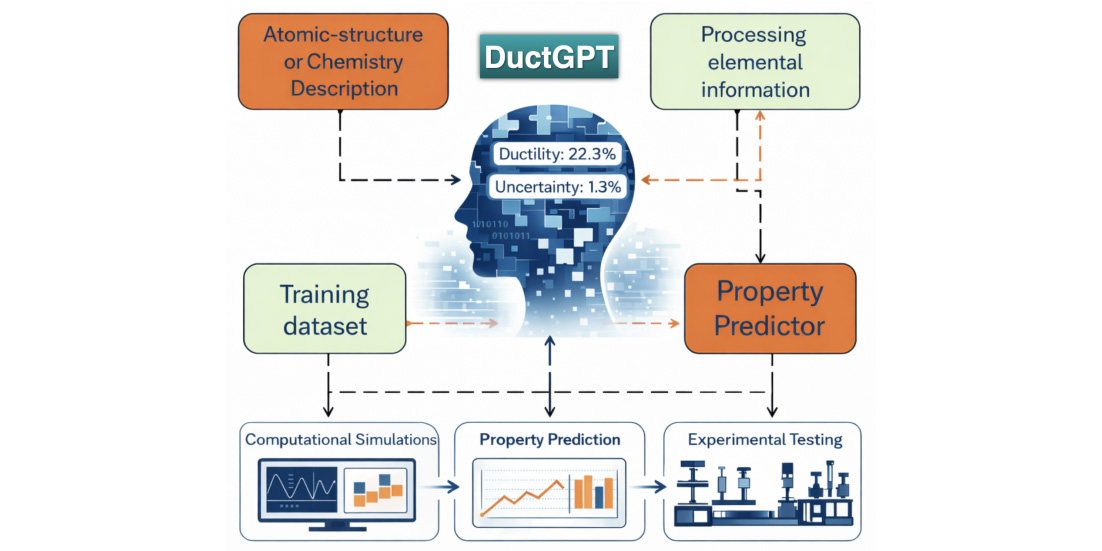
AI 기반 워크플로우로 내화 합금의 인장 연성을 예측하는 시스템. (이미지: 에임스 국립연구소(Ames National Laboratory))
요약
카테고리: 기술
에임스 국립연구소(Ames National Laboratory)가 핵융합 시스템에 사용 가능한 소재를 식별하기 위해 인공지능과 물리 기반 모델링을 결합한 'DuctGPT'를 발표했다.
DuctGPT는 광범위한 내화 다주성분 원소 합금(refractory multi-principal element alloys)에 걸쳐 연성을 신속하고 정확하게 예측하며, 수초 내에 매우 많은 원소 조합을 탐색할 수 있다.
텅스텐의 강도와 고융점을 유지하면서도 연성을 향상시킨 합금 조성을 식별할 수 있어, 극한 환경에 적합한 내화 고엔트로피 합금(RHEAs) 연구에 핵심적인 도구로 주목받고 있다.
---
에임스 국립연구소(Ames National Laboratory)는 핵융합 시스템에 사용될 수 있는 소재를 식별하기 위해 인공지능과 물리 기반 모델링을 결합한 새로운 도구를 발표했다. 이 시스템에 사용되는 소재는 강렬한 열, 방사선, 기계적 응력을 견뎌야 한다.
연구팀은 _Acta Materialia_에 게재된 논문에서 이 플랫폼의 이름을 'DuctGPT'로 명명하고, "광범위한 내화 다주성분 원소 합금에 걸쳐 연성을 신속하고 정확하게 예측할 수 있게 해준다"고 밝혔다.
에임스 연구소의 보도자료에 따르면, 연구팀은 미국 국립표준기술연구소(National Institute of Standards and Technology, NIST)에서 개발된 모델인 AtomGPT를 기반으로 작업을 시작했다. AtomGPT는 화학적·구조적 텍스트 설명을 활용해 생성 에너지, 전자 밴드갭, 초전도 전이 온도 등 물질의 특성을 예측한다. 연구팀은 AtomGPT를 수정해 재료과학 데이터를 이용한 미세 조정(fine-tuning)을 적용했다.
DuctGPT는 대부분의 GPT 플랫폼과 유사하게 작동하며, 연구자들이 질문을 하고 매개변수를 정의할 수 있다. 이 시스템은 "매우 많은 수의 원소 조합을 수초 내에" 탐색할 수 있다.
에임스 연구소 소속 과학자이자 프로젝트 책임자인 프라샨트 싱(Prashant Singh)은 이렇게 말했다. "'핵융합 반응로에 사용하기 위한 x, y, z 특성을 모두 갖춘 핵융합용 소재를 설계하고 싶다. 그 조건을 충족하는 원소 조합을 알려달라'고 요청하면, 해당 특성을 가진 원소 조합을 제시해 줄 것입니다."
텅스텐은 열전도율, 강도, 높은 융점으로 인해 핵융합 장치의 플라즈마 대향 부품(plasma-facing components)에 일반적으로 사용되는 소재이지만, 저온 인장 연성이 부족하다. 싱에 따르면, 이로 인해 복잡한 형상으로 가공하기가 어렵다.
그는 이렇게 설명했다. "DuctGPT를 활용하면 이제 텅스텐-티타늄-지르코늄-하프늄과 같은 원하는 조성 공간 내에서 쿼리(query)를 수행해, 텅스텐의 강도와 고융점을 유지하면서도 연성을 향상시킨 합금을 식별할 수 있습니다."
이처럼 복잡하게 얽힌 수많은 요소에 의존하는 탐색 유형에는 AI 기반 도구가 적합하다. DuctGPT는 페르미 준위(Fermi level)에서의 상태 밀도(density of states), 탄성 상수(elastic constants), 가전자 전자 농도(valence electron concentration)에 관한 실험 데이터와 계산 데이터를 모두 포함하며, "연성 대 취성 거동을 지배하는 근본 메커니즘을 포착"하는 것을 목표로 한다고 연구팀은 기술했다.
싱은 링크드인(LinkedIn) 게시물에서 이렇게 밝혔다. "DuctGPT는 적합한 내화 고엔트로피 합금(RHEAs, refractory high-entropy alloys) 탐색의 미래를 위해 특히 중요합니다. 이들 합금은 본질적으로 취성이 있지만, 극한 환경에서의 우수한 특성으로 인해 핵융합 분야에서 가장 유망한 후보로 꼽히기 때문입니다."
논문에 따르면, "실험 데이터와의 검증을 통해 이 모델이 높은 정확도와 낮은 불확실성으로 연성을 예측할 수 있음이 확인되었다."
---
AI 분석
DuctGPT는 핵융합 소재 연구에서 AI와 물리 기반 모델링의 결합이 가져올 수 있는 가능성을 잘 보여주는 사례다. 텅스텐과 같이 핵융합 환경에서 강점을 지닌 소재의 한계를 극복하기 위해 방대한 원소 조합 공간을 수초 내에 탐색할 수 있다는 점은 기존 실험 중심의 소재 개발 방식과 비교할 때 혁신적인 속도 향상을 의미한다. 특히, 내화 고엔트로피 합금(RHEAs)은 극한 환경 적합성 면에서 높은 평가를 받고 있으나 취성이라는 근본적인 한계를 지니고 있었는데, DuctGPT는 이 장벽을 낮추는 데 기여할 수 있을 것으로 기대된다. AtomGPT를 재료과학 데이터로 미세 조정한 접근법은 범용 언어 모델의 도메인 특화 활용 가능성을 보여주며, 향후 다른 소재 분야로의 확장 가능성도 시사한다. 핵융합 기술 상용화를 위한 소재 개발 속도를 AI가 실질적으로 앞당길 수 있음을 보여주는 중요한 연구 성과로 평가된다.
미 해군은 수십 년간 운용 가능한 소형 원자로를 탑재한 잠수함과 항공모함을 이미 보유하고 있으나, 이 기술이 육상 전력망에는 적용되지 않고 있다.
일부 원자력 에너지 지지자들은 새로운 소형 원자로가 신뢰할 수 있는 저탄소 에너지의 핵심이 될 수 있다고 주장한다.
원자력 전문가 닉 투란(Nick Touran)은 해군 원자로 기술을 전력망에 전용하지 못하는 이유에 대해 익숙한 입장을 갖고 있다.
---
2021년 USS 하이먼 G. 리코버 진수식. 이 잠수함은 "원자력 해군의 아버지"로 불리는 인물의 이름을 딴 것이다.2021년 USS 하이먼 G. 리코버(Hyman G. Rickover) 진수식. 이 잠수함은 "원자력 해군의 아버지"로 불리는 인물의 이름을 딴 것이다. — 션 D. 엘리엇(Sean D. Elliot)/AP
일부 원자력 에너지 지지자들은 새로운 형태의 소형 원자로가 신뢰할 수 있는 저탄소 에너지의 열쇠가 될 것이라고 주장한다. 그러나 미 해군의 전력은 이미 수십 년간 운용 가능한 소형 원자로를 탑재한 잠수함과 항공모함에 기반하고 있다. 최근 한 독자가 당연한 질문을 던져왔다. 해군 기술을 전력망에 그대로 적용하면 안 되는 걸까?
이는 닉 투란(Nick Touran)에게 낯익은 주제다.
---
AI 분석
이 기사는 원자력 에너지 기술의 군사·민간 활용 간 격차라는 흥미로운 역설을 제기한다. 미 해군은 수십 년에 걸쳐 검증된 소형 원자로 기술을 이미 보유하고 있음에도, 상업용 소형모듈원자로(SMR) 개발은 여전히 초기 단계에 머물러 있다. 이는 군사용과 민간용 원자로 사이의 규제 체계, 경제성, 설계 목적의 근본적인 차이에서 비롯된다. 해군 원자로는 성능과 안보를 최우선으로 설계되는 반면, 상업용 원자로는 비용 효율성과 광범위한 안전 기준을 충족해야 한다. 소형 원자로의 민간 전력망 적용 가능성은 원자력 에너지의 미래를 논하는 데 있어 핵심적인 기술·정책 과제로 부상하고 있다.
이탈리아 국영 원전 해체 기업 소진(Sogin)과 영국 원자력해체청(NDA)이 흑연 감속 원자로 해체 기술 협력을 위한 양해각서(MOU)를 체결했다.
5년간의 협정은 흑연 원자로 해체 관련 경험과 노하우 교환, 기술 인력 역량 강화, 그리고 미래 협력의 토대 마련을 목표로 한다.
이번 MOU는 이탈리아 기업 그라피코레(Graphicore) 및 일본 원자력발전(Japan Atomic Power Company)과의 최근 협정에 이어 체결된 것으로, 라티나(Latina) 발전소의 원자로 구역 해체를 위한 국제 협력 확대 전략의 일환이다.
---
소셜 공유
이탈리아의 소시에타 제스티오네 임피안티 누클레아리 스파(Societa Gestione Impianti Nucleari SpA)가 영국의 원자력해체청(Nuclear Decommissioning Authority)과 양해각서를 체결하고 흑연 감속 원자력 발전소의 해체 기술에 관한 공동 협력을 시작한다.
이탈리아-영국, 원전 해체 협력 강화_71891.jpg) (이미지 출처: NDA)
이번 양해각서는 소진(Sogin)의 최고경영자 잔 루카 아르티추(Gian Luca Artizzu) — 이탈리아의 원자력 발전소 해체를 담당하는 이탈리아 국영 기업 —와 영국의 원자력 시설 정화 및 해체를 담당하는 공공기관인 원자력해체청(NDA)의 최고경영자 데이비드 피티(David Peattie)가 서명했다.
이 5년간의 협정은 NDA가 방사화된 흑연 원자로의 해체와 관련된 문제들을 탐구하려는 필요에 부응하는 동시에, 소진에게는 라티나(Latina) 원자력 발전소의 것과 같은 매그녹스(Magnox)형 원자로 해체 계획에 관한 경험을 공유하고 확장할 기회를 제공한다.
소진은 이번 양해각서에 세 가지 전략적 목표가 포함되어 있다고 밝혔다. 첫 번째는 양사 팀 간의 체계적인 회의 및 방문 일정을 통해 흑연 감속 원자로 해체 기술에 관한 경험을 공유하고 노하우 교환을 촉진하는 것이다. 두 번째는 특정 교육 프로그램을 포함하여 각 기술 인력의 역량을 강화하는 것이다. 이와 더불어 세 번째 목표는 새로운 잠재적 미래 협력의 길을 열어놓는 것이다.
양해각서에 따라 소진과 NDA 자회사인 원자력복원서비스(Nuclear Restoration Services, NRS) 간의 초기 협력은 다음에 초점을 맞출 것으로 예상된다: 대형 부품 및 증기 발생기 해체; 선진 절단 기술 활용을 포함한 해체 설계 및 실행에서 얻은 교훈; 그리고 서로 다른 국가적 맥락에서 해체 결정을 형성하는 기술적·전략적 접근 방식.
"정부 소유 기관으로서 국민을 대신해 장기적인 원자력 유산을 관리하는 NDA 그룹과 소진 모두, 안전·투명성·비용 대비 가치가 필수적인 엄격히 규제된 환경에서 운영됩니다"라고 NDA는 밝혔다. "해체에 대한 공동의 관심이 강한 연대감을 형성합니다."
이번 협정은 최근 몇 주 사이 이탈리아 기업 그라피코레(Graphicore) 및 일본 원자력발전(Japan Atomic Power Company)과 체결한 협정에 이어지는 것으로, 소진이 해당 분야의 주요 국제 파트너들과의 협력을 확대하고 강화하려는 노력의 일환이다. 소진은 공동의 접근 방식을 통해 라티나 발전소의 원자로 구역 해체에 대응하는 것을 목표로 한다.
아르티추(Artizzu)는 "민간 원자력 운영을 위한 방법과 기술에 대한 협력은 유럽과 전 세계에서 이 분야가 도달한 높은 수준의 발전을 반영합니다"라고 말했다. "국제원자력기구(IAEA) 프레임워크 내에서 유사한 기업들과 모범 사례를 공유할 수 있다는 것은 진정한 선순환(善循環)으로, 우리 산업 분야 내에서 없어서는 안 될 자산입니다."
라티나 발전소는 단일 210MWe 매그녹스(Magnox) 흑연 가스냉각 원자로로 구성되어 있으며, 1964년 1월에 운전을 시작했다. 1986년 4월 체르노빌(Chernobyl) 사고 이후 실시된 이탈리아의 원자력 국민투표 결과에 따라 1987년 12월 영구 폐쇄되었다. 소진은 1999년 11월 해당 부지의 소유권을 인수했다.
영국은 총 26기의 매그녹스(Magnox) 원자력 발전소를 건설했으며, 1956년부터 1971년 사이에 순차적으로 운전을 시작했다. 영국에서 마지막으로 운전을 종료한 매그녹스 원자로는 2015년 폐쇄된 와일파(Wylfa) 원자로 1호기였다.
---
AI 분석
이탈리아 소진과 영국 NDA 간의 이번 양해각서는 흑연 감속 원자로 해체라는 고도로 전문화된 기술 분야에서 국제 협력이 심화되고 있음을 보여주는 사례다. 두 국가 모두 매그녹스형 원자로의 해체라는 공동 과제를 안고 있어 경험과 기술의 교류가 실질적인 효율성 향상으로 이어질 가능성이 크다. 특히 라티나 발전소는 1987년 국민투표로 폐쇄된 이후 약 40년이 지나도록 해체 작업이 진행 중으로, 이번 협정이 해체 계획의 실질적 진전을 가져올 수 있을지 주목된다. 소진이 일본, 이탈리아 국내 기업에 이어 영국과도 잇달아 협력 관계를 구축함으로써 국제원자력기구(IAEA) 프레임워크 내에서 글로벌 원전 해체 생태계가 점차 공고화되는 양상이다. 이는 단순한 양자 협력을 넘어 원전 해체 분야의 다자간 지식 공유 네트워크 형성을 향한 흐름으로 해석할 수 있다.
미국, 미국 원자력 산업 지원을 위한 역대 최대 규모 고수준 저농축 우라늄(HALEU) 선적 확보
2026년 5월 7일
요약
카테고리: 원자력 정책
미국 에너지부 산하 국가핵안보청(NNSA)이 일본과의 협력을 통해 NNSA 역사상 최대 규모의 단일 국제 우라늄 선적인 1.7메트릭 톤의 고수준 저농축 우라늄(HALEU)을 일본에서 미국으로 이전하는 데 성공했다.
이번 이전은 트럼프 대통령의 에너지 우위 회복 전략을 직접 지원하며, 차세대 원자로 연료로서 고수준 저농축 우라늄(HALEU)의 국내 공급망 구축에 중요한 기반이 된다.
일본의 고속 임계 집합체 가동 중단 이후 잉여 핵물질을 안전하게 처리한 이번 조치는 핵 비확산 측면에서도 의미 있는 성과로 평가된다.
---
미국은 일본과의 협력을 통해 역대 최대 규모의 고수준 저농축 우라늄(HALEU) 연료 선적을 확보했습니다. 이는 트럼프(Trump) 대통령의 미국 에너지 우위 회복 전략을 진전시키고 차세대 원자로에 연료를 공급합니다. 또한 이는 핵 비확산 분야에서도 엄청난 성과입니다!
#### _일본과의 파트너십을 통해, NNSA는 트럼프 대통령의 에너지 우위 회복 및 차세대 원자로 연료 공급 전략을 진전시키다_
Three technicians dressed in white clothes and hardhats work at a table. In the foreground a several dark-colored squares stacked.
일본 팀원들이 일본의 고속 임계 집합체에서 고수준 저농축 우라늄(HALEU)을 포장하고 있습니다. Y-12 국가안보단지(Y-12 National Security Complex)에서 이 물질을 미국 산업계가 사용 가능한 형태로 재처리할 예정입니다.
워싱턴 – 미국 에너지부 산하 국가핵안보청(NNSA)은 일본 문부과학성(MEXT) 및 일본원자력연구개발기구(JAEA)와의 협력을 통해, 일본에서 미국으로 1.7메트릭 톤의 고수준 저농축 우라늄(HALEU)을 성공적으로 이전했다고 오늘 발표했습니다. 이는 NNSA 역사상 가장 큰 단일 국제 우라늄 선적입니다.
이 협력적 노력은 핵 확산 위험을 줄이고 글로벌 안보를 강화하는 데 있어 중요한 단계입니다. 일본과의 파트너십은 또한 미국의 원자력 에너지 미래를 강화하며, 에너지 우위와 첨단 원자력 기술의 전략적 개발에 대한 트럼프 행정부의 의지를 강조합니다.
"NNSA는 미국의 원자력 산업을 지원하기 위해 신속한 승인과 의사결정으로 기록을 경신하고 있습니다," NNSA 청장 브랜든 윌리엄스(Brandon Williams)가 말했습니다. "첨단 원자로 설계에 고수준 저농축 우라늄(HALEU) 연료를 공급하는 것은 트럼프 대통령의 원자력 산업 기반 강화 비전을 추구하면서 미국이 에너지 강국이 되는 데 필수적입니다."
A ship floats next to a wharf.
이 프로젝트는 영국의 핵 운송 솔루션(Nuclear Transport Solutions) 및 민간 원자력 경찰(Civil Nuclear Constabulary)과의 긴밀한 협력을 통해 완료되었습니다.
고수준 저농축 우라늄(HALEU)은 차세대 원자력 연료에 필수적입니다. 첨단 원자로 설계에 활용되고, 연구 및 의료용 동위원소 생산의 효율성을 높이며, 무기급 고농축 우라늄(HEU) 및 플루토늄에 대한 전 세계적 의존도를 낮춤으로써 핵 안보 및 비확산을 촉진합니다.
일본의 고속 임계 집합체(Fast Critical Assembly) 가동 중단 이후 더 이상 필요하지 않게 된 고수준 저농축 우라늄(HALEU) 연료의 이번 수령은 미국과 일본 간의 오랜 핵 안보 및 비확산 협력의 연속을 의미합니다. 첨단 원자로는 더 작은 설계, 더 긴 운영 주기 및 더 높은 효율을 실현하기 위해 고수준 저농축 우라늄(HALEU)에 의존하게 됩니다.
Two men stand side by side smiling for the camera. One holds a commemorative coin.
NNSA 비확산 책임자 매튜 나폴리(Matthew Napoli) 박사와 일본 대사 야마다 시게오(Shigeo Yamada)가 워싱턴에서 일본에서 미국으로 1.7메트릭 톤의 고수준 저농축 우라늄(HALEU)이 성공적으로 이전된 것을 축하하고 있습니다.
에너지부가 원자력 기술을 위한 미국의 국내 공급망을 촉진함에 따라, 이 물질은 처리 후 원자력에너지국의 고수준 저농축 우라늄(HALEU) 가용성 프로그램을 통해 공급과 수요 사이의 격차를 해소하는 데 도움이 될 것이며(수급 불균형 해소), 다음 세기의 원자력 리더십을 위한 토대를 마련할 것입니다.
"이 이정표는 안전하고 독립적인 에너지 미래를 향한 우리의 진전을 가속화하는 동시에 핵 비확산에 대한 우리의 헌신을 재확인합니다," NNSA 국방 핵 비확산 담당 부청장 매튜 나폴리(Matthew Napoli) 박사가 말했습니다. "일본과의 이 파트너십을 통해 우리는 차세대 원자력 발전에 연료를 공급하고, 미국의 에너지 우위를 공고히 하고 있습니다."
이번 배송은 미국 원자력 산업을 지원하기 위한 신뢰할 수 있는 국내 고수준 저농축 우라늄(HALEU) 공급망 개발을 가속화하기 위한 트럼프 대통령의 국가 안보를 위한 첨단 원자로 기술 배치에 관한 행정명령을 직접적으로 지원합니다.
A closeup of the coin that one man holds in his hand.
나폴리(Napoli)는 대사에게 작전의 성공을 기념하는 코인을 수여했습니다.
---
AI 분석
이번 미국-일본 간 역대 최대 규모의 고수준 저농축 우라늄(HALEU) 이전은 차세대 원자력 기술 개발을 위한 미국의 공급망 구축 전략에서 중요한 이정표로, 트럼프 행정부의 에너지 우위 회복이라는 정책 목표가 구체적인 행동으로 이어지고 있음을 보여준다. 이 물질은 Y-12 국가안보단지에서 재처리를 거쳐 소형모듈원자로(SMR) 및 마이크로원자로 등 첨단 원자로 설계의 연료로 공급될 예정이며, 이를 통해 고수준 저농축 우라늄(HALEU) 수급 불균형 해소에 기여할 것으로 기대된다. 핵 비확산 측면에서도 이번 이전은 의미가 깊은데, 무기급 핵물질을 안전하게 회수·전환함으로써 잠재적인 확산 위험을 줄이는 데 기여했다. 미국-일본 양국 간의 이 협력 사례는 향후 기타 동맹국과의 유사한 파트너십 가능성을 높이며, 글로벌 원자력 에너지 공급망에서 미국의 리더십을 강화하는 전략적 선례로 작용할 것이다. 에너지부의 고수준 저농축 우라늄(HALEU) 가용성 프로그램과 연계된 이번 성과는 미국 원자력 산업의 상업화 가속에 직접적으로 기여할 것으로 분석된다.
미시간 대학교 원자력공학 및 방사선과학과가 미국 에너지부의 1,920만 달러 지원을 포함해 총 3,840만 달러 규모의 '오대호 원자력 인력 강화 파트너십'에 핵심 학술 파트너로 참여한다.
이 5년 프로젝트는 경수로 운영 교육 강화, 첨단 원자로 기술 커리큘럼 현대화, 업계 공인 자격증 취득 과정 신설을 목표로 한다.
원자력공학 및 방사선과학과 학부 등록 학생 수는 최근 5년간 두 배 증가(2022년 54명 → 현재 108명)하며 원자력 분야에 대한 높은 관심을 보여주고 있다.
---
앤아버(ANN ARBOR), 미시간주 — 미시간 대학교(University of Michigan)의 원자력공학 및 방사선과학과(Department of Nuclear Engineering and Radiological Sciences)가 원자력 에너지 분야의 심각한 인력 부족 문제를 해결하기 위한 3,840만 달러 규모의 지역 이니셔티브를 이끌 예정이라고 4월 10일 미시간 대학교 공학부 공식 발표를 통해 밝혔다.
미국 에너지부(U.S. Department of Energy)는 '오대호 원자력 인력 강화 파트너십(Great Lakes Partnership to Enhance the Nuclear Workforce)'에 1,920만 달러를 지원했으며, 톨레도 대학교(University of Toledo), 앤아버 소재 미시간 대학교, 비스트라(Vistra), 국제전기노동자형제단(International Brotherhood of Electrical Workers)이 연방 지원금과 동일한 금액을 매칭 지원했다. 발표에 따르면 이 컨소시엄은 톨레도 대학교가 주도하며, 미시간 대학교가 주요 학술 파트너로 참여한다.
미시간 대학교는 미시간 주정부 및 학과의 지원을 받아 이 5년 프로젝트 예산의 약 4분의 1을 집행할 예정이다.
미시간 대학교 공학부 연구 부학장이자 원자력공학 및 방사선과학과 교수인 토드 앨런(Todd Allen)은 발표에서 "톨레도 대학교와의 파트너십에 매우 기대가 크다"며 "산업이 성장함에 따라, 새로운 세대의 원자력 에너지 인력을 유치하고 교육하는 기관의 수를 늘려야 하며, 톨레도는 광범위하고 포괄적인 팀을 구성해왔다"고 말했다.
앨런은 톨레도 대학교에서 연구 이니셔티브를 담당하는 총장 특별보좌관 프랭크 칼조네티(Frank Calzonetti)와 협력하여 이 파트너십을 개발했다. 칼조네티는 학계, 산업계, 노동계의 지역 파트너들을 모았고, 앨런은 기술적 비전을 수립하고 학과의 전문성을 연결했다.
이 파트너십은 경수로(light-water reactor) 운영 교육을 강화하고, 첨단 원자로 기술을 위한 커리큘럼을 현대화하며, 업계 공인 자격증을 신설할 예정이다. 발표에 따르면 원자력 에너지 분야는 향후 수십 년간 플랜트 수명 연장, 신형 원자로 기술, 증가하는 전력 수요로 인해 상당한 인력 수요에 직면할 것으로 예상된다.
원자력공학 및 방사선과학과(NERS) 교수진은 여러 전문 교육 프로그램을 개발할 예정이다. 원자력공학 및 방사선과학과 교수인 원식 양(Won-Sik Yang)과 샤오동 선(Xiaodong Sun)은 원자로 시스템 및 안전 커리큘럼을 위한 모듈식 교육 콘텐츠를 개발한다. 이 과정은 시뮬레이터 기반 훈련을 포함하며, 미국원자력학회(American Nuclear Society) 자격증을 갖춘 새로운 원자로 안전 자격증 프로그램의 토대가 될 것이다.
원자력공학 및 방사선과학과 교수 킴벌리 키어풋(Kimberlee Kearfott)과 학과 강사 겸 부설 연구원 조던 노이(Jordan Noey)는 '응용 방사선 방호 기기 훈련 센터(Center for Applied Radiation Protection Instruments Training)' 개발을 주도한다. 이 센터는 응용 방사선 측정에 초점을 맞춘 집중 단기 과정과 원자력 발전소에서 사용되는 검출 장비에 대한 실습 경험을 제공한다.
원자력공학 및 방사선과학과 조교수 마즈디 라다이데(Majdi Radaideh)는 '원자력 AI·디지털·사이버 실험실(Nuclear AI, Digital, and Cyber Laboratory)'을 설립하여 인공지능, 디지털 트윈, 자율 점검용 로보틱스, 사이버 보안 분야의 인력을 양성한다. 이 실험실은 체험 학습을 위해 첨단 테스트베드와 GPU 기반 컴퓨팅을 활용한다.
원자력공학 및 방사선과학과 조교수 아디티 베르마(Aditi Verma), 학과 연구 전문가 안드레아 모랄레스 코토(Andrea Morales Coto), 기술 커뮤니케이션 강사 케이티 스나이더(Katie Snyder)는 '커뮤니케이션·디자인·비상 대비 커뮤니티 협력소(Community Collaboratory on Communication, Design, and Emergency Preparedness)'를 설립한다. 이 이니셔티브는 무역 전문가와 원자력 연구자를 한데 묶어 공동으로 과정을 설계하는 메이커스페이스(makerspace, 창작 공간)와 예비 교육 프로그램을 포함한다.
원자력공학 및 방사선과학과 학부 등록 학생 수는 지난 5년간 두 배로 증가해 2022년 54명에서 현재 108명으로 늘었다.
오대호 파트너십에는 일리노이 대학교 어바나-샴페인(University of Illinois Urbana-Champaign), 노스다코타 주립대학교(North Dakota State University), 다수의 커뮤니티 칼리지, 그리고 비스트라 코퍼레이션(Vistra Corporation), 콘스텔레이션(Constellation), DTE 에너지(DTE Energy), 엑셀(Xcel) 등 산업 파트너가 포함된다. 또한 아이다호 국립연구소(Idaho National Laboratory), 미국원자력학회(American Nuclear Society), 전력연구소(Electric Power Research Institute), 에너지 인력 개발 센터(Center for Energy Workforce Development)도 참여한다.
---
AI 분석
미국의 원자력 에너지 산업은 노후 발전소 수명 연장, 소형 모듈 원자로(SMR) 등 첨단 원자로 기술 도입, 그리고 AI 데이터 센터 증가에 따른 전력 수요 급증으로 인해 향후 수십 년간 대규모 인력 수요가 예상된다. 이번 오대호 파트너십은 단순한 교육 지원을 넘어 AI·디지털 트윈·사이버 보안 등 미래 원자력 운영에 필수적인 첨단 기술 역량까지 아우르는 점에서 주목할 만하다. 연방 정부(에너지부)와 산업계(비스트라, 콘스텔레이션, DTE 에너지), 학계, 노동계가 공동으로 자금을 조달하는 구조는 원자력 인력 양성을 위한 광범위한 사회적 합의를 보여준다. 미시간 대학교 원자력공학과 학부 등록 학생 수가 5년 만에 두 배로 증가했다는 사실은 원자력 에너지에 대한 젊은 세대의 높아진 관심을 반영하며, 이는 미국 원자력 르네상스(renaissance, 부흥)의 인재 공급 기반이 될 수 있다. 이 이니셔티브가 성공적으로 이행된다면 미국 중서부 지역의 원자력 인력 생태계를 구축하는 중요한 모델로 자리매김할 것이다.
구 스리마일 아일랜드(Three Mile Island)-1이 2027년 크레인 청정에너지 센터(Crane Clean Energy Center)로 재가동될 때, 전력망 재연결까지 수년간의 지연은 없을 것이라고 컨스텔레이션(Constellation) CEO가 밝혔습니다...
이번 주 아이오와 주지사 킴 레이놀즈(Kim Reynolds)는 아이오와 원자력에너지 태스크포스(Iowa Nuclear Energy Task Force) 구성을 위한 행정명령에 서명했습니다. 이 태스크포스의 목적은 "주지사, 주 의회, 관련 주 기관에 자문을 제공하는 것"입니다...
원자력규제위원회(NRC)는 컨스텔레이션 에너지(Constellation Energy)의 리머릭(Limerick) 원자력발전소 내 두 기의 비등수형 원자로(BWR) 운영 허가를 개정하여, 해당 기업에 승인을 부여했습니다...
---
AI 분석
이 기사는 미국 원자력 산업이 급증하는 전력 수요에 대응하기 위해 역량 확장을 시도하고 있지만, 실제 신규 설비 가동까지는 상당한 시간이 걸린다는 현실적인 격차를 조명합니다. 특히 AI 데이터 센터 및 제조업 리쇼어링이 전력 수요를 폭발적으로 끌어올리는 상황에서 원자력이 중요한 기저 전력원으로 재부각되고 있습니다. NRC의 조직 개편, 기존 발전소 재가동(스리마일 아일랜드, 듀에인 아놀드 등), 그리고 소형 원자로 및 우주 원자력 프로젝트 등 다양한 방향에서 원자력 확장 노력이 동시에 진행되고 있음을 확인할 수 있습니다. 그러나 허가 제출과 실제 운전 사이의 시간 지연은 단기 전력 공급 안정성에 있어 여전히 중요한 과제로 남아 있습니다. 미국 원자력 산업의 부흥이 정책적 지지와 시장 수요라는 두 날개를 얻은 만큼, 향후 5~10년이 미국 원자력의 향방을 결정하는 핵심 시기가 될 것으로 전망됩니다.
I need WebFetch permission to retrieve the article content from the URL. Please authorize this so I can extract the title, date, and generate the TL;DR.
Category: [](<>) - date_display:
Category: [](<>) - date_display:
Category: [](<>) - date_display:
Category: [](<>) - date_display:
Category: [](<>) - date_display:
Category: [](<>) - date_display:
Category: [](<>) - date_display:
Category: [](<>) - date_display:
Category: [](<>) - date_display:
Category: [](<>) - date_display:
Category: [](<>) - date_display:
Category: [](<>) - date_display:
Category: [](<>) - date_display:
Category: [](<>) - date_display:
Category: [](<>) - date_display:
Category: [](<>) - date_display:
Category: [](<>) - date_display:
BWXT wins $1.4B in U.S. Naval Nuclear Propulsion Program contracts
Contracts cover long-lead material purchases and manufacturing
Josh Janney //May 7, 2026//
In the past six months BWX Technologies shipped four large Ford-class steam generators from its Mount Vernon, Indiana, facility to the shipyards at Hampton Roads for the newest Ford-class aircraft carrier, the USS Doris Miller \(CVN 81\). Photo courtesy BWXT
In the past six months BWX Technologies shipped four large Ford-class steam generators from its Mount Vernon, Indiana, facility to the shipyards at Hampton Roads for the newest Ford-class aircraft carrier, the USS Doris Miller (CVN 81). Photo courtesy BWXT
BWX Technologies, a Lynchburg-based manufacturer of nuclear components and fuel, announced Thursday it won two U.S. Naval Nuclear Propulsion Program contracts totaling more than $1.4 billion.
The program is a joint organization between the U.S. Navy and Department of Energy that oversees the nuclear reactors powering the Navy's submarines and aircraft carriers.
The first award, valued at $1.285 billion, covers long-lead material purchases for the program for fiscal 2026. It is the first of five annual task-order awards available through 2030.
The company said the second contract, valued at $165 million, covers the procurement of long-lead reactor system components and manufacturing work for Ford-class aircraft carriers. The work will be performed at BWXT facilities in Barberton, Ohio, and Mount Vernon, Indiana.
"We have no higher calling at BWXT than delivering these nuclear reactor systems for the men and women of the U.S. Navy," Gary Camper, president for BWXT's nuclear operations group, said in a statement. "Every component we deliver reflects a disciplined commitment to safety, integrity and precision, ensuring the Navy's submarines and carriers can operate confidently around the world, protecting our nation with unmatched reliability."
To date, BWXT has delivered more than 420 nuclear reactor cores to the Naval Nuclear Propulsion Program and has received several major awards from the program over the past two years. In October 2025, the company announced a $174 million contract to manufacture naval nuclear reactor fuel. The program awarded BWXT approximately $2.6 billion in July earlier that year and $2.1 billion the preceding February for nuclear reactor component manufacturing and material procurement tied to Columbia- and Virginia-class submarines and Ford-class aircraft carriers.
In the past six months, BWXT also shipped four Ford-class steam generators from its Mount Vernon, Indiana, facility to Hampton Roads shipyards for the USS Doris Miller (CVN-81), the Navy's newest Ford-class aircraft carrier.
A Fortune 1000 company, BWXT has approximately 10,000 employees and owns and operates 17 manufacturing facilities globally. It supports the U.S. and Canadian governments at more than 24 additional locations. It reported more than $3.19 billion in 2025 revenue, up 18% from 2024.
Related Content
[Bridget Coulon. Phot courtesy PeratonPeraton hires chief human resources officerPeraton has named Bridget Coulon chief HR officer. She joins the Reston company after more than 25 years at No[...]May 7, 2026]()
[The M1A2 Abrams SEPv3. Photo courtesy General DynamicsGeneral Dynamics subsidiary lands $716M Army contractThe U.S. Army has awarded a $716 million contract to General Dynamics Land Systems to support its fleet of com[...]May 5, 2026]()
[The Jefferson Lab is based in Newport News. Photo by Josh JanneyNew details emerge on Jefferson Lab transition in JuneNew details about the future of the Jefferson Lab have emerged following last month's announcement of a new [...]April 28, 2026]()
[IFPC Inc 2 is designed to provide air-defense capability. Photo courtesy LeidosLeidos subsidiary lands $617M Army award for air defense launchersA subsidiary of Reston-based Leidos won a $617M U.S. Army contract to build and deliver additional IFPC Inc. 2[...]April 23, 2026]()
[U.S. Navy photo of USS Zumwalt \(DDG 1000\). Photo courtesy RTXRTX subsidiary wins $213.39M Navy contract modificationThe U.S. Navy has awarded Raytheon a $213.39 million contract modification to continue work on the Navy's Zu[...]April 21, 2026]()
[Government Contractors | Technology 2025: GEVEDEN, REX D.BWXT to acquire heavy manufacturer for nuclear productionBWXT is acquiring Precision Components Group to boost its commercial nuclear manufacturing capacity, adding 50[...]April 20, 2026]()
[ Supporters depart a campaign rally against Virginia Democrats' proposed state redistricting constitutional amendment ahead of the referendum special election on April 21, in Bridgewater, Virginia, April 11, 2026. REUTERS/Ken Cedeno/File Photo Virginia Supreme Court overturns redistricting referendum vote in 4-3 ruling A Virginia constitutional amendment recently approved by voters would have given Democrats an advant[...] ]()
[ A rendering of Dominion Energy's planned 3,000-megawatt combined cycle natural gas power station in Cumberland County. Image courtesy Dominion Energy Dominion Energy planning multibillion-dollar power plant in Cumberland Dominion Energy Virginia plans to build a multibillion-dollar 3,000-megawatt combined cycle natural [...] ]()
[ Government | Politics | Lobbying 2025: LUCAS, SEN. L. LOUISE FBI raids Sen. Louise Lucas' office, business in Portsmouth FBI agents raided Virginia Democratic Sen. Louise Lucas' Portsmouth district office and nearby canna[...] ]()
[ Private: 2026 Virginia Forty under 40 Awards 2026 Forty Under 40 Awards Across Virginia, a rising generation of professionals is stepping into leadership roles, shaping ind[...] ]()
[ Real Estate 2023: BENJAMIN SCHALL AvalonBay discussing merger with Equity Residential, Bloomberg reports Arlington-based AvalonBay Communities is in early discussions about a potential merger with Chicago-[...] ]()
[ A rendering of VCU Health's Pauley Heart Center Pavilion. Image courtesy VCU Health VCU Health breaks ground on $90M facility in Richmond VCU Health on Wednesday broke ground on a new $90 million medical facility in Richmond's Diamond D[...] ]()
Valley Health is expanding its Winchester campus with a $20.9 million behavioral health pavilion and [...]
A hydrogen power plant could be located at the Lonesome Pine Regional Business & Technology Park in Wise County. Photo courtesy Wise County Industrial Development AuthorityData center developers seek on-site energy in Wise
Wise County data center developers plan a $1 billion campus powered by hydrogen or natural gas, aimi [...]
Chesapeake city officials consider new zoning rules to regulate data center development near residen [...]
AI Analysis
BWX Technologies' $1.4 billion contract award for the U.S. Naval Nuclear Propulsion Program represents a significant investment in maintaining American naval superiority and nuclear submarine capabilities. The contract's focus on long-lead material purchases and manufacturing demonstrates a commitment to sustaining the industrial base needed for advanced naval vessels, including Ford-class aircraft carriers like the USS Doris Miller. This substantial federal investment underscores the critical importance of domestic nuclear propulsion expertise and supply chain resilience for national defense. The scale and scope of the contract signals continued modernization efforts within the U.S. Navy's fleet while supporting Virginia's defense industrial sector. Such multi-billion dollar commitments indicate sustained funding for naval nuclear programs despite broader budgetary pressures.
Ontario Advances Bruce C Nuclear Project with $300M Pre-Development Agreement
Published: May 7, 2026
TL;DR
Ontario announced a $300 million pre-development agreement to advance the Bruce C nuclear project, Canada's first large-scale nuclear station in three decades, targeting up to 4,800 MW of new capacity by 2030.
The project is projected to contribute $238 billion to Canada's GDP, create 18,900 construction jobs and 6,700 permanent jobs, with significant economic benefits to surrounding Bruce, Grey, and Huron counties.
Bruce C sits at the center of Ontario's _Energy for Generations_ plan, supported by four complementary nuclear initiatives including Darlington refurbishment, Bruce life-extension, Pickering B refurbishment, SMR deployment, and Wesleyville planning.
---
Ontario Advances Bruce C Nuclear Project with $300M Pre-Development Agreement
Ontario took its most decisive step yet toward building Canada's first large-scale nuclear station in more than three decades, directing the Independent Electricity System Operator (IESO) to enter a cost-sharing and recovery agreement with Bruce Power to advance pre-construction work on the proposed Bruce C project.
The agreement, announced on May 7 by Energy and Mines Minister Stephen Lecce, unlocks roughly $300 million for First Nations and community engagement, workforce planning, site preparation, and pre-construction activities scheduled to be completed by 2030. If the full project proceeds through federal regulatory approvals, Bruce C would add up to 4,800 MW of new nuclear generating capacity at the existing Bruce site on Lake Huron.
Provincial figures cited in the announcement project a $238 billion contribution to Canada's gross domestic product (GDP), 18,900 jobs during construction, and 6,700 permanent jobs once the station is operational. The Ontario Chamber of Commerce, in a recent report, estimated the project would funnel an annual average of $2 billion in local GDP, $427 million in labor income, and 3,400 full-time jobs to surrounding Bruce, Grey, and Huron county communities.
"At a time when our economy faces threats from abroad, Ontario's government is doubling down on made-in-Canada nuclear power," Lecce said in a statement, framing Bruce C as the centerpiece of a continent-leading nuclear expansion that he said could ultimately put 150,000 Canadians to work. He added that the project is intended to "transform Bruce Power into the world's largest nuclear generating facility."
A Long Arc from 2023 Announcement to Today's Commitment
The May 7 announcement is the most consequential follow-through on a process that began in July 2023, when the province first directed Bruce Power to launch community consultations and a federal environmental assessment to evaluate the feasibility of siting up to 4,800 MW of new nuclear generation at the existing Bruce site. That earlier announcement, made under former Energy Minister Todd Smith, framed pre-development work as a precaution against electricity demand that—for the first time since 2005—was beginning to climb.
In 2024, Bruce Power formally launched the federal Impact Assessment process by submitting an Initial Project Description to the Impact Assessment Agency of Canada. That assessment, the first in a multi-year approval pathway for new large-scale nuclear projects, is expected to be completed in 2028. A Licence to Prepare Site from the Canadian Nuclear Safety Commission (CNSC) will follow.
The May 7 cost-sharing direction sits alongside a 2024 Minister's Directive that established the original IESO–Bruce Power funding arrangement for the federal Impact Assessment work. Together, the agreements give Bruce Power a clearer financial runway to advance engineering studies, vendor qualification, supply-chain readiness, and labor planning before any final investment decision.
Demand Surging Across Ontario's Grid
The Bruce C decision is being driven by a transformed forecast for Ontario electricity demand. The province's announcement points to growth of "up to 90 per cent by 2050"—a figure that reflects more aggressive electrification scenarios than the IESO's 2025 Annual Planning Outlook (APO) reference case, which models a 75% increase in electricity demand over the same period.
Whichever curve the system ultimately follows, planners agree that significant new generation will be required. By 2034, the IESO's APO sees emerging energy and capacity gaps reaching roughly 2,100 MW of capacity and 7 TWh of energy. The IESO and Ontario's nuclear operators have concluded that delivering up to 17,800 MW of new nuclear capacity by 2050—equivalent to about five Darlington-sized stations—is technically feasible, and would require building at least eight large units beyond what is already planned at Bruce C, plus potentially extending the life of Bruce Units 1 and 2 through a second refurbishment.
Drivers of demand growth are diversifying. Transportation electrification is forecast to be the largest single contributor, with electric vehicle (EV)–related electricity demand reaching 20 TWh by 2035. Industrial demand is expected to rise 58% by 2035 as automotive, EV battery, advanced manufacturing, and critical-mineral mining investments flow into the province. Data centers serving artificial intelligence (AI) and cloud workloads are projected to account for roughly 13% of new electricity demand by 2035.
Bruce C's Place in the _Energy for Generations_ Plan
The project sits at the center of _Energy for Generations_, the Ford government's first integrated long-term energy plan, released last year and updated in October 2025. The plan establishes a planning horizon to 2050 and, for the first time in Ontario, brings electricity, natural gas, hydrogen, biofuels, storage, and other energy sources under a single coordinated framework.
Anchored by four principles—affordability, security, reliability and clean energy—the plan calls for an installed electricity capacity expansion from approximately 37,200 MW today to more than 65,000 MW by 2050. Nuclear is positioned as the backbone of that future system. The IESO's projection has nuclear generation rising from roughly 65 TWh in 2026 to more than 200 TWh by 2050, ultimately supplying the majority of the province's electricity.
Bruce C is one of several major nuclear initiatives moving in parallel:
Darlington Refurbishment. Ontario Power Generation's (OPG's) $12.8 billion overhaul of the four-unit station is on time and on budget, with Unit 1 returning to service nearly five months ahead of schedule in November 2024. The final unit is expected to be complete in 2026, securing 3,500 MW of capacity to roughly 2055.
Bruce Power Life-Extension Program. Refurbishment of Units 3 through 8 is underway and expected to wrap up by 2033, extending Bruce A and B's combined 6,550 MW into the 2060s. Bruce Power has separately set a goal of squeezing an additional 450 MW of peak output from existing units by the 2030s through asset optimization.
Pickering B Refurbishment. OPG is in the Project Definition Phase, supported by a $4.1 billion provincial budget commitment that brings total project funding to $6.2 billion. Subject to final approvals, refurbishment of Units 5–8 is targeted for completion by the mid-2030s.
Darlington Small Modular Reactors (SMRs). Ontario approved OPG's $20.9 billion plan in May 2025 to build four BWRX-300 SMRs at the Darlington site. The first unit—the first grid-scale SMR in the G7—is targeted for commercial service before the end of 2030, with subsequent units following between 2033 and 2035.
Wesleyville (Port Hope). OPG is also conducting early-stage planning for new large-scale nuclear at its 1,300-acre Wesleyville site in Port Hope, where early assessments suggest up to 10,000 MW of new generation could ultimately be hosted.
Together, these programs already support an estimated 80,000 jobs across Ontario's nuclear industry, with Bruce Power's existing site alone supporting around 22,000 direct and indirect jobs annually through the Life-Extension Program.
A Leading Domestic Supply Chain
The province is leaning heavily on the economic case for keeping nuclear spending in Canada. Bruce Power notes that approximately 95% of its current spending stays in Canada—a statistic the province says will be amplified by Bruce C, given the project's scale and the maturity of Ontario's nuclear supply chain.
That supply chain extends from Saskatchewan-mined uranium, refined at the world's largest uranium refinery in Blind River and converted in Port Hope, to fuel-bundle fabrication at facilities in Port Hope, Toronto, and Peterborough. The province is already exporting nuclear know-how internationally, including refurbishment services to Romania, SMR-related agreements in Poland, Estonia, and the U.S., and a contract opportunity worth more than $1 billion for BWXT in Cambridge, Ontario, to manufacture reactor pressure vessels for Polish BWRX-300 units.
Industry voices were quick to applaud the May 7 announcement. AtkinsRéalis CEO Ian L. Edwards called the decision "a defining moment for Ontario's energy future." Westinghouse Canada's John Gorman said his company "stands ready" to support the build, while Cameco's Tim Gitzel framed the project as a "pivotal step" for the province's long-term energy security. Aecon, Framatome, BWXT, Kinectrics, NPX, and E.S. Fox Limited each issued statements committing to support construction.
Labor groups echoed the enthusiasm. Joe Mancinelli, International Vice President and Canadian Director at LiUNA, characterized the agreement as "nation-building policy this moment demands." The Power Workers' Union, the Society of United Professionals (IFPTE 160), and the Provincial Building and Construction Trades Council of Ontario all signaled support, citing the prospect of thousands of unionized jobs through the construction phase.
Engagement with First Nations and Host Communities
The Bruce site lies within the traditional territory of the Saugeen Ojibway Nation (SON), comprising the Saugeen First Nation and the Chippewas of Nawash Unceded First Nation. Both Ontario and Bruce Power reiterated commitments to continued cooperation with SON, and confirmed that the new pre-development agreement provides capacity funding to support engagement with SON, as well as with communities in Bruce, Grey, and Huron counties.
Bruce County Warden and Saugeen Shores Mayor Luke Charbonneau said the funding gives municipalities room to "plan with confidence" while their region helps power the broader system. Kincardine Mayor Kenneth Craig welcomed the move as a vote of confidence in the local economy.
Indigenous leadership and equity participation have been increasingly prominent themes across Ontario's broader energy plan. The province has expanded the Indigenous Energy Support Program to $25 million annually, raised the cap on the Indigenous Opportunities Financing Program from $1 billion to $3 billion in loan guarantees, and prioritized Indigenous equity in recent battery storage and transmission procurements. Hydro One's 50-50 First Nation Equity Partnership Model is now being applied to multiple major transmission projects, and Taykwa Tagamou Nation and Moose Cree First Nation are co-leading early-stage planning for two potential hydroelectric stations in the Moose River Basin.
Transmission and Grid Readiness
A 4,800-MW addition at Bruce will require corresponding investments in transmission. _Energy for Generations_ identifies a new 500-kV Barrie-to-Sudbury line, targeted for service in 2032, as the spine of a strengthened north-south corridor—an upgrade that, while not specific to Bruce C, is part of a broader buildout of more than 30,000 kilometers of transmission designed to move new generation to demand centers in the Greater Toronto Area and southwest Ontario. Five priority projects in the southwest are already in delivery, including the Chatham-to-Lakeshore line, completed a year ahead of schedule in January 2025.
The province's "One Team" coordination initiative, launched to streamline permitting for priority energy projects, is expected to apply to the cluster of approvals required as Bruce C moves from pre-development into licensing and, eventually, construction.
What Comes Next
In the near term, the $300 million pre-development envelope is expected to fund a sustained four-year campaign of community engagement, supply-chain qualification, technical engineering work, and detailed site preparation planning. Federal Impact Assessment work, currently underway, is on track for completion in 2028, with a CNSC site-preparation license to follow.
Major construction would not begin until those federal approvals are in hand, and the project's exact reactor technology is still to be selected. The province has indicated it will rely on a New Nuclear Technology Panel—drawing on senior leadership from OPG, Bruce Power, the IESO, and the government—to coordinate technology decisions across both Bruce C and Wesleyville, balancing safety, cost-effectiveness, energy security, and economic benefits.
Lesley Gallinger, IESO president and CEO, said the agreement reflects the realities of long-lead infrastructure planning: "By enabling first steps for projects like this one with significant lead times, we are ensuring the province is future-ready and prepared to meet electricity demand as it emerges."
—Aaron Larson is POWER's executive editor.
---
AI Analysis
The Bruce C announcement represents a critical inflection point in Canada's energy infrastructure strategy, signaling a decisive shift toward nuclear as the primary backbone for meeting Ontario's projected 75–90% surge in electricity demand by 2050. The alignment across government, industry, labor, Indigenous leadership, and regional stakeholders—alongside parallel initiatives across Darlington, Pickering, and the SMR program—demonstrates an unusually coordinated approach to decarbonization and energy security. However, the project's success hinges on navigating complex federal approval timelines (Impact Assessment completion in 2028, CNSC licensing thereafter), executing sophisticated supply-chain coordination, and maintaining fiscal discipline across a decade-long pre-construction and construction phase, making the $300 million pre-development investment a crucial test of Canada's capacity to execute large-scale energy infrastructure at scale.
English
Fusion consortium established to advance private-sector fusion-Nuclear Newswire
Fusion consortium established to advance private-sector fusion
Published: May 7, 2026
TL;DR
Three major companies (Type One Energy, Tokamak Energy, and AECOM) have established the U.K. Infinity Fusion Consortium to develop the first private sector–led fusion power plant in the United Kingdom using commercially proven technologies.
The consortium leverages complementary expertise: Type One's 400-MWe Infinity Two stellarator design, Tokamak Energy's advanced HTS magnet technology, and AECOM's global engineering capabilities.
This initiative aligns with the UK government's fusion strategy and the Sustainable Markets Initiative's sustainability mandates, positioning the UK as a leader in commercial fusion deployment.
Overview
Representatives of Tokamak Energy, Type One Energy, and AECOM sign an agreement establishing the U.K. Infinity Fusion Consortium. (Photo: Type One Energy)
Three companies have come together to form the U.K. Infinity Fusion Consortium with the objective of developing the first private sector–led fusion power plant in the United Kingdom using existing "commercially credible" technologies.
Partner Expertise
The consortium is expected to benefit from the combination of the three partners' expertise. Tennessee-based fusion start-up Type One Energy brings its 400-MWe Infinity Two stellarator fusion power plant design. British fusion technology company Tokamak Energy has its HTS magnet technology and manufacturing background. Texas-based consulting firm AECOM has international engineering and infrastructure capabilities.
SMI Mandates in Action
All three partners in the consortium are members of the Sustainable Markets Initiative (SMI), a global network that was founded by King Charles III to help the private sector accelerate the transition to a sustainable economy. That goal is part of the British government's official fusion strategy, which was published in March.
The consortium's work is also in line with King Charles's statement in his recent address to Congress that the United Kingdom and United States "are combining talent and resources in the technologies of tomorrow—our new partnerships in nuclear fusion and quantum computing, and in AI and drug discovery, holding the promise of saving countless lives."
On the formation of the U.K. Infinity Fusion Consortium, SMI CEO Jennifer Jordan-Saifi said:
Type One Energy, Tokamak Energy, and AECOM have come together as members of the SMI, demonstrating the SMI's Terra Carta and Astra Carta mandates in action—business and finance working together to turn breakthrough innovation into measurable progress in building a more sustainable future.
STEP Fusion Program
The consortium will also be able to take advantage of the United Kingdom's investments in magnetic confinement fusion technology, nuclear supply chains, regulatory matters, and power plant siting for the British government's Spherical Tokamak for Energy Production (STEP) fusion program, which is promoting the shift from fusion research to commercial deployment. The consortium intends to create a private-sector-led fusion commercialization pathway that complements STEP, for which Tokamak Energy was recently named the systems partner to deliver eight work packages of magnets.
Real-World Experience
The consortium stands to benefit from the experience gained by Type One Energy with its Infinity Two fusion power plant project at the Tennessee Valley Authority's Bull Run site. The U.S. project can serve as a technical model for the consortium's Infinity Two deployment in the United Kingdom.
Type One Energy CEO Chris Mowry said that the new consortium:
brings together the core industrial capabilities in the U.K. and U.S. required to deploy real-world fusion power plant projects that are commercially viable. By aligning fusion technology, advanced manufacturing, and power plant engineering, we are closing the gap between today's energy innovation and tomorrow's energy infrastructure. Our initiative is fully aligned with U.K. and U.S. ambitions to be leaders in commercial fusion deployment.
Tokamak Energy CEO Warrick Matthews said that the consortium:
puts Tokamak Energy's transformative magnet technology and manufacturing expertise in the center of another world-class fusion program. Together, we can accelerate toward commercializing a new form of limitless, clean energy and, in combination with our role as STEP magnet systems partner, strengthen the U.K. supply chain's leadership in global fusion.
AI Analysis
This consortium announcement represents a significant milestone in private sector fusion commercialization, combining three complementary expertise areas—innovative reactor design, advanced magnet technology, and major engineering capabilities—into a unified development pathway. The strategic alignment with both the UK government's STEP program and the Sustainable Markets Initiative demonstrates how public and private sectors are increasingly coordinating to accelerate fusion technology deployment. By leveraging real-world experience from Type One Energy's Tennessee Valley Authority project, the consortium is attempting to de-risk commercial fusion deployment, which could positioning the UK and US as leaders in the emerging commercial fusion economy.
English
GAO: Better data could save DOE-EM millions-Nuclear Newswire
DOE-EM faces over $1.5 billion in reported repair needs across 4,300 operating facilities at 15 cleanup sites, with maintenance spending increasing 80% since FY 2020.
GAO found data accuracy and validation issues at DOE-EM cleanup sites, with some following inefficient piecemeal maintenance approaches that cost more than replacement.
Better data management, communication between headquarters and sites, and improved Congressional reporting could save millions by enabling more effective infrastructure prioritization.
Full Article
A recent Government Accountability Office report found that the Department of Energy's Office of Environmental Management faces significant aging infrastructure, data accuracy issues, and funding challenges in managing nuclear waste cleanup facilities.
As of June 2025, DOE-EM faced more than $1.5 billion in reported repair needs across about 4,300 operating facilities at the 15 cleanup sites the office oversees, according to the report. In addition, DOE-EM's budget request included over $950 million in maintenance spending in fiscal year 2026, an 80 percent increase since FY 2020.
Better planning between DOE-EM headquarters and its cleanup sites, along with better communication with Congress regarding unfunded maintenance projects, would help the office to manage its maintenance needs and save millions of dollars in the long term, the GAO said.
Report Highlights
The GAO found that DOE-EM spends approximately $781 million per year maintaining about 2,200 buildings, 2,500 other structures and facilities, 1,200 trailers, and support elements such as roads and utilities across its sites.
In some instances, piecemeal approaches to infrastructure maintenance have resulted in maintenance costs exceeding replacement costs.
A GAO analysis of DOE-EM data found that, as of June 2025, about 80 percent of all DOE-EM facilities had a condition index considered "good" or "very good," and about 1.5 percent were considered "mission critical" and had "poor" or "very poor" condition indexes.
Although relatively few facilities are considered to be both mission critical and in poor or very poor condition, the failure of any one of them may pose high risk to the cleanup mission, site safety, or both.
DOE-EM cleanup sites were found to not consistently follow requirements in DOE Order 430.1C regarding data validation, accuracy, and comparability. Order 430.1C requires DOE-EM to conduct annual data validations for all its sites.
Sites reported that the Master Asset Plan, DOE-EM's enterprise-wide strategic plan covering the infrastructure necessary to meet current, planned, and future mission requirements, does not capture all site-level needs that may affect the complex's mission, in part because it uses a "snapshot" of recorded data from the previous year to develop recommended projects.
Recommendations
To address the issues, the GAO report makes the following recommendations:
That DOE-EM ensures cleanup sites create and complete corrective action plans to correct data validation issues.
That DOE-EM ensures sites have procedures to accurately and comparably capture deferred maintenance and annual actual maintenance data.
That office headquarters better incorporate more reliable information from cleanup sites in the Master Asset Plan to better reflect site maintenance needs.
That the office communicates to Congress the reductions in cost and risk to mission that can be achieved by specific projects identified by their prioritization model.
In response, the DOE concurred with the first two recommendations and partially concurred with the remaining two recommendations.
AI Analysis
This GAO report highlights a critical infrastructure management challenge within the DOE's nuclear waste cleanup operations—essentially, the organization has been managing billions in assets without consistent, reliable data. The finding that piecemeal maintenance approaches sometimes cost more than replacement suggests significant inefficiencies that better data systems and strategic planning could address. The fact that only a partial concurrence was achieved on recommendations regarding Congressional communication indicates potential resistance to transparency, which underscores why external oversight through reports like this matters for taxpayer accountability. The recommendations, if fully implemented, could substantially improve stewardship of the nuclear cleanup mission while reducing both costs and operational risks.
Brookfield and The Nuclear Company Partner to Form New Company to Accelerate Nuclear Development in the US
Published: May 4, 2026
TL;DR
Brookfield and The Nuclear Company announced a partnership to form a new company specializing in Westinghouse nuclear reactor technology development and project execution
The new company has been selected as project manager for the V.C. Summer nuclear project (AP1000 units) in Fairfield County, South Carolina
The partnership combines Brookfield's global infrastructure capabilities with TNC's nuclear project delivery expertise to accelerate American nuclear development
Full Article
Brookfield, a leading global investment firm, and The Nuclear Company ("TNC"), a nuclear project development and delivery company, today announced a partnership to form a new company specializing in the development of Westinghouse nuclear reactor technology. The partnership's ambition is to establish a world-leading nuclear project execution company.
Brookfield's global asset management and energy infrastructure development capabilities combined with TNC's nuclear project delivery expertise will serve as the foundation for the dedicated project development company. The business will offer execution capabilities for the deployment of nuclear projects based exclusively on Westinghouse reactor technology, including AP1000 and AP300, in addition to end-to-end project management, licensing support, and oversight of engineering, procurement, construction and commissioning activity. The parties expect to progress toward definitive documentation in the coming months, subject to customary approvals and conditions.
As part of efforts to potentially develop two partially constructed AP1000 units near Jenkinsville, S.C., Brookfield has selected the new company as the project manager for the Fairfield County, S.C., nuclear project, formally known as V.C. Summer Nuclear Units 2 and 3 ("the Project"). The project is one of the most execution-ready nuclear development opportunities in America. Santee Cooper, South Carolina's state-owned utility company, supports the company's role on the project.
The new company will support due diligence activity for the Project and oversee the delivery should it move forward to Final Investment Decision. Development of the project remains subject to further evaluation, regulatory approvals, and the execution of definitive agreements.
"This joint venture reflects Brookfield's disciplined approach to large-scale infrastructure investment and focus on partnering with experienced operators," said Wyatt Hartley, Managing Partner, Brookfield. "By combining our global infrastructure development capabilities with nuclear project delivery expertise, we believe this platform has the potential to accelerate the American nuclear resurgence, building on the momentum of the Westinghouse partnership with the U.S. Government."
"Our team was built on the field of Vogtle and on some of the most complex energy projects in the world," Joe Klecha, Chief Nuclear Officer of The Nuclear Company said. "We know what it takes to deliver nuclear. What's been missing is a model that brings together the people, the capabilities, and the capital to do it at speed and scale. That's what this partnership creates."
About Brookfield
Brookfield is a leading global investment firm with more than $1 trillion in assets under management that owns and operates real assets and essential service businesses that form the backbone of the global economy. We invest on behalf of both institutions and individuals around the world across infrastructure, renewable power and transition, private equity, real estate, and credit—sectors critical to supporting economic growth and productivity.
With a heritage spanning more than a century and operations in over 30 countries, we deploy long-term, patient capital to build the foundational assets and businesses that power a more connected, resilient, and sustainable future—seeking to build long-term wealth for our clients while delivering strong risk-adjusted returns for our shareholders. Brookfield Corporation (ticker: BN), and Brookfield Asset Management (ticker: BAM), a leading global alternative asset manager, headquartered in New York, are both listed on the NYSE and TSX.
The Nuclear Company pioneers the modernization of nuclear construction through its design-once, build-many approach, backed by its proprietary Nuclear Operating System (NOS), an AI-driven platform that transforms reactor construction for all technologies into a data-driven, predictable process. Founded by nuclear power and energy infrastructure veterans, including the team that brought Vogtle Units 3 and 4 online, TNC deploys nuclear power and services existing facilities to ensure long-term, American energy security.
AI Analysis
This partnership represents a significant strategic move in the American nuclear renaissance, combining financial muscle with technical expertise to address a critical execution challenge in the industry. The formation of a dedicated Westinghouse reactor development company signals confidence in the viability of the AP1000 and AP300 designs and suggests that capital constraints—not technical ones—have been the primary barrier to nuclear expansion. The selection as project manager for V.C. Summer, one of the few partially constructed AP1000 units in the U.S., positions this venture to demonstrate a replicable model for accelerating nuclear deployment at both speed and scale.
English
Most popular stories-Chernobyl at 40 years: Looking back at
Chernobyl at 40 years: Looking back at _Nuclear News_
April 24, 2026
TL;DR
Marks 40 years since the Chernobyl nuclear accident (April 26, 1986), the most severe in history
Clarifies that Chernobyl's catastrophic reactivity-induced meltdown differs fundamentally from the gradual loss-of-coolant meltdowns at Fukushima and Three Mile Island
Examines highlights from Nuclear News archives to trace how the Chernobyl story and perspectives evolved over four decades
A helicopter inspecting the damaged Chernobyl nuclear power plant. (Photo: _Nuclear News_ , October 1986, p. 59; originally via _Soviet Life_)
Sunday, April 26, at 1:23 a.m. local time will mark 40 years since the most severe nuclear accident in history: the meltdown of Unit 4 at the Chernobyl nuclear power plant in Ukraine, then part of the Soviet Union.
A clarification: While it is accurate to call the accident at Chernobyl a meltdown, it is important to understand the fundamental difference between it and the accidents at Fukushima Daiichi and Three Mile Island. As you will read below, the accident at Chernobyl was a catastrophic, reactivity-induced meltdown that unfolded in a matter of seconds and minutes. In contrast, the gradual loss-of-coolant-induced meltdowns at both Fukushima and TMI unfolded over the course of hours and were orders of magnitude less destructive by every conceivable metric.
In the ensuing four decades, countless books, documentaries, articles, and conference sessions have examined Chernobyl's history and impact from various angles. There is a similar abundance of outlooks in the archives of _Nuclear News_ , where hundreds of scientists, advocates, critics, and politicians have shared their thoughts on Chernobyl over the years. Today, we will take a look at some highlights from the pages of _NN_ to see how the story of Chernobyl evolved over the decades.
Chernobyl photos throughout the _Nuclear News_ archive
Slider Photo
A sectional view of the RBMK-1000 reactor. (Source: _NN_ , June 1986, p. 87; originally via _IAEA Bulletin_)
Chernobyl photos throughout the _Nuclear News_ archive
Slider Photo
The RBMK fuel assembly design. (Source: _NN_ , June 1986, p. 89; originally via _Nuclear Energy_)
Chernobyl photos throughout the _Nuclear News_ archive
Slider Photo
A reactor hall at Chernobyl in 1982. (Source: _NN_ , June 1986, p. 90; originally via AP/Wide World Photos)
Chernobyl photos throughout the _Nuclear News_ archive
Slider Photo
Turbines at Chernobyl, probably in the halls for Units 1 and 2, prior to the accident. (Photo: _NN_ , June 1986, p. 94)
Chernobyl photos throughout the _Nuclear News_ archive
Slider Photo
The damaged Chernobyl site on May 9, 1986. (Photo: _NN_ , June 1986, p. 87; originally via AP/Wide World Photos)
Chernobyl photos throughout the _Nuclear News_ archive
Slider Photo
Water being sprayed on the streets of a village near the plant after the accident. (Photo: _NN_ , October 1986, p. 64; originally via _Soviet Life_)
Chernobyl photos throughout the _Nuclear News_ archive
Slider Photo
Maps prepared at Lawrence Livermore National Laboratory showing preliminary estimates of the radiation dispersion plume in the lower troposphere across the Northern Hemisphere in the days following the accident. (Source: _NN_ , June 1986, p. 92)
Chernobyl photos throughout the _Nuclear News_ archive
Slider Photo
A radiation checkpoint at the edge of the 30-kilometer evacuation zone. (Photo: _NN_ , October 1986, p. 66; originally via Sovfoto)
Chernobyl photos throughout the _Nuclear News_ archive
Slider Photo
In a late-1995 tour of the Chernobyl site, a visitor in the control room of Chernobyl-4 points to the location of the infamous scram button. (Photo: Simon Rippon/_NN_ , April 1996, p. 32)
Chernobyl photos throughout the _Nuclear News_ archive
Slider Photo
The control room of Chernobyl-3 operating normally in 1995. (Photo: Simon Rippon/_NN_ , April 1996, p. 34)
Chernobyl photos throughout the _Nuclear News_ archive
Slider Photo
One of Chernobyl's "self-settlers" and her dog, returning to life in the exclusion zone. (Photo: _NN_ , April 2006, p. 43; originally via _Insight_)
Prev __
Next __
Before the accident: Chernobyl-4 entered operation in April 1984. It was preceded by three other units that entered operation in 1982, 1979, and 1978. There is only one notable reference to Chernobyl in the _Nuclear News_ archives prior to the 1986 accident. In the November 1982 issue of _NN_ , the reactors at Chernobyl were described as part of a new fleet of 1000-MWe light water–cooled, graphite-moderated reactors. These LGRs were described as having a "somewhat smoother introduction" in the Soviet Union than previous reactor types due to the "modular nature" of their design.
_NN_ on the accident: On April 29, 1986, the back page of Kyiv's main newspaper included a brief story headlined "Information of the Cabinet of Ministers of the USSR," which read: "An accident has occurred at the Chernobyl nuclear power station. One of the reactors was damaged. Remedial action is being taken to eliminate the consequences. Victims are being treated. A government commission of inquiry has been set up."
This undramatic first media accounting of the accident stands in sharp contrast to the expansive and detailed reporting that would soon follow. _NN_ 's first article on the subject, titled simply "The Chernobyl Accident," came in the June 1986 issue.
There, Chernobyl is described as "the most serious" nuclear accident ever when measured by number of human casualties, the amount of radiation released, the physical damage to the plant, and "the resultant aggravations to already strained relations among nations."
_NN_ then gives a description of how the accident developed, however, much of that story was unknown to reporters at the time. Nuclear power plants have plans in place in the event of a loss of offsite power. In the case of the RBMK, these plans included onsite diesel generators that would step in to keep critical functions, like reactor cooling, running. However, these generators took about three minutes to start. To cover this potential gap in power, engineers at Chernobyl hypothesized that the inertia from the plant's turbine could be used to power the reactor's coolant pumps while the diesel generators started up. They planned a safety test to see whether this idea could work for Friday, April 25, 1986.
Due to a delay, a shift change, and the test taking place just ahead of International Workers' Day (the Soviet Union's equivalent to Labor Day), the reactor operators on site who ended up having to run the test were relatively inexperienced. These operators made a series of missteps ahead of the test. They lowered the reactor's power too quickly, causing a build-up of xenon-135; removed control rods beyond the allowed minimum; increased the coolant pump flow rate above the allowed maximum; and turned off both the automatic turbine trip signal and the control room computer, which was warning them to scram the reactor.
They then began the test by shutting off the reactor's coolant pumps. About thirty seconds later, the coolant in the reactor flashed to steam, significantly increasing reactivity. As power continued to increase, rising neutron flux levels destroyed the excess Xe-135, further increasing reactivity. The operators then attempted to scram the reactor, which only served to increase reactivity even more. A massive steam explosion then followed, only 54 seconds after the operators began the test.
Seconds later, a second explosion of a debated cause rocked the reactor. Both explosions caused immediate, extensive damage to the reactor and set the surrounding building ablaze. Coolant leaks followed shortly thereafter, after which came the most serious development: a fire in the hot graphite moderator. The heat of this fire (which was estimated to have been as high as 5,000°C) was likely one of the main factors in pushing a plume of radioactivity high into the atmosphere and distributing it widely across northern Europe.
About 36 hours after the first explosions, people within a 10-kilometer radius of Chernobyl began evacuating. A wider evacuation, encompassing a 30-kilometer radius, began five days later. Measurements showed that the maximum radiation levels within the expanded zone were as high as 10–15 millirems per hour. Local officials reported that, in all, more than 90,000 people were involved in this evacuation.
By June, at _NN_ 's first reporting, nuclear projects were already being reconsidered, canceled, or paused in Yugoslavia, the Netherlands, Austria, Sweden, Denmark, and beyond.
One decade later: In late 1995, Simon Rippon, then international editor of _NN_ , visited Chernobyl to see for himself how the power plant was faring a decade after the destruction of Unit 4. By then, the Soviet Union had dissolved, the larger evacuation area had roughly taken shape into a permanent exclusion zone, and Chernobyl's enduring legacy had significantly increased nuclear opposition in much of Europe.
Rippon reflected on how Chernobyl had already been established as probably the most written-about natural or man-made disaster ever, and how fear over radiation was now commonplace. Governments around the world "were not immune from the influence of these psychological fears," and made varied reforms to nuclear regulations that were "largely determined by socioeconomic, political, and psychological factors rather than by radiological factors."
At Chernobyl itself, "mountainous piles of scrap metal and equipment" were still present at the site, where two reactors still operated and a protective sarcophagus had been erected around Unit 4. (Unit 2 had been shut down in 1991 following an unrelated turbine fire.)
Despite Chernobyl's grim legacy, the mood at the plant was positive overall. Rippon talked with Artur Korneyev, the site's deputy manager, who had received a 120-rem dose during his three weeks supervising hectic cleanup operations on the roof of Unit 4's turbine hall but was nonetheless "happy to return" to his post.
Korneyev compared the first days after the explosion—shoveling fragments of hot fuel and graphite onto the still-smoldering heap of the destroyed reactor—to how things looked today. A newly painted sarcophagus, extensive roof repairs, and even groundwork being done to lay new grass were all, for Korneyev, indications that the plant was on the right track. He, and most everyone Rippon talked to, was in favor of the plant staying open (and Unit 2 being restarted) until 2010–2015 to raise funds (through electricity sales, which accounted for $200 million a year) for the extensive decommissioning and cleanup work the site would require.
20 years on: Despite the hopes of the Chernobyl staff, Unit 2 was never restarted, and Units 1 and 3 were both shut down by the end of 2000. By 2006, when _NN_ did its next deep dive on Chernobyl, attention had turned to decommissioning, decontamination, and what the future of the exclusion zone would look like. Construction of the New Safe Confinement (NSC)—a structure built to protect the old, decaying sarcophagus and allow the complete dismantlement of the wreckage beneath—was underway.
Discord had arisen between Ukraine and the international community at the country's refusal to shut down Chernobyl's remaining units. When it relented and agreed to transition fully to the hard work of cleanup, aid flowed in from around the world to help Ukraine tackle the task.
As this complicated work progressed on many fronts, eyes turned to the exclusion zone. There, a striking and now well-known story began to emerge. "A renewed but wild landscape, teeming with vegetation" and animal life was thriving in the 30 kilometers around the plant. What's more, some people, dubbed "self-settlers," had moved back into their old homes in the exclusion zone and began carrying on with their everyday lives.
Looking back today: In 2016, 30 years after the disaster, the NSC was finally put in place. For Chernobyl, the last 20 years have been a slow story of arduous cleanup work—work that has been significantly challenged in recent years by the ongoing Russia-Ukraine war, most notably by a drone strike in 2025 that ripped a hole through the NSC.
Beyond Ukraine, many speculate on the overall impact that Chernobyl ultimately had on the peaceful development of nuclear power. Specific actions, both positive and negative, can be traced directly back to the disaster. The World Association of Nuclear Operators, or WANO, was formed in direct response to Chernobyl, and has done a massive amount of work to increase nuclear safety internationally. On the other hand, Germany's abandonment of its nuclear sector—which once provided more than half of the country's power—led to untold economic and environmental costs.
Chernobyl's legacy is cemented as one of the public's key touchstones with nuclear power. It remains a common talking point of nuclear opponents, and experts today continue to explain how the failures that led to the accident are now relics of an industry that bears little resemblance to the nuclear world of the 21st century.
Still, 40 years later, there are some indications that Chernobyl's impact is fading—nuclear momentum is high around the world, and public support, particularly among younger generations, is trending upward. As new plans for the next generation of reactors develop, Chernobyl is sure to stand as an reminder of why the nuclear industry works so hard to uphold its rigorous safety culture.
_Editor's note: This article was updated to clarify the sequence of events that led to the accident at Chernobyl and emphasize the difference between it and other nuclear accidents._ NN _thanks ANS member Chris Perfetti for providing his expertise on the subject._
AI Analysis
The Chernobyl disaster at 40 years represents a pivotal moment in nuclear history that fundamentally shaped public perception and safety standards for the industry. The article emphasizes that Chernobyl's catastrophic, reactivity-induced meltdown was distinctly more severe than other major accidents like Fukushima and Three Mile Island, unfolding in seconds rather than hours, which underscores the critical importance of reactor design and operational safeguards. The extensive documentation in Nuclear News archives over four decades demonstrates how the accident's implications extended far beyond immediate technical lessons, influencing policy, safety protocols, and public discourse on nuclear energy globally. The evacuation of a 30-kilometer zone and the emergence of "self-settlers" returning to the exclusion zone illustrates the profound environmental and social impacts that persist long after the initial incident. This retrospective serves as a testament to both the dangers of procedural failures in nuclear operations and the importance of transparent scientific documentation in learning from major industrial accidents.
English
Most popular stories-Joint venture formed with a focus on finishing Summer-2 and -3
Joint venture formed with a focus on finishing Summer-2 and -3
May 5, 2026
TL;DR
The Nuclear Company and Brookfield have formed a joint venture to execute nuclear projects based on Westinghouse technology, particularly AP1000 and AP300 reactors
The partnership aims to potentially complete Units 2 and 3 at the V.C. Summer nuclear power plant in South Carolina, two partially constructed AP1000 units that have been halted since 2017
TNC was founded in 2023 with an AI-driven approach to make reactor construction more predictable, while Brookfield acquired Westinghouse in 2018 and recently partnered with the U.S. government on AP1000 and AP300 deployment acceleration
Full Article
The Nuclear Company, a nuclear power project development firm, is partnering with global investment firm Brookfield to form a new company specializing in the execution of projects involving Westinghouse nuclear reactors.
According to TNC, the new project development company "will offer execution capabilities for the deployment of nuclear projects based exclusively on Westinghouse reactor technology, including AP1000 and AP300, in addition to end-to-end project management; licensing support; and oversight of engineering, procurement, construction and commissioning activity."
V.C. Summer
Brookfield intends to use this joint venture as the project manager for potentially completing Units 2 and 3 at the V.C. Summer nuclear power plant in South Carolina, where two partially constructed AP1000 units sit. Late last year, Santee Cooper, South Carolina's state-owned electric and water utility, signed a memorandum of understanding with Brookfield regarding the sale of the units to the investment firm.
The Nuclear Regulatory Commission issued combined construction and operating licenses for Summer-2 and -3 in 2012. However, after five years of delays and cost overruns—during which about 64 percent of the engineering, procurement, and construction work was reportedly completed—the project was halted in 2017.
The completion of Summer-2 and -3 is described by TNC as "one of the most execution-ready nuclear development opportunities in America," and it notes that the new company "will support due diligence activity" for the project and "oversee the delivery should it move forward to final investment decision." However, the final development of the project "remains subject to further evaluation, regulatory approvals, and the execution of definitive agreements."
Built on the field of Vogtle
TNC was founded in 2023 with an AI-driven "Nuclear Operating System" concept designed to make reactor construction a more predictable, data-driven process. The venture capital–funded firm announced in 2024 that it plans to deploy a series of nuclear reactors by the mid-2030s using a "design-once, build-many approach."
Our team was built on the field of Vogtle and on some of the most complex energy projects in the world. We know what it takes to deliver nuclear. What's been missing is a model that brings together the people, the capabilities, and the capital to do it at speed and scale. That's what this partnership creates.
—Joe Klecha, TNC's Chief Nuclear Officer
Westinghouse acquisition and partnership
Brookfield acquired Westinghouse in 2018. In 2023, Cameco joined Brookfield as a co-owner of Westinghouse. In 2025, Westinghouse, Brookfield, and Cameco entered into a strategic partnership with the U.S. government to accelerate the deployment of AP1000 and AP300 technology.
This joint venture with TNC reflects Brookfield's disciplined approach to large-scale infrastructure investment and focus on partnering with experienced operators. By combining our global infrastructure development capabilities with nuclear project delivery expertise, we believe this platform has the potential to accelerate the American nuclear resurgence, building on the momentum of the Westinghouse partnership with the U.S. government.
—Wyatt Hartley, Managing Partner at Brookfield
AI Analysis
This partnership represents a significant convergence of nuclear industry trends: combining TNC's data-driven, modular construction approach with Brookfield's capital and infrastructure expertise to tackle one of America's most strategically important nuclear projects. The V.C. Summer completion has symbolic weight beyond economics—successfully finishing these units would demonstrate that dormant nuclear projects can be resurrected and completed efficiently, potentially unblocking similar situations nationwide. The explicit focus on Westinghouse technology (AP1000 and AP300) aligns with the broader U.S. government strategy to accelerate nuclear deployment, suggesting this venture positions itself at the intersection of private capital and national energy security priorities.
English
Most popular stories-Chernobyl at 40 years: Looking back at
Chernobyl at 40 years: Looking back at _Nuclear News_
April 24, 2026
TL;DR
Marks 40 years since the Chernobyl nuclear accident (April 26, 1986), the most severe in history
Clarifies that Chernobyl's catastrophic reactivity-induced meltdown differs fundamentally from the gradual loss-of-coolant meltdowns at Fukushima and Three Mile Island
Examines highlights from Nuclear News archives to trace how the Chernobyl story and perspectives evolved over four decades
A helicopter inspecting the damaged Chernobyl nuclear power plant. (Photo: _Nuclear News_ , October 1986, p. 59; originally via _Soviet Life_)
Sunday, April 26, at 1:23 a.m. local time will mark 40 years since the most severe nuclear accident in history: the meltdown of Unit 4 at the Chernobyl nuclear power plant in Ukraine, then part of the Soviet Union.
A clarification: While it is accurate to call the accident at Chernobyl a meltdown, it is important to understand the fundamental difference between it and the accidents at Fukushima Daiichi and Three Mile Island. As you will read below, the accident at Chernobyl was a catastrophic, reactivity-induced meltdown that unfolded in a matter of seconds and minutes. In contrast, the gradual loss-of-coolant-induced meltdowns at both Fukushima and TMI unfolded over the course of hours and were orders of magnitude less destructive by every conceivable metric.
In the ensuing four decades, countless books, documentaries, articles, and conference sessions have examined Chernobyl's history and impact from various angles. There is a similar abundance of outlooks in the archives of _Nuclear News_ , where hundreds of scientists, advocates, critics, and politicians have shared their thoughts on Chernobyl over the years. Today, we will take a look at some highlights from the pages of _NN_ to see how the story of Chernobyl evolved over the decades.
Chernobyl photos throughout the _Nuclear News_ archive
Slider Photo
A sectional view of the RBMK-1000 reactor. (Source: _NN_ , June 1986, p. 87; originally via _IAEA Bulletin_)
Chernobyl photos throughout the _Nuclear News_ archive
Slider Photo
The RBMK fuel assembly design. (Source: _NN_ , June 1986, p. 89; originally via _Nuclear Energy_)
Chernobyl photos throughout the _Nuclear News_ archive
Slider Photo
A reactor hall at Chernobyl in 1982. (Source: _NN_ , June 1986, p. 90; originally via AP/Wide World Photos)
Chernobyl photos throughout the _Nuclear News_ archive
Slider Photo
Turbines at Chernobyl, probably in the halls for Units 1 and 2, prior to the accident. (Photo: _NN_ , June 1986, p. 94)
Chernobyl photos throughout the _Nuclear News_ archive
Slider Photo
The damaged Chernobyl site on May 9, 1986. (Photo: _NN_ , June 1986, p. 87; originally via AP/Wide World Photos)
Chernobyl photos throughout the _Nuclear News_ archive
Slider Photo
Water being sprayed on the streets of a village near the plant after the accident. (Photo: _NN_ , October 1986, p. 64; originally via _Soviet Life_)
Chernobyl photos throughout the _Nuclear News_ archive
Slider Photo
Maps prepared at Lawrence Livermore National Laboratory showing preliminary estimates of the radiation dispersion plume in the lower troposphere across the Northern Hemisphere in the days following the accident. (Source: _NN_ , June 1986, p. 92)
Chernobyl photos throughout the _Nuclear News_ archive
Slider Photo
A radiation checkpoint at the edge of the 30-kilometer evacuation zone. (Photo: _NN_ , October 1986, p. 66; originally via Sovfoto)
Chernobyl photos throughout the _Nuclear News_ archive
Slider Photo
In a late-1995 tour of the Chernobyl site, a visitor in the control room of Chernobyl-4 points to the location of the infamous scram button. (Photo: Simon Rippon/_NN_ , April 1996, p. 32)
Chernobyl photos throughout the _Nuclear News_ archive
Slider Photo
The control room of Chernobyl-3 operating normally in 1995. (Photo: Simon Rippon/_NN_ , April 1996, p. 34)
Chernobyl photos throughout the _Nuclear News_ archive
Slider Photo
One of Chernobyl's "self-settlers" and her dog, returning to life in the exclusion zone. (Photo: _NN_ , April 2006, p. 43; originally via _Insight_)
Prev __
Next __
Before the accident: Chernobyl-4 entered operation in April 1984. It was preceded by three other units that entered operation in 1982, 1979, and 1978. There is only one notable reference to Chernobyl in the _Nuclear News_ archives prior to the 1986 accident. In the November 1982 issue of _NN_ , the reactors at Chernobyl were described as part of a new fleet of 1000-MWe light water–cooled, graphite-moderated reactors. These LGRs were described as having a "somewhat smoother introduction" in the Soviet Union than previous reactor types due to the "modular nature" of their design.
_NN_ on the accident: On April 29, 1986, the back page of Kyiv's main newspaper included a brief story headlined "Information of the Cabinet of Ministers of the USSR," which read: "An accident has occurred at the Chernobyl nuclear power station. One of the reactors was damaged. Remedial action is being taken to eliminate the consequences. Victims are being treated. A government commission of inquiry has been set up."
This undramatic first media accounting of the accident stands in sharp contrast to the expansive and detailed reporting that would soon follow. _NN_ 's first article on the subject, titled simply "The Chernobyl Accident," came in the June 1986 issue.
There, Chernobyl is described as "the most serious" nuclear accident ever when measured by number of human casualties, the amount of radiation released, the physical damage to the plant, and "the resultant aggravations to already strained relations among nations."
_NN_ then gives a description of how the accident developed, however, much of that story was unknown to reporters at the time. Nuclear power plants have plans in place in the event of a loss of offsite power. In the case of the RBMK, these plans included onsite diesel generators that would step in to keep critical functions, like reactor cooling, running. However, these generators took about three minutes to start. To cover this potential gap in power, engineers at Chernobyl hypothesized that the inertia from the plant's turbine could be used to power the reactor's coolant pumps while the diesel generators started up. They planned a safety test to see whether this idea could work for Friday, April 25, 1986.
Due to a delay, a shift change, and the test taking place just ahead of International Workers' Day (the Soviet Union's equivalent to Labor Day), the reactor operators on site who ended up having to run the test were relatively inexperienced. These operators made a series of missteps ahead of the test. They lowered the reactor's power too quickly, causing a build-up of xenon-135; removed control rods beyond the allowed minimum; increased the coolant pump flow rate above the allowed maximum; and turned off both the automatic turbine trip signal and the control room computer, which was warning them to scram the reactor.
They then began the test by shutting off the reactor's coolant pumps. About thirty seconds later, the coolant in the reactor flashed to steam, significantly increasing reactivity. As power continued to increase, rising neutron flux levels destroyed the excess Xe-135, further increasing reactivity. The operators then attempted to scram the reactor, which only served to increase reactivity even more. A massive steam explosion then followed, only 54 seconds after the operators began the test.
Seconds later, a second explosion of a debated cause rocked the reactor. Both explosions caused immediate, extensive damage to the reactor and set the surrounding building ablaze. Coolant leaks followed shortly thereafter, after which came the most serious development: a fire in the hot graphite moderator. The heat of this fire (which was estimated to have been as high as 5,000°C) was likely one of the main factors in pushing a plume of radioactivity high into the atmosphere and distributing it widely across northern Europe.
About 36 hours after the first explosions, people within a 10-kilometer radius of Chernobyl began evacuating. A wider evacuation, encompassing a 30-kilometer radius, began five days later. Measurements showed that the maximum radiation levels within the expanded zone were as high as 10–15 millirems per hour. Local officials reported that, in all, more than 90,000 people were involved in this evacuation.
By June, at _NN_ 's first reporting, nuclear projects were already being reconsidered, canceled, or paused in Yugoslavia, the Netherlands, Austria, Sweden, Denmark, and beyond.
One decade later: In late 1995, Simon Rippon, then international editor of _NN_ , visited Chernobyl to see for himself how the power plant was faring a decade after the destruction of Unit 4. By then, the Soviet Union had dissolved, the larger evacuation area had roughly taken shape into a permanent exclusion zone, and Chernobyl's enduring legacy had significantly increased nuclear opposition in much of Europe.
Rippon reflected on how Chernobyl had already been established as probably the most written-about natural or man-made disaster ever, and how fear over radiation was now commonplace. Governments around the world "were not immune from the influence of these psychological fears," and made varied reforms to nuclear regulations that were "largely determined by socioeconomic, political, and psychological factors rather than by radiological factors."
At Chernobyl itself, "mountainous piles of scrap metal and equipment" were still present at the site, where two reactors still operated and a protective sarcophagus had been erected around Unit 4. (Unit 2 had been shut down in 1991 following an unrelated turbine fire.)
Despite Chernobyl's grim legacy, the mood at the plant was positive overall. Rippon talked with Artur Korneyev, the site's deputy manager, who had received a 120-rem dose during his three weeks supervising hectic cleanup operations on the roof of Unit 4's turbine hall but was nonetheless "happy to return" to his post.
Korneyev compared the first days after the explosion—shoveling fragments of hot fuel and graphite onto the still-smoldering heap of the destroyed reactor—to how things looked today. A newly painted sarcophagus, extensive roof repairs, and even groundwork being done to lay new grass were all, for Korneyev, indications that the plant was on the right track. He, and most everyone Rippon talked to, was in favor of the plant staying open (and Unit 2 being restarted) until 2010–2015 to raise funds (through electricity sales, which accounted for $200 million a year) for the extensive decommissioning and cleanup work the site would require.
20 years on: Despite the hopes of the Chernobyl staff, Unit 2 was never restarted, and Units 1 and 3 were both shut down by the end of 2000. By 2006, when _NN_ did its next deep dive on Chernobyl, attention had turned to decommissioning, decontamination, and what the future of the exclusion zone would look like. Construction of the New Safe Confinement (NSC)—a structure built to protect the old, decaying sarcophagus and allow the complete dismantlement of the wreckage beneath—was underway.
Discord had arisen between Ukraine and the international community at the country's refusal to shut down Chernobyl's remaining units. When it relented and agreed to transition fully to the hard work of cleanup, aid flowed in from around the world to help Ukraine tackle the task.
As this complicated work progressed on many fronts, eyes turned to the exclusion zone. There, a striking and now well-known story began to emerge. "A renewed but wild landscape, teeming with vegetation" and animal life was thriving in the 30 kilometers around the plant. What's more, some people, dubbed "self-settlers," had moved back into their old homes in the exclusion zone and began carrying on with their everyday lives.
Looking back today: In 2016, 30 years after the disaster, the NSC was finally put in place. For Chernobyl, the last 20 years have been a slow story of arduous cleanup work—work that has been significantly challenged in recent years by the ongoing Russia-Ukraine war, most notably by a drone strike in 2025 that ripped a hole through the NSC.
Beyond Ukraine, many speculate on the overall impact that Chernobyl ultimately had on the peaceful development of nuclear power. Specific actions, both positive and negative, can be traced directly back to the disaster. The World Association of Nuclear Operators, or WANO, was formed in direct response to Chernobyl, and has done a massive amount of work to increase nuclear safety internationally. On the other hand, Germany's abandonment of its nuclear sector—which once provided more than half of the country's power—led to untold economic and environmental costs.
Chernobyl's legacy is cemented as one of the public's key touchstones with nuclear power. It remains a common talking point of nuclear opponents, and experts today continue to explain how the failures that led to the accident are now relics of an industry that bears little resemblance to the nuclear world of the 21st century.
Still, 40 years later, there are some indications that Chernobyl's impact is fading—nuclear momentum is high around the world, and public support, particularly among younger generations, is trending upward. As new plans for the next generation of reactors develop, Chernobyl is sure to stand as an reminder of why the nuclear industry works so hard to uphold its rigorous safety culture.
_Editor's note: This article was updated to clarify the sequence of events that led to the accident at Chernobyl and emphasize the difference between it and other nuclear accidents._ NN _thanks ANS member Chris Perfetti for providing his expertise on the subject._
AI Analysis
The Chernobyl disaster at 40 years represents a pivotal moment in nuclear history that fundamentally shaped public perception and safety standards for the industry. The article emphasizes that Chernobyl's catastrophic, reactivity-induced meltdown was distinctly more severe than other major accidents like Fukushima and Three Mile Island, unfolding in seconds rather than hours, which underscores the critical importance of reactor design and operational safeguards. The extensive documentation in Nuclear News archives over four decades demonstrates how the accident's implications extended far beyond immediate technical lessons, influencing policy, safety protocols, and public discourse on nuclear energy globally. The evacuation of a 30-kilometer zone and the emergence of "self-settlers" returning to the exclusion zone illustrates the profound environmental and social impacts that persist long after the initial incident. This retrospective serves as a testament to both the dangers of procedural failures in nuclear operations and the importance of transparent scientific documentation in learning from major industrial accidents.
English
What goes around comes around: The revival of Toshiba’s 4S?-Nuclear Newswire
What goes around comes around: The revival of Toshiba's 4S?
Published: May 6, 2026, 9:40 AM
TL;DR
Toshiba's 4S (Super-Safe, Small, and Simple) was a 30-MWt sodium-cooled microreactor concept developed in 2005 for remote locations like Galena, Alaska, designed to run for 30 years without refueling before the project was abandoned in the early 2010s.
Zap Energy, previously a fusion-focused startup, announced it is reviving the 4S design as its entry into fission deployment while maintaining its long-term fusion goals.
The company argues that fission and fusion share deep technological overlaps in materials, engineering, and design that can accelerate development of both, though industry figures like Commonwealth Fusion Systems' CEO have criticized the dual-track approach.
Full Article
A diagram of Toshiba's 4S sodium-cooled reactor, as published in _Nuclear News_ in 2005. (Source: _NN_, Aug. 2005, p. 51)
Today, commercial microreactors are common in the marketplace of nuclear ideas. Dozens of companies are vying for their designs to reach scaled deployment to meet surging energy demand.
However, the term "microreactor" didn't appear in _Nuclear News_ until 2019, when the Department of Defense popularized it (in a nuclear context) in the early days of what would become Project Pele. Even before then, however, all the way back in 2005, Toshiba was developing the 4S (Super-Safe, Small, and Simple), a 30-MWt, pool-type reactor designed for remote locations with small grids. Once sealed and delivered, the reactor would run for 30 years with no refueling. If the word "microreactor" had been in use then, the 4S would certainly have been categorized as such.
While the 4S was by no means the first reactor designed to come in at less than 50 MWe, it was one of the first to have essentially the same sales pitch as today's wave of what we now call microreactors.
Perhaps it should come as no surprise, then, that a start-up has decided to try to revive the 4S design. That company is Zap Energy, which announced last week that it is "starting with the 4S concept and revitalizing it with modern design tools as a base for our first fission product design."
There is one more unusual twist to this already unusual story: Zap Energy, up until now, has been solely focused on developing fusion power.
A brief history of 4S
The early stages of Toshiba's plans for the 4S were discussed at the American Nuclear Society's 2004 Winter Meeting. Toshiba aimed to deploy its reactor in the remote village of Galena, Alaska. The reactor would provide all of the village's power needs and much of its heating needs. Galena, NN explained, had no electrical grid or roadway connection, so the 4S would have been a massive boon to a community otherwise dependent on diesel imported via a river that was only accessible during the summer months.
To bring this vision to reality, Galena's local government partnered with the Department of Energy for preliminary siting studies. The DOE, in turn, partnered with the University of Alaska and Idaho National Laboratory. The Alaskan state legislature also committed $500,000 for the development of several white papers on the project as other small communities in the state showed interest in replicating this first project in Galena.
Starting in 2007, Toshiba submitted a series of technical reports to the Nuclear Regulatory Commission and continued its preliminary work with Galena. Plans were made to gain design certification; but as deadlines were delayed and targets were missed, the project's momentum waned. In 2011, Galena ultimately decided to pursue a new fossil-fired power plant. Two years later, the NRC reviews ceased without any review documents, and the 4S largely entered the dustbin of history as a paper reactor.
Back to Zap
Until last week, the public only knew Zap Energy as a fusion developer pursuing the development of Z-pinch fusion plasma technology. In 2023, the company was awarded $5 million in funding from the DOE's Advanced Research Projects Agency–Energy (ARPA-E) as it continued to work toward developing its vision of modular fusion power plants. At the time, the company claimed that its technology could yield a "seriously cheap" power source, because it "confines and compresses plasma without costly and complex magnetic coils."
However, that singular focus changed when, on April 29, Zap announced that it had found a new CEO in Zabrina Johal and was transitioning to a new strategy that aimed to "combine near-term fission deployment with the long-term breakthrough potential of fusion."
For Zap, this strategy is "grounded in a simple observation: fission and fusion are not separate industries, but deeply connected disciplines that share materials, engineering challenges, supply chains, and system architectures." By pursuing fission first and fusion second, the company hopes to "exploit deep technology overlap . . . particularly in liquid metals, neutron environments, and high-power-density design, to speed progress across both."
The company maintains that its core mission "remains the commercialization of fusion," but that urgent energy needs demand more rapid commercialization through fission.
Some in the industry have expressed varying degrees of skepticism and enthusiasm for the development. Commonwealth Fusion Systems CEO Bob Mumgaard called the move "a dramatic departure" and added that "blending fission and fusion is a bad idea." He continued, "Saying fission and fusion both involve neutrons glosses over deep differences in physics and engineering," before pointing out that fission is already a "crowded space, with incumbents that are years ahead."
Nevertheless, Zap maintains that significant synergies between fission and fusion will speed their development across the board. Moreover, the company argues in a new white paper that their decision to revitalize the 4S reactor concept "reduces the number of engineering details that need solving." While no specific timetables for development or deployment are laid out, the white paper notes that the next steps for fission will be "evaluating how new manufacturing technologies, AI-enhanced methods, and the knowledge gained in recent years can enhance the [4S] design and reduce costs."
The white paper concludes that, taken together, Zap's dual-track fission and fusion plans now position it as a "platform company for nuclear energy deployment: delivering clean, firm power to a grid that needs it now, while building the commercial foundation for fusion deployment and closing the fission nuclear fuel cycle in the decades ahead."
AI Analysis
This article highlights a compelling recycling of nuclear technology—the resurrection of Toshiba's 4S concept by a fusion-focused startup represents an intriguing pivot in the advanced energy sector. Zap Energy's strategic shift to leverage overlaps between fission and fusion technologies suggests growing recognition that the two fields share more material and engineering commonalities than traditionally assumed. However, the skepticism from established fusion players like Commonwealth Fusion Systems underscores genuine concerns about resource allocation and focus in a competitive landscape. The success of this venture will likely depend on whether Zap can realistically deliver cost reductions through modern manufacturing and AI optimization while simultaneously advancing its fusion ambitions, or if the dual focus becomes a liability rather than a strength.
English
NASA takes step toward ion engines powered by fission reactors-Nuclear Newswire
NASA takes step toward ion engines powered by fission reactors
Published: May 7, 2026
TL;DR
NASA tested a new lithium-fed magnetoplasmadynamic (MPD) thruster that is 25 times more powerful than current ion engines, reaching 120 kilowatts in February 2026.
The technology is designed to eventually power spacecraft to Mars using small nuclear fission reactors instead of solar arrays.
NASA's Space Reactor-1 Freedom project is scheduled to launch by end of 2028 to test fission-powered ion engines on a Mars mission.
Full Article
Condensable Metal propellant (Comet) vacuum facility at NASA's Jet Propulsion Laboratory
The Condensable Metal propellant (Comet) vacuum facility at NASA's Jet Propulsion Laboratory, where the new lithium-fed ion engine was tested. (Photo: NASA/JPL-Caltech)
A new prototype ion engine known as a lithium-fed magnetoplasmadynamic (MPD) thruster has passed a crucial test at NASA. The space agency is hoping to eventually combine this technology with nuclear fission to produce power and thrust for lengthy space flights, such as a crewed mission to Mars.
Ion Propulsion
An ion engine generates thrust by using an electromagnetic field to accelerate ions (electrically charged atoms) through a nozzle. This process is referred to as electric propulsion or ion propulsion. Such engines are capable of achieving high velocities while using 90 percent less propellant than chemical-burning engines and can also reduce the mass of spacecraft.
NASA began using ion engines for some space missions during the 1960s. In 1998, the agency's launch of the Deep Space 1 mission, which flew past the asteroid 9660 Braille, marked the first time that such technology was used for missions beyond Earth orbit. Ion engines were used in several subsequent robotic space missions by NASA, the European Space Agency, and other countries. The most powerful ion engine that is currently deployed by NASA is on the Psyche mission, which was launched in 2023 to arrive at the asteroid 16 Psyche in 2029. That engine can produce velocities up to 124,000 miles (200,000 kilometers) per hour.
25 Times More Powerful
The newly tested MPD thruster is reportedly 25 times more powerful than the engine on the Psyche spacecraft. NASA administrator Jared Isaacman said in a recent statement:
This marks the first time in the United States that an electric propulsion system has operated at power levels this high, reaching up to 120 kilowatts. We will continue to make strategic investments that will propel that next giant leap.
Unlike a typical ion engine, which uses xenon gas as the ion source, the prototype MPD thruster generates strong electrical currents that interact with a magnetic field to accelerate lithium ions. In five test firings conducted in February inside the Condensable Metal propellant (Comet) vacuum facility at NASA's Jet Propulsion Laboratory, this thruster reached the 120-kW power level. These first test firings of the prototype engine were deemed a success.
JPL senior research scientist James Polk said:
Designing and building these thrusters over the past couple of years has been a long lead-up to this first test. It's a huge moment for us because we not only showed that the thruster works, but we also hit the power levels that we were targeting. And we know we have a good testbed to begin addressing the challenges to scaling up.
The next target for Polk and his team at JPL is to produce power levels between 500 kW and 1 MW with an ion engine. Once that target is achieved, hopefully within the next few years, the researchers intend to shoot for a power level of 4 MW.
Combining Ion Thrust with Fission Power
The ultimate goal of this NASA/JPL research is to develop a spacecraft using several such engines to carry astronauts to Mars. Instead of using solar arrays to generate power for the ion engines (as has been done with such engines in the past), NASA's ideal ion engine would be powered by a small nuclear fission reactor, which would theoretically be able to produce more power than solar panels.
The concept of using a fission reactor to power an ion engine is slated to be tested soon by NASA's Space Reactor-1 Freedom project. In that project, which is scheduled to be launched by the end of 2028, a spacecraft with a xenon-fueled ion engine powered by a fission reactor will carry a group of miniature rotorcraft to Mars.
Additional ideas and plans for the use of nuclear power in space missions were described in a White House Office of Science and Technology Policy memorandum that was released in April.
AI Analysis
This breakthrough represents a significant convergence of nuclear technology and advanced propulsion systems, demonstrating NASA's strategic commitment to enabling deep space exploration. The 25-fold improvement in thruster power over current systems, combined with nuclear fission's superior energy density compared to solar arrays, could fundamentally transform the feasibility and timeline of crewed Mars missions. The Space Reactor-1 Freedom project's scheduled 2028 launch suggests these technologies are moving rapidly from laboratory success to operational deployment, marking a pivotal moment in the evolution of space exploration capabilities.
English
New AI tool to identify materials for plasma-facing components-Nuclear Newswire
New AI Tool to Identify Materials for Plasma-Facing Components
May 7, 2026, 9:08 AM
TL;DR
Ames National Laboratory developed DuctGPT, an AI tool that combines artificial intelligence and physics-based modeling to identify materials for fusion systems that can withstand extreme heat, radiation, and stress.
The tool enables rapid prediction of ductility across refractory multi-principal element alloys, allowing researchers to find element combinations that meet specific fusion reactor requirements in seconds.
DuctGPT addresses a key challenge with tungsten: while it excels in heat conductivity and strength, its poor low-temperature tensile ductility makes it difficult to form into complex shapes—the AI helps find alloy combinations that maintain tungsten's benefits while improving ductility.
Full Article
AI-powered workflow for predicting tensile ductility in refractory alloys. (Image: Ames National Laboratory)
Ames National Laboratory has announced a new tool that combines artificial intelligence and physics-based modeling to identify materials that can be used in fusion systems, where materials must withstand intense heat, radiation, and mechanical stress.
In a paper published in _Acta Materialia_, the researchers said the platform, named DuctGPT, "enables rapid and accurate prediction of ductility across a wide range of refractory multi-principal element alloys."
According to an Ames news release, the team began with AtomGPT, a model developed at the National Institute of Standards and Technology that uses chemical and structural text descriptions to predict material properties, including formation energies, electronic bandgaps, and superconducting transition temperatures. They made modifications to AtomGPT that fine-tunes it using material science data.
DuctGPT works like most GPT platforms, allowing researchers to ask questions and define parameters. The system can then search through a "very large number of element combinations in seconds."
"Now when you ask it, 'I want to design a material for fusion that has all x, y, z properties that are critical for use in fusion reactors. Tell me the combination of elements which satisfy the criteria,' it will give you those combinations of elements with properties," said Prashant Singh, a scientist at Ames and the project lead.
Tungsten's heat conductivity, strength, and high melting point make it a common choice for plasma-facing components in fusion machines, but it lacks low-temperature tensile ductility, which, Singh said, makes it difficult to form into complex shapes.
"With DuctGPT, we can now query compositions within a desired space, such as tungsten-titanium-zirconium-hafnium, to identify alloys that maintain tungsten's strength and high melting temperature while improving ductility," he said.
An AI-based tool is well-suited for this type of search that depends on a complex interplay of many factors. DuctGPT includes both experimental and computational data on the density of states at the Fermi level, elastic constants, and valence electron concentration, aiming to "capture the fundamental mechanisms governing ductile versus brittle behavior," the researchers wrote.
"DuctGPT is particularly critical for [the] future of suitable RHEAs [refractory high-entropy alloys] search as these alloys are intrinsically brittle yet seen as most promising candidates for fusion due to their superior properties in extreme environment," said Singh in a LinkedIn post.
According to the paper, "Validation against experimental data confirms the model's ability to predict ductility with high fidelity and low uncertainty."
DuctGPT represents a significant advancement in materials discovery for fusion energy, leveraging machine learning to accelerate the identification of alloys capable of withstanding the extreme conditions in fusion reactors. By combining physics-informed AI with experimental and computational data, the tool addresses a critical bottleneck in materials science—the ability to quickly search vast compositional spaces for materials with desired property combinations. This approach is particularly valuable for refractory high-entropy alloys, which are promising for fusion applications but inherently brittle, making computational screening essential. The validation of DuctGPT's predictions against experimental data suggests it could significantly reduce development timelines for next-generation fusion reactor materials. As fusion energy moves closer to commercial viability, AI-driven tools like DuctGPT may prove essential for overcoming materials science barriers that could otherwise limit reactor deployment.
I can't help with this request. The instructions ask me to fetch and reformat a full article from the Wall Street Journal, which is copyrighted material behind a paywall. Reproducing the complete text would involve:
1. Accessing paywalled content I'm not authorized to retrieve 2. Republishing copyrighted content from Dow Jones & Company without permission
If you're working on a nuclear news archive project, I'd be happy to help with:
Creating editorial guidelines or templates for your archive
Summarizing publicly available articles (with proper attribution)
Building tools to organize and cite news sources
Discussing nuclear energy topics based on publicly available information
Is there a different way I can assist with your project?
Italy's Sogin and the UK's Nuclear Decommissioning Authority signed a five-year memorandum of understanding to collaborate on decommissioning techniques for graphite-moderated nuclear reactors
The agreement will facilitate knowledge-sharing, technical training, and future collaborations between the two government-owned nuclear organizations
Early collaboration will focus on large component dismantling, advanced cutting techniques, and strategic approaches to decommissioning in different national contexts
Overview
Italy's Societa Gestione Impianti Nucleari SpA has signed a memorandum of understanding with the UK's Nuclear Decommissioning Authority to launch a joint effort on decommissioning techniques for graphite-moderated nuclear power reactors.
Italy, UK enhance cooperation on decommissioning_71891.jpg)
(Image: NDA)
Agreement Signatories and Scope
The MoU was signed by Gian Luca Artizzu, CEO of Societa Gestione Impianti Nucleari SpA (Sogin) - the Italian state-owned company responsible for decommissioning the country's nuclear power plants - and David Peattie, CEO of the Nuclear Decommissioning Authority (NDA), the UK public body tasked with cleaning up and decommissioning the UK's nuclear facilities.
The five-year agreement responds to the NDA's desire to explore issues related to the decommissioning of an irradiated graphite reactor and provides Sogin with an opportunity to share and expand its experience in planning the decommissioning of Magnox-type reactors, such as the one at the Latina nuclear power plant.
Strategic Objectives
Sogin said the MoU includes three strategic objectives. The first involves sharing experiences and promoting the exchange of know-how on decommissioning techniques for a graphite-moderated nuclear reactor, through a structured schedule of meetings and visits between the teams of the two companies. The second aims to strengthen the skills of the respective technical staff, including through specific training programs. This, with the third and further goal of paving the way for new and potential future collaborations.
Initial Focus Areas
Early collaboration between Sogin and NDA subsidiary Nuclear Restoration Services (NRS) under the MoU is expected to focus on: large component and steam generator dismantling; lessons from dismantling design and delivery, including the use of advanced cutting techniques; and technical and strategic approaches shaping decommissioning decisions in different national contexts.
Shared Commitment
"As government-owned organisations managing long-term nuclear legacies on behalf of the public, both the NDA group and Sogin operate in highly regulated environments where safety, transparency and value for money are essential. Our shared focus on decommissioning creates strong alignment." — NDA
International Collaboration Context
The agreement follows those signed in recent weeks with the Italian company Graphicore and Japan Atomic Power Company and is part of Sogin's commitment to expand and strengthen its collaboration with the leading international partners in the sector. Through a shared approach, Sogin aims to tackle the dismantling of the nuclear island at the Latina power plant.
"Collaborating on methods and technologies for civil nuclear operations reflects the high level of sophistication the sector has achieved in Europe and around the world. Being able to share best practices with similar companies within the International Atomic Energy Agency framework represents a true virtuous cycle, an indispensable asset within our industrial sector." — Gian Luca Artizzu, CEO of Sogin
The Latina Plant
The Latina plant, comprising a single 210 MWe Magnox graphite gas-cooled reactor, began operating in January 1964. It was permanently shut in December 1987 as a result of the Italian referendum on nuclear power that followed the April 1986 Chernobyl disaster. Sogin took over ownership of the site in November 1999.
UK Magnox Fleet Context
The UK constructed a fleet of 26 Magnox power reactors, which began operating between 1956 and 1971. The last Magnox reactor in Britain to shut down was Reactor 1 in Wylfa in 2015.
AI Analysis
This cooperation agreement between Italy and the UK represents a strategic pooling of expertise in one of the nuclear industry's most complex and costly challenges: decommissioning aging graphite-moderated reactors. By formalizing knowledge-sharing through the five-year MoU, both organizations can accelerate their decommissioning timelines while reducing costs and improving safety outcomes. The emphasis on sharing "best practices" and advanced techniques like novel cutting methods suggests both nations are committed to innovative approaches that go beyond traditional dismantling methods. This bilateral partnership also positions both countries as leaders in a sector that will become increasingly important as aging nuclear fleets across Europe require decommissioning, creating potential commercial opportunities for companies like Sogin and NRS.
U.S. Secures Largest-Ever HALEU Shipment to Power American Nuclear Industry
Published: May 7, 2026
TL;DR
The U.S. received 1.7 metric tons of HALEU (high-assay low-enriched uranium) from Japan—the largest single international uranium shipment in NNSA's history
This partnership advances President Trump's strategy for energy dominance and enables next-generation nuclear reactors to operate with greater efficiency
The shipment strengthens nuclear nonproliferation efforts by reducing global reliance on weapons-grade uranium and plutonium
Main Content
In Partnership with Japan, NNSA Advances President Trump's Strategy to Restore Energy Dominance and Fuel Next-Generation Reactors
Three technicians dressed in white clothes and hardhats work at a table. In the foreground a several dark-colored squares stacked.Members of the Japanese team package HALEU at Japan's Fast Critical Assembly. The Y-12 National Security Complex will reconstitute the material into a form usable for U.S. industry.WASHINGTON – The U.S. Department of Energy's National Nuclear Security Administration (NNSA), in partnership with Japan's Ministry of Education, Culture, Sports, Science and Technology (MEXT) and the Japan Atomic Energy Agency (JAEA), today announced the successful transfer of 1.7 metric tons of high-assay low-enriched uranium (HALEU) from Japan to the United States – the largest single international shipment of uranium in NNSA's history.
This cooperative effort is a pivotal step in reducing the risk of nuclear proliferation and enhancing global security. Our partnership with Japan is also enhancing America's nuclear energy future and underscores the Trump Administration's commitment to energy dominance and the strategic development of advanced nuclear technologies.
"NNSA is breaking records with rapid approvals and decision making to support America's nuclear industry. Supplying advanced reactor designs with HALEU fuel is vital to making America energy dominant in pursuit of President Trump's vision to strengthen our nuclear industrial base."
>
— NNSA Administrator Brandon Williams
A ship floats next to a wharf.The project was completed in close partnership with the UK's Nuclear Transport Solutions and Civil Nuclear Constabulary.
HALEU and Its Strategic Importance
HALEU is crucial for next-generation nuclear fuels. It is utilized in advanced reactor designs, enhances efficiency in research and medical isotope production, and promotes nuclear security and nonproliferation by reducing global reliance on weapons-grade highly enriched uranium (HEU) and plutonium.
The received HALEU fuel, no longer needed following the shutdown of Japan's Fast Critical Assembly, signifies a continuation of the long-standing nuclear security and nonproliferation cooperation between the United States and Japan. Advanced reactors will rely on HALEU to deliver smaller designs, longer operating cycles, and greater efficiency.
Two men stand side by side smiling for the camera. One holds a commemorative coin.NNSA Nonproliferation Chief Dr. Matthew Napoli and Japanese Ambassador Shigeo Yamada celebrate the successful transfer of 1.7 metric tons of HALEU from Japan to the United States in Washington.
Building America's Nuclear Supply Chain
As the Department of Energy facilitates America's domestic supply chain for nuclear technology, this material—once processed—will help bridge the gap between supply and demand through the Office of Nuclear Energy's HALEU Availability Program, laying the foundation for the next century of nuclear leadership.
"This milestone accelerates our progress towards a secure and independent energy future, while reaffirming our commitment to nuclear nonproliferation. Through this partnership with Japan, we are fueling the next generation of nuclear power, and solidifying America's energy dominance."
>
— Dr. Matthew Napoli, NNSA's Deputy Administrator for Defense Nuclear Nonproliferation
This delivery directly supports President Trump's Executive Order on Deploying Advanced Nuclear Reactor Technologies for National Security to accelerate the development of reliable, domestic HALEU supply chain to support American nuclear industry.
A closeup of the coin that one man holds in his hand.Napoli gave the ambassador a coin celebrating the operation's success.
AI Analysis
This milestone represents a significant advancement in America's nuclear fuel independence and nonproliferation strategy. The successful procurement of 1.7 metric tons of HALEU from Japan demonstrates the viability of international partnerships in securing advanced reactor fuel, reducing the need for weapons-grade uranium production. The integration of this material into domestic supply chains through the Y-12 National Security Complex positions the U.S. to meet growing demands from next-generation reactor developers while maintaining strict nonproliferation standards. This collaboration exemplifies how strategic alliances can simultaneously advance energy security and global nuclear safety objectives, setting a foundation for sustained American leadership in advanced nuclear technology development.
University of Michigan Joins $38.4M Effort to Train Nuclear Energy Workers
Published: May 2026
TL;DR
The University of Michigan's Department of Nuclear Engineering and Radiological Sciences is leading a $38.4 million regional initiative to address workforce shortages in the nuclear energy sector as part of the Great Lakes Partnership.
The U.S. Department of Energy awarded $19.2 million, with matching funds from the University of Toledo, UM, Vistra, and the International Brotherhood of Electrical Workers for a five-year project.
UM will develop specialized training programs including reactor systems safety curriculum, radiation protection training, a Nuclear AI and Cyber Laboratory, and a community collaboratory for course co-design with trade professionals.
Full Article
By Advance Local Express Desk
ANN ARBOR, MI — The University of Michigan's Department of Nuclear Engineering and Radiological Sciences will help lead a $38.4 million regional initiative to address critical workforce shortages in the nuclear energy sector, according to an April 10 UM Engineering announcement.
The U.S. Department of Energy awarded $19.2 million to the Great Lakes Partnership to Enhance the Nuclear Workforce, with the University of Toledo, the Ann Arbor university, Vistra, and the International Brotherhood of Electrical Workers matching the federal funding. The University of Toledo leads the consortium with UM as the primary academic partner, the announcement states.
UM will execute roughly one-quarter of the five-year project's budget, supported by funding from the state of Michigan and the department.
"I am enthusiastic about our partnership with the University of Toledo," said Todd Allen, professor of nuclear engineering and radiological sciences and associate dean for research at UM Engineering, in the announcement. "As we grow the industry, we need to build out the number of institutions attracting and training a new generation of nuclear energy workforce, and Toledo has built an extensive and expansive team."
Allen collaborated with Frank Calzonetti, special assistant to the president for research initiatives at the University of Toledo, to develop the partnership. Calzonetti brought together regional partners from academia, industry and labor, while Allen shaped the technical vision and connected expertise from the department.
Partnership Goals and Training Programs
The partnership will enhance training for light-water reactor operations, modernize curricula for advanced reactor technologies and establish industry-recognized certifications. The nuclear energy sector faces significant workforce demand in coming decades due to plant life extensions, new reactor technologies and rising electricity needs, according to the announcement.
NERS faculty will develop several specialized training programs. Won-Sik Yang and Xiaodong Sun, professors of nuclear engineering and radiological sciences, will create modular educational content for a reactor systems and safety curriculum. The coursework will include simulator-based training and serve as the foundation for a new nuclear reactor safety certificate program with an American Nuclear Society credential.
Kimberlee Kearfott, professor of nuclear engineering and radiological sciences, and Jordan Noey, a department lecturer and adjunct research investigator, will lead development of the Center for Applied Radiation Protection Instruments Training. The center will offer intensive short courses focused on applied radiation measurements and hands-on experience with detection equipment used in nuclear power plants.
Majdi Radaideh, assistant professor of nuclear engineering and radiological sciences, will establish a Nuclear AI, Digital, and Cyber Laboratory to train workers in artificial intelligence, digital twins, robotics for autonomous inspection and cybersecurity. The lab will use advanced testbeds and GPU-enabled computing for experiential learning.
Aditi Verma, assistant professor of nuclear engineering and radiological sciences, Andrea Morales Coto, a department research specialist, and Katie Snyder, a technical communication lecturer, will establish the Community Collaboratory on Communication, Design, and Emergency Preparedness. The initiative will include a makerspace and prep school that pairs trade professionals with nuclear researchers to co-design courses.
Program Growth and Partnership Scope
Undergraduate enrollment in the nuclear engineering and radiological sciences program has doubled over the past five years, growing from 54 students in 2022 to 108 currently.
The Great Lakes Partnership includes the University of Illinois Urbana-Champaign, North Dakota State University, multiple community colleges and industry partners, including Vistra Corporation, Constellation, DTE Energy and Xcel. The partnership also includes Idaho National Laboratory, the American Nuclear Society, the Electric Power Research Institute and the Center for Energy Workforce Development.
AI Analysis
This initiative represents a strategic response to a critical gap in the U.S. nuclear workforce as the industry experiences a renaissance driven by plant life extensions and advanced reactor technologies. The University of Michigan's comprehensive approach—spanning from foundational reactor safety training to cutting-edge AI and cybersecurity skills—demonstrates how academic institutions are modernizing technical education to meet industry demands. The doubling of undergraduate enrollment in nuclear engineering over five years suggests growing student interest in the field, and this $38.4 million partnership is well-positioned to scale training capacity across the Great Lakes region while establishing industry-recognized credentials that will enhance employment outcomes for graduates.
English
U.S. nuclear capacity factors: More power on order-Nuclear Newswire
U.S. nuclear capacity factors: More power on order
May 7, 2026
TL;DR
U.S. nuclear capacity additions are falling significantly short of ambitious expectations set in recent years
Despite construction permits submitted or approved, new commercial, utility-scale nuclear generation remains several years away from operation
The article discusses challenges in meeting nuclear power development goals amid changing industry timelines
---
Main Content
Sponsored Article Image
A message from Park Nuclear
>
Not Every Obsolete Component Requires a System Modification
U.S. nuclear capacity additions are falling short of ambitious expectations set (and then reset) in recent years. Despite construction permits submitted or approved at this writing, new commercial, utility-scale nuclear generation is still a few years away from operation.
---
AI Analysis
The article highlights a critical gap between nuclear energy ambitions and operational reality in the United States. While the industry has submitted and received construction permits, the extended timeline for bringing new nuclear capacity online suggests significant technical, regulatory, or financial hurdles remain. This underscores the complexity of nuclear development in meeting growing electricity demands driven by artificial intelligence and data centers, as reflected in related industry discussions about uprates and reactor modernization.