Nuclear News Daily—5/1: LWRS program / Argonne summit / State progress
발행일
May 01, 2026
미리보기
In this issue: Updates from capitol buildings around the country, an AI summit at Argonne, Canada develops new nuclear plans, and more. Feature Friday: Today’s feature, from the May issue of Nuclear News, is by Donna Kemp Spangler, a communications s...
도입부: In this issue: Updates from capitol buildings around the country, an AI summit at Argonne, Canada develops new nuclear plans, and more.
New issue available!
The May 2026 issue of Nuclear News, with a theme of “More Capacity, More Power,” is now available for ANS members to read in full online and will be delivered in print soon! These are this month’s feature articles: “U.S. Nuclear Capacity Factors: More Power on Order” “Getting Back to Yes: A Local Perspective on Decommissioning, Restart, and Responsibility” “Reimagining Nuclear Materials for the Future of Medicine” “National Labs Drive Nuclear Innovations and Uprates for the U.S. Fleet”
National labs drive nuclear innovations and uprates for the U.S. fleet
As the United States faces surging electricity demand driven by artificial intelligence, data centers, and a push to bring manufacturing back home, Idaho National Laboratory is leading an effort to modernize and expand the nation’s nuclear power capabilities by revamping the Department of Energy’s Light Water Reactor Sustainability (LWRS) Program. “The stakes have never been higher,” said Bruce Hallbert, national technical director of the program. “We’re at a unique inflection point and opportunity for commercial nuclear power. Revamping the LWRS Program reflects our response to the administration’s executive orders.” The LWRS Program centers on four integrated pathways: Capacity expansion—Boosting output from existing plants, advanced fuel strategies, and thermal efficiency improvements. Plant optimization—Improving efficiency and performance by deploying digital technologies and AI-driven tools. Long-term performance—Extending plant lifetimes through advanced materials research, aging management programs, and predictive maintenance strategies. Protection and assurance—Keeping plants competitive while ensuring security. Go deeper: To learn more about the details of the LWRS program, read Donna Kemp Spangler’s full feature on Nuclear Newswire.
and Kentucky Utilities have entered into a collaboration with X-energy to explore deploying Xe-100 units in Kentucky following the state’s 2024 formation of a Nuclear Energy Development Authority. PR Newswire
reached a deal to prepare for next-gen nuclear power, addressing differences over solar net metering in House Bill 221. The plan includes solar expansion to 250 kW capacity. WMUR
that Zaporizhzhia NPP lost all off-site power for the fifteenth time since the start of the Russia-Ukraine military conflict that began in February 2022. IAEA
president of the Energy Innovation Reform Project, shares his thoughts on Congress restructuring the nuclear investment tax credit to lower the cost of new projects by 30 to 50 percent. Utility Dive
Argonne: Where AI research meets education and training
Last September, Argonne National Laboratory hosted its first AI STEM Education Summit. More than 180 educators from high schools, community colleges, and universities; STEM administrators; and experts in various disciplines convened to discuss how artificial intelligence is reshaping STEM-related industries. Go deeper on Nuclear Newswire.
Diablo Canyon advocacy, Midwest nuclear legislation among April state news items
Pending, passed, and coveted legislation involving nuclear energy made their way across multiple state capitol buildings in the month of April. Here are a few notable updates from California, Iowa, Kentucky, and Missouri. Go deeper on Nuclear Newswire.
Ur-Energy begins ISR mining operations at Wyoming’s Shirley Basin
Ur-Energy Inc. announced last week that it has begun in situ recovery (ISR) operations at its Shirley Basin uranium mining site in central Wyoming. The company, which also operates the Lost Creek ISR project in south-central Wyoming, has said that the combined total annual licensed production and toll processing capacity of Lost Creek and Shirley Basin is 4.2 million pounds U₃O₈. Go deeper on Nuclear Newswire.
At the Canadian Nuclear Association Conference earlier this week, Minister of Energy and Natural Resources Tim Hodgson announced the development of a new Nuclear Energy Strategy for the country. Go deeper on Nuclear Newswire.
DOE selects first companies for nuclear launch pad—Nuclear Newswire NRC introduces microreactor regulatory framework—Nuclear Newswire A tour of Diablo Canyon in photos—KQED Chernobyl at 40 years: Looking back at Nuclear News—Nuclear Newswire TVA weighs in on early drafts of NRC rules—E&E News
LG&E, KU(PPL Corporation 자회사)와 X-energy가 켄터키주에 Xe-100 소형 모듈 원자로(SMR) 배치 타당성을 공동 검토하기로 협력 협약 체결
켄터키주는 2024년 핵에너지개발청 설립, 2025년 규제 조사 개시에 이어 2026년 4월 Andy Beshear 주지사가 총 7,500만 달러 규모의 원자력 부지 준비 파일럿 프로그램에 서명
X-energy의 Xe-100은 80 MWe급 고온 가스냉각로로, 4기(320 MWe) 또는 12기(기가와트급) 구성이 가능하며, 미국·영국에서 11 GW 이상의 신규 원전 용량을 개발 중
_켄터키 주에 소형 원자력 발전소 추가 타당성 검토에 초점_
루이즈빌, 켄터키 주 및 록빌, 메릴랜드 주, 2026년 4월 30일 /PRNewswire/ -- PPL 코퍼레이션(NYSE:PPL)의 자회사인 루이즈빌 가스 앤드 일렉트릭 컴퍼니(Louisville Gas and Electric Company, "LG&E")와 켄터키 유틸리티(Kentucky Utilities, "KU") 컴퍼니, 그리고 선도적인 첨단 원자력 원자로 기술 설계사 및 첨단 원자력 연료 제조업체인 엑스에너지(X-energy, Inc.)(NASDAQ: XE)("X-energy")가 협력하여 켄터키 주 전역의 증가하는 에너지 수요를 장기적이고 안정적인 청정 에너지로 충족하기 위해 X-energy의 Xe-100 소형 모듈식 원자로(SMR)를 켄터키 주에 배치하는 방안을 검토하고 있습니다. 각 회사들은 초기 프로젝트 타당성 조사 활동을 시작하였으며, 켄터키 주 전역의 장기적인 전력망 신뢰성 및 데이터 센터를 포함한 대규모 전력 수요 고객을 지원하기 위한 SMR 배치 기회를 모색할 예정입니다.
이번 협력은 기저 부하 전력 생산을 위한 안정적인 선택지로서 블루그래스 주(켄터키 주)에서 최근 원자력 에너지에 대한 큰 관심이 높아지는 가운데 이루어졌습니다. 기저 부하 전력은 언제 어떤 조건에서도 공급 가능하도록 설계됩니다. 2024년, 켄터키 주는 해당 주의 원자력 에너지 생태계를 지원하고자 하는 비규제 기관인 켄터키 원자력 에너지 개발 당국(Kentucky Nuclear Energy Development Authority)을 설립했으며, 켄터키 공공 서비스 위원회(Kentucky Public Service Commission)는 2025년 켄터키 주의 원자력 개발 규제 방안을 포함하여 원자력 에너지를 조사하는 사례를 개시했습니다.
올해 4월, 앤디 베시어(Andy Beshear) 주지사는 주 의회가 통과시킨 원자력 원자로 부지 준비 시범 프로그램(Nuclear Reactor Site Readiness Pilot Program)에 서명하여 법으로 제정했습니다. 이 프로그램은 원자력 부지 타당성 조사, 초기 부지 및 건설 허가 신청, 그리고 인허가를 지원하기 위한 7,500만 달러 규모의 보조금 계획을 포함하고 있습니다. 세 개의 프로젝트가 선정되어 각각 최대 2,500만 달러를 지원받게 됩니다. 또한, 이 법안은 규제 공익 기업이 켄터키 주 내 부지에 대한 허가 및 인허가 신청 과정에서 발생한 비용 중 기존 요금에 포함되지 않은 비용의 회수를 공공 서비스 위원회에 신청할 수 있도록 허용합니다.
LG&E 및 KU 사장 존 R. 크로켓 3세(John R. Crockett III)는 "신뢰할 수 있고 저렴한 전력으로 우리의 강력한 경쟁적 에너지 우위를 유지하고 강화할 수 있도록 켄터키 주에서 원자력 에너지를 우선시한 베시어 주지사, 주 의회, 그리고 켄터키 공공 서비스 위원회에 감사드립니다. 이달 원자력 원자로 부지 준비 시범 프로그램이 법으로 제정된 것을 계기로, 대규모 전력 수요 고객이 비용 구조를 지원할 수 있는 당사 서비스 지역 내 새로운 프로젝트의 상당한 파이프라인을 지원하기 위해 켄터키 주에 원자력 에너지를 도입하는 방안을 모색하고자 X-energy와 협력하게 되어 자랑스럽습니다. 당사는 전국에서 가장 신뢰할 수 있는 발전 설비 중 하나인 포괄적 발전 방식을 채택하고 있습니다. 이번 협력을 통해 원자력 에너지가 당사의 장기 계획에 부합하는지 여부를 검토할 것입니다. X-energy Xe-100 원자로는 현재 미국에서 개발 중인 4세대 원자력 SMR 중 하나로, 현재 시장에서 가장 안전한 원자력 설계 중 하나입니다. X-energy 및 하이퍼스케일러들과의 협력과 새로운 시범 프로그램 참여 가능성을 기대합니다"라고 밝혔습니다.
X-energy의 최고 경영자 J. 클레이 셀(J. Clay Sell)은 "켄터키 주의 에너지 리더십과 숙련된 노동력은 첨단 원자력 배치를 평가하기 위한 강력한 기반을 마련합니다. 이번 협력을 통해 Xe-100이 지역 경제 기회를 창출하고 전력망 신뢰성을 강화하면서 켄터키 주의 증가하는 전력 수요를 어떻게 지원할 수 있는지 모색할 수 있게 되었습니다"라고 말했습니다.
X-energy의 SMR 기술에 대하여
소형 모듈식 원자로는 기존 원자력 발전소보다 소형화되고 유연한 설계를 통해 청정하고 안전하며 신뢰할 수 있는 에너지를 생산하도록 설계된 첨단 원자력 에너지 시스템입니다. SMR은 공장에서 제작하여 현장에서 조립할 수 있어 건설이 간소화되며, 대형 경수로에 비해 더욱 유연한 부지 선정이 가능하도록 본질적인 안전 특성을 갖추고 설계되었습니다.
X-energy의 Xe-100 SMR은 80 MWe급 고온 가스 냉각 원자로로, 전력망 요구 사항에 따라 4기 또는 12기 플랜트로 배치될 수 있습니다. 4기 플랜트는 지역 공익 기업 및 대규모 전력 수요 고객을 위해 320 MWe를 공급하며, 12기 플랜트는 대도시 지역 및 하이퍼스케일 인프라를 위한 기가와트급 전력을 제공합니다. 각 원자로는 완공 즉시 독립적으로 가동될 수 있습니다. 이를 통해 최종 사용자는 한 번에 한 기씩 용량을 단계적으로 추가하여 수요 증가에 맞춰 신규 발전을 조율하고, 실제 부하 확장에 맞게 전력 공급을 조정할 수 있습니다.
X-energy는 현재 다우 케미칼(Dow Chemical), 아마존(Amazon), 센트리카(Centrica)와의 파트너십을 포함하여 미국 및 영국 내 프로젝트를 통해 11 GW 이상의 신규 원자력 용량을 개발하고 있습니다.
lge-ku.com/investments를 방문하여 LG&E와 KU가 켄터키의 경제 성장 모멘텀을 지속적으로 이끌고 고객에게 안전하고 신뢰할 수 있는 합리적인 서비스를 제공하기 위해 시스템에 투자하는 모든 방법에 대해 자세히 알아보세요.
_LG&E와 KU 소개_ _루이빌 가스 전기 회사(Louisville Gas and Electric Company)와 켄터키 유틸리티 회사(Kentucky Utilities Company)는 PPL 코퍼레이션(PPL Corporation, NYSE: PPL) 및 그 계열사의 일부로, 거의 140만 명의 고객에게 서비스를 제공하는 규제 유틸리티 기업이며 미국 내 최우수 고객 서비스 기업 중 하나로 꾸준히 평가받고 있습니다. LG&E는 루이빌과 인근 16개 카운티에서 336,000명의 가스 고객과 443,000명의 전기 고객에게 서비스를 제공합니다. KU는 켄터키 77개 카운티의 581,000명 고객과 버지니아 5개 카운티의 28,000명 고객에게 서비스를 제공합니다. 자세한 정보는_ _www.lge-ku.com_ _및_ _www.pplweb.com_ _에서 확인하실 수 있습니다._
_X-에너지(X-energy) 소개_ _X-에너지(X-energy, Inc.)는 청정 에너지 발전을 위한 첨단 소형 모듈 원자력 원자로 및 연료 기술의 선도적인 개발사로, 더욱 안전하고 효율적인 첨단 소형 모듈 원자력 원자로와 독점 연료의 개발을 통해 원자력 에너지 산업을 재정의하며, 현대 경제의 수요를 충족하는 청정하고 안전하며 신뢰할 수 있는 에너지를 공급하고 있습니다. X-에너지의 단순화되고 모듈화된 본질적으로 안전한 SMR 설계는 원자력 기술 배치를 위한 응용 분야와 시장을 확장하며, 다른 SMR 및 기존 원자력과 비교하여 향상된 안전성, 낮은 비용, 빠른 건설 일정을 실현합니다._
_미래 예측 진술_ _이 보도자료에는 당사 사업에 관한 미래 예측 진술이 포함되어 있습니다. 이러한 미래 예측 진술은 예측에 불과하며 다양한 요인으로 인해 실제 결과와 크게 다를 수 있습니다. 미래 예측 진술을 미래 사건의 예측으로 신뢰해서는 안 됩니다. 당사의 사업 및 재무 결과에 영향을 미칠 수 있는 잠재적 위험 및 불확실성에 대한 자세한 정보는 증권거래위원회(Securities and Exchange Commission)에 제출된 양식 S-1의 "위험 요소(Risk Factors)" 항목에 상세히 기술되어 있으며, 당사 투자자 관계 웹사이트 https://investors.x-energy.com/ 및 SEC 웹사이트 www.sec.gov에서 확인하실 수 있습니다. 또한, 본 문서에 포함된 미래 예측 진술은 현재 날짜 기준으로 합리적이라고 판단되는 가정을 바탕으로 하고 있음을 유의하시기 바랍니다. 당사는 새로운 정보나 미래 사건으로 인해 이러한 진술을 업데이트할 의무를 지지 않습니다._
추가 정보 문의: LG&E 및 KU 24시간 미디어 핫라인 (502) 627-4999로 연락하세요.
X-에너지(X-energy): 로버트 맥엔타이어(Robert McEntyre), 기업 커뮤니케이션 [[email protected]]() (240) 673-6565
패트리샤 길(Patricia Gil), 투자자 관계 [[email protected]]() (301) 558-3040
출처: LG&E and KU
AI 분석
LG&E와 KU(PPL Corporation 자회사)가 X-energy와 협력하여 켄터키주에 소형모듈원자로(SMR) 배치 타당성을 검토하기 시작했다는 이번 발표는, 미국 내 SMR 실용화를 향한 민간 유틸리티 기업의 적극적인 움직임을 보여주는 중요한 사례다. 켄터키주는 2024년 핵에너지개발청 설립, 2025년 공공서비스위원회 조사 개시, 그리고 2026년 4월 '핵반응로 부지 준비 파일럿 프로그램' 법제화(총 7,500만 달러 보조금 포함)를 통해 원자력 생태계 구축에 제도적 기반을 빠르게 마련하고 있다. X-energy의 Xe-100은 80MWe급 고온 가스냉각로로, 4유닛(320MWe)에서 12유닛(기가와트 규모)까지 모듈식으로 확장 가능해 데이터센터 등 대규모 전력 수요처에 유연하게 대응할 수 있다는 점에서 특히 주목된다. 이번 협력은 아마존, 다우케미칼 등과의 기존 파트너십을 바탕으로 11GW 이상의 신규 원자력 용량을 개발 중인 X-energy의 사업 확장 전략과도 맞닿아 있으며, 하이퍼스케일러 기업들의 청정 전력 수요 증가가 SMR 상용화를 가속화하는 핵심 동력으로 부상하고 있음을 시사한다. 결국 이번 발표는 에너지 전환 시대에 원자력이 신뢰성 있는 기저 전력원으로 재조명받고 있음을 보여주며, 미국 내 SMR 생태계 구축 경쟁이 본격화되고 있다는 신호로 해석할 수 있다.
※ 이 글은 해외 원자력 바로알기를 위한 정보 전달을 목적으로 제공됩니다. 특정 기업이나 종목에 대한 투자 권유가 아니며, 모든 투자 판단과 그에 따른 책임은 투자자 본인에게 있습니다.
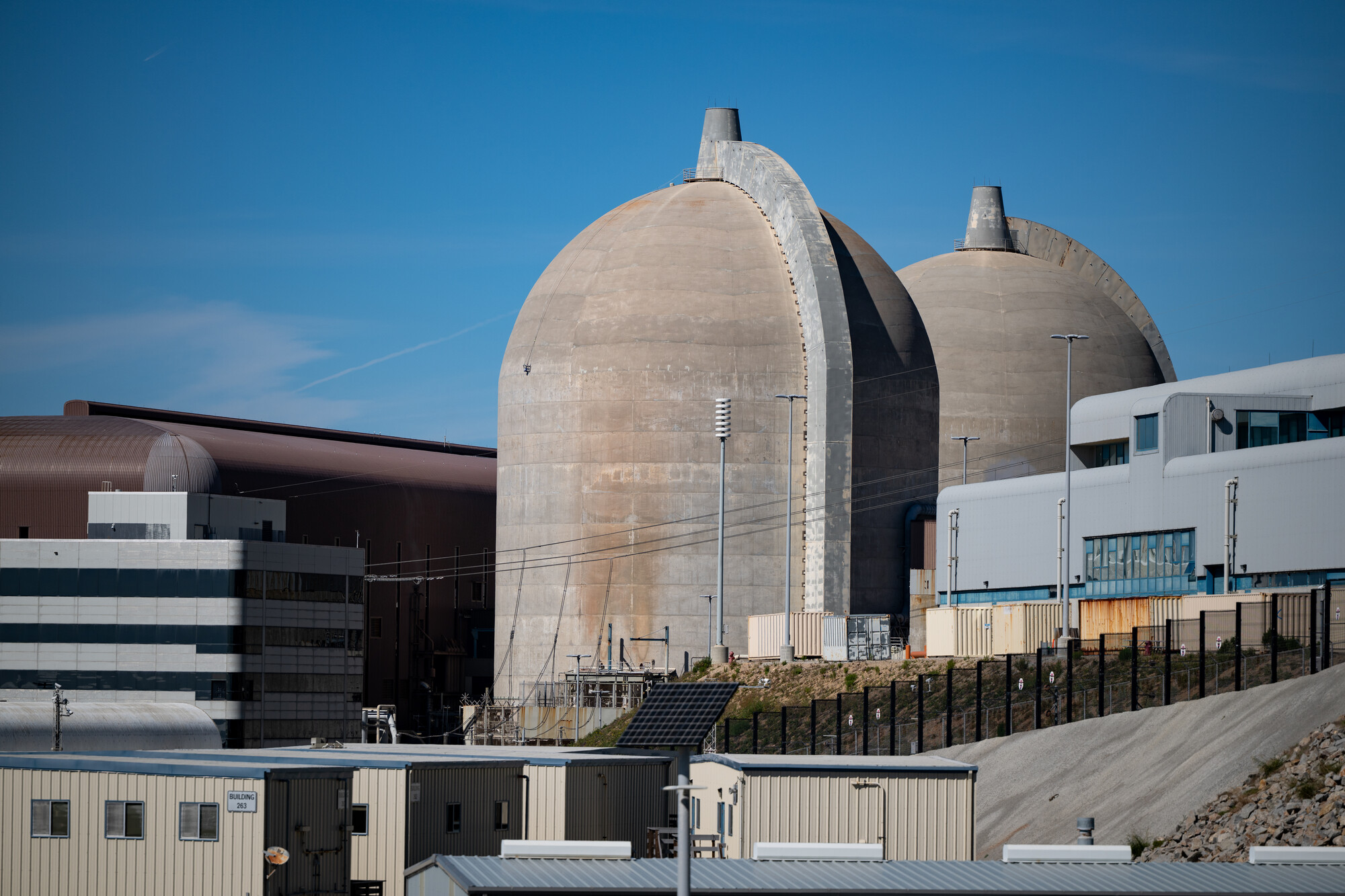
2026년 2월 13일 산루이스오비스포에 위치한 디아블로 캐년 발전소(Diablo Canyon Power Plant). 캘리포니아 유일의 가동 중인 원자력 발전소다. 이 발전소의 수명 연장 논의가 새크라멘토에서 재개되면서 모든 시선이 집중되고 있다. 그런데 내부는 어떤 모습일까? (베스 라버지(Beth LaBerge)/KQED)
_캘리포니아는 청정 에너지로의 전환을 추진 중입니다. KQED는 이것이 여러분에게 어떤 의미인지 보도하고 있습니다. 무엇이 효과적인가? 무엇이 효과적이지 않은가? 비용은 얼마인가?_ _오늘 기부__하여 이러한 답을 찾는 데 도움을 주세요._
불과 몇 년 전만 해도 이 발전소는 폐쇄될 예정이었고, 직원들은 폐로 작업을 진행하고 있었다. 그러나 개빈 뉴섬(Gavin Newsom) 주지사가 2022년 방향을 전환하면서 주는 운영을 2030년까지 연장했다. 이제 새크라멘토의 입법자들은 잠재적으로 2045년까지 더 오래 운영하는 방안을 논의하고 있다.
하지만 일부 지역 단체들은 발전소 건설 당시부터 반대 시위를 벌여온 단체들로, 안전 문제와 치명적인 노심 용융, 그리고 여러 지진 단층선 인근 부지에 보관된 사용후 핵폐기물이 초래하는 위험에 대한 우려의 목소리를 한층 높이고 있다.
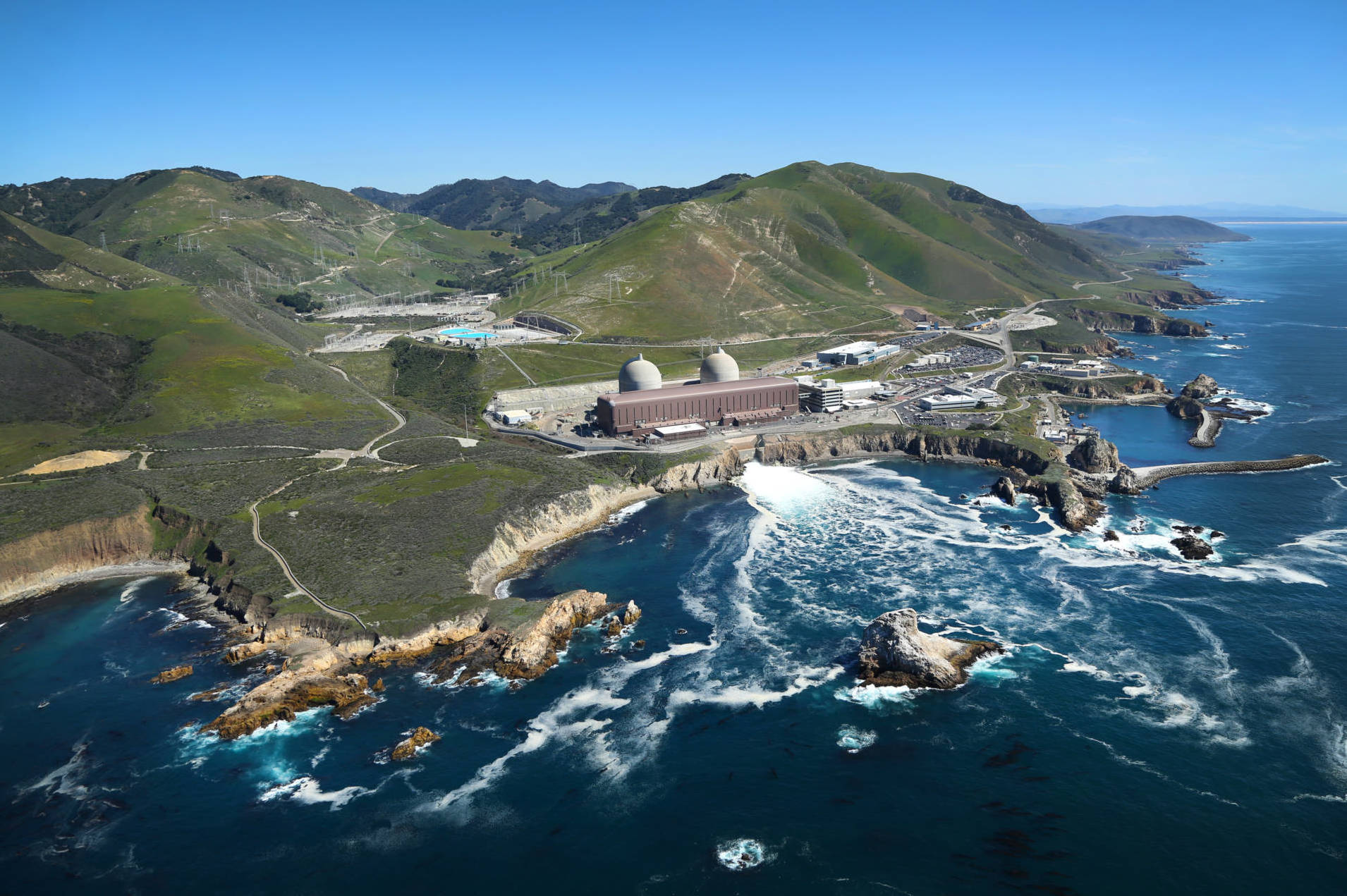
산루이스오비스포 카운티 아빌라 비치의 태평양 연안에 위치한 디아블로 캐년 원자력 발전소(Diablo Canyon Nuclear Power Plant) 항공 사진. (PG&E 제공)
한편 학계에서는 디아블로 캐년의 운영 유지에 드는 비용과 이것이 주의 청정 에너지 전환을 지지할지 아니면 저해할지에 대해 활발한 분석이 이루어지고 있다. 그리고 기업 단체들은 지지 대열에 합류하고 있다.
그래서 PG&E가 올해 초 언론 취재진을 대상으로 견학 투어를 제공했을 때 KQED가 이에 응했다. 이 원자력 발전소가 이토록 큰 주목을 받은 것은 수년 만의 일이지만, 이제 다시 한번 모든 시선이 디아블로 캐년에 쏠리고 있다. 내부는 어떤 모습일까?
수면 위에서
PG&E의 디아블로 캐니언 원자력발전소(Diablo Canyon Power Plant) 투어는 원자로 바로 남쪽에 위치한 보호 마리나의 보트 위에서 시작되었다. 이곳과 방파제 바로 바깥의 또 다른 작은 만은 발전소 냉각 시스템의 핵심 시설이 있는 장소이기도 하다 — 그리고 환경론자들에게는 주요 우려 사항이기도 한데, 이들은 이 시스템이 해양 생물을 빨아들여 죽인다고 주장하며 캘리포니아 해안에서 "가장 파괴적인 시설"이라고 부른다.
디아블로 코브(Diablo Cove)에 손을 담가 보면, 이 지역 해양의 냉랭한 기준 온도와 달리 물이 미지근하다.
PG&E의 규제 및 환경 수석 이사 톰 존스(Tom Jones)가 2026년 2월 13일 산루이스오비스포(San Luis Obispo)의 디아블로 캐니언 원자력발전소 인근에서 보트를 조종하고 있다. (베스 라버지(Beth LaBerge)/KQED)
이는 디아블로 캐니언이 장비 냉각을 위해 매일 20억~25억 갤런의 해수를 — 올림픽 규격 수영장 3,000개 이상을 채울 수 있는 양 — 끌어들인 후, 보통 16~17도 더 뜨거운 상태로 해양에 다시 방류하기 때문이다.
따뜻해진 물 때문에 마치 캘리포니아 남부 해안의 일부가 잘려 북쪽으로 옮겨진 것 같은 느낌이 든다.
수면 위에는 동물들의 활발한 움직임이 넘쳤다. 둥실 떠 있는 해달과 바위 위에서 일광욕을 즐기는 통통한 물개들의 모습이 보였다.
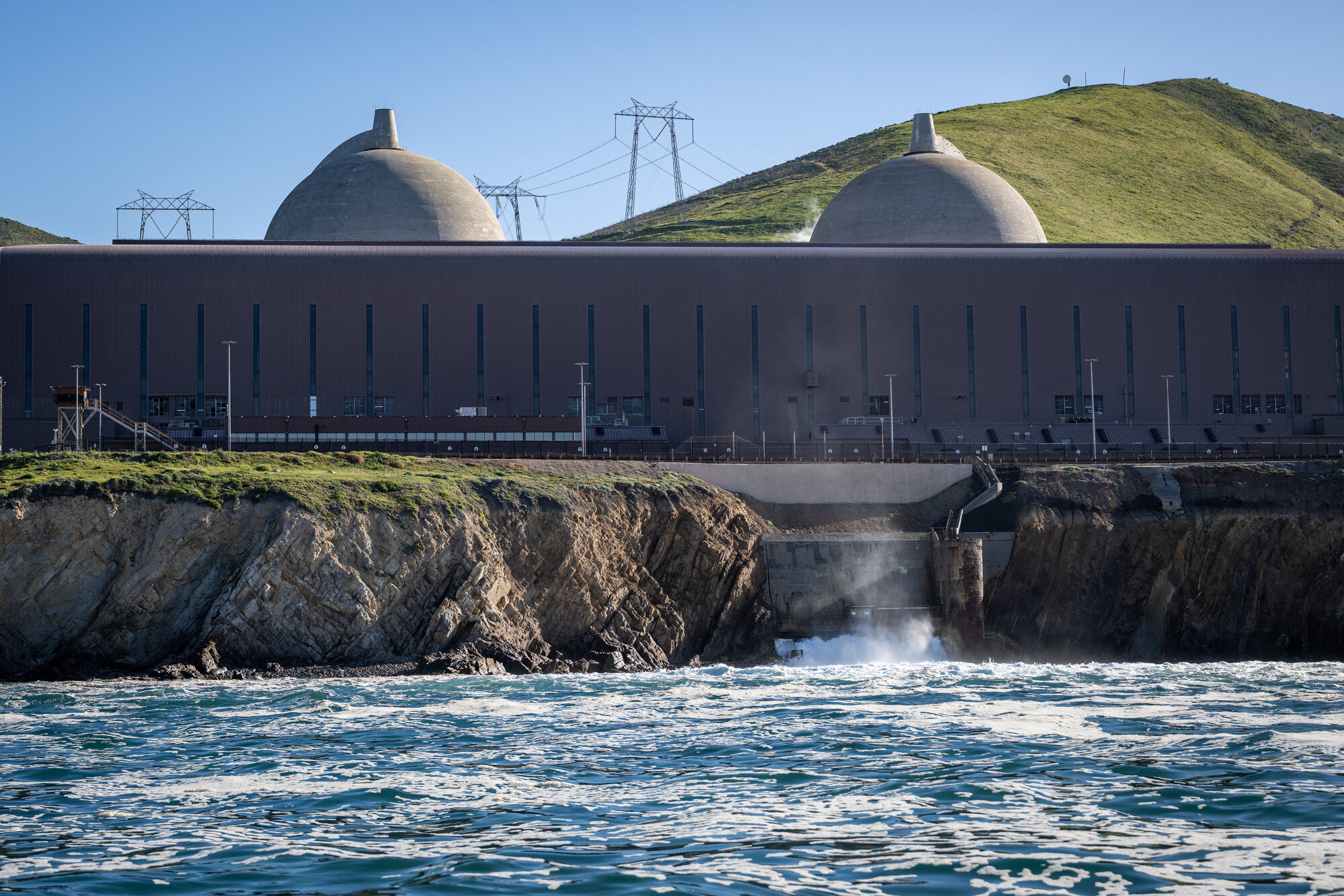
2026년 2월 13일, 산루이스오비스포의 디아블로 캐니언 원자력발전소. 캘리포니아 주의 유일한 가동 중인 원자력발전소이다. (베스 라버지(Beth LaBerge)/KQED)
다른 종들도 있었다 — 농어, 가오리, 그리고 캘리포니아 주어(州魚)인 가리발디(garibaldi)가 그것인데, 이 물고기는 원래 캘리포니아 해안의 더 남쪽에 서식하지만 이곳으로 이동해 왔다.
디아블로 캐니언 직원들은 따뜻한 물이 환경에 실질적인 변화를 일으키지 않는다고 밝혔다. 발전소로부터 2,000야드 이내에서는 낚시 및 기타 활동이 금지되어 있기 때문에, 이곳은 "사실상의 해양 보호구역"이라고 디아블로 캐니언의 미래 계획 담당 수석 이사 톰 존스(Tom Jones)는 말했다.
그러나 캘리포니아 해안위원회(California Coastal Commission) — 해안선과 자연 자원 보호를 담당하는 주(州) 기관 — 는 2025년 보고서에서 발전소의 냉각 시스템이 매년 약 20억 마리의 치어(稚魚)를 죽이며, 측정되지 않는 다른 생물체도 추가로 피해를 입는다고 밝혔다.
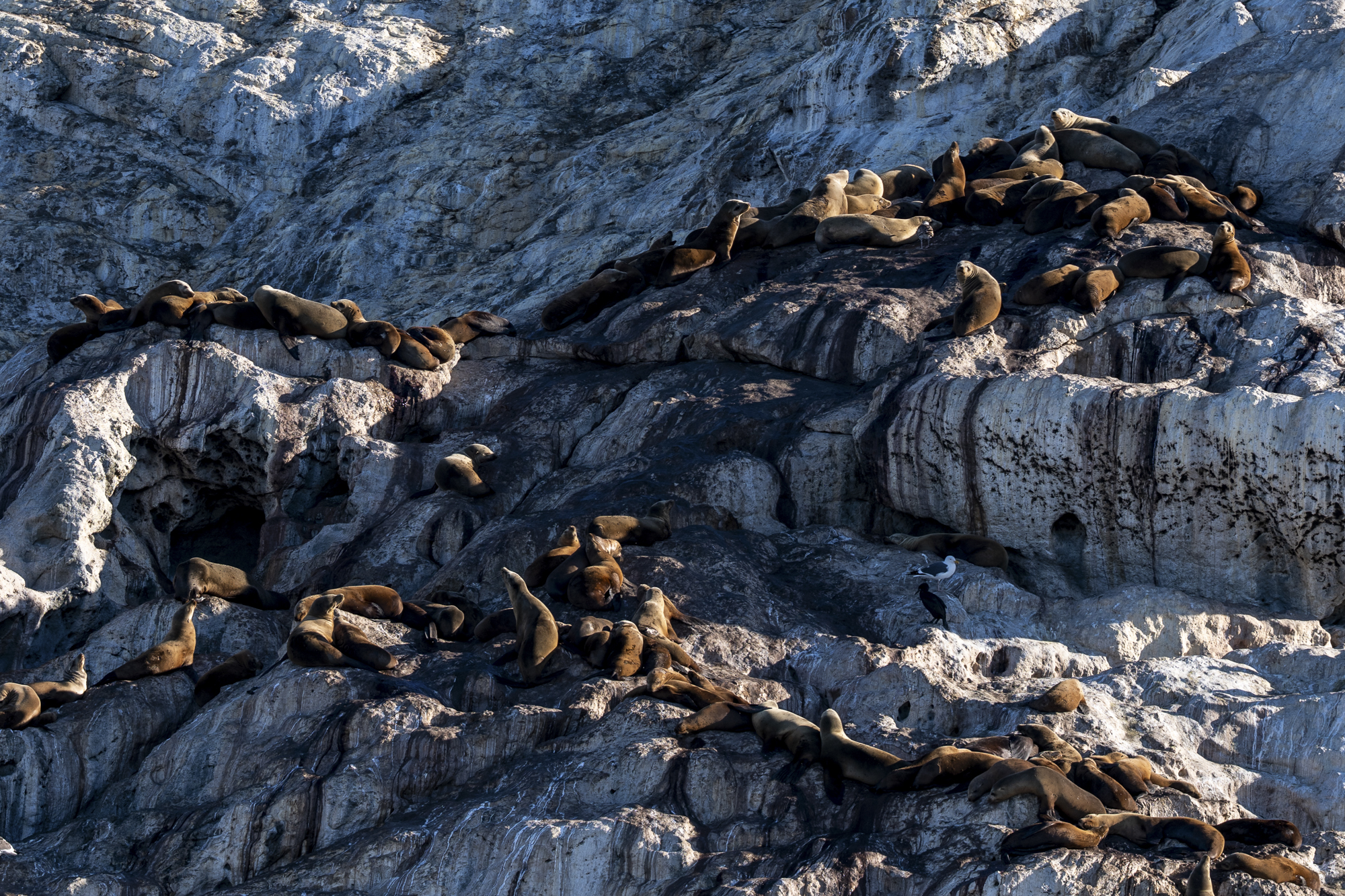
2026년 2월 13일, 산루이스오비스포 디아블로 캐니언 원자력발전소 인근의 라이언 록(Lion Rock). 수백 마리의 캘리포니아 바다사자, 항구물범, 바닷새의 서식지이다. (베스 라버지(Beth LaBerge)/KQED)
위원회는 디아블로 코브에 성체 개체군이 풍부하게 존재할 수 있으나, 성체는 산란 장소에서 멀리 떨어진 곳에 나타나는 경우가 많으며, 이곳에서의 존재는 인근의 풍요로운 해양 서식지 덕분일 수 있다고 기술했다.
위원회는 또한 디아블로 캐니언 인근에서 알과 유생을 제거하면 발전소로부터 수십 마일 떨어진 곳의 종(種)이 "현저히 감소"하는 결과를 초래한다고 경고했다.
위원회는 "이 플랑크톤성 생물들은"이라고 기술하며, "캘리포니아 연안 해역 먹이 사슬의 기반을 이룬다"고 덧붙였다.
터빈 갑판으로
우리는 안전모와 안전 장비를 착용하고 강화된 보안을 통과하여 원자력 반응로에 더 가까운 공간으로 구성된 "보호 구역"에 진입했다.
우리는 두 개 반의 미식축구 경기장 크기의 산업용 건물인 터빈 갑판에 들어섰다. 갑판 위는 덥고 시끄러웠으며, 발밑에는 약한 진동이 느껴졌다.
2026년 2월 13일, 캘리포니아주 샌루이스오비스포에 위치한 디아블로 캐니언 원자력 발전소의 터빈 갑판. 캘리포니아주 유일의 가동 중인 원자력 발전소이다. (베스 라버지(Beth LaBerge)/KQED)
내부의 증기 구동 터빈은 수평으로 반으로 자른 강철 파이프처럼 생긴 거대한 반원통 형태로, 발전기를 회전시켜 전기를 생산한다.
PG&E 안내원은 창문 너머로 격납 돔을 가리키며, 그 안에서 우라늄 원자가 분열하여 엄청난 양의 열이 방출된다고 설명했다.
2026년 2월 13일, 캘리포니아주 샌루이스오비스포에 위치한 디아블로 캐니언 원자력 발전소의 터빈 건물에서 바라본 원자로 격납 건물. 캘리포니아주 유일의 가동 중인 원자력 발전소이다. (베스 라버지(Beth LaBerge)/KQED)
이어 연쇄 반응이 일어난다. 열이 물을 가열하여 증기를 만들고, 증기가 파이프를 통해 이동하여 터빈을 돌리며, 터빈이 발전기에 연결되어 전기를 생산하고, 이 전기는 전력망을 통해 약 300만 명의 캘리포니아 주민에게 공급된다.
원자력은 주 에너지 공급량의 약 9%를 생산하며, 가스, 수력, 태양광, 풍력, 지열, 심지어 소량의 석탄을 포함한 에너지 믹스의 일부를 구성한다.
디아블로 캐니언의 전력 생산 현황. (PG&E 제공)
캘리포니아의 전력 수요는 수년간 정체 상태였지만, 현재는 전기차 보급, 가스 기기의 전기 기기 교체, 데이터 센터 확산으로 인해 증가하고 있다.
디아블로 캐니언을 계속 가동하려는 논의는 부분적으로 이러한 수요 증가에 의해 촉발되고 있다. PG&E의 수석 부사장 겸 최고 리스크 책임자인 모린 자왈릭(Maureen Zawalick)은 터빈 갑판에 들어서면 이 모든 전력의 최종 용도가 떠오른다고 말했다. "병원의 안전, 신장 투석, 신호등, 그리고 다른 모든 것들이요."
20세기 캘리포니아의 성장은 화석 연료를 기반으로 이루어졌지만, 주 지도자들은 태양광과 풍력 같은 재생 에너지 확대와 잉여 전력 저장을 위한 배터리를 통해 미래를 이끌어 나갈 것으로 보고 있다.
2020년 폭염으로 캘리포니아 전력망이 압박을 받아 순환 정전이 발생했을 때, 주 의회와 뉴섬(Newsom) 주지사는 디아블로 캐니언의 운영 연장에 찬성표를 던졌다.
현재 전기 요금이 계속 오르고 수요는 증가할 것으로 전망되는 가운데, 지지자들은 발전소를 더 오래 가동하는 것이 캘리포니아가 위태로운 줄타기의 중간을 비틀거리며 건너는 데 도움이 될 수 있다고 주장한다.
시뮬레이터
우리는 안전 장비를 벗고 교실과 시뮬레이터라고 불리는 제어실의 정확한 복제품이 있는 훈련 건물로 향했다.
직원들이 반원형의 수직 패널에 있는 스위치, 조명, 화면을 조작하며 훈련 연습을 완료하는 동안 다시 시원하고 조용해졌다. 자왈리크(Zawalick)는 시뮬레이터의 해초색 벽이 평온함을 불러일으키기 위한 것이라고 말했지만, 시뮬레이터의 존재 자체는 미국 다른 지역에서 발생한 원자력 재해에 기인한다.
2026년 2월 13일, 캘리포니아 주의 유일한 가동 중인 원자력 발전소인 샌루이스오비스포의 디아블로 캐니언 원자력 발전소(Diablo Canyon Power Plant) 훈련 시설. (베스 라버지(Beth LaBerge)/KQED)
시뮬레이터는 펜실베이니아에서 발생한 스리마일 아일랜드(Three Mile Island) 원자력 사고 이후 1979년에 모든 원자력 발전소의 필수 요건이 되었다. 부분 노심 용융은 미국 역사상 가장 심각한 원자력 사고로, 인적 및 장비 결함 모두로 인해 발생했다.
디아블로 캐니언의 실제 제어실 복제품에서 연습하는 것은 다양한 비상 상황을 처리할 수 있는 근육 기억을 직원들에게 훈련시키기 위한 것이다.
직원들은 계획된 연료 보충부터 일상적인 유지 보수, 대형 비상 상황에 이르기까지 모든 것을 훈련하기 위해 디아블로 캐니언 시뮬레이터에서 근무 시간의 20%를 보낸다.
사용후핵연료
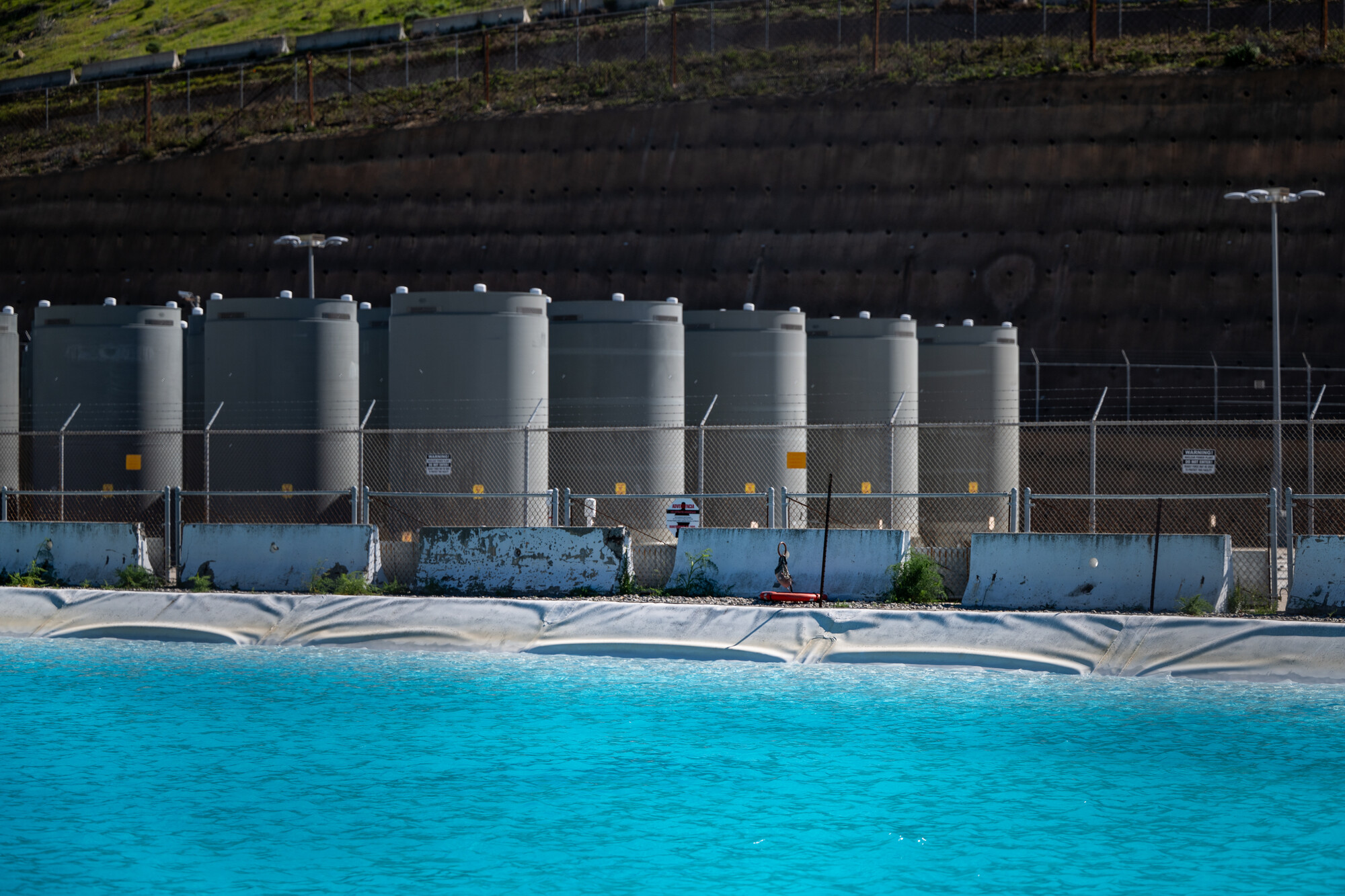
투어를 마무리하기 위해, 우리는 언덕을 올라 바다에서 더 멀어지며 사용후핵연료를 담고 있는 거대한 콘크리트 실린더 수십 개를 찾았다. 이것을 "건식 저장 용기(dry casks)"라고 부른다.
이 원자력 물질은 지진이나 테러 공격이 저장 시설을 불안정하게 만들어 방사성 폐기물을 바다나 인근 지역사회로 흩뿌릴 수 있다고 우려하는 지역 주민 단체들의 걱정거리다. 인근 주민들은 매년 비상 대비문서를 우편으로 받으며, 갑상선을 방사선으로부터 보호하는 요오드화칼륨 무료 용량을 받을 수 있다.
캘리포니아주 유일의 현역 원자력 발전소인 샌루이스오비스포 디아블로 캐니언 원자력 발전소에서 2026년 2월 13일 촬영. 담수화된 해수가 담긴 원수 저수지 뒤편 건식 저장 시설에 보관된 사용후핵연료. (베스 라버지(Beth LaBerge)/KQED)
린다 실리(Linda Seeley)는 반원자력 비영리단체 '평화를 위한 어머니회(Mothers for Peace)'의 회원으로서 수십 년간 디아블로 캐니언에 반대하는 운동을 펼쳐왔다.
"핵폐기물이 독성이 없고, 미래 천 세대에 치명적이지 않다면 얼마나 좋겠어요. 하지만 그건 사실이 아니에요. 사실은 독성이 있다는 거예요"라고 그녀는 말했다.
연료가 발전소 내부에서 사용되고 나면 방사선 수치가 위험할 정도로 높아져 노출된 사람을 몇 분 안에 사망에 이르게 할 가능성이 있다.
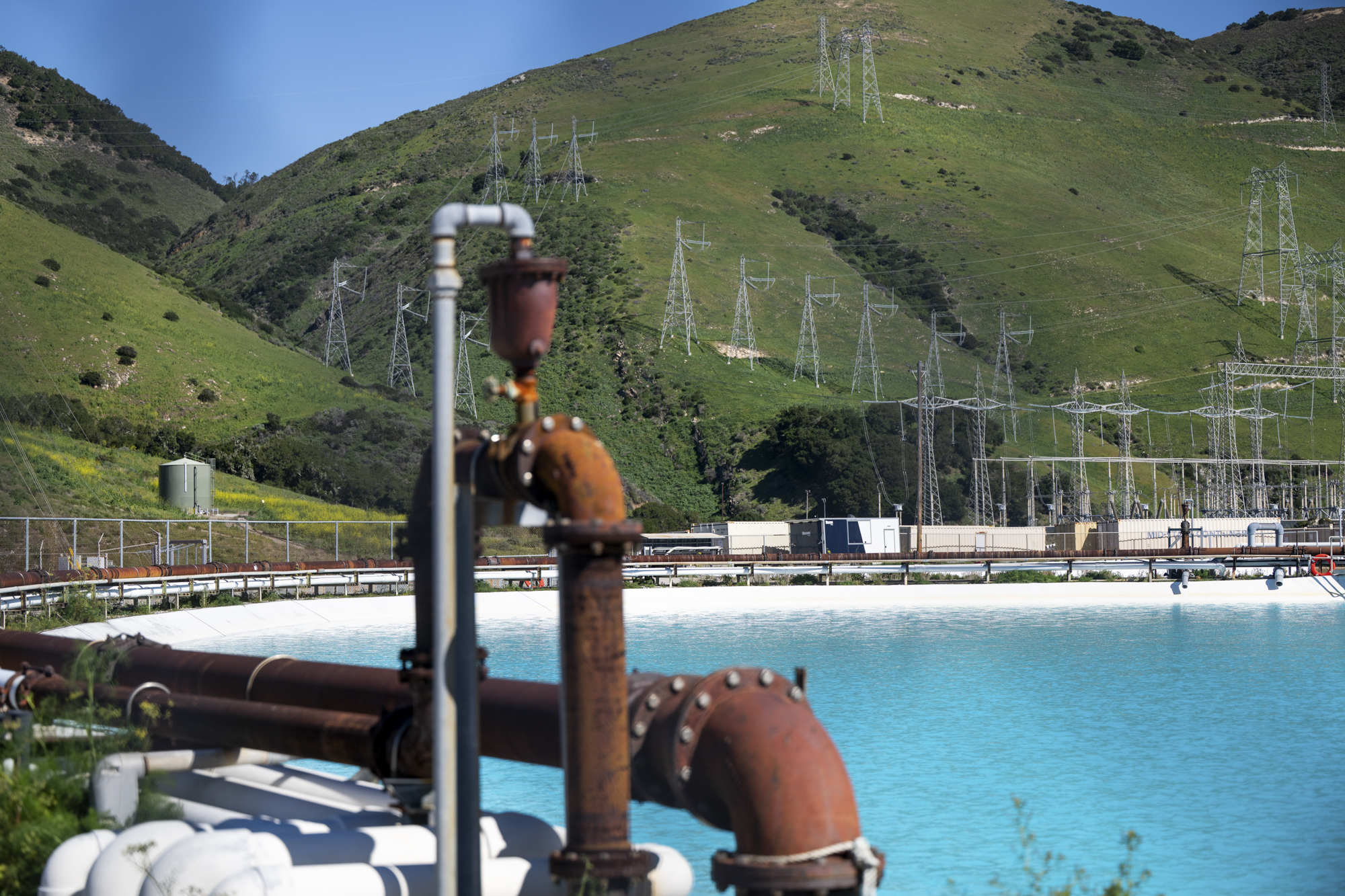
캘리포니아주 유일의 현역 원자력 발전소인 샌루이스오비스포 디아블로 캐니언 원자력 발전소에서 2026년 2월 13일 촬영한 담수화된 해수가 담긴 원수 저수지. (베스 라버지(Beth LaBerge)/KQED)
사용후핵연료는 화학물질로 처리된 대형 수조인 "습식 저장 시설"에서 7~10년을 보낸다. 이 액체는 높은 방사선 수준을 지닌 우라늄의 열과 붕괴를 흡수한다.
그런 다음 원자력 물질은 높이 약 6미터(20피트)의 이중 라이닝 스테인리스강 강화 건식 저장 용기에 포장된다. 각 용기는 지진을 견디도록 설계된 두께 2.3미터(7.5피트)의 철근 콘크리트 패드에 볼트로 고정된다. 이 연료는 수만 년 동안 특수 취급이 필요하다.
디아블로 캐니언은 발전소에 대한 주요 지진 위험을 제기하는 호스그리(Hosgri) 단층에서 약 5.6킬로미터(3.5마일) 떨어진 곳에 위치해 있다. 또 다른 단층인 쇼어라인(Shoreline)은 발전소에 더 가깝지만 규모가 더 작다. 일부 지진학자들은 이 단층들을 따라 발생하는 지진이 멜트다운을 일으킬 수 있다고 우려하고 있다.
미국 정부는 법적으로 모든 상업용 사용후핵연료의 소유권을 인수할 의무가 있지만, 정부가 아직 영구 보관 장소를 건설하지 않았기 때문에 연료는 발전소에 보관되고 있다.
디아블로 캐니언의 건식 저장 용기와 같은 현재의 해결책들은 철저할 수 있지만, 원자력규제위원회(Nuclear Regulatory Commission)로부터 2064년까지만 허가를 받은 상태다.
자왈릭(Zawalick)은 PG&E가 디아블로 캐니언의 사용후핵연료 저장에 대해 자신 있다고 말했다. 그녀는 원자력이 "우리 폐기물의 모든 온스가 정확히 어디에 있는지 아는 유일한 에너지원"이라고 지적했다. 원자력규제위원회와 PG&E는 매일 및 연간 단위로 사용후핵연료를 모니터링한다. "안전하게 보관되고, 검사되고, 감사되고, 샘플링됩니다. 저는 모든 에너지원을 지지하지만, 태양광 패널이 사용 후 어디로 보내지는지, 배터리나 그 모든 것들이 어디로 가는지는 모르겠어요."
자왈릭은 이곳에서 생산된 에너지를 수백만 캘리포니아 주민들에게 전달하는 강력한 송전선을 가리켰다. 특별하거나 평범한 순간에 방을 밝히고, 냉장고에서 음식을 보존하고, 에어컨을 가동하고, 샤워 물을 데우기 위해서다.
질서와 안전은 디아블로 캐니언 원자력 발전소 투어에서 자주 언급된다. 신원 조사, 무장 경비원, 지진 방호 조치, 계단에서 손잡이를 잡으라는 당부. 그 결과는 태평양을 내려다보는 언덕에 자리 잡은 차분하고 깔끔한 환경이다.
그러나 그 고요함 아래에는 원자력의 본질적인 위험이 도사리고 있다. 특히 지진 단층선 근처에 위치할 때 더욱 그렇다. 디아블로 캐니언은 그 아이디어가 처음 나온 이후로 줄곧 열정적인 논쟁의 원천이 되어왔다. 그리고 발전소 운영을 더 연장하려는 어떠한 노력도 다를 바 없을 것이다.
그렇게 투어가 끝났고, 가이드들은 각자의 업무로 돌아갔다. 소 한 마리가 접근로를 천천히 가로질러 지나갔다. 자신의 논쟁 많은 이웃에 대해서는 전혀 아는 바 없이.
캘리포니아 마지막 원자력 발전소인 디아블로 캐니언은 2022년 뉴섬 주지사의 결정으로 폐쇄 대신 2030년까지 운영 연장이 결정되었고, 현재는 2045년까지의 추가 연장 논의가 진행 중이다. 이 기사는 에너지 전환 시대에 기존 원전을 얼마나 오래 유지해야 하는가라는 복잡한 정책적 딜레마를 잘 보여주며, 청정에너지 목표, 전력 공급 안정성, 비용 문제가 맞물린 복잡한 논쟁을 반영한다. 환경단체들은 지진 단층대 인근의 입지, 냉각수로 인한 해양 생태계 피해, 방사성 폐기물 처리 문제 등을 들어 강하게 반대하고 있는 반면, 산업계는 안정적 전력 공급원으로서의 원전 가치를 강조하며 지속 운영을 지지하고 있다. 학계에서도 경제성 분석이 활발히 이루어지고 있어, 이 결정이 캘리포니아의 에너지 미래에 미칠 파급 효과가 상당할 것으로 보인다. 디아블로 캐니언 사례는 탈탄소화를 추진하는 여러 나라들이 직면하고 있는 원자력 에너지의 역할에 대한 전 세계적 논쟁의 축소판이기도 하다.
※ 이 글은 해외 원자력 바로알기를 위한 정보 전달을 목적으로 제공됩니다. 특정 기업이나 종목에 대한 투자 권유가 아니며, 모든 투자 판단과 그에 따른 책임은 투자자 본인에게 있습니다.
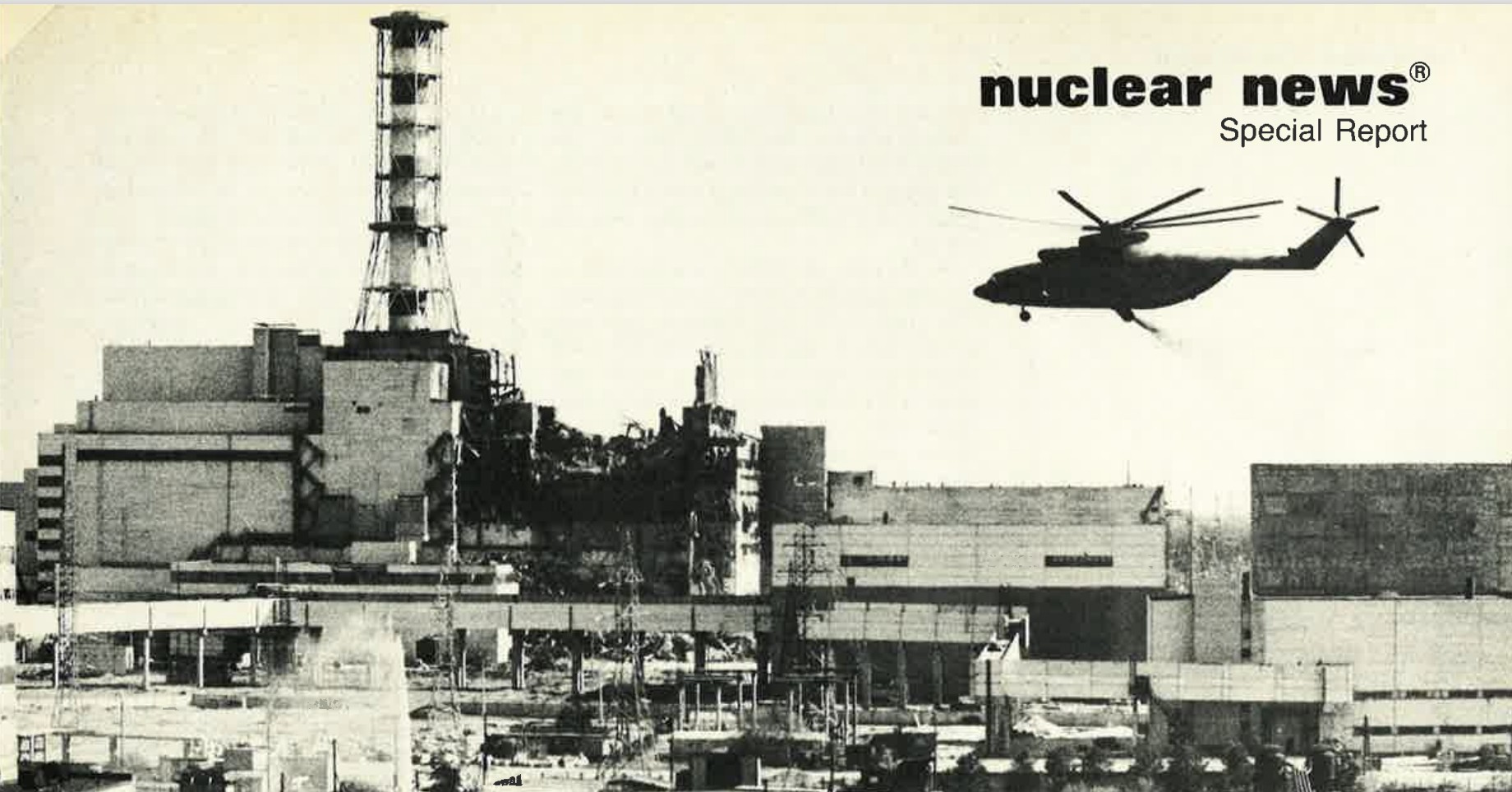
손상된 체르노빌 원자력 발전소를 점검하는 헬리콥터. (사진: _Nuclear News_, 1986년 10월호, 59쪽; 원출처: _Soviet Life_)
올해 4월 26일 일요일 현지 시각 오전 1시 23분은 역사상 가장 심각한 원자력 사고, 즉 우크라이나(당시 소련 영토)에 위치한 체르노빌 원자력 발전소 4호기 용융 사고가 발생한 지 40주년이 되는 시점이다.
그 후 40년간, 수많은 책과 다큐멘터리, 기사, 학술 대회 세션들이 다양한 관점에서 체르노빌의 역사와 영향을 분석해 왔다. _Nuclear News_ 의 아카이브에도 이와 마찬가지로 풍부한 시각들이 담겨 있으며, 수백 명의 과학자, 지지자, 비평가, 정치인들이 수년에 걸쳐 체르노빌에 대한 견해를 밝혀왔다. 오늘은 _NN_ 지면의 주요 내용들을 살펴보며 체르노빌의 이야기가 수십 년에 걸쳐 어떻게 전개되어 왔는지 알아보도록 하겠다.
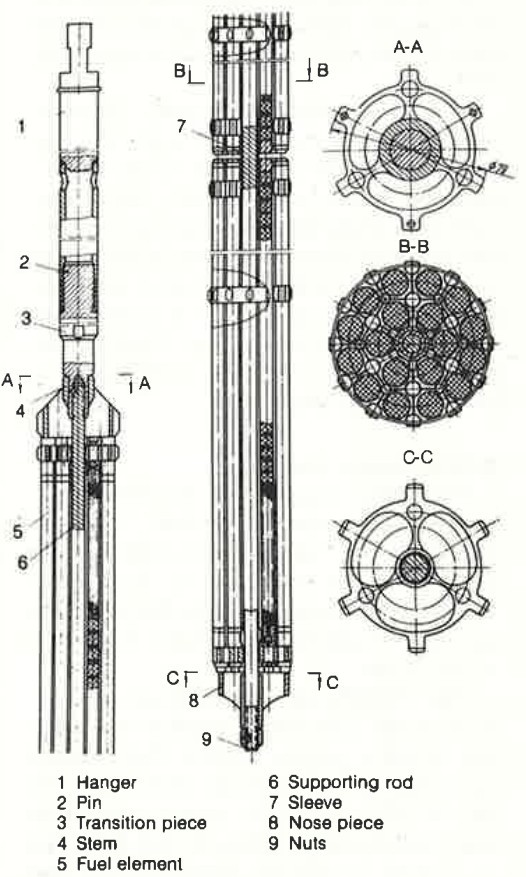
RBMK 연료 집합체 설계. (출처: _NN_, 1986년 6월호, 89쪽; 원출처: _Nuclear Energy_)
_Nuclear News_ 아카이브 속 체르노빌 사진들
Slider Photo
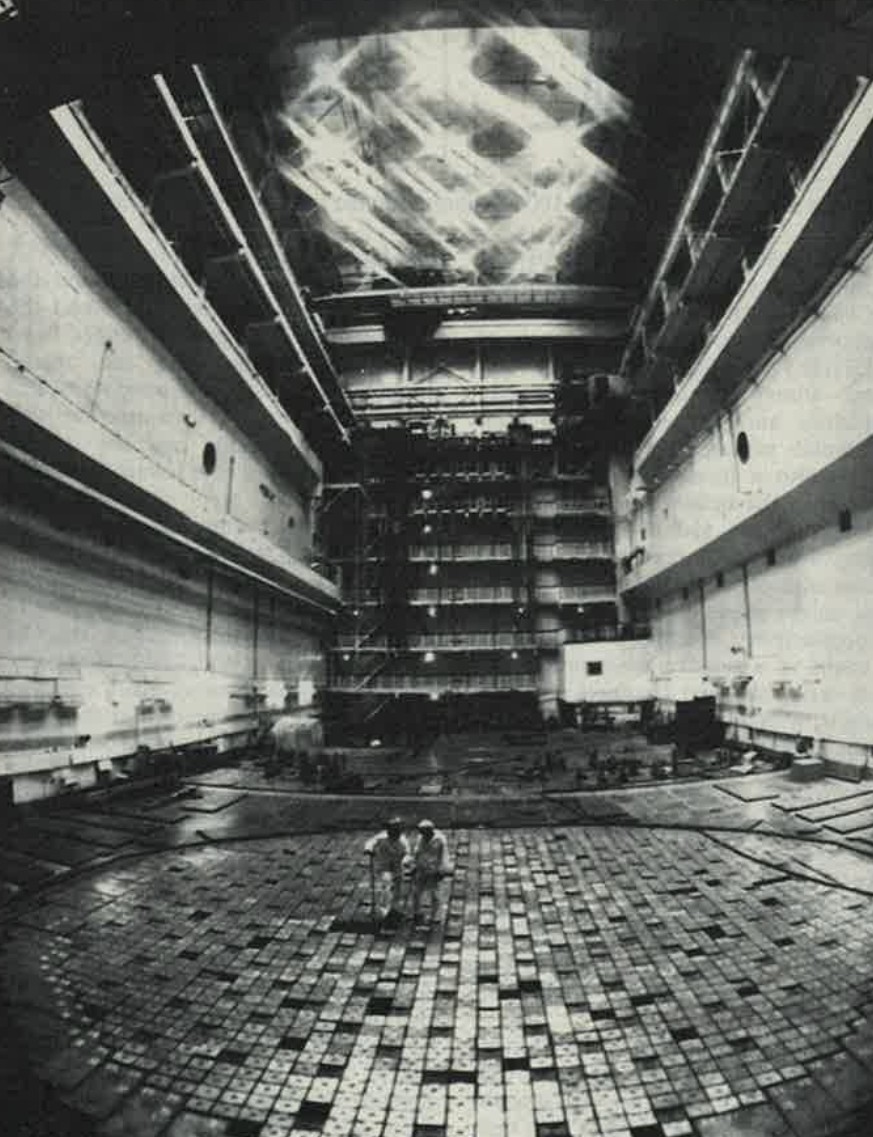
1982년 체르노빌의 원자로 홀. (출처: _NN_, 1986년 6월호, 90쪽; 원출처: AP/Wide World Photos)
_Nuclear News_ 아카이브 속 체르노빌 사진들
Slider Photo
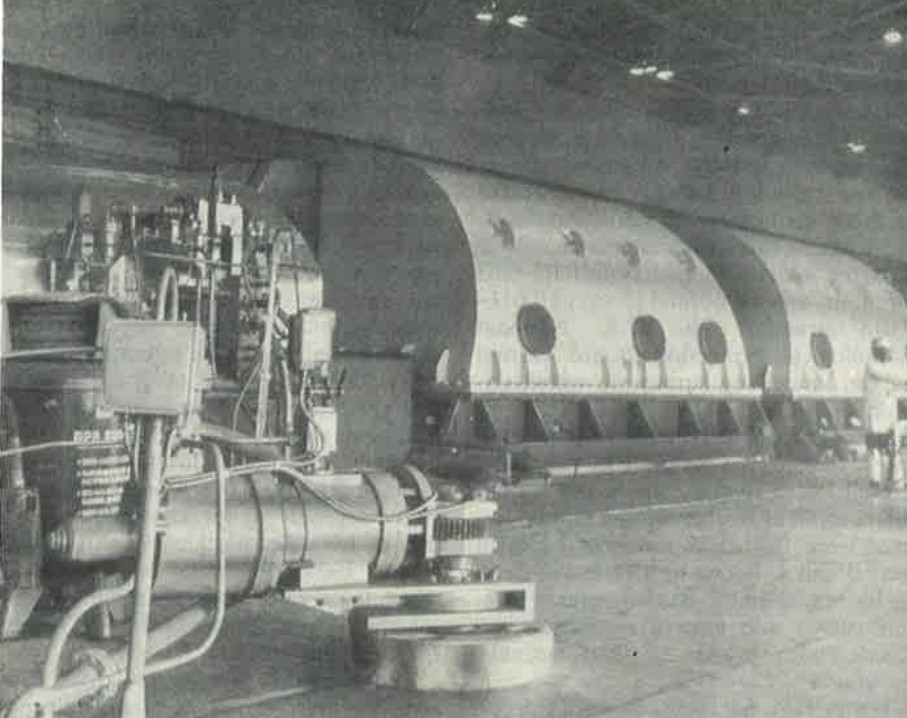
사고 이전 체르노빌의 터빈, 아마도 1호기 및 2호기 홀로 추정. (사진: _NN_, 1986년 6월호, 94쪽)
_Nuclear News_ 아카이브 속 체르노빌 사진들
Slider Photo
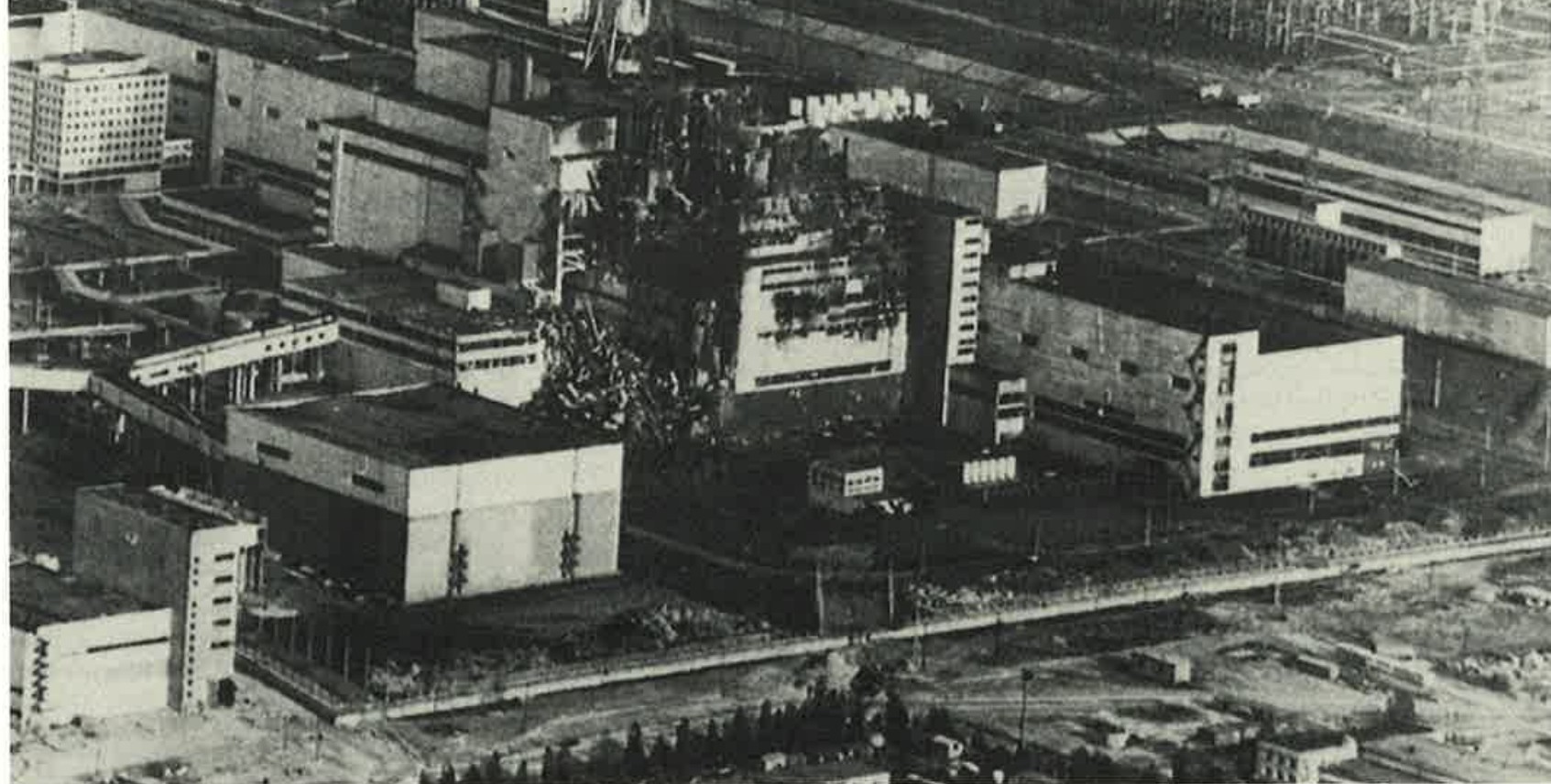
1986년 5월 9일의 손상된 체르노빌 부지. (사진: _NN_, 1986년 6월호, 87쪽; 원출처: AP/Wide World Photos)
_Nuclear News_ 아카이브 속 체르노빌 사진들
Slider Photo
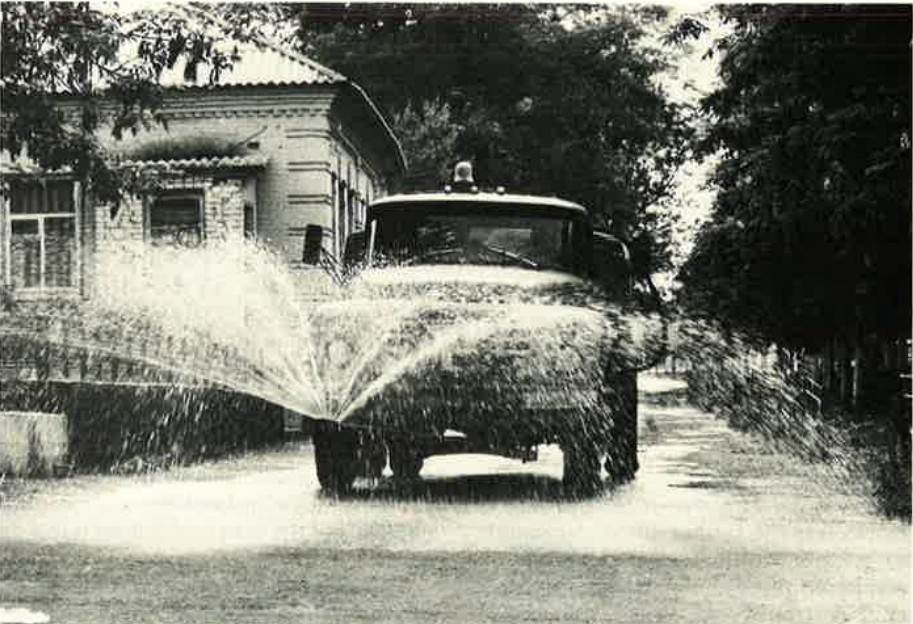
사고 이후 발전소 인근 마을 도로에 물을 뿌리는 모습. (사진: _NN_, 1986년 10월호, 64쪽; 원출처: _Soviet Life_)
_Nuclear News_ 아카이브 속 체르노빌 사진들
Slider Photo
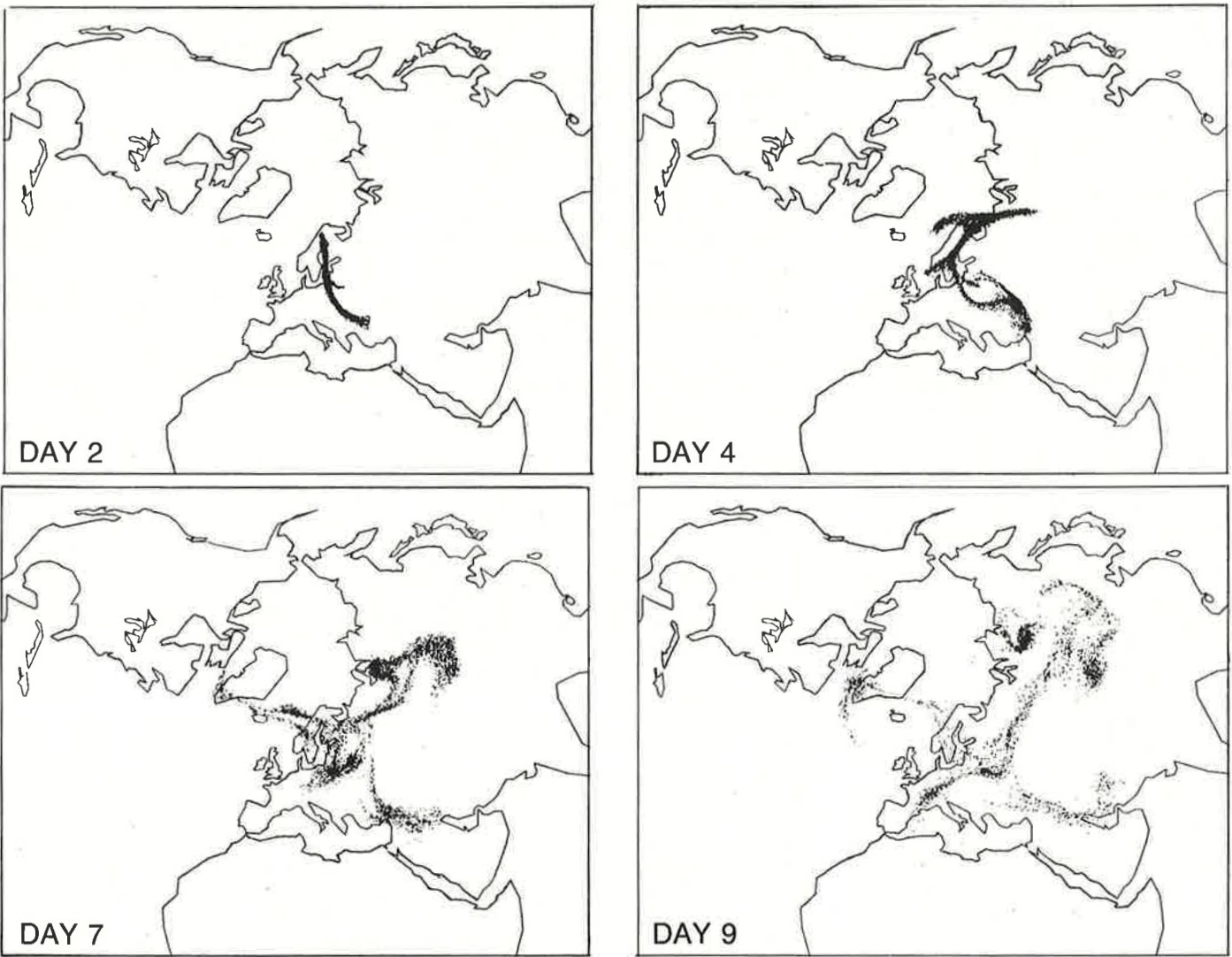
로렌스 리버모어 국립연구소(Lawrence Livermore National Laboratory)에서 작성한 지도로, 사고 발생 후 며칠간 북반구 하부 대류권에서의 방사선 분산 플룸 예비 추정치를 나타낸다. (출처: _NN_, 1986년 6월호, 92쪽)
_Nuclear News_ 아카이브 속 체르노빌 사진들
Slider Photo
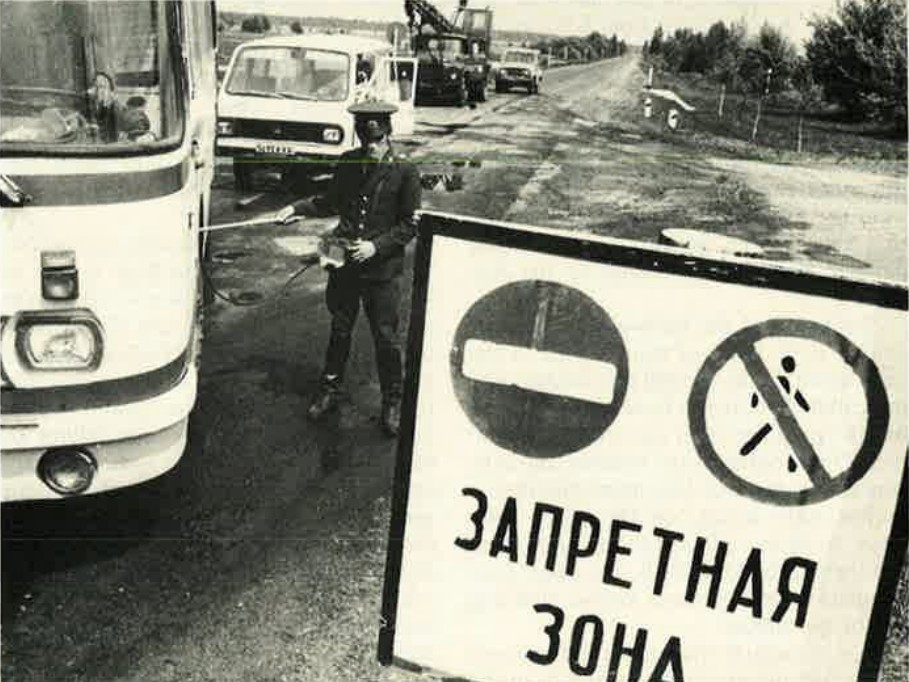
반경 30킬로미터 대피 구역 경계의 방사선 검문소. (사진: _NN_, 1986년 10월호, 66쪽; 원출처: Sovfoto)
_Nuclear News_ 아카이브 속 체르노빌 사진들
Slider Photo
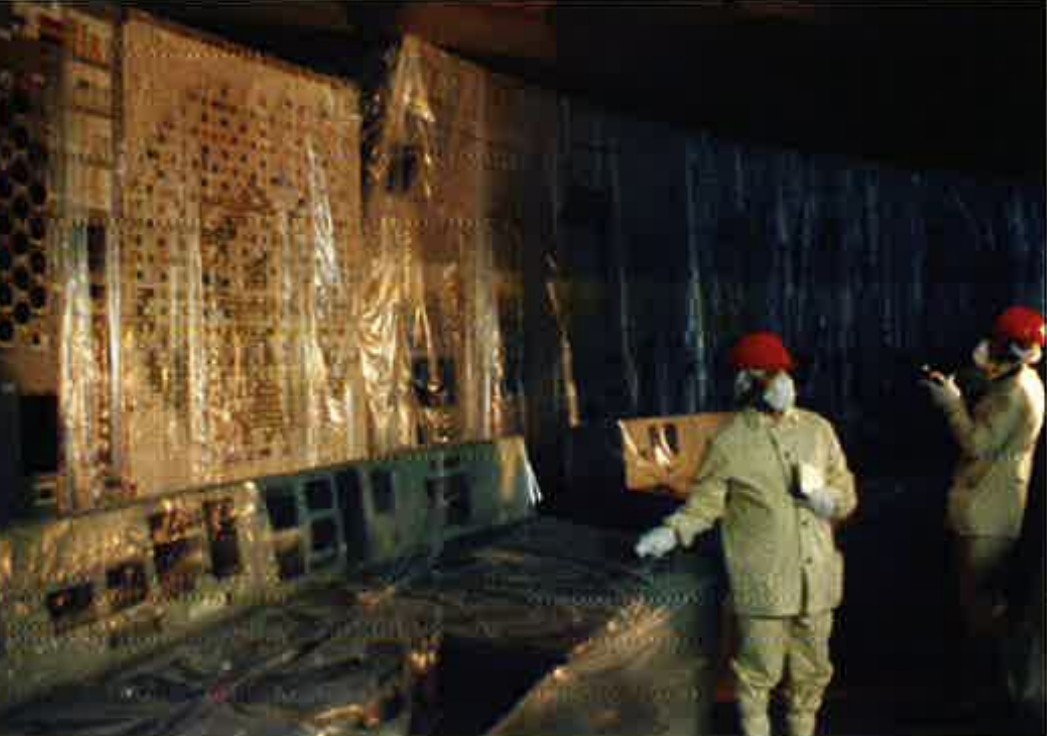
1995년 말 체르노빌 부지 견학 중, 한 방문객이 체르노빌 4호기 제어실에서 악명 높은 스크램 버튼의 위치를 가리키고 있다. (사진: Simon Rippon/_NN_, 1996년 4월호, 32쪽)
_Nuclear News_ 아카이브 속 체르노빌 사진들
Slider Photo
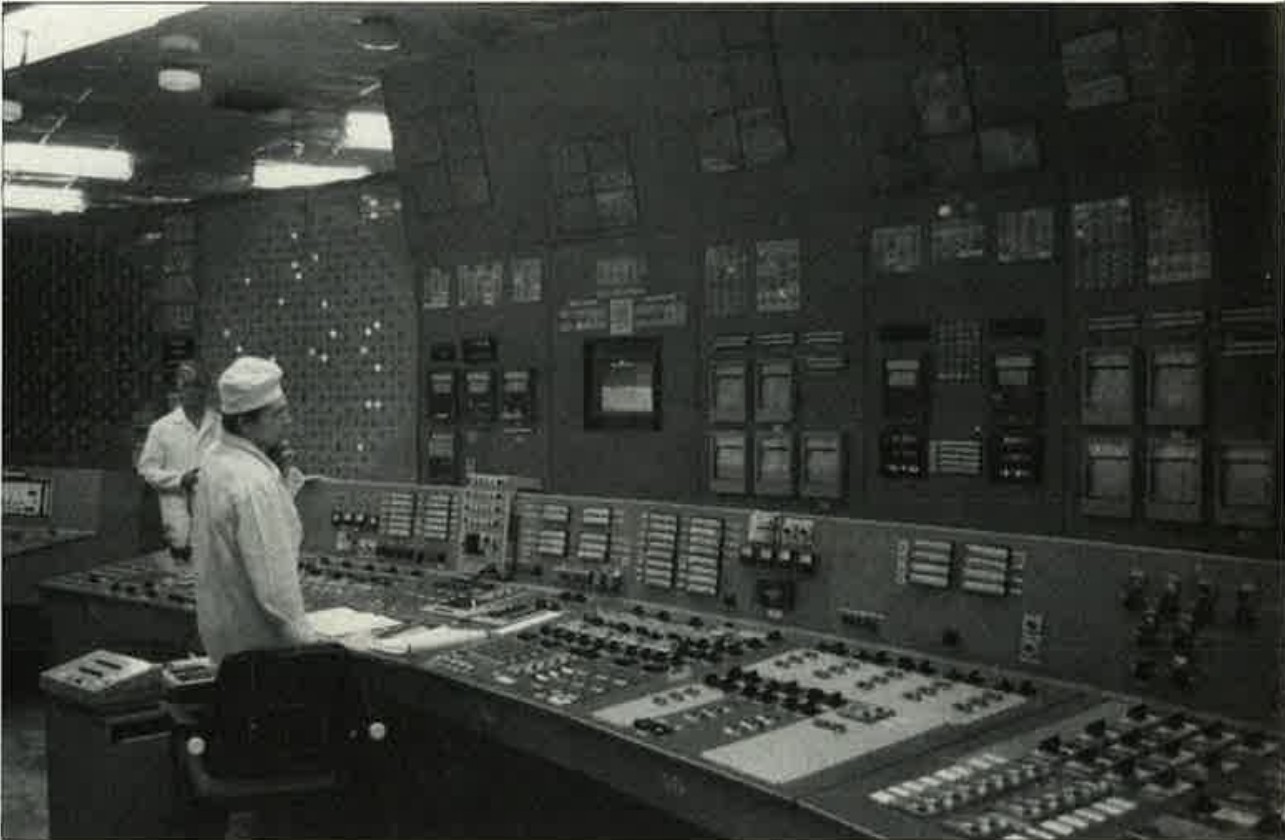
1995년 정상 가동 중인 체르노빌 3호기 제어실. (사진: Simon Rippon/_NN_, 1996년 4월호, 34쪽)
_Nuclear News_ 아카이브 속 체르노빌 사진들
Slider Photo
체르노빌의 "자발적 귀환자" 중 한 명이 개와 함께 출입 금지 구역에서의 삶으로 돌아가는 모습. (사진: _NN_, 2006년 4월호, 43쪽; 원출처: _Insight_)
이전 __
다음 __
사고 이전: 체르노빌 4호기는 1984년 4월에 운전을 개시하였다. 이에 앞서 1982년, 1979년, 1978년에 각각 운전을 시작한 세 기의 다른 호기들이 있었다. 1986년 사고 이전, _Nuclear News_ 아카이브에서 체르노빌을 언급한 기록은 단 한 건에 불과하다. _NN_ 1982년 11월호에서 체르노빌의 원자로들은 1000MWe급 경수 냉각, 흑연 감속 원자로로 구성된 새로운 원자로군의 일부로 소개되었다. 이 LGR들은 설계의 "모듈식 특성" 덕분에 소련에서 이전 원자로 유형들에 비해 "다소 순조로운 도입"이 이루어졌다고 기술되었다.
_NN_ 의 사고 보도: 1986년 4월 29일, 키이우의 주요 신문 뒷면에는 "소련 각료회의 정보"라는 제목의 짧은 기사가 실렸다. 그 내용은 다음과 같았다. "체르노빌 원자력발전소에서 사고가 발생했습니다. 원자로 중 하나가 손상되었습니다. 피해 수습을 위한 복구 조치가 진행 중입니다. 부상자들이 치료를 받고 있습니다. 정부 조사위원회가 구성되었습니다."
이처럼 극적이지 않은 첫 언론 보도는 곧 이어질 광범위하고 상세한 보도와 극명한 대조를 이룬다. _NN_ 이 이 주제에 관해 처음으로 게재한 기사는 단순히 "체르노빌 사고"라는 제목으로 1986년 6월호에 실렸다.
그 기사에서 체르노빌은 인명 피해 규모, 방출된 방사선량, 발전소의 물리적 피해, 그리고 "이미 긴장된 국가 간 관계를 더욱 악화시킨 결과" 등의 기준으로 볼 때, 역사상 "가장 심각한" 원자력 사고로 묘사되었다.
이어서 _NN_ 은 사고가 어떻게 전개되었는지 상세히 설명한다. 4월 26일, 4호기의 정기 유지보수 정지 중에 원자로 출력이 갑자기 상승했다. 당시 기자들은 알지 못했지만, 이 출력 상승은 원자로 운전원이 제어봉을 삽입해 원자로를 급정지시키기 위한 버튼을 누른 데서 비롯되었다. 이 실수의 원인은 오늘날까지도 밝혀지지 않고 있다. 제어봉의 알려진 설계 결함으로 인해, 제어봉 삽입이 반응성을 낮추기는커녕 오히려 잠시 반응성과 열을 증가시켰다. 체르노빌 4호기의 경우, 이러한 상황이 맞물려 열 상승이 연료 파열을 일으켰고, 이것이 증기 폭발로 이어졌다.
수초 후, 원인에 대한 논란이 있는 두 번째 폭발이 원자로를 강타했다. 두 차례의 폭발은 원자로에 즉각적이고 광범위한 피해를 입혔으며, 주변 건물에 화재를 일으켰다. 얼마 지나지 않아 냉각수 누출이 발생했고, 이어 가장 심각한 상황이 전개되었다. 바로 뜨거운 흑연 감속재에서 발생한 화재였다. 이 화재의 열기(최고 5,000°C에 달한 것으로 추정)는 방사성 물질을 대기 중 높이 밀어 올려 북유럽 전역에 광범위하게 확산시킨 주요 요인 중 하나였을 것으로 보인다.
첫 폭발 약 36시간 후, 체르노빌 반경 10킬로미터 이내 주민들이 대피를 시작했다. 반경 30킬로미터로 확대된 광역 대피는 5일 후 시작되었다. 측정 결과, 확대된 구역 내 최고 방사선량은 시간당 10~15밀리렘에 달했다. 지역 당국은 이 대피에 총 9만 명 이상이 동원되었다고 보고했다.
_NN_ 이 처음 보도하던 6월 무렵에는 이미 유고슬라비아, 네덜란드, 오스트리아, 스웨덴, 덴마크 등지에서 원자력 사업들이 재검토되거나 취소 또는 중단되고 있었다.
10년 후: 1995년 말, 당시 _NN_ 의 국제 편집장이던 사이먼 리폰(Simon Rippon)은 4호기 파괴 10년 후 발전소 현황을 직접 확인하기 위해 체르노빌을 방문했다. 그 무렵 소련은 이미 해체되었고, 광역 대피 구역은 대체로 영구 출입 금지 구역의 형태를 갖추어 가고 있었으며, 체르노빌의 지속적인 유산은 유럽 대부분의 지역에서 원자력 반대 여론을 크게 높여 놓은 상태였다.
리폰은 체르노빌이 이미 역대 자연재해 또는 인재 중 가장 많이 다루어진 사건으로 자리 잡았음을 돌아보며, 방사선에 대한 공포가 이제 일상화되었다고 지적했다. 세계 각국 정부는 "이러한 심리적 공포의 영향에서 자유롭지 못했고", 원자력 규제에 다양한 개혁을 단행했는데, 이는 "방사선학적 요인보다는 사회경제적, 정치적, 심리적 요인에 의해 크게 좌우된" 것이었다.
체르노빌 현장에는 여전히 "산더미 같은 고철과 장비"가 남아 있었으며, 두 기의 원자로가 계속 가동 중이었고 4호기 주변에는 방호용 석관이 세워져 있었다. (2호기는 관련 없는 터빈 화재가 발생한 1991년에 가동이 중단된 상태였다.)
체르노빌의 어두운 유산에도 불구하고, 발전소의 전반적인 분위기는 긍정적이었다. 리폰은 현장 부소장 아르투르 코르네예프(Artur Korneyev)와 이야기를 나눴는데, 그는 4호기 터빈 홀 지붕의 긴박한 수습 작업을 3주간 감독하는 동안 120렘의 방사선에 피폭되었음에도 기꺼이 자신의 자리로 "돌아왔다"고 했다.
코르네예프는 폭발 직후 며칠간의 상황—여전히 불씨가 남아 있는 파괴된 원자로 위에 뜨거운 연료와 흑연 파편을 삽으로 퍼 올리던 때—을 지금의 모습과 비교했다. 새로 도색된 석관, 광범위한 지붕 수리, 심지어 새 잔디를 심기 위한 부지 정비 작업까지, 이 모든 것이 코르네예프에게는 발전소가 올바른 방향으로 나아가고 있다는 증거였다. 그를 비롯해 리폰이 만난 대부분의 사람들은, 광범위한 폐로 및 정화 작업에 필요한 자금을 마련하기 위해(전력 판매로 연간 2억 달러의 수익을 올리고 있었다) 발전소를 2010~2015년까지 계속 가동하고(2호기도 재가동하고) 싶다는 입장이었다.
20년 후: 체르노빌 직원들의 희망에도 불구하고, 2호기는 재가동되지 않았으며, 1호기와 3호기 모두 2000년 말까지 가동이 중단되었다. _NN_이 체르노빌에 대한 다음 심층 분석을 진행한 2006년이 되자, 관심은 폐로, 제염, 그리고 출입 금지 구역의 미래가 어떤 모습이 될지에 대한 문제로 옮겨갔다. 신안전격납구조물(NSC)—노후화되어 붕괴되는 기존 석관을 보호하고 그 아래 잔해의 완전한 해체를 가능하게 하기 위해 건설된 구조물—의 건설이 진행 중이었다.
우크라이나가 체르노빌의 나머지 가동 중인 원자로들을 폐쇄하기를 거부하면서 우크라이나와 국제 사회 사이에 불화가 생겨났다. 우크라이나가 마침내 뜻을 굽히고 본격적인 정화 작업으로의 전환에 동의하자, 우크라이나가 그 과제를 해결할 수 있도록 돕기 위해 전 세계에서 지원이 몰려들었다.
이 복잡한 작업이 여러 방면에서 진행되면서, 시선은 출입 금지 구역으로 향하게 되었다. 그곳에서 놀랍고 이제는 잘 알려진 이야기가 등장하기 시작했다. 발전소 주변 30킬로미터 지역에서 "풍성한 식생을 자랑하는 새롭지만 야생 그대로의 경관"과 동물 생태계가 번성하고 있었다. 더욱이 "자기정착민"이라 불리는 일부 사람들이 출입 금지 구역 내 자신들의 옛 집으로 돌아와 일상적인 삶을 이어가기 시작했다.
오늘날 돌아보며: 재난으로부터 30년이 지난 2016년, NSC가 마침내 설치되었다. 체르노빌에게 있어 지난 20년은 고된 정화 작업의 느린 이야기였으며—이 작업은 최근 몇 년간 진행 중인 러시아-우크라이나 전쟁으로 인해 큰 도전에 직면했고, 특히 2025년에 드론 공격으로 NSC에 구멍이 뚫리는 사건이 발생했다.
우크라이나를 넘어, 많은 이들이 체르노빌이 원자력 발전의 평화적 개발에 궁극적으로 미친 전반적인 영향에 대해 추측한다. 긍정적이든 부정적이든 간에, 구체적인 조치들이 이 재난으로 직접 거슬러 올라가게 된다. 세계원자력발전사업자협회(WANO)는 체르노빌에 대한 직접적인 대응으로 설립되었으며, 국제적인 원자력 안전을 높이기 위해 엄청난 양의 작업을 수행해 왔다. 반면에 한때 국가 전력의 절반 이상을 공급했던 원자력 부문을 독일이 포기한 것은 헤아릴 수 없는 경제적, 환경적 비용을 초래했다.
체르노빌의 유산은 대중이 원자력 발전을 인식하는 핵심적인 기준점 중 하나로 확고히 자리 잡았다. 이는 원자력 반대론자들이 자주 언급하는 주제로 남아 있으며, 오늘날 전문가들은 그 사고로 이어진 결함들이 이제 21세기의 원자력 세계와는 거의 닮은 점이 없는 산업의 유물이 되었음을 계속해서 설명하고 있다.
그럼에도 불구하고, 40년이 지난 지금, 체르노빌의 영향이 희미해지고 있다는 몇 가지 징후가 있다—전 세계적으로 원자력의 기세가 높아지고 있으며, 특히 젊은 세대를 중심으로 대중의 지지가 상승하는 추세를 보이고 있다. 차세대 원자로에 대한 새로운 계획들이 발전해 나가면서, 체르노빌은 원자력 산업이 엄격한 안전 문화를 유지하기 위해 왜 그토록 노력하는지를 일깨워주는 교훈으로 분명히 자리하게 될 것이다.
AI 분석
체르노빌 사고 40주년을 맞아 미국원자력학회(ANS)의 《Nuclear News》가 지난 40년간 이 사고를 어떻게 다루어 왔는지를 되돌아보는 이 기사는, 역사상 가장 심각한 원자력 사고의 장기적 영향과 교훈을 재조명하는 데 큰 의미를 갖는다. 1986년 4월 26일 소련 우크라이나에서 발생한 체르노빌 4호기 용융 사고는 이후 원자력 산업의 안전 기준과 국제 규제 체계에 근본적인 변화를 가져왔으며, 그 여파는 오늘날까지도 이어지고 있다. 《Nuclear News》의 아카이브에는 수백 명의 과학자, 옹호론자, 비평가, 정치인들이 수십 년에 걸쳐 체르노빌에 대한 다양한 시각을 공유해 왔으며, 이는 원자력 기술에 대한 사회적 인식 변화를 추적하는 귀중한 역사적 기록이 된다. 특히 사고 이전 소련의 RBMK-1000 원자로가 '비교적 순조로운 도입'으로 묘사되었다는 점은, 당시 원자력 산업계가 얼마나 위험을 과소평가했는지를 보여주는 중요한 함의를 담고 있다. 이 기사는 체르노빌을 단순한 역사적 사건이 아니라 원자력의 미래를 논의하는 현재진행형 교훈으로 바라보게 한다는 점에서 중요한 가치를 지닌다.
※ 이 글은 해외 원자력 바로알기를 위한 정보 전달을 목적으로 제공됩니다. 특정 기업이나 종목에 대한 투자 권유가 아니며, 모든 투자 판단과 그에 따른 책임은 투자자 본인에게 있습니다.
미국 원자력규제위원회(NRC)가 마이크로원자로를 위한 새로운 인허가 프레임워크인 '파트 57(Part 57)' 규칙을 제안했으며, 이를 통해 $37.6억~$118.4억의 비용 절감이 기대된다.
파트 57은 100MWe 이하의 소형·단순 원자로를 대상으로 하며, 인허가 및 배치 기간을 6~12개월로 단축하는 것을 목표로 한다.
이 프레임워크는 ADVANCE법 및 2025년 원자력 관련 행정명령에 따른 NRC의 규제 검토 및 개편 작업의 일환으로, 경수로(LWR) 기반 기술에서 벗어나는 첨단 원자로 설계를 지원한다.
---
원자력규제위원회(Nuclear Regulatory Commission, NRC)가 마이크로원자로 및 유사 원자로 설계에 대한 새로운 인허가 프레임워크를 공개했다. 이 프레임워크는 보다 단순한 기술을 보유한 신청자들에게 더욱 적합한 경로를 제공할 것으로 기대된다.
'파트 57(Part 57)'로 알려진 이 제안 규칙은 ADVANCE법과 2025년 원자력 관련 행정명령에 따른 NRC의 규칙 검토 및 전면 개편 작업의 최신 성과물이다. 또한 지난 3월 최종 확정된 파트 53(Part 53) 규칙과 같이, 경수로(LWR) 기술에서 벗어나 첨단 원자로 설계를 위해 개발된 최신 프레임워크이기도 하다.
NRC 위원장 호 니에(Ho Nieh)는 금요일에 다음과 같이 말했다. "우리는 안전성, 규모, 속도를 고려해 설계된 새로운 인허가 프레임워크를 개발하고 있으며, 파트 57이 그 대표적인 사례입니다."
마이크로원자로를 위한 설계: 제안된 규칙에는 다음과 같은 내용이 포함되어 있다:
동일한 원자로 군(플리트)에 대한 일괄 승인 요청.
새로운 원자로 운영에 대한 대체 설계 기준 및 프로그램의 적절한 활용 허용.
환경적 영향이 제한적인 프로젝트에 대한 환경 검토 간소화.
NRC 허가 취득 이전에 제한적인 건설 착수를 위한 경로 제공.
제안 규칙에 명시적으로 규정되어 있지는 않지만, 파트 57은 100MWe 이하의 원자로를 대상으로 한다고 니에 위원장은 밝혔다. (비교하자면, 소형모듈원자로(SMR)는 일반적으로 약 50MWe~300MWe의 용량을 가지는 것으로 알려져 있으며, NRC는 기가와트급 경수로(LWR)에 대해서도 다수의 인허가를 발급한 바 있다.)
대형 원자로의 평가에는 기술 및 부지에 대한 장기간의 검토가 필요하다. 마이크로원자로는 규모 면에서 그 반대편 극단에 위치한다.
니에 위원장은 "소형 기계이자 단순한 기계입니다. 그야말로 단순하고, 대량 인허가에 적합합니다"라고 말했다.
그는 또한 "우리는 안전 사례가 매우 단순한 설계를 다루고 있습니다. 시설에서 사고가 발생했을 때 작동해야 하는 복잡한 안전 장비가 많지 않은 설계입니다. 이는 정말로 매우 단순한 기계, 단순한 안전 시스템을 지향합니다"라고 덧붙였다.
NRC에 따르면, 파트 57은 기관과 산업계 전반에 걸쳐 $37.6억에서 $118.4억에 이르는 비용을 절감할 것으로 예상된다. 또한 NRC는 인허가 및 배치에 6~12개월이 소요될 것으로 전망하며, 이는 허가 및 인허가 일정을 크게 앞당기는 것이다.
전체적으로 이 프레임워크는 마이크로원자로의 이동성 여부 등 개발자들이 고객 수요를 충족하는 방식을 다루는 것을 목표로 한다. 새롭고 다양한 원자력 기술에 대한 수요가 있다면 NRC가 그 자리에 함께할 것이라고 니에 위원장은 말했다.
"과거에는 원자력 발전의 주된 수요가 기저 부하용 전력 유틸리티 발전기였습니다"라고 니에 위원장은 말했다. "이제 이 전체적인 환경이 완전히 달라졌습니다. 완전히 달라진 환경 덕분에 혁신가들이 새로운 설계를 들고 시장에 등장하고 있습니다 . . . 우리는 에너지 환경이 변화하는 만큼 우리의 프레임워크도 적응시키려 하고 있습니다."
추진 일정: NRC는 적어도 2020년부터 마이크로원자로 규제 및 정책 검토에 관여해 왔지만, 제안 규칙 작업은 ADVANCE법과 행정명령에 따라 지난해 본격적으로 시작되었다. 새로 설립될 첨단 원자로 사무소(Office of Advanced Reactors)를 이끌게 될 제러미 바우언(Jeremy Bowen)은 기술 직원들이 규칙 문안을 개발하는 데 약 6개월이 걸렸다고 밝혔다.
"의회의 방향 지침과 산업계와의 수년간의 상호작용으로부터 얻은 많은 혜택이 이 규칙에 담긴 내용을 구체화하는 데 도움이 되었습니다. 우리가 처음부터 시작한 것은 아닙니다. 시작하기도 전에 이미 많은 아이디어가 있었습니다"라고 바우언은 말했다.
NRC에 따르면, 파트 57은 잠정적으로 5월 6일 _연방관보(Federal Register)_ 에 게재될 예정이다. 기관은 제안 규칙에 대한 공청회를 조만간 개최할 예정이다.
---
AI 분석
NRC의 파트 57 제안 규칙은 급성장하는 마이크로원자로 시장에 대응하기 위한 규제 현대화의 중요한 이정표로 평가된다. 기존의 대형 원자로 중심의 복잡한 인허가 절차를 단순·소형 원자로에 맞게 간소화함으로써, 첨단 원자력 기술의 상업화 속도를 획기적으로 앞당길 수 있을 것으로 기대된다. 특히 6~12개월이라는 단축된 인허가 기간과 최대 $118.4억에 달하는 비용 절감 효과는 민간 투자 유치와 원자력 산업 생태계 활성화에 긍정적인 신호가 될 수 있다. 이 프레임워크는 AI 데이터센터, 원격 지역 에너지 공급, 군사 시설 등 다양한 분야에서 마이크로원자로 도입을 가속화할 수 있는 제도적 기반을 마련한다는 점에서 전략적 의미가 크다. 한편, 공청회와 연방관보 게재 이후 본격적인 이해관계자 의견 수렴 과정이 진행될 예정이어서, 최종 규칙이 확정되기까지는 추가적인 논의와 조정이 있을 것으로 예상된다.
백악관이 연방 소유 유틸리티 테네시 밸리 오소리티(TVA)에 원자력규제위원회(NRC)의 규정 초안을 사전에 공유하며, 원자력 안전 규정 형성 과정에서 누가 영향력을 행사하는지에 대한 논란이 일고 있다.
트럼프(Trump) 행정부는 독립 기관에 대한 정치적 책임 강화를 목적으로 NRC가 제안 규정을 백악관 심사에 회부하도록 지시했으며, 이는 약 100년간의 선례를 뒤집는 조치다.
인공지능 데이터센터의 폭발적인 전력 수요에 대응하기 위해 원자력 발전 부흥을 추진하는 과정에서, 원자로 승인 절차의 신속화를 위한 규제 개편이 추진되고 있다.
---
백악관은 연방 소유 유틸리티인 테네시 밸리 오소리티(Tennessee Valley Authority, TVA)에 원자력규제위원회(Nuclear Regulatory Commission, NRC) 초안에 대한 사전 열람 기회를 제공하고 있어, 성장하는 원자력 산업의 안전 규정을 누가 주도적으로 형성할 수 있는지에 대한 의문이 제기되고 있다.
7개 주에 걸쳐 1,000만 명 이상에게 전력을 공급하는 이 유틸리티는, 트럼프(Trump) 행정부가 NRC에 최근 도입한 비공개 백악관 심사 절차를 통해 원자력 발전 규정 초안에 대한 피드백을 제출하고 있다. NRC는 TVA의 7기 원자로를 포함해 미국의 54기 원자력 발전소를 감독하며, TVA의 7기 원자로는 해당 유틸리티 전력 공급의 5분의 2를 담당하고 있다.
도널드 트럼프(Donald Trump) 대통령은 독립 기관에 대한 정치적 책임을 강화하려는 광범위한 노력의 일환으로, 2025년 2월 NRC가 제안 규정을 백악관 심사에 회부하도록 지시했다. 이 심사 방식은 거의 100년에 걸친 관행에서 벗어난 것으로, 이제 해당 기관들은 행정부의 의견을 기다리는 동안 종종 아무런 정보도 전달받지 못하는 상황에 놓이게 됐다.
NRC는 트럼프 행정부의 주요 관심 대상으로, 대통령은 2025년 5월 NRC의 법률 전면 개정 및 대규모 조직 개편을 지시했다. 트럼프 행정부는 인공지능 데이터센터의 막대한 전력 수요를 충족하기 위한 원자력 발전 부흥을 이끌기 위해, 원자로 승인을 위한 신속한 절차를 확립하길 희망하고 있다.
---
AI 분석
이 기사는 트럼프 행정부가 원자력 발전 확대를 위해 규제 기관인 NRC의 독립성을 약화시키고 있다는 점에서 주목할 만하다. 연방 소유 유틸리티인 TVA가 백악관의 비공개 심사 과정을 통해 규정 초안에 피드백을 제출할 수 있다는 사실은, 규제 기관의 독립성과 공공 이익 보호 사이의 균형에 대한 우려를 낳는다. 특히 AI 데이터센터의 폭발적인 전력 수요가 원자력 규제 완화의 명분으로 활용되고 있다는 점은, 안전 기준 완화에 따른 잠재적 위험성에 대한 논의를 촉발할 수 있다. 이 같은 움직임은 원자력 산업의 성장을 가속화할 수 있는 반면, 규제 포획(regulatory capture)—즉 규제 기관이 피규제 업체의 이익에 종속되는 현상—의 위험성을 내포하고 있다. 향후 미국 원자력 정책의 방향성과 안전 규제의 신뢰성에 중요한 시험대가 될 전망이다.
뉴햄프셔 주 하원·상원 협상단이 차세대 원자력(소형모듈원자로) 개발 기반 마련을 위한 하원 법안 221호에 합의했다.
쟁점이었던 태양광 순계량 확대 문제는 태양광 발전 최대 피크 용량을 250kW(최대 5MW 설치 허용)로 늘리는 방안으로 절충했다.
이 합의안은 하원·상원 전체 표결 후 켈리 아요트 주지사의 최종 서명을 거쳐야 한다.
하원·상원 협상단, 차세대 원자력 및 태양광 순계량 합의 도달
하원·상원 협상단, 차세대 원자력 및 태양광 순계량 합의 도달
콩코드는 오늘 태양광에 관한 타협안을 포함한 차세대 원자력 발전 협상에서 합의에 도달했습니다. 소형 모듈형 원자로는 미래의 에너지원입니다. 뉴햄프셔 주 의원들은 세계가 준비되었을 때 주 법률이나 정부 관계자들이 뒤처지는 상황을 원하지 않습니다. 누군가 이런 시설을 건설하고자 할 때, 뉴햄프셔는 준비가 되어 있을 것입니다. 그리고 그것이 중요하다고 생각합니다. 하원·상원 협상단은 목요일 오전 하원 법안 221호에 관한 이견을 조율하며 첨단 원자력 자원을 위한 기반을 마련했습니다. 주요 쟁점 중 하나는 태양광 발전 순계량 확대를 포함하려는 상원의 우선 과제였습니다. 순계량이란 태양광 패널을 보유한 개인과 기업이 자신이 사용하는 것보다 더 많은 전력을 생산했을 때 돌려받는 금액입니다. 주지사도 원자력을 원합니다. 우리도 원자력을 원합니다. 모두가 원자력을 원합니다. 하지만 우리에게는 지금 당장의 필요도 있습니다. 가스도 필요하고, 원자력도 필요하며, 기업 유치도 필요합니다. 어소시에이티드 그로서스(Associated Grocers)는 태양광을 적극 활용하고 있습니다. 태양광 순계량에 대해 이야기하기 시작하면, 신뢰할 수 없는 에너지, 때때로 존재하는 에너지에 대해 이야기하는 것입니다. 언제 있을지 알 수 없습니다. 오늘은 없습니다. 결국 협상단은 태양광 순계량을 최대 발전 용량 250kW로 늘리는 데 합의했습니다. 원하는 만큼 최대 5메가와트까지 건설할 수 있습니다. 여기서 이야기하는 것은 태양광을 보유함으로써 돌려받는 금액입니다. 이 합의는 여전히 하원과 상원 전체 회의에서 승인 및 표결을 거쳐야 합니다. 승인이 이루어지면 켈리 아요트(Kelly Ayotte) 주지사의 책상으로 넘어갑니다. 주지사가 이를 수용해 주기를 바랍니다. 주지사가 올해 원자력을 원한다면, 순계량에 대해 소폭 양보하고 우리는 앞으로 나아갈 수 있습니다. 하지만 그것은 정말로
주요 쟁점 중 하나는 태양광 발전 순계량 확대를 포함하려는 상원의 우선 과제였습니다. 순계량이란 태양광 패널을 보유한 개인과 기업이 자신이 사용하는 것보다 더 많은 전력을 생산했을 때 돌려받는 금액입니다.
"주지사도 원자력을 원합니다. 우리도 원자력을 원합니다. 모두가 원자력을 원합니다"라고 공화당 소속 나수아 지역 상원의원 케빈 아바드(Kevin Avard)가 말했습니다. "하지만 우리에게는 지금 당장의 필요도 있습니다. 가스도 필요하고, 원자력도 필요하며, 기업 유치도 필요합니다. 어소시에이티드 그로서스(Associated Grocers)는 태양광을 적극 활용하고 있습니다."
"태양광 순계량에 대해 이야기하기 시작하면, 신뢰할 수 없는 에너지, 때때로 존재하는 에너지에 대해 이야기하는 것입니다"라고 공화당 소속 사우스햄프턴 지역 하원의원 J.D. 베르나디(J.D. Bernardy)가 말했습니다. "언제 있을지 알 수 없습니다. 오늘은 없습니다."
의원들은 결국 태양광 순계량을 최대 발전 용량 250킬로와트로 늘리는 데 합의했습니다.
"원하는 만큼 최대 5메가와트까지 건설할 수 있습니다"라고 공화당 소속 런던데리 지역 하원의원 더글러스 토머스(Douglas Thomas)가 말했습니다. "여기서 이야기하는 것은 태양광을 보유함으로써 돌려받는 금액입니다."
이 합의는 켈리 아요트(Kelly Ayotte) 주지사의 책상으로 넘어가기 전에 하원과 상원 전체 회의의 승인 및 표결을 거쳐야 합니다.
"주지사가 이를 수용해 주기를 바랍니다"라고 민주당 소속 도버 지역 상원의원 데이비드 왓터스(David Watters)가 말했습니다. "주지사가 올해 원자력을 원한다면, 순계량에 대해 소폭 양보하고 우리는 앞으로 나아갈 수 있습니다. 하지만 그것은 주지사의 선택인 것 같습니다."
뉴햄프셔 주 의회 하원과 상원 협상단이 차세대 원자력(소형모듈원자로, SMR) 개발 기반을 마련하는 하원법안 221호에 대한 합의에 도달했으며, 이는 미국 내 SMR 상용화를 앞두고 주 차원에서 선제적으로 법적·행정적 기반을 갖추려는 노력을 보여준다. 이번 합의는 핵에너지 추진과 함께 태양광 순계량(net metering) 상한을 250kW로 확대하는 타협안을 포함하고 있어, 재생에너지와 원자력 사이의 정치적 균형을 모색한 결과물이라 할 수 있다. SMR은 기존 대형 원전보다 건설비용이 낮고 입지 유연성이 높아 에너지 전환 시대의 핵심 기술로 주목받고 있으며, 뉴햄프셔의 이번 입법 시도는 다른 주들에도 유사한 정책 논의를 촉진할 가능성이 있다. 다만, 법안은 아직 상·하원 전체 표결과 주지사 서명이 남아 있어 최종 통과 여부는 켈리 아요트 주지사의 결단에 달려 있다는 점에서 향후 추이를 주목할 필요가 있다.
※ 이 글은 해외 원자력 바로알기를 위한 정보 전달을 목적으로 제공됩니다. 특정 기업이나 종목에 대한 투자 권유가 아니며, 모든 투자 판단과 그에 따른 책임은 투자자 본인에게 있습니다.
원자력 융합 에너지가 수십 년간의 과학적 연구 단계를 벗어나 상업화 단계로 진입하고 있으며, 민간 및 공공 자본이 수십억 달러 규모로 유입되고 있다.
초전도체, 소재, 컴퓨팅 분야의 기술 발전이 새로운 가능성을 열고 있으며, 특히 데이터센터의 안정적·청정 전력 수요 급증이 개발 속도를 앞당기고 있다.
다양한 경쟁 기술과 야심찬 타임라인이 공존하는 가운데, 어떤 방식이 최초 상업 플랜트 가동에 성공할지는 아직 불투명하다.
---
팟캐스트SwitchedOn 팟캐스트 커버 아트청취 방법Switched On 에피소드 소개
원자력 융합 에너지가 새로운 국면에 접어들고 있다. 수십 년간 순수 과학의 영역에 머물렀던 이 분야는 이제 민간 및 공공 자본 수십억 달러를 끌어모으고 있으며, 빅테크 기업, 석유 회사, 각국 정부가 앞다투어 최초의 상업용 플랜트 가동에 나서고 있다. 초전도체, 소재, 컴퓨팅 분야의 발전이 새로운 가능성을 열어가고 있는 한편, 특히 데이터센터를 중심으로 한 안정적이고 청정한 전력에 대한 급증하는 수요가 개발 모멘텀을 가속화하고 있다. 그러나 여러 경쟁 기술, 야심찬 타임라인, 그리고 아직 확실한 선두 주자가 없는 상황 속에서 전망은 여전히 불확실하다. 과연 원자력 융합은 상업적 현실에 얼마나 가까이 와 있으며, 어떤 방식이 가장 먼저 결실을 맺을 것인가? 톰 롤랜즈-리스(Tom Rowlands-Rees)가 블룸버그NEF(BloombergNEF)의 수석 원자력 애널리스트 크리스 가돔스키(Chris Gadomski)와 함께 그의 보고서 "융합 투자, 상업적 실현 가능성을 추구하다(Fusion Investment Pursuing Commercial Viability)"를 주제로 논의한다.
에피소드 방영일
2026년 4월 30일
---
AI 분석
원자력 융합 에너지는 오랫동안 "항상 30년 후의 기술"로 불려왔으나, 최근 민간 자본의 대규모 유입과 기술 혁신이 맞물리며 상업화 가능성이 실질적으로 높아지고 있다. 초전도 자석 기술의 발전은 토카막(tokamak) 방식 융합로의 소형화와 비용 절감을 가능하게 하여 스타트업들의 진입 장벽을 낮추고 있다. 데이터센터의 전력 수요 급증은 탄소 배출 없이 대용량 전력을 안정적으로 공급할 수 있는 융합 에너지에 대한 산업계의 관심을 더욱 부채질하고 있다. 다만 여전히 복수의 경쟁 기술이 공존하고 있어 어느 방식이 최초 상업 운전에 성공할지는 불분명하며, 투자자들은 기술적 불확실성과 장기 회수 구조를 신중히 고려할 필요가 있다. 이 팟캐스트는 융합 에너지 분야의 현황과 투자 동향을 균형 있게 조망하는 데 유용한 참고 자료가 된다.
초당파적 법안(HR 8482, 핵에너지 요금 안정화법)이 발의되어, 원자력 투자 세액공제(ITC)의 혜택을 요금납부자에게 즉시 전달하도록 구조를 개편함으로써 신규 원전 건설 비용을 30~50% 절감하는 것을 목표로 함.
현행 원자력 ITC는 자본 비용의 30~50%를 세액공제로 제공하지만, 정책 설계상의 결함으로 인해 그 실질적 가치가 크게 제한되고 있음.
미국은 원자력 기술의 선도국이나 지난 40년간 신규 원자로 건설이 거의 없었으며, 급증하는 전력 수요에 대응하기 위해 원전 건설 재활성화를 위한 효과적인 정책 지원이 시급함.
An article from site logo
Opinion
의회는 원자력 투자 세액공제를 바로잡아야 한다
양당 초당적 법안이 세액공제를 개편해 그 전체 가치를 첫날부터 요금 납부자에게 전달하고, 새로운 원자력 프로젝트의 표면 가격을 30~50% 절감할 것이라고 EIRP의 새뮤얼 서른스트롬(Samuel Thernstrom)이 기고했다.
2026년 4월 30일 게재
기고: 새뮤얼 서른스트롬(Samuel Thernstrom)
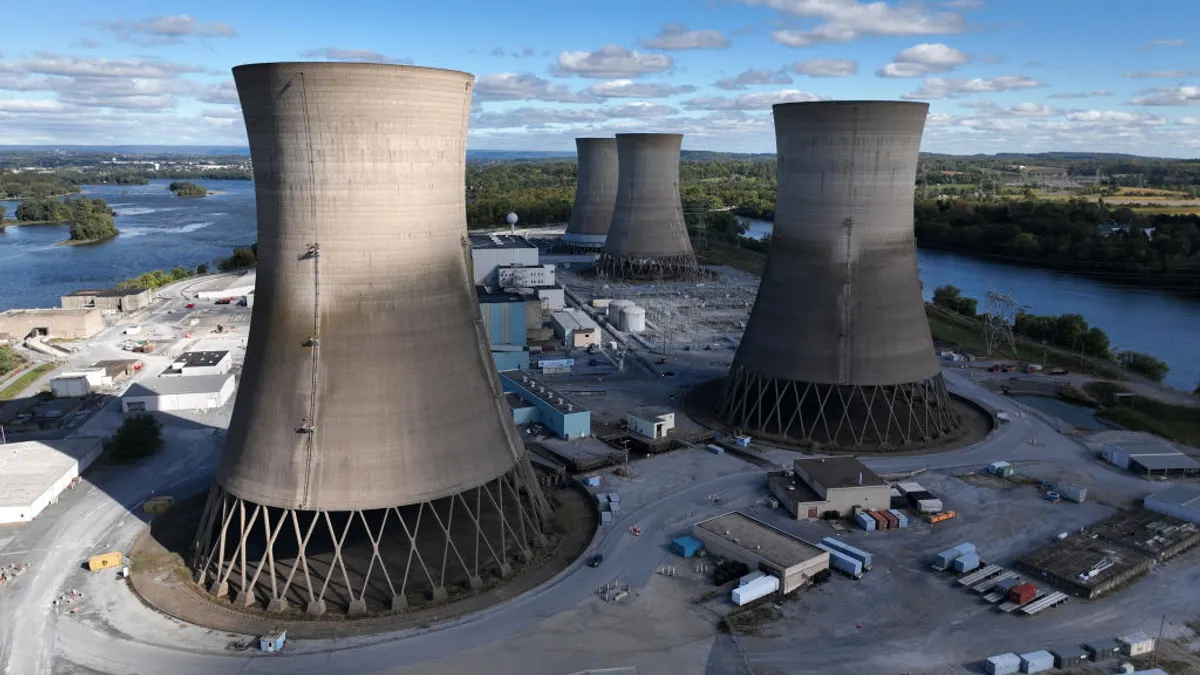
콘크리트 냉각탑은 원자력 발전소의 일부입니다.
펜실베이니아주 미들타운(Middletown) 인근에 위치한 폐쇄된 쓰리마일아일랜드(Three Mile Island) 원자력 발전소. 에너지 혁신 개혁 프로젝트(Energy Innovation Reform Project) 설립자이자 대표인 새뮤얼 서른스트롬(Samuel Thernstrom)은 원자력 투자 세액공제를 개편하여 그 전체 가치를 요금 납부자에게 더 신속하게 전달해야 한다고 기고했다. 칩 소모데빌라(Chip Somodevilla) / 게티이미지(Getty Images)
새뮤얼 서른스트롬(Samuel Thernstrom)은 미국 에너지 공급의 저렴성, 신뢰성, 안전성 및 보안성 향상을 위한 첨단 에너지 기술 및 관행 개발을 촉진하는 비영리 단체인 에너지 혁신 개혁 프로젝트(Energy Innovation Reform Project)의 설립자이자 대표입니다. 그는 또한 국가이익센터(Center for the National Interest)의 선임 연구원이기도 합니다.
이처럼 극도로 분열된 의회에서 에너지 정책 개혁에 대한 초당적 협력은 이례적인 일이지만, 원래는 그래서는 안 된다.
미국인들은 에너지 실용주의자들이지만, 의회는 대개 그런 시각으로 사안을 보지 않는다. 그렇기에 새 원자력 발전소 세액공제의 결함 있는 요소를 바로잡기 위한 초당적 파트너십이 형성된 것은 주목할 만하다.
4월 23일, 팻 해리건(Pat Harrigan) 공화당 하원의원(노스캐롤라이나)과 지미 파네타(Jimmy Panetta) 민주당 하원의원(캘리포니아)은 HR 8482, 원자력 요금 안정화법(Nuclear Rate Stabilization Act)을 발의했다. 이 법안이 제정되면, 공익설비 기업들이 투자 세액공제를 청구하는 방식을 조정함으로써 원자력 발전소 건설을 촉진하는 동시에 요금 납부자들의 비용을 수억 달러 절감할 수 있을 것이다.
미국에는 에너지가 필요하다 — 데이터 센터와 공장부터 가정의 전등까지 우리 경제를 움직이는, 풍부하고 저렴하며 안정적이고 안전한 청정에너지가 필요하다. 전력 수요는 급격히 증가하고 있으며, 예상 부하는 2030년까지 최대 25% 증가할 것으로 추산된다.
어떤 단일 자원도 우리의 모든 필요를 충족시킬 수는 없지만, 캘리포니아에서 텍사스, 뉴욕에 이르기까지 전력망 운영자와 정책 입안자들은 원자력 에너지가 중요한 역할을 담당해야 한다는 것을 인식하고 있다.
미국은 원자력 에너지 분야에서 세계 선두 주자였다. 우리는 이 기술을 발명했고, 세계 최대 규모의 원자로 단지를 운영하며, 세계 어느 나라보다도 잘 운영하고 있다. 그러나 우리는 새 원자로를 건설하는 역량을 되살려야 한다. 여러 면에서 우리는 그렇게 할 준비가 잘 되어 있다. 웨스팅하우스(Westinghouse)와 GE 같은 기존 원자력 기업들 외에도, 첨단 원자로 설계를 시장에 선보이기 위해 노력하는 25개 이상의 기업이 있다.
그러나 여기에 수반되는 어려움이나 잘 설계된 지원 공공 정책의 중요성을 과소평가해서는 안 된다. 지난 40년간 미국에서는 단 두 개의 새 원자로만이 건설되었다. 새로운 원자력 인력을 양성하고 새로운 기술을 실증하는 것은 비용이 많이 든다. 이러한 발전소들은 에너지 시스템과 국가에 막대한 가치를 지니지만, 건설의 비용과 위험은 첫 몇 개 프로젝트에서 실재한다.
경험에 따르면 인력과 공급망을 재건한 이후에는 비용이 낮아질 것이 강하게 시사되지만, 그 과정을 시작하는 것 자체가 쉽지 않다. 산업을 다시 활성화하려면 공익설비 기업과 요금 납부자들에게 경제성이 맞아 들어가도록 잘 설계된 공공 정책이 필수적이다.
의회는 2022년에 이러한 대규모 투자 비용을 절감하고, 이들 프로젝트가 전력망과 국가에 가져다주는 혜택을 인식하여 원자력 투자 세액공제를 신설했다. 투자세액공제(ITC)는 새로운 원자력 발전소 자본 비용의 30%에서 50%에 해당하는 세액공제를 제공한다. 이는 중요하고 취지가 좋은 조항이지만, 예상치 못한 정책 설계상의 결함으로 인해 그 가치가 크게 제한되고 있다.
난해해 보이지만, 핵심 질문은 간단합니다: 유틸리티가 투자 시점에 세액공제 전액을 청구하여 고객 비용을 즉시 낮출 수 있어야 하는가, 아니면 공제 혜택의 가치를 시설의 운영 수명에 걸쳐 분산해야 하는가?
연방 회계 관행은 후자를 요구합니다. 투자세액공제(ITC)를 받는 요율 규제 전력 유틸리티는 이를 발전소 운영 기간인 수십 년에 걸쳐 분할하여 받아야 합니다. 이 관행을 세금 "정규화(normalization)"라고 합니다.
여기에는 나름의 논리가 있습니다. 이 방식은 유틸리티에 더 많은 자금을 제공하여 이러한 프로젝트를 건설하려는 인센티브를 극대화합니다. 유틸리티는 자신들의 투자 비용을 요금납부자에게 청구할 수 있으며, ITC의 전체 가치를 선불로 받으면 투자 규모가 줄어듭니다. 위험한 프로젝트를 건설해주기를 원한다면 왜 유틸리티에 대한 ITC의 가치를 제한하는 것일까요?
이 질문에는 설득력 있는 답이 있습니다. 바로 요금납부자와 그들의 대표자들입니다. 규제 시장에서 새로운 발전소를 승인해야 하는 주 공익사업위원회는 요금납부자를 보호할 의무가 있습니다. 미국의 다음 원자력 발전소 중 하나를 건설하는 중요한 임무를 맡으려는 유틸리티라면, 요금 감당성에 대한 우려가 크게 고조된 시기에 규제 기관의 승인을 요청해야 할 때 에너지 정책 옹호자들의 박수갈채는 도움이 되지 않습니다.
하지만 요금납부자에게 첫날부터 전체 가치를 전달하여 초기 비용을 30%에서 50%까지 낮추도록 설계된 ITC는 판도를 바꾸는 것입니다. 원자력의 선불 비용을 감안할 때 고객 감당성을 극대화하는 것이 핵심입니다. 유틸리티가 정규화 요건에서 벗어나 ITC의 전체 가치를 고객에게 전달할 수 있도록 허용하면, 규제 기관이 새로운 원자력 프로젝트를 훨씬 쉽게 승인할 수 있습니다. 이는 세액공제의 규모나 국고 비용을 늘리지 않고도 기존 세액공제를 더욱 효과적으로 만들 것입니다.
원자력 요율 안정화법(Nuclear Rate Stabilization Act)은 요율 규제 유틸리티에게 원자력 ITC에 대한 정규화 요건에서 벗어날 수 있는 선택권을 부여합니다. 전력 수요가 증가하고 요금 감당성에 대한 우려가 그 어느 때보다 두드러지는 상황에서, 의회는 이 사려 깊은 초당파적 법안을 신중하게 검토해야 합니다.
유틸리티가 정규화에서 벗어날 수 있도록 허용함으로써, 이 법안은 불필요하게 제약적인 연방 규정을 완화하고, 요금납부자 보호를 우선시하며, 유틸리티에게 프로젝트 자금 조달을 위한 더 많은 선택지를 제공합니다. 이 법안은 원자력 세금 인센티브의 가치를 극대화하고, 새로운 원자로를 개념에서 현실로 전환할 것입니다. 이것이 바로 전력망을 현대화하고 우리 시대의 에너지 과제를 해결하기 위해 해야 할 일입니다.
미국 의회에서 초당파적 협력으로 발의된 '핵에너지 요금 안정화법(HR 8482)'은 원자력 발전소 건설에 대한 투자세액공제(ITC)의 구조적 결함을 수정하여 전력 소비자에게 즉각적인 혜택을 제공하려는 중요한 입법 시도이다. 현행 ITC는 자본 비용의 30~50%에 달하는 세액공제를 제공하지만, 설계상의 결함으로 인해 그 혜택이 소비자에게 즉시 전달되지 않는 문제가 있으며, 이 법안은 이를 개선해 신규 원자력 프로젝트의 실질 비용을 30~50% 절감하는 것을 목표로 한다. 미국은 전 세계 최대의 원자로 운영 국가임에도 불구하고 지난 40년간 단 2기의 신규 원자로만 건설하였으며, 2030년까지 전력 수요가 최대 25% 증가할 것으로 예상되는 상황에서 원자력 산업 재건은 에너지 안보 측면에서 시급한 과제로 부각되고 있다. 이 법안의 통과는 공공 유틸리티와 소비자 모두에게 경제적 혜택을 제공하는 동시에, 25개 이상의 기업이 개발 중인 차세대 원자로 기술의 상업화를 촉진하는 촉매제가 될 수 있다. 결국 이 입법 시도는 청정에너지 전환과 에너지 비용 절감이라는 두 가지 목표를 동시에 달성하기 위한 정책적 혁신으로서, 미국 원자력 산업의 부흥을 위한 핵심 정책 수단이 될 것으로 평가된다.
※ 이 글은 해외 원자력 바로알기를 위한 정보 전달을 목적으로 제공됩니다. 특정 기업이나 종목에 대한 투자 권유가 아니며, 모든 투자 판단과 그에 따른 책임은 투자자 본인에게 있습니다.
LG&E and KU Collaborate with X-Energy to Explore Nuclear Energy
Published: April 30, 2026
TL;DR
LG&E and KU are exploring the deployment of X-energy's Xe-100 small modular reactor (SMR) in Kentucky to meet growing energy demands with clean, reliable baseload power
Kentucky's $75 million Nuclear Reactor Site Readiness Pilot Program will support three projects with up to $25 million each for feasibility studies and permitting
X-energy's Xe-100 is an 80 MWe high-temperature gas-cooled reactor that can be deployed in 4-unit (320 MWe) or 12-unit (gigawatt-scale) configurations with phased online capability
Collaboration Announcement
_Collaboration focuses on feasibility to add small nuclear reactors in Kentucky_
Louisville Gas and Electric Company ("LG&E") and Kentucky Utilities ("KU") Company, subsidiaries of PPL Corporation (NYSE:PPL), and X-energy, Inc. (NASDAQ: XE), a leading designer of advanced nuclear reactor technology and manufacturer of advanced nuclear fuels, are collaborating to explore deploying X-energy's Xe-100 small modular reactor (SMR) in Kentucky to meet growing energy demand across the Commonwealth with long-term, reliable, clean energy. The companies have begun early project feasibility activities and will explore opportunities for SMR deployments to support long-term grid reliability across the Commonwealth, and large load customers, including data centers.
This collaboration follows recent significant interest in nuclear energy in the Bluegrass State as a reliable option for baseload power generation, designed to be available at any time and in all conditions. In 2024, the Commonwealth formed the Kentucky Nuclear Energy Development Authority, a non-regulatory agency seeking to support the nuclear energy ecosystem in Kentucky, and the Kentucky Public Service Commission opened a case in 2025 to investigate nuclear energy, including how Kentucky would regulate nuclear development.
In April of this year, Governor Andy Beshear signed into law the Nuclear Reactor Site Readiness Pilot Program passed by the General Assembly, which includes a $75-million grant initiative to support nuclear site feasibility studies, applications for early site and construction permitting, and licensing. Three projects will be selected to receive up to $25 million each. In addition, this legislation allows a regulated utility to apply to the Public Service Commission for the recovery of costs, which are not covered in the existing rates of the utility, that have been incurred in applying for such permitting and licensing for sites in the Commonwealth.
Executive Statements
"We appreciate Governor Beshear, the General Assembly and the Kentucky Public Service Commission prioritizing nuclear energy in the Commonwealth to help ensure we maintain and build upon our strong competitive energy advantage with reliable and affordable power," said John R. Crockett III, President for LG&E and KU. "On the heels of the Nuclear Reactor Site Readiness Pilot Program being signed into law this month, we're proud to work with X-energy to explore bringing nuclear energy to Kentucky to support the significant pipeline of new projects in our service territories where large load customers can support the cost structure. We have an all-of-the-above approach to our power generation fleet that's among the most reliable in the nation. This collaboration will explore whether nuclear energy fits into our long-term plans. The X-energy Xe-100 reactor is one of the Gen 4 nuclear SMRs being developed in the U.S. today and is one of the safest nuclear designs on the market today. We look forward to working with X-energy and hyperscalers on this effort and the prospect of participating in the new pilot program."
"Kentucky's energy leadership and skilled workforce create a strong foundation for evaluating advanced nuclear deployment. This collaboration allows us to explore how the Xe-100 can support the Commonwealth's growing electricity demands while strengthening grid reliability and creating economic opportunity across the region." — J. Clay Sell, Chief Executive Officer of X-energy
About X-energy's SMR Technology
Small modular reactors are advanced nuclear energy systems designed to generate clean, safe, reliable energy through a smaller, more flexible design than traditional nuclear plants. SMRs can be factory-built, and assembled on-site to simplify construction, and are designed with intrinsic safety characteristics that enable greater siting flexibility as compared to large light-water reactors.
X-energy's Xe-100 SMR is an 80 MWe high-temperature gas-cooled reactor that can be deployed in either four- or twelve-unit plants depending on grid requirements: a four-unit plant delivers 320 MWe for regional utilities and large load customers, while a twelve-unit plant provides gigawatt-scale power for larger metropolitan areas and hyperscale infrastructure. Each reactor is capable of coming online independently upon completion. This allows end users to phase in capacity one unit at a time, aligning new generation with demand growth and matching power supply to real-world load expansion.
X-energy is currently developing more than 11 GW of new nuclear capacity across projects in the United States and United Kingdom, including partnerships with Dow Chemical, Amazon, and Centrica.
Visit lge-ku.com/investments to learn more about all the ways LG&E and KU are investing in their systems to continue powering Kentucky's economic growth momentum and provide safe, reliable and affordable service for customers.
About the Companies
LG&E and KU
Louisville Gas and Electric Company and Kentucky Utilities Company, part of the PPL Corporation (NYSE:PPL) and its companies, are regulated utilities that serve nearly 1.4 million customers and have consistently ranked among the best companies for customer service in the United States. LG&E serves 336,000 natural gas and 443,000 electric customers in Louisville and 16 surrounding counties. KU serves 581,000 customers in 77 Kentucky counties and 28,000 in five counties in Virginia. More information is available at www.lge-ku.com and www.pplweb.com.
X-energy
X-energy, Inc. is a leading developer of advanced small modular nuclear reactors and fuel technology for clean energy generation that is redefining the nuclear energy industry through its development of safer and more efficient advanced small modular nuclear reactors and proprietary fuel to deliver clean, safe, reliable energy that meets the demands of the modern economy. X-energy's simplified, modular, and intrinsically safe SMR design expands applications and markets for deployment of nuclear technology and drives enhanced safety, lower cost and faster construction timelines when compared with other SMRs and conventional nuclear.
Forward-Looking Statements
This press release contains forward-looking statements regarding our business. These forward-looking statements are only predictions and may differ materially from actual results due to a variety of factors. You should not rely on our forward-looking statements as predictions of future events. More information about potential risks and uncertainties that could affect our business and financial results is more fully detailed under the caption "Risk Factors" in our Form S-1 filed with the Securities and Exchange Commission, which is available on our Investor Relations website at https://investors.x-energy.com/ and on the SEC website at www.sec.gov. In addition, please note that any forward-looking statements contained herein are based on assumptions that we believe to be reasonable as of this date. We undertake no obligation to update these statements as a result of new information or future events.
Media Contacts
LG&E and KU: 24/7 media hotline at (502) 627-4999
X-energy:
Robert McEntyre, Corporate Communications — [email protected] — (240) 673-6565
This collaboration represents a significant strategic initiative to diversify Kentucky's energy portfolio by leveraging advanced nuclear technology. The partnership between established regional utilities and an innovative advanced reactor manufacturer demonstrates growing market confidence in small modular reactors as a viable solution for meeting increasing electricity demand, particularly from data centers and hyperscale infrastructure. The state's supportive policy framework—exemplified by the $75 million Nuclear Reactor Site Readiness Pilot Program—creates favorable conditions for nuclear deployment and signals a broader institutional commitment to positioning Kentucky as a nuclear energy hub in the United States.
The View Inside California's Last Nuclear Power Plant
Apr 28, 2026
TL;DR
Diablo Canyon, California's last operating nuclear power plant, faces renewed debate over extending operations to 2045 as lawmakers reconsider the 2030 closure deadline
Local groups continue to raise safety and environmental concerns, including risks from spent nuclear waste near seismic fault lines
Academics and business groups are analyzing the economic costs and impacts on California's clean energy transition goals
News
The View Inside California's Last Nuclear Power Plant
The Diablo Canyon Power Plant in San Luis Obispo on Feb. 13, 2026, the state's only active nuclear power plant. All eyes are turned to power plant as the debate about extending its life returns to Sacramento. But what's it like inside? (Beth LaBerge/KQED)
_California is transitioning to clean energy. KQED is reporting on what that means for you. What works? What doesn't? How much does it cost? Help us find these answers and more by_ _donating today_ _._
The most striking view off one of San Luis Obispo County's winding coastal roads is not the lashing ocean waves of the Pacific Ocean or cows plodding out from the shade of a California live oak tree.
It is two enormous concrete domes that come into focus along a final climb that began 7 miles back at Avila Beach. The land sinks away, and what looks like a small town emerges, showcased in a palette of grays, whites and terracotta.
This is Diablo Canyon, California's last operating nuclear power plant.
Just years ago, the plant was slated to close, and employees worked to decommission it, until a 2022 about-face by Gov. Gavin Newsom led the state to extend its operations to 2030. Now lawmakers in Sacramento are talking about allowing it to operate even longer, potentially to 2045.
But local groups, some of whom have protested the plant since its construction, are banging the drum ever louder about their concerns for safety or a catastrophic meltdown, as well as the danger posed by spent nuclear waste at a site near several seismic faultlines.
Aerial view of the Diablo Canyon Nuclear Power Plant, which sits on the edge of the Pacific Ocean at Avila Beach in San Luis Obispo County. (Courtesy of PG&E)
Meanwhile, academics are furiously analyzing how much keeping Diablo Canyon open would cost and if it would support or hinder the state's clean energy transition. And business groups are lining up in support.
So when PG&E offered press tours earlier this year, KQED accepted. The nuclear power plant has not garnered this much attention in years, but now, once again, all eyes are on Diablo Canyon. What does it look like inside?
Out on the water
PG&E's Diablo Canyon Power Plant tour started on a boat in a protected marina just south of the reactors. This, and another cove just outside the breakwaters, are the site of a key piece of the plant's cooling system — and a major concern for environmentalists, who argue it hoovers up and kills marine life and have called it "the most destructive facility" along California's coast.
Dipping a hand in Diablo Cove, the water is lukewarm, not the frosty standard for the ocean in these parts.
Tom Jones, a regulatory and environmental senior director at PG&E, pilots a boat near the Diablo Canyon Power Plant in San Luis Obispo on Feb. 13, 2026. (Beth LaBerge/KQED)
That's because Diablo Canyon draws 2 billion3-2.5 billion gallons of ocean water daily — enough to fill more than 3,000 Olympic-size swimming pools — into the plant to cool equipment, and discharges the water back into the ocean typically 16 to 17 degrees hotter.
The warmer water makes it feel as if a chunk of Southern California's coast has been lobbed off and transferred north.
Out on the water, there was a hotbed of animal activity: a floating sea otter and chubby seals sunning themselves on rocks.
The Diablo Canyon Power Plant in San Luis Obispo on Feb. 13, 2026, the state's only active nuclear power plant. (Beth LaBerge/KQED)
There were other species too — sea bass, stingrays, and California's state fish, the garibaldi, which typically live farther south along California's coast, but have moved here.
Diablo Canyon staff said the warm water leads to essentially no change to the environment. Because fishing and other activities are not allowed within 2,000 yards of the plant, it's a "de facto marine sanctuary," said Tom Jones, a senior director in charge of future planning for Diablo Canyon.
But the California Coastal Commission, the state agency tasked with protecting the coastline and its natural resources, reported in 2025 that the plant's cooling system kills almost two billion larval fish annually, plus other organisms that aren't measured.
Lion Rock, home to hundreds of California sea lions, harbor seals, and seabirds, near the Diablo Canyon Power Plant in San Luis Obispo, on Feb. 13, 2026. (Beth LaBerge/KQED)
While adult populations may be abundant in Diablo Cove, the commission wrote that adults often appear far from where they spawn, and their presence here may be the result of productive marine habitats nearby.
The commission also warned that removing eggs and larvae near Diablo Canyon leads to "a significant reduction" of species dozens of miles from the plant.
"These planktonic organisms," wrote the commission, "constitute the base of the food web in California's coastal waters."
To the turbine deck
We donned hard hats and safety equipment and passed through heavy security to enter the "protected area," which consists of spaces closer to the nuclear reactors.
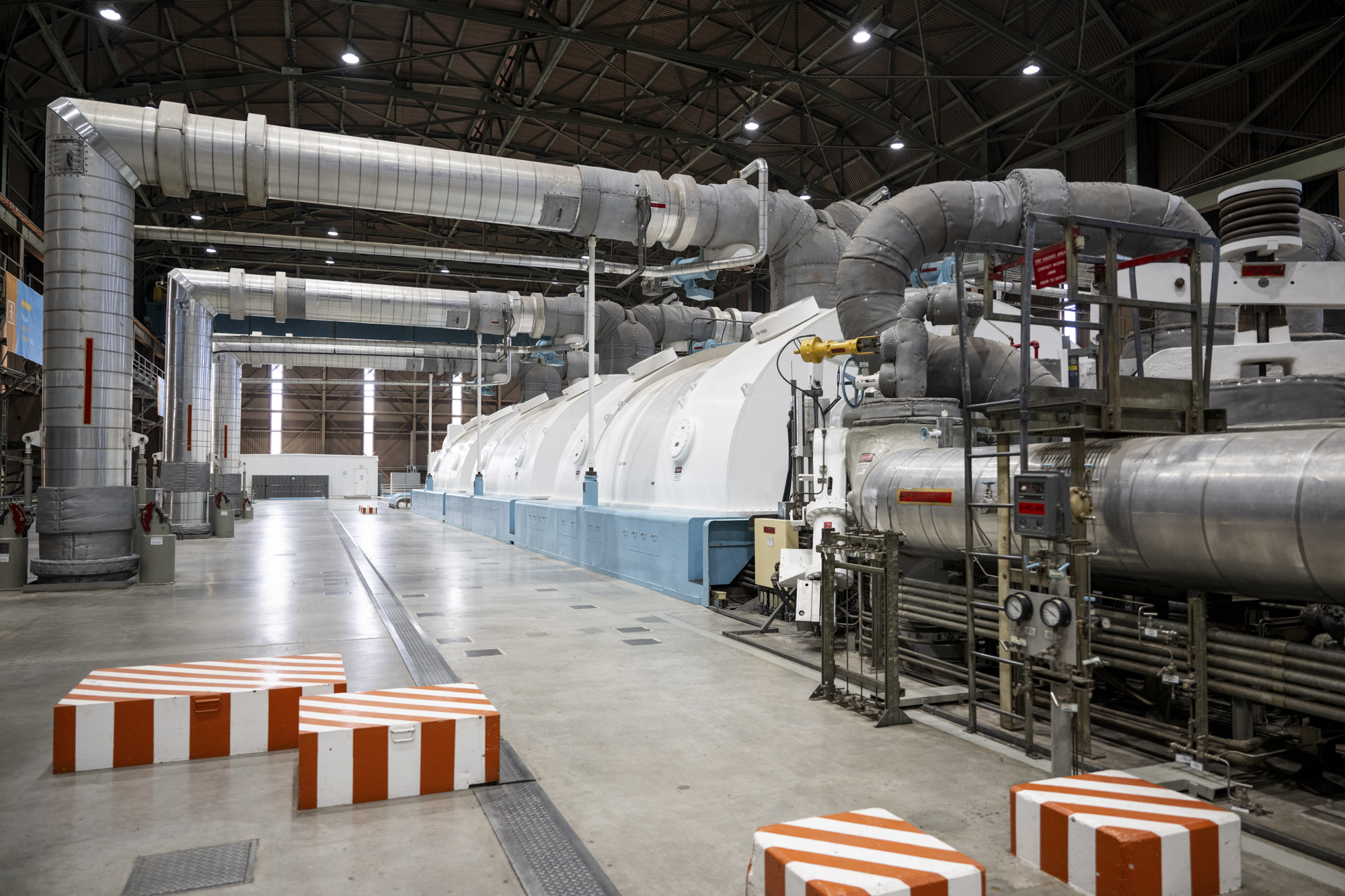
We entered the turbine deck, an industrial building the size of two-and-a-half football fields. It was hot and loud on the deck, with a slight vibration underfoot.
The turbine deck at the Diablo Canyon Power Plant in San Luis Obispo on Feb. 13, 2026, the state's only active nuclear power plant. (Beth LaBerge/KQED)
The steam-driven turbine inside is an enormous semi-cylinder that looks like a horizontal steel pipe cut in half, and spins a generator to produce electricity.
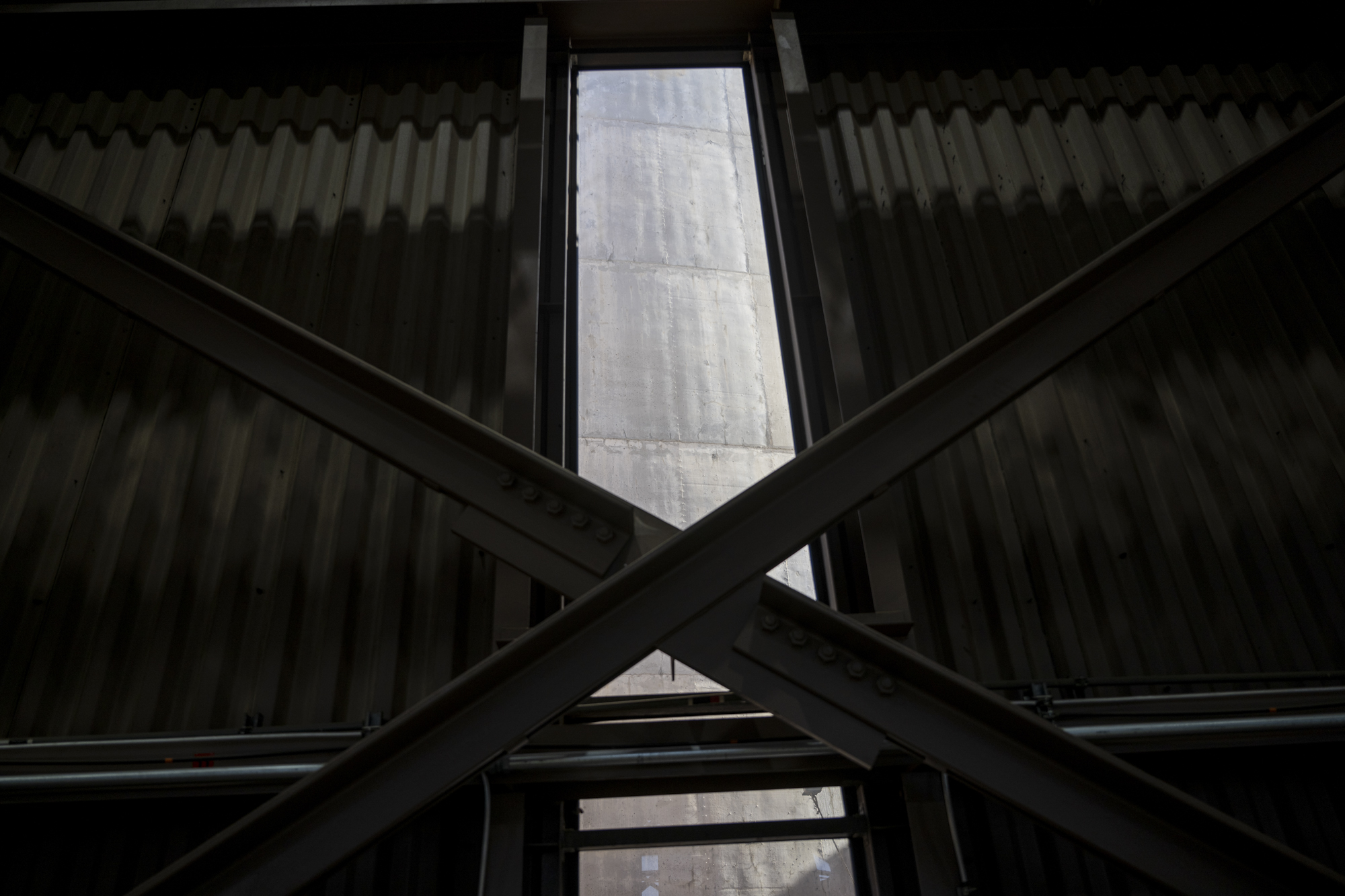
The PG&E guide pointed out the window at a containment dome, where uranium atoms are split apart, releasing huge amounts of heat.
A view of a reactor containment building from the turbine building at the Diablo Canyon Power Plant in San Luis Obispo on Feb. 13, 2026, the state's only active nuclear power plant. (Beth LaBerge/KQED)
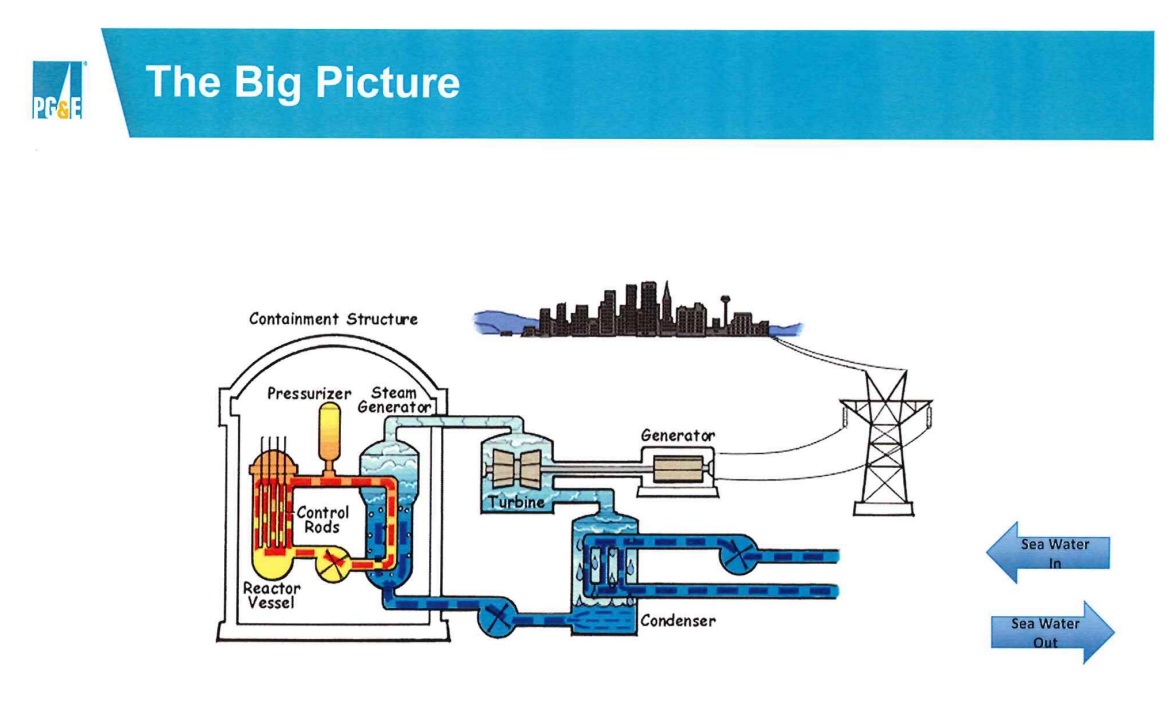
A cascade of effects follows: the heat warms water and creates steam, the steam travels through pipes to turn the turbine, the turbine connects to a generator, which makes electricity that's then sent across the grid and delivered to about three million Californians.
Nuclear generates nearly 9% of the state's energy supply, part of an energy mix that includes gas, hydroelectric, solar, wind, geothermal and even small amounts of coal.
Power generation at Diablo Canyon. (Courtesy of PG&E)
While California's demand for electricity has been flat for years, it's now growing with the adoption of electric vehicles, people swapping gas appliances for electric ones, and data centers.
The debate to keep Diablo Canyon open is spurred, in part, by this uptick in demand. Maureen Zawalick, senior vice president and chief risk officer at PG&E, said stepping into the turbine deck reminds her of the end uses of all this power: "safety in hospitals, kidney dialysis, stop lights and everything else."
The state's growth in the 20th century was built on a foundation of fossil fuels, but leaders see its future as being powered by the buildout of renewables like solar and wind, along with batteries to store excess power.
When heat waves strained California's power grid and caused rolling blackouts in 2020, state lawmakers and Newsom voted to extend Diablo Canyon's operation.
Now, as electricity bills continue to rise and demand is forecast to grow, proponents argue that keeping the plant open even longer can help California wobble across the precarious middle of the tightrope.
The simulator
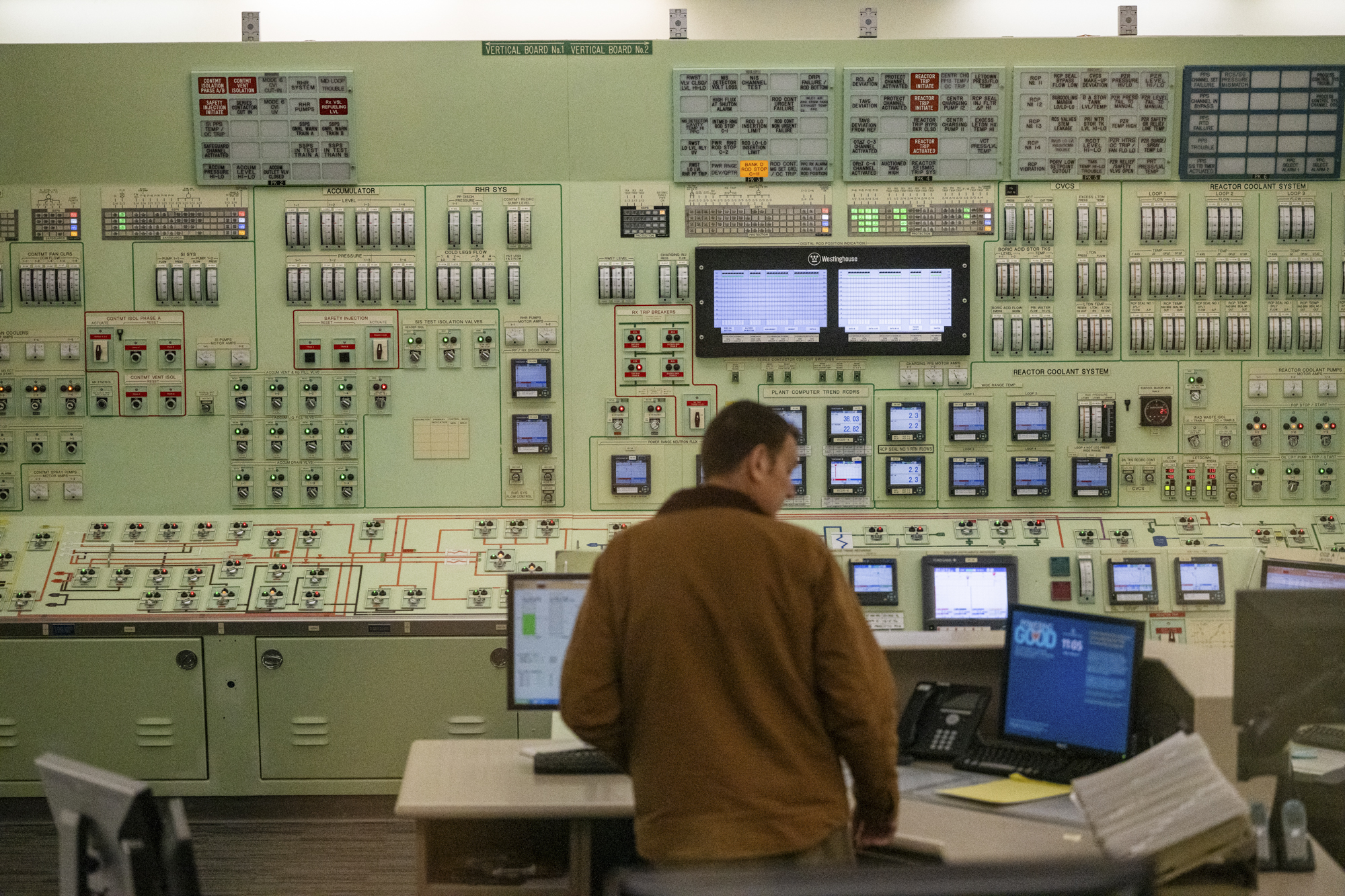
We shed our safety gear and headed to the training building, with classrooms and an exact replica of the control room, called the simulator.
It was cool and quiet again as employees completed a training exercise, manipulating switches, lights and screens on a semicircle of vertical boards. Zawalick said the simulator's seafoam green walls are meant to inspire calm, but its very existence is due to nuclear disasters that have occurred elsewhere in the U.S.
A training facility at the Diablo Canyon Power Plant in San Luis Obispo on Feb. 13, 2026, the state's only active nuclear power plant. (Beth LaBerge/KQED)
Simulators became a requirement for all nuclear power plants in 1979 after the Three Mile Island nuclear accident in Pennsylvania. The partial meltdown was the most serious nuclear accident in U.S. history and was caused by both human and equipment failure.
Practicing in a replica of Diablo Canyon's actual control room is meant to train workers with the muscle memory to handle a variety of emergencies.
Employees spend 20% of their time in the Diablo Canyon simulator training for everything from planned refueling to routine maintenance to major emergencies.
Spent nuclear fuel
To finish the tour, we drove uphill and farther from the ocean to find dozens of hulking concrete cylinders that contain spent fuel, called "dry casks."
The nuclear material is the concern of resident groups who fear an earthquake or terrorist attack could destabilize the storage and spew radioactive waste into the ocean or nearby communities. People living nearby are mailed annual emergency preparednessdocuments and have access to a free dose of potassium iodide, which protects the thyroid gland against radiation.
Spent nuclear fuel in dry storage behind a raw water reservoir with desalinated ocean water at the Diablo Canyon Power Plant in San Luis Obispo on Feb. 13, 2026, the state's only active nuclear power plant. (Beth LaBerge/KQED)
Linda Seeley has rallied against Diablo Canyon for decades as a member of the anti-nuclear nonprofit Mothers for Peace.
"As much as I would love it if nuclear waste were not toxic and lethal to a thousand generations in the future, that's not the fact. The fact is that it is toxic," she said.
Once fuel has been used inside the plant, radiation levels are dangerously high and have the potential to kill an exposed person in minutes.
A raw water reservoir with desalinated ocean water at the Diablo Canyon Power Plant in San Luis Obispo on Feb. 13, 2026, the state's only active nuclear power plant. (Beth LaBerge/KQED)
The spent fuel spends 7 to 10 years next to the reactors in "wet storage," a large pool of water treated with chemicals. The liquid absorbs heat and decays of the uranium, which has high levels of radiation.
The nuclear material is then packed into the double-lined, stainless steel and reinforced dry casks, roughly 20 feet tall. Each is bolted to a 7.5-foot-thick, steel-reinforced concrete pad designed to withstand earthquakes. The fuel requires special handling for tens of thousands of years.
Diablo Canyon is located roughly 3.5 miles from the Hosgri fault, which presents the main seismic risk to the plant. Another fault, the Shoreline, is closer to the plant, but smaller. Some seismologists are concerned that a quake along the faults could cause a meltdown.
The U.S. government is legally obligated to take ownership of all commercially spent nuclear fuel, but because the government has not yet built a permanent place to put it, the fuel is stored at the power plant.
Current solutions like Diablo Canyon's dry storage casks, while they may be thorough, are only licensed until 2064 by the Nuclear Regulatory Commission.
Zawalick said PG&E is confident in the storage of Diablo Canyon's spent fuel, though. She pointed out that nuclear power is "the only energy source that knows exactly where every ounce of our waste is." The Nuclear Regulatory Commission and PG&E monitor the spent fuel on a daily and annual basis. "It's secured, it's inspected, it's audited, it's sampled. I'm a fan of all energy sources, but I don't know where solar panels are sent when they're done, and batteries, and all of that."
Zawalick pointed to the powerful transmission lines carrying energy created here out to millions of Californians: to illuminate rooms for special and mundane occasions, preserve food in refrigerators, run air conditioners, and warm their shower water.
Order and safety come up frequently on the Diablo Canyon Power Plant tour: background checks, armed guards, seismic protective measures, reminders to hold on to handrails when on steps. The result is a calm and kempt environment, situated on a hillside overlooking the Pacific.
But underneath the serenity lie the inherent risks of nuclear power, especially when sited near seismic faultlines. Diablo Canyon has been the source of passionate debate as long as the idea of it has existed. And any effort to keep it operating longer will be no different.
And with that, the tour was over, and the guides returned to their work. A cow made its way slowly across the access road, with no idea of its contentious neighbor.
AI Analysis
Diablo Canyon's potential operational extension to 2045 represents a pivotal moment for California's clean energy strategy, as the state must balance its climate goals against competing concerns over nuclear safety, environmental impact, and economic viability. The article highlights the central tension: while nuclear power can provide reliable carbon-free baseload electricity essential for decarbonization, persistent concerns about seismic faults, spent nuclear waste storage, and the plant's destructive impact on marine ecosystems through its massive cooling water intake create legitimate safety and environmental challenges. The debate signals California's struggle to transition toward renewable energy independence while managing the realistic constraints of grid reliability and the time required to scale alternative generation sources. With academics analyzing costs and business groups mobilizing support, the outcome will significantly influence not only California's energy mix but also the broader national conversation about nuclear power's role in combating climate change. This decision ultimately reflects a difficult tradeoff between accepting a well-established energy source with known risks versus betting on accelerated development and deployment of emerging clean energy technologies.
English
Chernobyl at 40 years: Looking back at Nuclear News-Nuclear Newswire
Chernobyl at 40 years: Looking back at _Nuclear News_
April 24, 2026
TL;DR
The Chernobyl nuclear accident occurred 40 years ago on April 26, 1986, and remains the most severe nuclear accident in history, with extensive coverage in _Nuclear News_ archives documenting its evolution and impact over four decades
The disaster prompted immediate global policy changes, formation of WANO, but also led some countries like Germany to abandon nuclear power entirely, creating complex and lasting consequences
While Chernobyl's legacy remains significant, current nuclear momentum is high worldwide with increasing public support, particularly among younger generations, suggesting the industry's impact from the disaster may be slowly fading
---
Chernobyl at 40 years: Looking back at _Nuclear News_
Sunday, April 26, at 1:23 a.m. local time will mark 40 years since the most severe nuclear accident in history: the meltdown of Unit 4 at the Chernobyl nuclear power plant in Ukraine, then part of the Soviet Union.
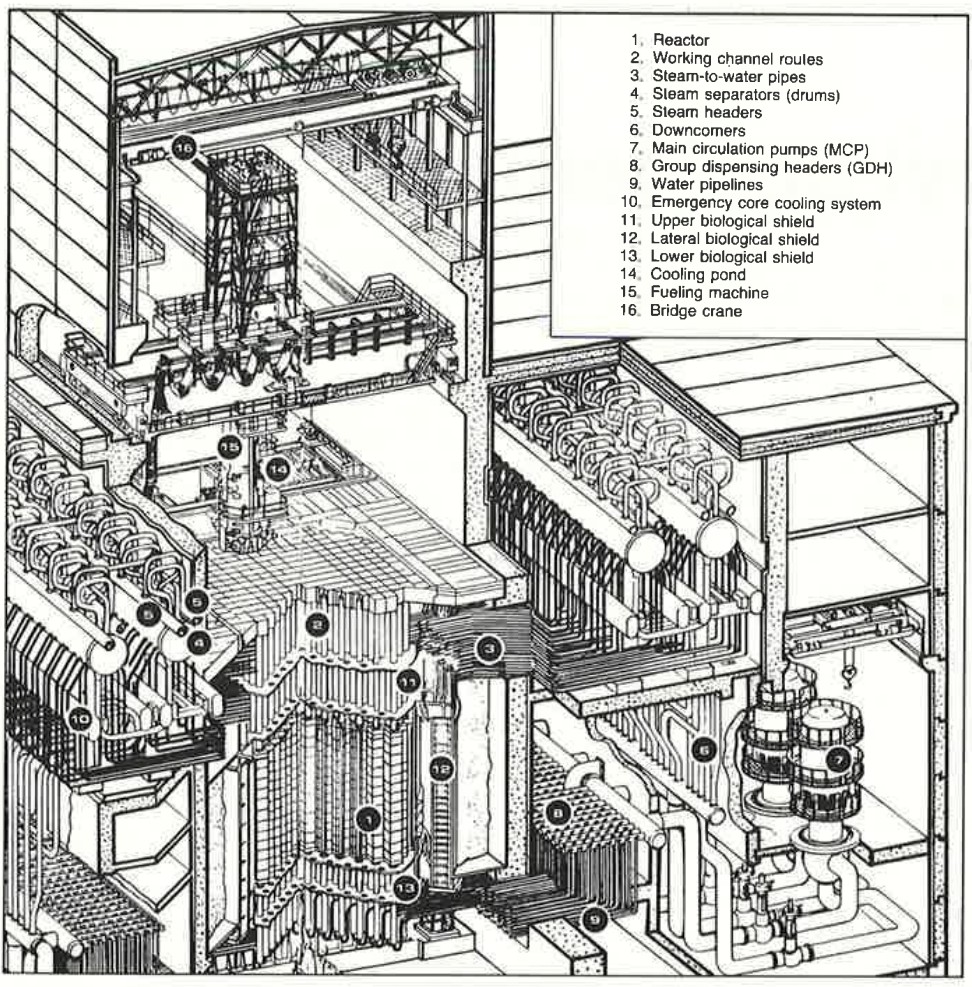
In the ensuing four decades, countless books, documentaries, articles, and conference sessions have examined Chernobyl's history and impact from various angles. There is a similar abundance of outlooks in the archives of _Nuclear News_, where hundreds of scientists, advocates, critics, and politicians have shared their thoughts on Chernobyl over the years. Today, we will take a look at some highlights from the pages of _NN_ to see how the story of Chernobyl evolved over the decades.
Chernobyl Photos Throughout the _Nuclear News_ Archive
A helicopter inspecting the damaged Chernobyl nuclear power plant. (Photo: _Nuclear News_, October 1986, p. 59; originally via _Soviet Life_)
Slider Photo
A sectional view of the RBMK-1000 reactor. (Source: _NN_, June 1986, p. 87; originally via _IAEA Bulletin_)
Slider Photo
The RBMK fuel assembly design. (Source: _NN_, June 1986, p. 89; originally via _Nuclear Energy_)
Slider Photo
A reactor hall at Chernobyl in 1982. (Source: _NN_, June 1986, p. 90; originally via AP/Wide World Photos)
Slider Photo
Turbines at Chernobyl, probably in the halls for Units 1 and 2, prior to the accident. (Photo: _NN_, June 1986, p. 94)
Slider Photo
The damaged Chernobyl site on May 9, 1986. (Photo: _NN_, June 1986, p. 87; originally via AP/Wide World Photos)
Slider Photo
Water being sprayed on the streets of a village near the plant after the accident. (Photo: _NN_, October 1986, p. 64; originally via _Soviet Life_)
Slider Photo
Maps prepared at Lawrence Livermore National Laboratory showing preliminary estimates of the radiation dispersion plume in the lower troposphere across the Northern Hemisphere in the days following the accident. (Source: _NN_, June 1986, p. 92)
Slider Photo
A radiation checkpoint at the edge of the 30-kilometer evacuation zone. (Photo: _NN_, October 1986, p. 66; originally via Sovfoto)
Slider Photo
In a late-1995 tour of the Chernobyl site, a visitor in the control room of Chernobyl-4 points to the location of the infamous scram button. (Photo: Simon Rippon/_NN_, April 1996, p. 32)
Slider Photo
The control room of Chernobyl-3 operating normally in 1995. (Photo: Simon Rippon/_NN_, April 1996, p. 34)
Slider Photo
One of Chernobyl's "self-settlers" and her dog, returning to life in the exclusion zone. (Photo: _NN_, April 2006, p. 43; originally via _Insight_)
Before the Accident
Chernobyl-4 entered operation in April 1984. It was preceded by three other units that entered operation in 1982, 1979, and 1978. There is only one notable reference to Chernobyl in the _Nuclear News_ archives prior to the 1986 accident. In the November 1982 issue of _NN_, the reactors at Chernobyl were described as part of a new fleet of 1000-MWe light water–cooled, graphite-moderated reactors. These LGRs were described as having a "somewhat smoother introduction" in the Soviet Union than previous reactor types due to the "modular nature" of their design.
_NN_ on the Accident
On April 29, 1986, the back page of Kyiv's main newspaper included a brief story headlined "Information of the Cabinet of Ministers of the USSR," which read:
An accident has occurred at the Chernobyl nuclear power station. One of the reactors was damaged. Remedial action is being taken to eliminate the consequences. Victims are being treated. A government commission of inquiry has been set up.
This undramatic first media accounting of the accident stands in sharp contrast to the expansive and detailed reporting that would soon follow. _NN_'s first article on the subject, titled simply "The Chernobyl Accident," came in the June 1986 issue.
There, Chernobyl is described as "the most serious" nuclear accident ever when measured by number of human casualties, the amount of radiation released, the physical damage to the plant, and "the resultant aggravations to already strained relations among nations."
_NN_ then gives a detailed description of how the accident developed. On April 26, during a scheduled maintenance shutdown of Unit 4, the reactor's power suddenly increased. Unknown to reporters at the time, this power increase was caused by a reactor operator pressing a button meant to scram the reactor by inserting control rods. The reason for this mistake remains unknown today. Due to a known design flaw in the control rods, their insertion, rather than reducing reactivity, briefly caused an increase in reactivity and heat. In the case of Chernobyl-4, circumstances were such that this increase in heat caused fuel to rupture, which led to a steam explosion.
Seconds later, a second explosion of a debated cause rocked the reactor. Both explosions caused immediate, extensive damage to the reactor and set the surrounding building ablaze. Coolant leaks followed shortly thereafter, after which came the most serious development: a fire in the hot graphite moderator. The heat of this fire (which was estimated to have been as high as 5,000°C) was likely one of the main factors in pushing a plume of radioactivity high into the atmosphere and distributing it widely across northern Europe.
About 36 hours after the first explosions, people within a 10-kilometer radius of Chernobyl began evacuating. A wider evacuation, encompassing a 30-kilometer radius, began five days later. Measurements showed that the maximum radiation levels within the expanded zone were as high as 10–15 millirems per hour. Local officials reported that, in all, more than 90,000 people were involved in this evacuation.
By June, at _NN_'s first reporting, nuclear projects were already being reconsidered, canceled, or paused in Yugoslavia, the Netherlands, Austria, Sweden, Denmark, and beyond.
One Decade Later
In late 1995, Simon Rippon, then international editor of _NN_, visited Chernobyl to see for himself how the power plant was faring a decade after the destruction of Unit 4. By then, the Soviet Union had dissolved, the larger evacuation area had roughly taken shape into a permanent exclusion zone, and Chernobyl's enduring legacy had significantly increased nuclear opposition in much of Europe.
Rippon reflected on how Chernobyl had already been established as probably the most written-about natural or man-made disaster ever, and how fear over radiation was now commonplace. Governments around the world "were not immune from the influence of these psychological fears," and made varied reforms to nuclear regulations that were "largely determined by socioeconomic, political, and psychological factors rather than by radiological factors."
At Chernobyl itself, "mountainous piles of scrap metal and equipment" were still present at the site, where two reactors still operated and a protective sarcophagus had been erected around Unit 4. (Unit 2 had been shut down in 1991 following an unrelated turbine fire.)
Despite Chernobyl's grim legacy, the mood at the plant was positive overall. Rippon talked with Artur Korneyev, the site's deputy manager, who had received a 120-rem dose during his three weeks supervising hectic cleanup operations on the roof of Unit 4's turbine hall but was nonetheless "happy to return" to his post.
Korneyev compared the first days after the explosion—shoveling fragments of hot fuel and graphite onto the still-smoldering heap of the destroyed reactor—to how things looked today. A newly painted sarcophagus, extensive roof repairs, and even groundwork being done to lay new grass were all, for Korneyev, indications that the plant was on the right track. He, and most everyone Rippon talked to, was in favor of the plant staying open (and Unit 2 being restarted) until 2010–2015 to raise funds (through electricity sales, which accounted for $200 million a year) for the extensive decommissioning and cleanup work the site would require.
20 Years On
Despite the hopes of the Chernobyl staff, Unit 2 was never restarted, and Units 1 and 3 were both shut down by the end of 2000. By 2006, when _NN_ did its next deep dive on Chernobyl, attention had turned to decommissioning, decontamination, and what the future of the exclusion zone would look like. Construction of the New Safe Confinement (NSC)—a structure built to protect the old, decaying sarcophagus and allow the complete dismantlement of the wreckage beneath—was underway.
Discord had arisen between Ukraine and the international community at the country's refusal to shut down Chernobyl's remaining units. When it relented and agreed to transition fully to the hard work of cleanup, aid flowed in from around the world to help Ukraine tackle the task.
As this complicated work progressed on many fronts, eyes turned to the exclusion zone. There, a striking and now well-known story began to emerge. "A renewed but wild landscape, teeming with vegetation" and animal life was thriving in the 30 kilometers around the plant. What's more, some people, dubbed "self-settlers," had moved back into their old homes in the exclusion zone and began carrying on with their everyday lives.
Looking Back Today
In 2016, 30 years after the disaster, the NSC was finally put in place. For Chernobyl, the last 20 years have been a slow story of arduous cleanup work—work that has been significantly challenged in recent years by the ongoing Russia-Ukraine war, most notably by a drone strike in 2025 that ripped a hole through the NSC.
Beyond Ukraine, many speculate on the overall impact that Chernobyl ultimately had on the peaceful development of nuclear power. Specific actions, both positive and negative, can be traced directly back to the disaster. The World Association of Nuclear Operators, or WANO, was formed in direct response to Chernobyl, and has done a massive amount of work to increase nuclear safety internationally. On the other hand, Germany's abandonment of its nuclear sector—which once provided more than half of the country's power—led to untold economic and environmental costs.
Chernobyl's legacy is cemented as one of the public's key touchstones with nuclear power. It remains a common talking point of nuclear opponents, and experts today continue to explain how the failures that led to the accident are now relics of an industry that bears little resemblance to the nuclear world of the 21st century.
Still, 40 years later, there are some indications that Chernobyl's impact is fading—nuclear momentum is high around the world, and public support, particularly among younger generations, is trending upward. As new plans for the next generation of reactors develop, Chernobyl is sure to stand as an reminder of why the nuclear industry works so hard to uphold its rigorous safety culture.
AI Analysis
This article effectively chronicles the evolution of Chernobyl's narrative through four decades of _Nuclear News_ coverage, demonstrating how the accident's meaning and significance have shifted with time and context. The piece highlights the critical tension between Chernobyl's role as a cautionary tale that catalyzed safety improvements and international cooperation (evidenced by WANO's formation) while simultaneously triggering irrational policy responses driven more by fear than radiological evidence, such as Germany's nuclear abandonment. The author's balanced perspective acknowledges both the disaster's legitimate technological lessons and the psychological dimensions that have complicated public discourse around nuclear energy. Notably, the article suggests a subtle shift in contemporary attitudes—younger generations show increasing nuclear support despite Chernobyl's legacy, indicating that institutional learning and improved safety culture may be gradually reshaping perceptions. This examination underscores how nuclear energy's future depends not just on technical advancement but on the industry's continued commitment to transparency and safety culture in response to historical disasters.
The NRC has released Part 57, a new licensing framework designed specifically for microreactors (≤100 MWe) that aims to streamline regulation, reduce costs by $3.76-11.84 billion, and accelerate licensing timelines to 6-12 months.
Part 57 includes provisions for fleet licensing, alternative design standards, streamlined environmental reviews, and limited pre-permitting construction to facilitate faster deployment of microreactor technology.
The framework reflects the NRC's shift toward developing simpler regulatory pathways for advanced reactor designs beyond traditional light water reactors, addressing emerging energy market needs.
Article
NRC Logo
The Nuclear Regulatory Commission has released a new licensing framework for microreactors and similar reactor designs that may provide a more suitable pathway for applicants with simpler technologies.
The proposed rule—known as Part 57—is the latest to come out of the NRC's rules review and overhaul stemming from the ADVANCE Act and 2025 nuclear-related executive orders. It is also the latest framework developed for advanced reactor designs shifting away from light water reactor technology, such as the Part 53 rule finalized in March.
"We are developing new licensing frameworks that are designed for safety, scale, and speed—Part 57 is one of those examples," NRC Chairman Ho Nieh said on Friday.
Made for microreactors
The proposed rule includes language to do the following:
Request approval of fleets of identical reactors.
Allow appropriate use of alternative design standards and programs for novel reactor operation.
Streamline environmental reviews of projects with limited environmental impacts.
Provide pathways for limited construction ahead of NRC permitting.
While the proposed rule doesn't spell it out, Part 57 is intended for reactors that are 100 MWe or smaller, Nieh said. (By comparison, a small modular reactor is commonly understood to have a capacity of around 50 MWe–300 MWe, and the NRC has licensed numerous gigawatt-scale LWRs.)
Evaluating a large reactor requires lengthy reviews of technology and siting. Microreactors are at the opposite end of the spectrum, by size.
"They're small machines, they're simple machines. They're just simple and conducive to higher-volume licensing," Nieh said.
"We are looking at designs here that have very simple safety cases, where there's not a lot of complex safety equipment that needs to activate during an event that would occur in a facility," he added. "This is really geared toward very simple machines, simple safety systems."
According to the NRC, Part 57 will save the agency and industry anywhere from $3.76 billion to $11.84 billion. Furthermore, the NRC projects licensing and deployment to take 6–12 months, accelerating the timeline for permitting and licensing.
Overall, the framework aims to address how developers want to meet customer needs, such as whether a microreactor will be mobile or stationary. If there's a need for new and different nuclear technology, the NRC wants to be there, said Nieh.
"It used to be the main need for nuclear power was baseload electric utility generators," said Nieh. "Now, this whole landscape is completely different. Because of this completely different landscape, innovators are coming to the market with new designs . . . We're trying to adapt our frameworks as the energy landscape adapts."
The timeline
While the NRC has been engaged in microreactor regulation and policy considerations since at least 2020, work began on the proposed rule last year, following the ADVANCE Act and executive orders. Jeremy Bowen, who will head the newly created Office of Advanced Reactors, said technical staff took about six months to develop the rule language.
"A lot of benefit of interactions over the past several years, both with direction from Congress and the interactions from the industry, have allowed us to inform what has gone into the rule," said Bowen. "It's not like we were starting from scratch; we had a lot of ideas before we even started."
According to the NRC, Part 57 is tentatively scheduled to be published in the Federal Register on May 6. The agency intends to hold a public meeting on the proposed rule soon.
AI Analysis
Part 57 represents a significant regulatory milestone in advancing the commercialization of microreactor technology, reflecting the NRC's strategic recognition that different reactor technologies warrant appropriately scaled licensing frameworks. The projected cost savings and accelerated timelines (6-12 months) address a critical barrier to microreactor deployment, particularly for emerging use cases beyond traditional grid-connected power generation. By emphasizing the "simple machines, simple safety systems" principle, the framework acknowledges that microreactors' inherent design characteristics allow for fundamentally different regulatory approaches without compromising safety oversight. This initiative demonstrates how regulatory bodies can evolve to support innovation while maintaining robust safety standards, potentially unlocking deployment of microreactors for distributed energy applications, industrial heat, and remote locations where traditional nuclear infrastructure is impractical.
White House Offers TVA an Early Look at Nuclear Rules
TL;DR
The White House is giving the Tennessee Valley Authority early access to draft nuclear power regulations through a closed-door review process initiated under the Trump administration
This process marks a departure from nearly a century of regulatory history, with independent agencies now subject to executive branch oversight of proposed rules
The administration aims to accelerate nuclear reactor approvals to meet growing electricity demand from AI data centers
Background
The White House is giving the federally owned Tennessee Valley Authority early access to proposals out of the Nuclear Regulatory Commission, raising questions about who gets to shape nuclear safety rules for the expanding industry.
The seven-state utility serving over 10 million people is sending feedback on draft nuclear power regulations via a closed-door White House review process recently introduced to the NRC under the Trump administration. The NRC oversees America's 54 nuclear power plants, including the seven TVA reactors accounting for two-fifths of its power supply.
Executive Review Process
President Donald Trump directed the NRC to begin submitting proposed regulations for White House review in February 2025 as part of a wider effort to increase the political accountability of independent agencies. The reviews depart from nearly a century of history, with the agencies now often in the dark as they await the executive's suggestions.
Administration Priorities
NRC has been a priority for Trump, who directed a wholesale revision of its laws and significant organizational changes in May 2025. His administration hopes to establish speedy paths for reactor approvals to usher in a nuclear power resurgence, in part to serve gargantuan electricity demand from artificial intelligence data centers.
AI Analysis
This development signals a significant shift in how nuclear regulations are shaped, moving from an independent agency model toward centralized executive review. The involvement of TVA in this early access process raises important questions about regulatory transparency and whether utility-specific interests might influence broader safety standards. The Trump administration's explicit goal of accelerating reactor approvals to support AI infrastructure demands suggests regulatory decisions may increasingly be driven by energy market dynamics rather than traditional nuclear safety-first protocols.
House, Senate negotiators reach deal on next-generation nuclear, solar net metering
Updated: 5:54 PM EDT Apr 30, 2026
TL;DR
New Hampshire House and Senate negotiators reached a deal on House Bill 221 to establish groundwork for next-generation nuclear power, including small modular reactors
A key compromise expanded solar power net metering to a peak generating capacity of 250 kilowatts, allowing solar installations up to 5 MW
The deal must be approved by full votes in both chambers before being sent to Governor Kelly Ayotte for signature
Main Article
Lawmakers in Concord reached a deal Thursday to lay the groundwork for next-generation nuclear power in New Hampshire.
If small, modular reactors are an energy source of the future, New Hampshire lawmakers said they don't want state laws or government officials to have to play catch-up.
"When the rest of the world is ready, when someone wants to build one of these things, New Hampshire will be ready, and I think that's important," said state Rep. Michael Vose, R-Epping.
House and Senate negotiators hammered out their differences over House Bill 221 Thursday morning, laying the groundwork for advanced nuclear resources.
One sticking point was a Senate priority to include an expansion of solar power net metering, the money people and businesses with solar panels get back when they generate more power than they use.
"The governor wants nuclear. We want nuclear. Everybody wants nuclear," said state Sen. Kevin Avard, R-Nashua. "But we also have a need now. We have a need for gas, nuclear. We have a need for businesses to come in. The Associated Grocers use solar left and right."
"When you start talking about net metering for solar, you're talking about unreliable energy, energy that's there sometimes," said state Rep. J.D. Bernardy, R-South Hampton. "You never know when it's going to be there. It's not there today."
Lawmakers ultimately agreed to increase net metering for solar to a peak generating capacity of 250 kilowatts.
"They can build as much as they want up to 5 MW," said state Rep. Douglas Thomas, R-Londonderry. "What we're talking about here is the amount of money they get back from having solar."
The deal still has to be approved in votes of the full House and Senate before heading to Gov. Kelly Ayotte's desk.
"I would hope the governor could see this," said state Sen. David Watters, D-Dover. "If she wants nuclear this year, she gives a minor amount on net metering, and we get to move forward, but it sounds as if that's her choice."
AI Analysis
This deal represents a pragmatic energy policy compromise that balances New Hampshire's ambitions for advanced nuclear technology with current renewable energy priorities. The agreement on HB 221 establishes the regulatory framework needed to attract small modular reactor development while making meaningful concessions to solar advocates, demonstrating legislator recognition of diversified energy sources. The 250 kW net metering threshold for solar represents a middle ground that supports business adoption without fully subsidizing residential-scale installations, while the 5 MW building limit provides adequate capacity for commercial applications.
Nuclear Fusion Powers Up for Commercial Breakthrough
Episode Date: April 30, 2026
TL;DR
Fusion energy is transitioning from scientific pursuit to commercial reality, with billions in private and public capital flowing into the sector from big tech, oil companies, and governments.
Advances in superconductors, materials science, and computing are accelerating the timeline, while surging demand for reliable, clean power from data centers is driving momentum.
Multiple competing fusion technologies are racing toward commercialization with ambitious timelines, but significant uncertainty remains about which approaches will deliver first.
Full Article
Category: Clean Energy
SwitchedOn podcast cover art
Fusion energy is entering a new phase. After decades as a scientific pursuit, the sector is attracting billions in private and public capital, with big tech, oil companies and governments all racing to bring the first commercial plants online. Advances in areas like superconductors, materials and computing are opening new pathways, while surging demand for reliable, clean power, particularly from data centers, is accelerating momentum. But the landscape remains uncertain, with multiple competing technologies, ambitious timelines and no clear winner. So how close is fusion to commercial reality, and which approaches are most likely to deliver first? Tom Rowlands-Rees is joined by BloombergNEF's lead nuclear analyst, Chris Gadomski, to discuss his note "Fusion Investment Pursuing Commercial Viability."
AI Analysis
This Switched On podcast episode captures a pivotal moment in nuclear fusion's evolution as it transitions from theoretical research to commercial deployment. The convergence of technological breakthroughs, massive capital investment, and urgent demand for carbon-free baseload power creates unprecedented momentum for fusion commercialization. However, the diversity of competing fusion approaches and aggressive development timelines introduces significant execution risk, making expert guidance like Gadomski's analysis essential for understanding which technological pathways are most viable. The episode underscores that while fusion's potential is immense, the path to first commercial plants remains complex and competitive across multiple platforms.
Congress should fix the nuclear investment tax credit
Published: April 30, 2026
TL;DR
A bipartisan bill (HR 8482, Nuclear Rate Stabilization Act) would restructure the nuclear investment tax credit to allow utilities to pass its full value to ratepayers immediately, reducing new nuclear project costs by 30-50%
Current federal tax "normalization" requirements force utilities to spread the tax credit value across the operational life of the plant, limiting upfront customer benefits
Allowing utilities to opt out of normalization would make new nuclear projects more affordable and easier for state regulators to approve without increasing the cost to taxpayers
Article
By Samuel Thernstrom
Concrete cooling towers are part of a nuclear power plant.
The shuttered Three Mile Island nuclear power plant near Middletown, Pa. Congress should make changes to the nuclear investment tax credit in order to pass along its full value to ratepayers more quickly, writes Energy Innovation Reform Project founder and President Samuel Thernstrom. Chip Somodevilla via Getty Images
Samuel Thernstrom is founder and president of the Energy Innovation Reform Project, a nonprofit organization that promotes the development of advanced energy technologies and practices to improve the affordability, reliability, safety and security of American energy supplies. He is also a senior fellow at the Center for the National Interest.
In this deeply divided Congress, bipartisan cooperation on energy policy reform is unusual, although it shouldn't be.
Americans are energy pragmatists, but that's not how Congress typically sees things. So it's notable that a bipartisan partnership has formed to fix a flawed element of the tax credit for new nuclear power plants.
On April 23, Reps. Pat Harrigan, R-N.C., and Jimmy Panetta, D-Calif., introduced HR 8482, Nuclear Rate Stabilization Act. If enacted, the bill would boost nuclear power plant construction while cutting costs for ratepayers by hundreds of millions of dollars by tweaking how utilities can claim an investment tax credit.
America needs energy — abundant, affordable, reliable and secure sources of clean energy to power our economy, from data centers and factories to the lights in our homes. Demand for electricity is skyrocketing, with estimated load increasing by as much as 25% by 2030.
No single resource can meet all our needs, but from California to Texas to New York, grid operators and policymakers are recognizing that nuclear power has a critical role to play.
The United States has been the world leader in nuclear power; we invented the technology, operate the largest fleet of reactors in the world and run them better than any other country. But we must revive our capacity to build new reactors. In many respects, we are well-positioned to do so: In addition to established nuclear companies like Westinghouse and GE, there are more than 25 companies working to bring advanced reactor designs to market.
We shouldn't underestimate the difficulties involved, however, or the importance of well-designed, supportive public policies. Only two new reactors have been built in the United States in the last 40 years. Training a new nuclear workforce and demonstrating new technologies is expensive. These plants are tremendously valuable for the energy system and the nation but the cost and risk of building the first few projects is real.
Experience strongly suggests that costs will fall once we've rebuilt the workforce and supply chains — but getting that process started is challenging. If we want to jump-start the industry, well-designed public policies are essential to ensuring the economics pencil out for public utilities and their ratepayers.
Congress created the nuclear investment tax credit in 2022 to help cut the cost of these large investments, recognizing the benefits to the grid and the nation from these projects. The ITC provides a tax credit worth between 30% and 50% of the capital cost of new nuclear plants. This is an important, well-intentioned provision — but an unanticipated flaw in the policy design has sharply limited its value.
While arcane, the core question is straightforward: Should a utility be able to claim the full tax credit when it makes the investment, lowering customer costs immediately, or should the value of the credit be spread out over the operational life of the facility?
Federal accounting practices call for the latter. A rate-regulated electric utility that is receiving the ITC is required to take it piecemeal, divided across the decades that the power plant will be in operation — a practice called tax "normalization."
There's a logic to this: It gives more money to the utilities, maximizing their incentive to build these projects. Utilities are allowed to charge ratepayers for their investments; taking the ITC's full value up front reduces the size of the investment. Why limit the ITC's value to utilities if we want them to build these risky projects?
There's a compelling answer to that question: ratepayers and their representatives. State public utility commissions, which must approve new power plants in regulated markets, have a mandate to protect ratepayers. If you're a utility that wants to tackle the important job of building one of America's next nuclear power plants, the applause of energy policy advocates won't help when you need to ask regulators for their votes at a time of greatly heightened concerns about affordability.
But an ITC that is structured to pass its full value along to ratepayers from day one, cutting the sticker price by 30% to 50%, is a game-changer. Given the up-front costs of nuclear, maximizing customer affordability is key. Allowing utilities to opt out of the normalization requirements and pass along the full value of the ITC to customers would make it far easier for regulators to approve new nuclear projects. This would make the existing tax credits more effective without increasing the size of the credit or the cost to the Treasury.
The Nuclear Rate Stabilization Act would give rate-regulated utilities the option to opt out of normalization requirements for the nuclear ITC. With electricity demand rising and affordability concerns more salient than ever, Congress should give this thoughtful bipartisan bill careful consideration.
By permitting utilities to opt out of normalization, the bill would ease an unnecessarily constraining federal mandate, prioritize ratepayer protection and give utilities more options for financing projects. The bill would maximize the value of the nuclear tax incentives and move new reactors from concepts to reality. That's what we need to do to modernize the grid and meet the energy challenges of our time.
AI Analysis
This opinion piece presents a compelling case for restructuring federal tax policy to accelerate nuclear energy development at a critical moment for U.S. energy infrastructure. The proposed Nuclear Rate Stabilization Act addresses a genuine policy inefficiency where well-intentioned tax incentives fail to deliver their full value to consumers due to accounting rules that spread benefits across decades rather than providing immediate relief. The bipartisan sponsorship and pragmatic focus on ratepayer protection—rather than simply increasing utility profits—make this proposal politically feasible and economically sound. With electricity demand projected to surge 25% by 2030 and only two new reactors built in the past 40 years, enabling faster cost reduction could prove instrumental in achieving both decarbonization goals and grid reliability.