📋 오늘의 요약
Nuclear News Daily—4/30: IAEA crop project / WIPP update / Utah TRIGA project
발행일
Apr 30, 2026미리보기
In this issue: The IAEA looks at nuclear techniques for crop resilience, New Mexico changes regulations for WIPP, Elemental Nuclear and the University of Utah partner up to power a mini data center, and more. Deadline extension: Due to ongoing issues...원문 링크
https://american-nuclear-society.read.axioshq.com/p/unclear-newswire-daily-practice/bdd38aa0-e56f-4a11-8c6d-ffa8e69ac484전체 내용
도입부: In this issue: The IAEA looks at nuclear techniques for crop resilience, New Mexico changes regulations for WIPP, Elemental Nuclear and the University of Utah partner up to power a mini data center, and more.IAEA looks at nuclear techniques for crop resilience
The International Atomic Energy Agency has launched a five-year coordinated research project to strengthen plant health preparedness using nuclear and related technologies. Wheat blast, potato late blight, potato bacterial wilt, and cassava witches broom disease can spread quickly across large areas of land, leading to severe yield losses in key crops for food security. But nuclear techniques such as gamma and X-ray irradiation have proven valuable, offering the ability to make beneficial microorganisms even more effective biofertilizers. Go deeper on Nuclear Newswire.
관련 링크:CNN digs into
Commonwealth Fusion Systems as it is nearing completion on a tokamak fusion reactor at its Massachusetts facility. This project aims to power the U.S. grid with fusion energy by the 2030s. CNN
관련 링크:Elemental Nuclear
has partnered with the University of Utah on a proof-of-concept project that will see the university’s TRIGA reactor power a “mini AI data center.” Businesswire
관련 링크:Podcast: Marketplace
interviewed Kairos Power’s Mike Laufer after this month’s ground-breaking in Oak Ridge. Marketplace
관련 링크:More than 800
generating projects totaling 220 GW have entered the PJM Interconnection process. The current queue includes 106 GW of gas and 18 GW of nuclear. Utility Dive
관련 링크:Zap Energy
has begun developing a small fission reactor. The company says that their previous work in fusion will give them a leg up in fission development, and that they aim to bring a reactor to market in the early 2030s. New York Times (subscription required)
관련 링크:The U.S. will give
$100 million in funding to repair damage done to the New Safe Confinement Structure at the Chernobyl site when it was damaged in a drone strike in February 2025. Reuters (subscription required)
관련 링크:A bill
passed 43–4 in the Iowa Senate that would offer tax breaks to bolster nuclear energy in the state. Iowa Public Radio
관련 링크:A new bill
in Colorado that will be debated today in the House Energy and Environment Committee would create several significant boons for nuclear power in the state, but it faces significant opposition from environmental advocates. Colorado Sun
관련 링크:China General Nuclear
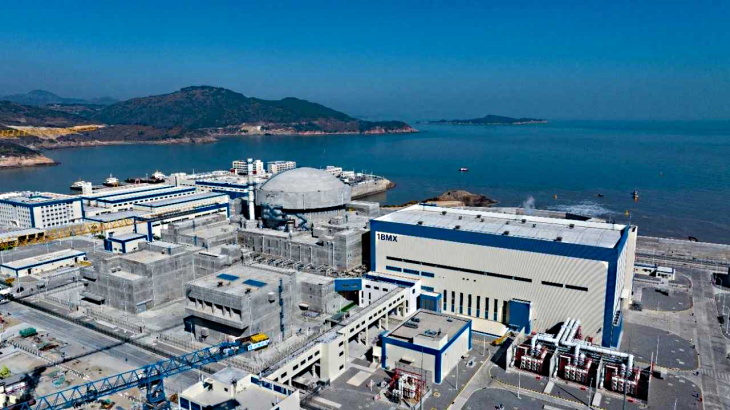
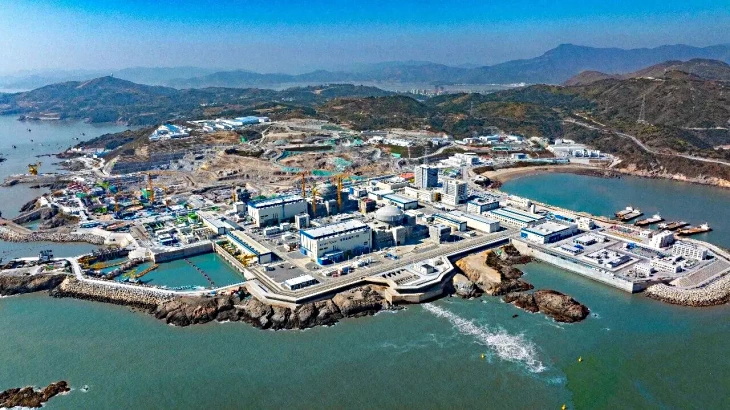
announced that Unit 1 at Sanao NPP—the first of six Hualong One reactors planned for the site—has entered commercial operation. World Nuclear News
관련 링크:Belgium is seeking
to take control of nuclear reactors from Engie to manage its energy supply, focusing on sustainable, affordable energy amid rising prices due to geopolitical tensions. EuroNews
관련 링크:New Mexico comes after DOE again on WIPP waste
Claiming the Department of Energy is backing away from commitments made in a 2023 settlement agreement with the state, the New Mexico Environment Department is proposing revisions to the Waste Isolation Pilot Plant operating permit. The revisions would prioritize the disposal of waste generated in New Mexico at WIPP, including legacy radioactive waste from Los Alamos National Laboratory. Go deeper on Nuclear Newswire.
관련 링크:Inconsistent terminology: An RIPB stumbling block
The American Nuclear Society’s Risk-informed, Performance-based Principles and Policy Committee (RP3C) held another presentation in its monthly Community of Practice (CoP) series. This month’s speaker was Lyndsey Fyffe, a nuclear safety engineer with Strategic Management Solutions, who presented “RIPB Terminology Across the Nuclear Industry.” Go deeper on Nuclear Newswire.
관련 링크:NS Savannah open house for National Maritime Day
On Sunday, May 17, in Baltimore, Md., there will be an open house on the NS Savannah to commemorate National Maritime Day. The Savannah acted as a passenger and cargo ship from 1962 to 1970, serving as a floating ambassador for President Eisenhower’s Atoms for Peace program and, more broadly, for the safe and peaceful uses of nuclear power. Go deeper on Nuclear Newswire.
관련 링크:TBT: A brief look at JIMO
The 2025 cancellation of DARPA’s DRACO project was far from the first time plans for nuclear propulsion in space were scuttled before completion. One such story took place between 2003 and 2005, when excitement gathered around NASA’s Project Prometheus and the Jupiter Icy Moons Orbiter (JIMO). As new momentum now collects around plans to send Space Reactor-1 Freedom to Mars by 2028, understanding how a similar story evolved in decades past can help us understand the historical context that new ambitions emerge from. A perfect place to start in piecing that story together is, as always, the archive of Nuclear News: March 2003: JIMO appears in the NN archive for the first time as the flagship mission of Project Prometheus, NASA’s new space nuclear effort in its fiscal year 2004 budget request. JIMO is envisioned as a spacecraft that uses a nuclear reactor to power electric (ion) engines for propulsion. Aimed for a post-2011 launch, its mission is to investigate Callisto, Ganymede, and Europa—the planet-sized moons of Jupiter, in part because these moons appear to have vast oceans beneath their surfaces and the requisite ingredients for life. This first story concludes with remarks referencing the many previously planned and canceled nuclear-powered space missions of prior administrations. August 2003: NASA’s Jet Propulsion Laboratory awards a team at Lockheed Martin a $6 million concept design study contract for JIMO. The team is tasked with evaluating technologies for the reactor, power conversion, electric propulsion, and more. September 2003: NASA awards another $6 million to a team at Boeing to study deep space propulsion systems for JIMO. BWXT and Ball Aerospace & Technologies team up with Boeing on the project. February 2004: A new ion engine design to be used for JIMO is successfully tested at NASA’s Jet Propulsion Laboratory in Pasadena, Calif. Alan Newhouse, director of Project Prometheus, says the test “is another example of the progress we are making in developing the technologies needed to support flagship space exploration missions.” May 2004: NASA partners with the Department of Energy’s Naval Reactor Program to jointly develop the reactor systems for JIMO. March 2005: In its FY 2006 budget request, NASA states that the agency has decided to “defer” JIMO. Despite this word choice, the move is widely perceived as a cancellation. Despite high-level collaborations across government and industry, technical achievements, and significant momentum, JIMO stalls out. Instead of leaving us with new insights about the nature of our solar system, it instead imparts a cautionary tale on the fragile nature of projects like it.
관련 링크:--- 크롤링 일시: 2026-05-01 03:00:08