📋 오늘의 요약
Nuclear News Daily—1/22: Kashiwazaki Kariwa / LIST in Tenn. / Maritime consortium
발행일
Jan 22, 2026미리보기
In this issue: Enrichment in Oak Ridge, new plans for Kewaunee in Wisconsin, a reactor restart in Japan—which has since hit a snag, Lloyd’s Register forms a new consortium, and more. Throwback Thursday: With news of Kashiwazaki Kariwa in the headline...원문 링크
https://american-nuclear-society.read.axioshq.com/p/unclear-newswire-daily-practice/80629af7-bba7-4cbe-a851-1416f2856e43전체 내용
도입부: In this issue: Enrichment in Oak Ridge, new plans for Kewaunee in Wisconsin, a reactor restart in Japan—which has since hit a snag, Lloyd’s Register forms a new consortium, and more.EnergySolutions confirms plans for new nuclear at Kewaunee
Utah-based EnergySolutions announced on January 15 that it has submitted a notice of intent to the Nuclear Regulatory Commission, confirming that the company plans to submit an application for a “major licensing action” for new nuclear generation at the closed Kewaunee nuclear power plant in Wisconsin. Applications for an early site permit, construction permit, or combined license are currently being evaluated, the company said. Go deeper on Nuclear NewsWire.
관련 링크:Japan’s Kashiwazaki Kariwa
NPP faced a technical glitch just hours after its long-awaited restart, forcing shutdown. TEPCO halted operations for inspections, prioritizing safety. No radioactive impact was reported. New York Times (subscription required); BBC via MSN
관련 링크:The Trump administration
is reportedly considering offering economic incentives to states willing to take nuclear waste. Exchange Monitor; E&E News (subscription required); Reuters (subscription required)
관련 링크:President Trump proposed
a rapid nuclear plant approval process for Silicon Valley to fuel AI energy needs, cutting the typical 4–5 year timeline to three weeks. Fortune
관련 링크:President Trump endorsed
nuclear energy at the World Economic Forum in Davos, highlighting safety improvements despite past skepticism, as AI-driven energy demands increase. Axios
관련 링크:Project finance
, not corporate balance sheets, could accelerate U.S. nuclear power growth by aligning financial risk with investors, overcoming regulatory hurdles and meeting rising electricity demand. Utility Dive
관련 링크:The DOE released
a fact sheet listing its recent progress and goals in the nuclear sector, serving as a relatively comprehensive recap of the current federal nuclear landscape. DOE
관련 링크:South Korea’s SK Innovation
transferred part of its stake in TerraPower to Korea Hydro & Nuclear Power, strengthening an existing collaboration among all three companies. World Nuclear News
관련 링크:As American companies
buy up the planned new supply of enriched uranium from Western producers increasing capacity, European countries struggle to end their dependence on Russia for enriched uranium. Financial Times (subscription required)
관련 링크:TEPCO restarts Kashiwazaki Kariwa Unit 6
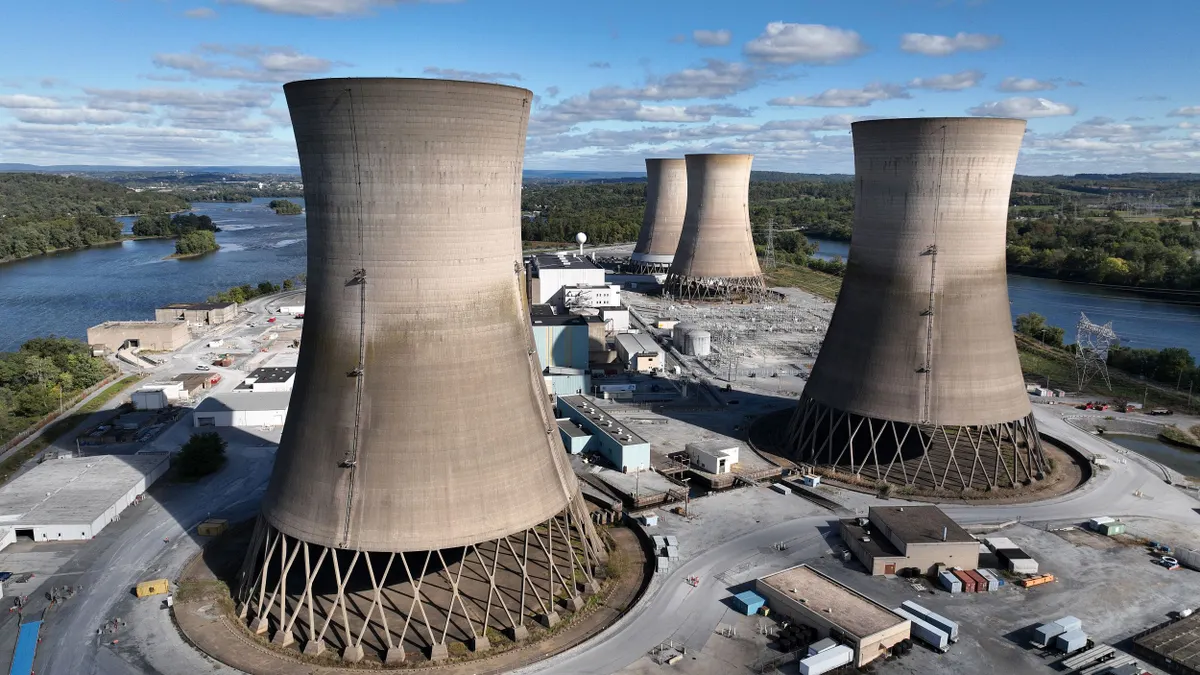
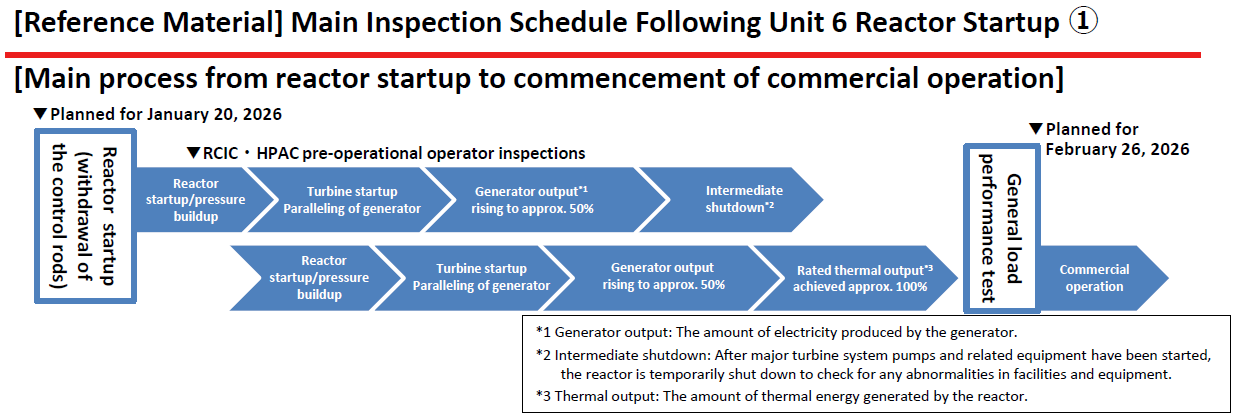
TEPCO announced that after nearly 15 years, Unit 6 at the Kashiwazaki Kariwa nuclear power station has been restarted. Following approval from Japan’s Nuclear Regulation Authority, TEPCO withdrew the reactor’s control rods to initiate startup yesterday at 7:02 p.m. local time. Go deeper on Nuclear NewsWire.
관련 링크:LIS Technologies to invest $1.38B in Oak Ridge
On January 16, Tenn. Gov. Bill Lee, Deputy Gov. Stuart McWhorter, and officials from Laser Isotope Separation Technologies announced the company’s plans to expand in Oak Ridge, Tenn. That expansion will come with a $1.38 billion investment from LIS Technologies for what the company says will be the first commercial laser uranium enrichment plant in the United States. Go deeper on Nuclear NewsWire.
관련 링크:Lloyd’s Register forms Maritime Nuclear Consortium to set international standards
London-based professional services organization and maritime classification society Lloyd’s Register has brought together a group of experts from the U.K. nuclear, maritime, insurance, and regulatory sectors with the primary goal of establishing international standards “for safe, secure, and commercially viable nuclear-powered ships.” Go deeper on Nuclear NewsWire.
관련 링크:TBT: Early days of Japanese nuclear
The impending restart of Unit 6 at Japan’s Kashiwazaki Kariwa is indicative of a broader upswing in nuclear enthusiasm that the country is currently experiencing, making it the perfect time to get some historical context by taking a look all the way back at the initiation of Japan’s nuclear sector. The very beginning: Japan’s Atomic Energy Commission was established in January 1956 for the purpose of enabling the government to enforce its new policies on the research, development, and utilization of nuclear power in the country. Also founded that year was the Japan Atomic Energy Research Institute, a semigovernmental organization charged with researching nuclear power. Along with JAERI, more organizations came shortly after with more specific goals. The Japan Atomic Industrial Forum was founded in 1956 to promote the peaceful uses of nuclear power and was participated in by roughly 600 companies in Japan. The Japan Nuclear Ship Development Agency was established in 1963 to develop Japan’s first nuclear-powered ship. The Power Reactor and Nuclear Fuel Development Corporation was established in 1967 as another semigovernmental organization that conducted developmental work on reactors as well as uranium prospecting and mining. The National Institute of Radiological Sciences was established in 1967 to research both the risks associated with and the medical applications of radiation. The first power reactor: As new private and public agencies quickly developed, so too did the first wave of commercial power projects. First to be completed was Tokai-1, a 159-MWe gas-cooled reactor that entered commercial operation in July 1966. Seinosuke Hashimoto, a member of the Japan Atomic Industrial Forum who covered the country’s nuclear developments in an issue of Nuclear News, posited that nuclear power was an ideal solution to Japan’s increasing energy demands (caused by increasing industrialization alongside a rising a standard of living). He argued that nuclear would increase energy security through diversification while saving the country a significant amount of money. Go deeper: Read Japan’s full section in the International Nuclear Review in the October 1968 issue of NN (pp. 39–41).
관련 링크:--- 크롤링 일시: 2026-04-06 19:59:17