Florida nuclear plant workers were too afraid to report safety concerns, records show
July 31, 2025
TL;DR
• Federal inspectors found a "culture of fear" at Florida Power & Light's St. Lucie nuclear plant, where workers were hesitant to report safety concerns due to fear of retaliation from upper management. • Anonymous safety complaints at the St. Lucie plant skyrocketed in 2024, reaching 20 allegations—the highest among all 54 U.S. nuclear plants and five times more than the previous year. • These safety culture issues coincide with FPL's request for the largest rate hike in American history, raising questions about whether customers should pay for costs associated with preventable outages and operational problems.
A culture of fear has persisted at a Florida nuclear power plant owned and operated by the state's largest utility, according to a federal inspection report completed last fall.
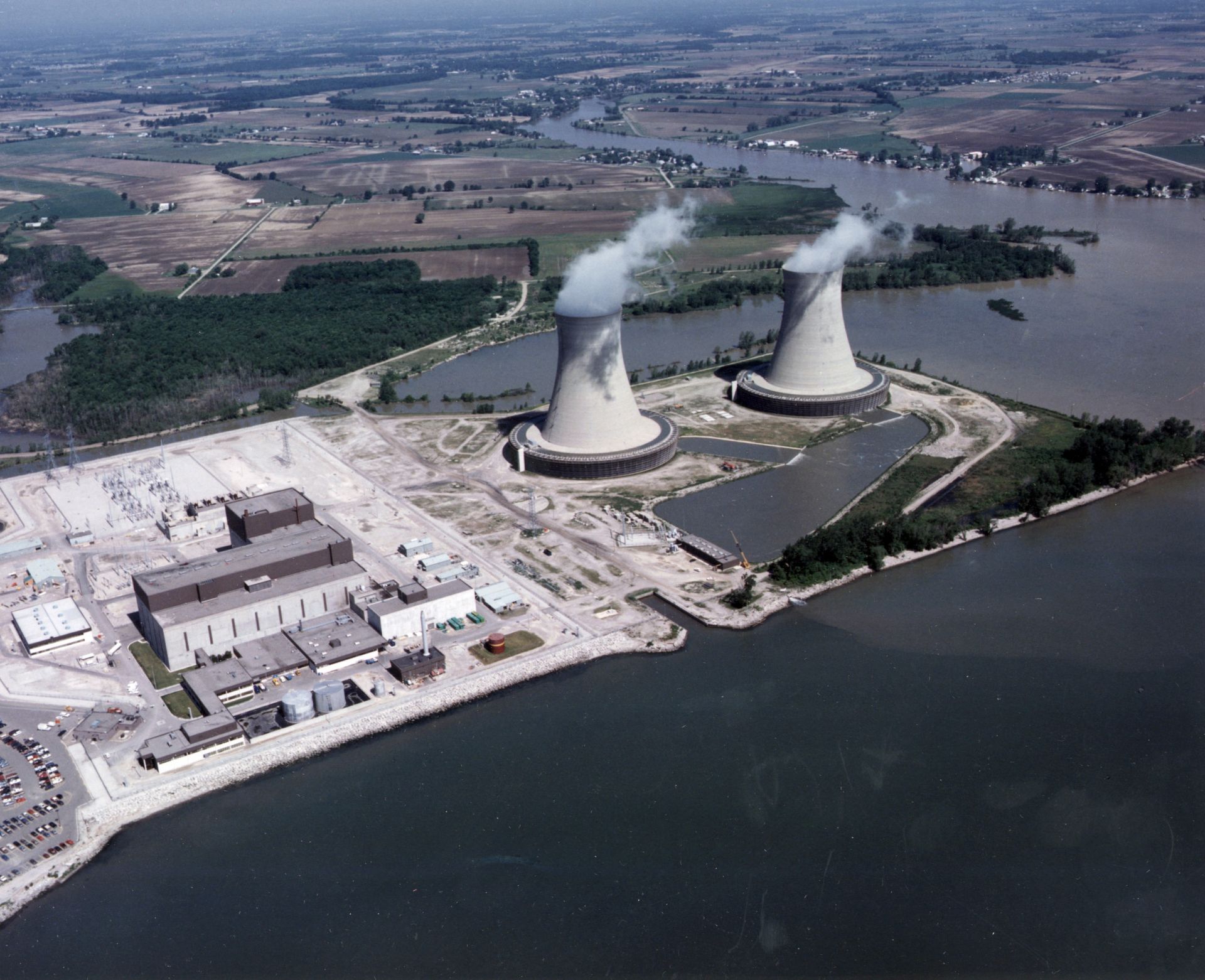
Workers were hesitant to report safety concerns to upper management lest they face retaliation. Inspectors came to this conclusion after interviewing more than 75 employees at the St. Lucie plant, located on a barrier island an hour north of West Palm Beach.
It wasn't the only sign of trouble. A federal database showed workers' anonymous complaints of wrongdoing at the plant skyrocketed last year.
These records cap years of issues surrounding the nuclear operations of the state's largest utility, Florida Power & Light, most of which have been disclosed in highly technical reports that have escaped public notice. State and federal regulators have identified issues at Florida Power & Light's two aging nuclear plants, largely focused on safety culture.
The findings, compiled for the first time by The Tributary and the Tampa Bay Times, come as the utility asks regulators for permission to hike Floridians' electric rates by billions of dollars over the next four years. The utility's proposed increase represents the largest rate hike request in American history, according to affordability advocates. Because of the issues at these plants, consumers may be footing a higher bill, according to one expert who testified before regulators.
During the federal inspection last year, interviews with employees revealed multiple incidents that were widely known at the plant in which "senior management's reactions to individuals raising nuclear safety concerns could be perceived as retaliation," the report reads.
These incidents resulted in employees being too scared to file anonymous complaints online in case their IP addresses were recorded, records show. Instead, they funneled concerns through a union representative.
The majority of staff in the operations department told regulators they were reluctant to raise safety concerns to any managers above their direct supervisors because of these incidents, during which they believed top officials had > "the singular focus of furthering production goals."
Edwin Lyman, a physicist and director of nuclear power safety at the Union of Concerned Scientists, said he found these issues to be troubling.
"The reason why these inspections were initiated in the first place is the recognition of how important good safety culture is," he said in an interview. "Without that, it's a toxic environment that contributes to potential for a more serious event to occur."
Inspectors also found two mechanical issues at St. Lucie that they said had been left unaddressed by plant management for years. One resulted in an emergency shutdown.
The company has defended its management in testimony to state regulators, characterizing its plants as a source of safe, reliable, clean, and cost-effective power for the utility's millions of Florida customers.
The utility cut about a quarter of the jobs at both plants in the last few years, according to testimony from an expert hired by the state's consumer advocate.
Richard Polich, managing director at the utility consulting firm GDS Associates Inc., said those job reductions, coupled with instances of workers facing penalties after reporting safety problems, indicate the safety culture at the plants may be lacking because staff is forced to do more with less.
"As a result, mistakes can occur, tasks may not be performed in accordance with company procedures, and projects are rushed to be completed, all of which can lead to avoidable … outages, and imprudent fuel costs for customers," said Polich, who holds degrees in nuclear and mechanical engineering, in testimony submitted to the Florida Public Service Commission.
Florida Power & Light has disputed Polich's testimony in filings to state regulators, characterizing his comments as "based solely on conjecture" and "irrelevant and incompetent."
Ellen Meyers, a spokesperson for the utility, said that while fewer people work at its two nuclear plants than in 2017, that was because of a restructuring that centralized more staff at the corporate level.
"FPL's nuclear fleet has been safely providing low-cost, reliable and emissions-free electricity to Floridians for decades," Meyers wrote in a statement. "St. Lucie and Turkey Point help FPL deliver reliable electricity from a diverse energy mix to keep customer bills as low as possible."
The nuclear units at St. Lucie and Turkey Point have been rated as green by the Nuclear Regulatory Commission, she said, the highest rating for safety performance. Meyers also pointed out that while federal inspectors found evidence of a chilled work environment at St. Lucie last year, they did not cite the company with any formal violations because the company was working to correct the issues.
Nuclear safety advocates have, however, pushed for federal regulators to do more to enforce safety rules, saying their current system regularly gives utility companies the benefit of the doubt.
Inspectors are discouraged from escalating their findings, making it difficult for any plant to get slapped with a rating worse than green, Lyman wrote in an email to the Times.
"I think that makes the Green findings less meaningful — essentially, there has been grade inflation," he said.
An aging fleet
Florida has a bumpy history with nuclear energy. In 2009, in a do-it-yourself approach to a fix designed to save money, Progress Energy workers at the Crystal River nuclear plant cracked the reactor's containment building. The plant, now owned by Duke Energy, has been shut down ever since, and Duke customers pay a small fee on each bill so the company can recoup losses from that costly disaster.
That's left St. Lucie and Turkey Point, which is south of Miami, as the only two operational nuclear plants in the state. Combined, the plants make up about a fifth of the utility's enormous electricity generation, which overall keeps the lights on for 12 million Floridians in 43 counties.
The plants are also aging.
They have been operating since the 1970s, which means keeping up with maintenance is crucial, experts said. The federal government recently renewed the license for Turkey Point until at least 2052. Florida Power & Light expects federal regulators to approve renewals that will allow two of St. Lucie's reactors to operate for decades.
But throughout the past year, there were indications that workers at a Florida nuclear power plant were clamoring to get the attention of regulators.
The number of anonymous reports of wrongdoing at Florida Power & Light's St. Lucie Plant skyrocketed in 2024, according to data from the U.S. Nuclear Regulatory Commission, which processes the complaints. On-site workers filed far more reports there than at any other of the nation's 54 nuclear power plants, according to a federal database.
The spike in anonymous reports from St. Lucie raised red flags, Lyman said.
The substance of those anonymous complaints is secret to protect employee confidentiality, the federal agency said. Federal regulators told Florida Power & Light it began its inspection of work-safety culture because of a spike in anonymous reports.
But the sheer number of them stands out: On-site workers at St. Lucie filed 20 allegations last year, almost double the second-highest plant nationwide and five times the number of complaints from the plant the previous year, according to the data.
Those complaints were among the highest single-year totals of any of the nation's power plants since 2020. About 425 people work at the plant on an average day, according to a company fact sheet. The pace could be slowing this year, as workers submitted zero complaints through June, the most recent data available.
Gay Henson, the secretary-treasurer of the International Federation of Professional and Technical Engineers, said she dealt with a similar situation of a chilled work environment at a Tennessee Valley Authority nuclear site, where workers who raised concerns were fired. It took years, she said, for the damage to the work culture to be undone.
"Coming out of something like that for a workplace is really difficult for employees and the company, because they have to rebuild trust," Henson said.
She said it's noteworthy for federal regulators to make the determination of a chilled work environment, as they did at St. Lucie.
"You have to be especially diligent at a nuclear plant because there's just so many moving parts," she said. "Every little concern can become something big if you don't take care of it early. And if people don't feel like they can bring something forward, you have a worse situation where people go silent."
Multiple leaders of the union representing St. Lucie employees, which is a chapter of the International Brotherhood of Electrical Workers, did not respond to texts, calls and emails over several weeks requesting more information about working conditions at the plant, both from reporters and through intermediaries.
The moderator of a Facebook group for St. Lucie plant employees, whose identity was unclear, declined a request from a Times reporter asking to speak with current or former workers.
"No reason to tell you why," the person replied. "Not interested."
But public records indicate that Florida Power & Light grappled with dysfunction at St. Lucie and Turkey Point for years.
Old problems arise again
In 2017, a regional vice president for the utility cancelled a contract employee's job after the worker raised a safety concern about how many radiation-detecting devices they needed to wear during refueling, resulting in a federal fine. In 2019, Florida Power & Light mechanics at Turkey Point doctored a work order, inspectors found, falsely saying that a maintenance safety check had been completed.
After two other instances that year of falsifying information at Turkey Point came to light — including technicians performing maintenance on the wrong charging pump, and then "deliberately" failing to notify a manager that they'd "inadvertently manipulated a pressure switch" — the plant got slapped with a $150,000 fine, inspection records show.
Federal regulators said the three 2019 issues "did not cause any actual consequences to the plant" but that the potential ramifications were "significant and concerning."
"Because the violations are interrelated to a common cause involving integrity issues among multiple FPL staff and inadequate management oversight, these violations have been categorized as a Severity Level III problem," a federal report reads, referencing a medium-level safety risk.
By 2020, Florida Power & Light had formed an internal task force to "determine the extent of the wide-spread operational performance decline" at both of its nuclear plants, according to a Public Service Commission audit of the utility's nuclear operations.
Utility leaders became highly critical of their own employees.
Commission staffers wrote that their review of the minutes from the management meetings revealed "unvarnished and often harsh observations and conclusions of FPL's most senior managers."
At one point, management concluded that St. Lucie had "the worst operational focus in the [U.S. nuclear] industry." The state audit further found that some of the plant's issues included "management being inadequately engaged, allowing erosion of high standards, failing to model appropriate leadership behavior, and failing to deliver acceptable operational results."
Plant shutdowns are also happening almost twice as often as the national average at St. Lucie and Turkey Point, an analysis of federal records show. Those shutdowns were the subject of an audit by state regulators last year.
They concluded that Florida Power & Light had addressed the problems enough to start to see a downward trend.
The company's internal review had helped right the ship and that "no similar issues regarding FPL's safety culture appear to have arisen since 2019," regulatory staff wrote.
Then, shutdowns spiked again throughout last year, in tandem with the rise in employees' safety concerns at St. Lucie.
Now, the same state regulatory staff are noting that the problems identified by the audit have returned.
Suzanne Brownless, a lawyer for state utility regulators, told the commission in remarks filed in November that issues related to Florida Power & Light's "philosophy with regard to receiving concerns … may have come up again."
That means that after being largely confined to obscure reports for years, these problems may soon get more attention.
Florida Power & Light recently filed what affordability advocates said was the largest rate hike request in American history, asking state regulators to allow it to charge its customers nearly $10 billion more over the next four years. The utility, which is the biggest in the country, has said the hike is necessary to reinvest in the grid and keep up with Florida's population growth.
As that case proceeds, the company's operations will be scrutinized by lawyers and experts in Tallahassee. The state public advocate can ask the utility for internal documents that are usually confidential.
Those records can be used by lawyers to help them argue against the rate hikes. And if the case leads to public hearings, more details about the nuclear problems could spill into the open.
Who pays for mistakes?
Nuclear plant outages are a safety issue — and a financial one.
Last year, Polich, the consultant hired by the state's consumer advocate, filed testimony to regulators that a series of outages at St. Lucie and Turkey Point from 2020 onward each had associated replacement power costs — that is, the cost of finding electricity to replace the lost output from the nuclear plants when they're shut down.
For that reason, the cost of a single shutdown can exceed $1 million, he found. What remains a subject of debate is who should pick up that tab: Florida Power & Light or its millions of customers?
Polich argued that regulators on the Florida Public Service Commission should closely scrutinize the outages at St. Lucie and Turkey Point over the last several years, many of which Polich concluded were preventable and the utility's responsibility.
Florida Power & Light has challenged some of Polich's conclusions and asked state regulators to strike portions of his past testimony.
The state's consumer advocate, called the Office of Public Counsel, fought back, accusing the company of trying to hide unflattering evidence.
Last year, the commission approved a settlement between the company and the Office of Public Counsel on a series of nuclear outages from 2020 through 2022 in which the utility agreed to refund customers $5 million. The settlement also subjects Florida Power & Light to another audit of its nuclear program to "ensure that FPL continues to meet and improve its high nuclear power plant operational standards."
Polich's entire testimony also became a part of the public record.
In a statement to reporters, Meyers, the utility spokesperson, said Florida Power & Light was not seeking "any replacement power costs associated with FPL's nuclear operations" in its request to hike base rates this year. Utilities can recoup costs from customers in multiple ways.
But the commission could still take up questions about Florida Power & Light's management of its nuclear plants when it's weighing the utility's request for a rate increase.
State lawmakers who closely follow utility policy hope it does.
Sen. Don Gaetz, a Panhandle Republican who unsuccessfully tried to pass a bill to curb the profits of Florida Power & Light and other utilities, said in a text that the commission "should consider these issues."
Rep. Anna Eskamani, a Democrat from Orlando, said the multiple problems raised in public documents merit further review.
"A 'chilled work environment' where employees fear speaking up about safety concerns is not just a red flag — it's a siren," she said in a statement. "When paired with expert testimony detailing years of preventable outages, operational mismanagement, and staff reductions at FPL's nuclear plants, it's clear we're not talking about isolated incidents. This points to a systemic failure in oversight and serious public safety concerns."
---
Nate Monroe is the executive editor of The Tributary. He can be reached at nate.monroe@jaxtrib.org.
Emily L. Mahoney covers energy for The Tampa Bay Times.
AI Analysis
This investigation reveals deeply concerning patterns at Florida Power & Light's nuclear facilities that extend far beyond typical operational challenges. The combination of a documented "culture of fear," record-high anonymous complaints, and a history of safety violations suggests systemic management failures rather than isolated incidents. What's particularly troubling is the timing—these safety culture issues are emerging just as FPL seeks the largest rate hike in U.S. history, raising serious questions about whether customers should bear the financial burden of preventable outages caused by poor management practices. The federal regulators' finding that workers were afraid to report safety concerns online due to fears about IP address tracking reveals a level of workplace intimidation that is especially dangerous in nuclear operations, where early identification of problems is critical to preventing catastrophic failures.